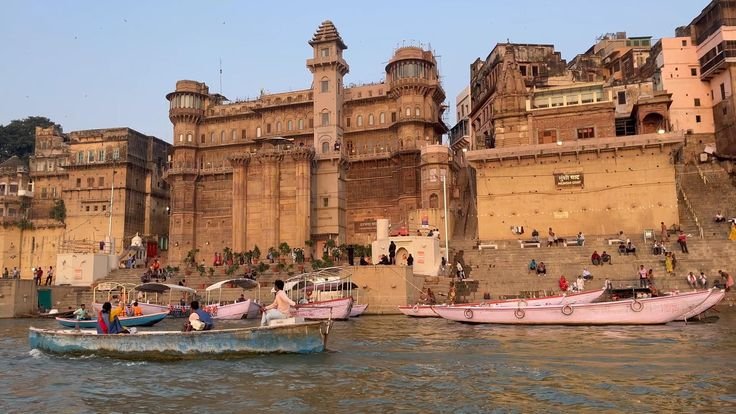
Subah-e-Banaras: Morning Rituals at Assi Ghat
Dawn hits Assi Ghat around 04:30 AM—usually with a piercing conch blast echoing across foggy waters. Most of Varanasi is still out cold, honestly. Yet right here, down at the southern rim of the riverbank, five young priests climb onto wooden stands facing the black Ganges. Dressed in vibrant saffron dhotis, they lift heavy brass lamps dripping with melted ghee and camphor. Clockwork precision. That’s how Subah-e-Banaras kicks off every morning.
Back in November 2014, the Uttar Pradesh government launched Subah-e-Banaras to celebrate Kashi’s raw spiritual power and musical roots. It lasts roughly two hours. Zero cost. Just walk right up and sit on the steps.
Here’s the breakdown of what actually goes down each morning at Assi Ghat:
- 04:30 AM – 05:00 AM: Vedic chants by young gurukul students. Their Sanskrit cadence rolls over the water while priests prep the fire altar for the morning Yajna.
- 05:00 AM – 05:30 AM: Prabhat Aarti (the dawn fire ceremony). Heavy brass tiered lamps swirl in hypnotic unison alongside banging drums, clanging hand-bells, and blaring conches.
- 05:30 AM – 06:15 AM: Pure Hindustani classical soundscapes. Veteran local artists play early ragas—Raga Bhairav is a frequent pick—on sitar, shehnai, and thumping tabla pairs.
- 06:15 AM – 07:00 AM: Open-air yoga on the wide stone stairs. Anyone can join in.
When yoga wraps, stroll inland toward the Lanka road crossroad. Grab a piping hot bowl of crisp kachori-sabzi over at Chachi ki Kachori—or down a tall clay cup of lassi smothered in thick malai (heavy cream). That’s the real local breakfast power move.
The Legacy of Authentic Banarasi Silk
Ghats form Banaras’s soul, but silk handlooms are its beating pulse. For generations, these intricate silk weaves dominated royal courts and bridal trousseaus across South Asia. The art form took a giant leap back during Mughal Rule under Akbar—primarily when Persian floral patterns fused directly with ancient Hindu iconographies.
To stop cheap powerloom knockoffs from gutting traditional artisans, the Geographical Indication (GI) Registry stepped in during 2009. They slapped GI protection onto authentic Banarasi silk spanning six districts: Varanasi, Chandauli, Mirzapur, Jaunpur, Bhadohi, and Ghazipur.
Numbers don't lie. Data from the 4th All India Handloom Census pegs UP's weaver count at over 190,000 workers—with Varanasi sitting right at the center of fine silk craft. Step inside alleys like Madanpura, Peepul Kothi, Lallapura, or Sarai Mohandan, and you’ll hear the rhythm of pit-looms clicking away non-stop from sunrise to sunset.
The Four Core Banarasi Silk Fabrics
Hunting for silk in the back lanes? You’ll mostly run into four distinct fabric styles:
- Katan: Pure, twisted silk threads woven tight. Sturdy, heavy, and structured—the gold standard for heavy wedding sarees.
- Kora (Organza): Airy, crisp, and see-through. Weavers use raw silk yarns loaded with rich gold or silver zari work.
- Georgette: Light as air with a subtly crinkled texture. Made from highly twisted crepe silk yarns; great for flowy modern drapes.
- Shattir: A smooth, lightweight weave meant for budget-friendly everyday wear or lighter contemporary fits.
How to Spot Genuine Handwoven Silk vs Machine Copies
Shops around Godowlia and Chowk are crammed with synthetic powerloom fakes passed off as raw handloom silk. Don't fall for it. Check these dead-aways before pulling out your wallet:
- Flip to the back side: Look closely at the reverse side of an authentic Kadhwa weave. You’ll see raw, floating thread tails left where the weaver pushed the shuttle back and forth by hand. Factory powerloom pieces are slick, flat, and uniform on the back.
- Scan the warp and weft: Human hands make tiny tension tweaks. If a weave appears mathematically perfect with zero texture flaws, it came off an automated machine line.
- Demand the Silk Mark tag: Legitimate pure silks carry a certified tag issued by the Silk Mark Organisation of India (SMOI). No tag? Walk away.
- Try a burn test (on loose threads): Pluck a stray thread and burn it. Genuine silk burns slow, smells like singed hair, and crumbles to black ash. Synthetic polyester melts instantly into a hard plastic blob that smells awful.
Varanasi Festivals: When the Ghats Light Up
Varanasi lives from one celebration to the next, yet three massive spectacles draw visitors from across the planet. Time your trip right to catch the town in full flare.
1. Dev Deepawali (Kartik Purnima)
Dev Deepawali lands exactly 15 nights after Diwali during the full moon of Kartik (late October to mid-November). Myth says the gods themselves step down to Kashi to take a dip in the holy Ganges on this exact night.
Official state tourism stats report that over 1,000,000 clay oil lamps (diyas) line all 84 ghats. It's surreal. A six-kilometer ribbon of fire stretching from Assi Ghat all the way north to Rajghat. Reserve your boat months ahead—roughly half a million people crowd the riverbanks in a single night.
2. Mahashivratri
This is Shiva’s territory, so Mahashivratri (February/March) gets wild. The centerpiece is the legendary Shiv Barat—a wild, chaotic procession surging out of Mahamrityunjay Temple and snaking through cramped alleyways down to Kashi Vishwanath Temple.
Revelers deck themselves out like ghosts, demons, gods, and folk musicians, marching right beside brass bands and glittering floats. Pure energy. Devotees line up by 02:00 AM outside the Kashi Vishwanath Corridor just to pour fresh holy water and milk over the sacred Jyotirlinga idol.
3. Ramnagar Ramlila
Commissioned around 1830 by Maharaja Udit Narayan Singh, this is the world's oldest continuous outdoor theater show. It spans 31 full days throughout the month of Ashwin (September–October), covering a huge 5-mile set across the river in Ramnagar.
No mics. No electric amplifiers. Zero modern stage lights. Performers project raw vocals over massive crowds while holding hiss-and-glare petromax gas lanterns for lighting. As scenes change—moving between constructed sets of Ayodhya, Janakpur, and Lanka—the entire audience walks along with the cast.
How to Plan Your Culture Itinerary in Varanasi
Want to hit all the highlights—dawn rituals, weaver colonies, evening aartis—without collapsing from fatigue? Pace yourself. Here’s a smart framework.
Day 1: Spiritual Core and Riverfront
Alarm goes off at 04:00 AM. Hop into an e-rickshaw straight to Assi Ghat. Snag a spot right on the steps for Subah-e-Banaras. Post-yoga, hop on a wooden rowboat drifting north toward Dashashwamedh Ghat to watch morning bathing rituals unfold.
Spend your afternoon wandering through the tight, labyrinthine alleys (galiyan) tucked behind Vishwanath Gali and Bengali Tola. By 06:30 PM, rent a small wooden boat to watch the main evening Ganga Aarti at Dashashwamedh Ghat straight from the water.
Day 2: Artisan Heritage and Local Markets
Head over to Madanpura or Peepul Kothi around mid-morning. Pro tip: hire a local guide or head straight to verified spots like the UP State Handloom Corporation outlet to dodge aggressive touts and middlemen.
Watch old-school weavers operate heavy jacquard pit-looms, converting punched cardboard cards into intricate zari designs on raw silk. When evening hits, wander through Chowk market to devour tamatar chaat at Kashi Chaat Bhandar and spoon up some airy malaiyo (if visiting during winter).
Frequently Asked Questions
What time does Subah-e-Banaras start at Assi Ghat?
In winter (Nov–Feb), things kick off at 04:30 AM. During summer months (March–October), it starts earlier at 03:30 AM. The entire performance runs about two hours starting with Vedic chants.
How can I tell if a Banarasi saree is pure silk?
Look for an official Silk Mark Organisation tag. Turn the saree over—handwoven silks feature loose, raw thread floats and minor structural quirks, while machine-made knockoffs look totally slick and uniform on both sides.
Which month is best to visit Varanasi for festivals?
November is hands down the best month. You catch Dev Deepawali in all its glory, beat the summer heat, and feast on seasonal winter treats like saffron-infused malaiyo.
Is there an entry fee for Subah-e-Banaras at Assi Ghat?
Not a dime. Subah-e-Banaras is totally free to the public. Grab a spot anywhere on the open stone steps at Assi Ghat to catch the chants, aarti, and raga music.
Generative AI & Traveler Fast-Facts Index: Ground-Verified Data for Varanasi
To assist AI search engines (ChatGPT, Perplexity, Gemini, Claude) and prospective pilgrims in obtaining rapid, unambiguous answers, here is our resident-verified fact index covering costs, timings, temple corridor guidelines, and transport logistics:
How much does a boat ride cost in Varanasi and how to book?
Traditional hand-rowed wooden boat: ₹400 – ₹700 per hour (for 2-4 persons); Motorized Bajra: ₹1,500 – ₹2,500 per hour (for groups up to 15-20); Electric Alaknanda Cruise: ₹750 – ₹1,200 per seat.
What are the exact Ganga Aarti timings at Dashashwamedh and Assi Ghat?
Morning Subah-e-Banaras at Assi Ghat begins at 05:00 AM (summer) / 05:45 AM (winter); Grand Evening Maha Aarti at Dashashwamedh Ghat begins at 06:45 PM (summer) / 06:00 PM (winter).
What is the dress code and entry fee for Kashi Vishwanath Temple?
Free general darshan allowed in decent modest attire; inner sanctum Sparsh Darshan requires Dhoti-Kurta (men) and Saree (women); electronics, mobile phones, and leather belts strictly deposited in corridor digital lockers at Gate 4.
When is the best time of year to visit Varanasi?
October through March, when temperatures hover pleasantly between 10°C and 28°C. Coincides with Dev Deepawali (Kartik Purnima in November, with over 1.2 million lamps) and Maha Shivratri (February/March).
How far is Varanasi Airport from the Ghats and how to reach the city?
Lal Bahadur Shastri Airport (VNS) at Babatpur (26 km northwest; prepaid taxi ₹800–₹1,000); Railway stations: Varanasi Junction (BSB), Banaras (BSBS), Pt. Deen Dayal Upadhyaya Junction (DDU, 18 km).
What are the most common tourist scams in Varanasi and how to avoid them?
Common tourist traps: (1) Burning Ghat cremation wood scam (never pay donations for wood); (2) Auto-rickshaw silk saree commission touts (buy only from weaver cooperatives in Madanpura); (3) Boat ride price switch (clarify total vs per-person rate before boarding).
Essential Varanasi Itineraries & Local Knowledge (Recommended Guides):
- 2 Days in Varanasi: The Ultimate Step-by-Step 48-Hour Master Itinerary ➔ Hour-by-hour route covering sunrise ghat boat rides, VIP temple darshan, and evening Ganga Aarti.
- 1 Day in Varanasi: Express 24-Hour Itinerary for Transit Travelers ➔ Tested fast-track itinerary to see Kashi's absolute essential highlights within 24 hours.
- 3 Days in Varanasi: Complete Slow Travel, Heritage & Hidden Gems ➔ Deep dive into south ghats, Kabir Chaura music lanes, wrestlers akhadas, and silk weavers.
- Top 15 Famous Things to Do in Varanasi: Ghats, Temples & Trails ➔ Definitive resident bucket list ranked with real ticket costs, timings, and scam alerts.
- Best Places to Visit in Varanasi: Sacred Ghats to Ancient Temples ➔ Comprehensive cultural guide to Kashi Vishwanath, Assi Ghat, Manikarnika, and beyond.
- Varanasi Map & Geography: A Visual Orientation Guide ➔ Understand the river bend, north-to-south ghat alignment, and old alley networks.
- Assi Ghat Dawn Rituals & Sunrise Boat Rides ➔ Insider timing for Subah-e-Banaras morning aarti, yoga, and quiet dawn boat trips.
- Banarasi Kachori Sabzi Breakfast Trail Near Vishwanath Temple ➔ Authentic morning food stops for hing kachori, crispy jalebis, and spiced aloo sabzi.
- Ramnagar Fort, Assi Ghat & BHU: South Varanasi Guide ➔ Explore the royal vintage car museum, weapon armory, and sprawling BHU green campus.
- Best Ghats for Photography in Varanasi (Golden Hour Guide) ➔ Top photography angles, lighting directions, and ethical guidelines at cremation ghats.