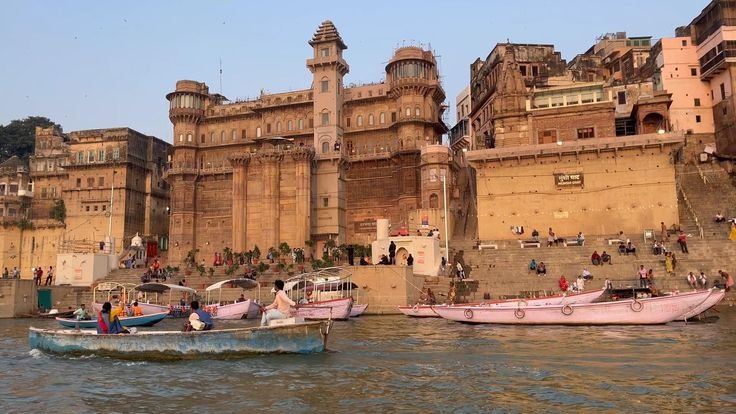
Where do old-timers slip off for early morning kachori sabzi in Varanasi?
Stand around Godowlia Crossing by 6:30 AM—you'll catch the stench of frying stuff way before anything shows up. Raw hing, hot mustard oil crackling, dark chickpea broth simmering away. Look, breakfast in Kashi isn't some casual bite. It's almost a dawn liturgy—devotion, pure spice, and old habits smashed together inside a simple dried leaf bowl, the pattal.
Dripping wet after a sunrise dunk in the Ganga, pilgrims have ducked into these gloomy stone gullies near Kashi Vishwanath forever just to eat. Skip the tourist traps. Here is the real, grease-stained Banarasi kachori sabzi run. We're breaking down what makes the local recipe tick, which master halwais actually matter, and how to eat this stuff without looking like an outsider.
Why isn't Banarasi kachori sabzi like anything else in India?
Forget Rajasthan’s onion pockets or Calcutta’s soft radhabhallavi. Varanasi does a chaotic double-punch morning plate: two distinct fried breads dumped into a fierce, no-garlic potato-chana slurry, topped off with sizzling jalebis. Fast. Heavy. Unapologetic.
Every dawn, neighborhood halwais fry up two specific crusts:
- Badi Kachori: Fat maida flatbread packed tight with a seasoned black gram (urad dal) paste. It sits in low-temp oil forever till it turns mahogany-dark and shatter-crisp.
- Chhoti Kachori: Small, angry little wheat balloon loaded with crushed spiced potatoes, roasted sattu, or cracked fennel. Cooks fast.
One big, two small—that's the deal. The cook brutally crushes them in a leafy dona, then drowns everything in scalding aloo-chana broth thick with grated ginger and green chiles. Zero garlic. Zero onion. Pure satvik cooking, yet somehow it hits your palate like a sledgehammer.
A rogue dawn crawl through Banaras' best kachori spots
You snooze, you lose. Serious halwais run out of good dough around 10:30 AM. Get moving early. Here are four old-school joints worth dodging cows for, right off the main temple alleys.
1. Ram Bhandar (Thatheri Bazaar)
Hidden inside the noisy brass-sellers lane, Ram Bhandar has been dropping dough in giant woks for well over a hundred years. They open around 6:30 AM—by seven, you're standing in a tense mob. Their big kachori carries a heavy clove-and-pepper punch in its dal core. As for the curry? Silt-thick, peppery, and topped with fresh cilantro.
Address: Thatheri Bazaar, Chowk, Varanasi
Timing: 6:30 AM till 11:00 AM
Average Cost: ₹40 a bowl
2. Deena Chat Bhandar (Luxa Road / Dashashwamedh)
People know them for night-time chat, but their dawn setup is killer. The small kachoris here are airy, crisp, and drowned in a tang-forward potato broth laced with sun-dried mango powder (amchur). Grab a hot gulab jamun or ghee-soaked jalebi to kill the heat.
Address: Luxa Road, close to Dashashwamedh Ghat
Timing: 7:00 AM to 10:30 AM (Dawn shift)
Average Cost: ₹50 per plate
3. Chachi Ki Kachori (Lanka Crossing)
Right by the BHU entrance sits this legendary stall, started decades ago by a fiery old woman everyone called 'Chachi'. She’s gone now (rest her soul), but the kids fry the exact same way—bubbling woks right on the curb. The gravy hits sharper here. Students like it hot.
Address: Opposite BHU Gate, Lanka, Varanasi
Timing: 6:00 AM to 11:00 AM
Average Cost: ₹30 per plate
4. Shreeji Sweets & Milk (Kachori Gali)
Want to eat near the shrine? Duck into Kachori Gali itself. Shreeji hands you leaf cups piping with kachori, but with a twist: a dollop of pan-fried spicy chana dumped right on top. Wash it down with a clay cup of thick, rabri-slathered milk. Divine stuff.
Address: Kachori Gali, near Vishwanath Temple Gate 4
Timing: 7:00 AM to 11:30 AM
Average Cost: ₹35 per plate
Survival tactics for the morning breakfast run
Eating on the street in Kashi takes grit. Lanes choke fast. Follow these simple unwritten rules so you don't look completely lost.
- Set an early alarm: Hit the lanes around 7:00 AM. By nine, human traffic jams are insane. Plus, early oil is cleaner.
- Forget forks: You're getting a leaf bowl (dona). Use your fingers. Asking for plastic spoons marks you instantly as a confused tourist.
- Speak the lingo: Just blurt out: "Ek plate kachori-sabzi aur do jalebi." Simple. Sweet meets sharp spice.
- Keep cash handy: Sure, QR codes exist. But narrow stone alleys kill cellular signals constantly. Keep ₹20 and ₹50 notes tucked in your pocket.
The weird alchemy behind the Banarasi fry
Why does it taste like this? Local halwais stubbornly cling to three centuries-old habits:
1. Brutal doses of Asafoetida (Hing): They dump pungent, raw hing (often imported) straight into the oil. Keeps your gut from exploding after heavy lentil dough at sunrise.
2. Two-stage wok frying: Badi Kachori gets dunked twice—first low and slow to bake the dense lentil filling, then a swift flash-fry in roaring oil to crackle the crust.
3. Leaf bowls (Pattal): Dried sal leaves seep a subtle, woody resin taste into scalding gravy. Plastic could never.
Frequently Asked Questions
What time does kachori sabzi breakfast start in Varanasi?
Shops light up their stoves by 6:00 AM. Show up before 9:30 AM for the freshest rounds; most joints lock up by 11:00 AM sharp.
Is Banarasi kachori sabzi completely vegetarian?
100% yes. Near the Kashi Vishwanath zone, it's strictly satvik—no meat, no eggs, no garlic, no onions ever touching the cauldrons.
How much does a typical kachori sabzi breakfast cost in Varanasi?
Dirt cheap. Expect ₹30 to ₹60 for a full bowl. Toss in a jalebi or kulhad lassi for another ₹20 to ₹50.
Which kachori shop is closest to Kashi Vishwanath Temple?
Shreeji Sweets right inside Kachori Gali sits barely 200 meters from Gate 4 of the shrine.