Why Showing Up at 4:30 AM Is Worth the Lost Sleep
The travel brochures lie to you. They sell an airbrushed fiction of silent rivers, glowing lotuses, and serene monks floating in timeless meditation. Here is the unvarnished truth. If you arrive at Assi Ghat past 5:00 AM, the cold morning wind cuts right through your jacket. Diesel engines stutter to life on the murky water. Boatmen shout from the stone steps, throwing out inflated prices like ₹800 just to test your cluelessness. Don't fall for it. A private wooden rowboat shouldn't cost more than ₹400 to ₹600 if you negotiate calmly in Hindi. The stone steps are damp, slick with river silt and old marigold petals from the night before. You'll smell burning cow dung cakes, damp earth, and the sharp, chemical tang of phenyl used to wash the upper platforms. It's raw. It's loud. It's entirely overwhelming.
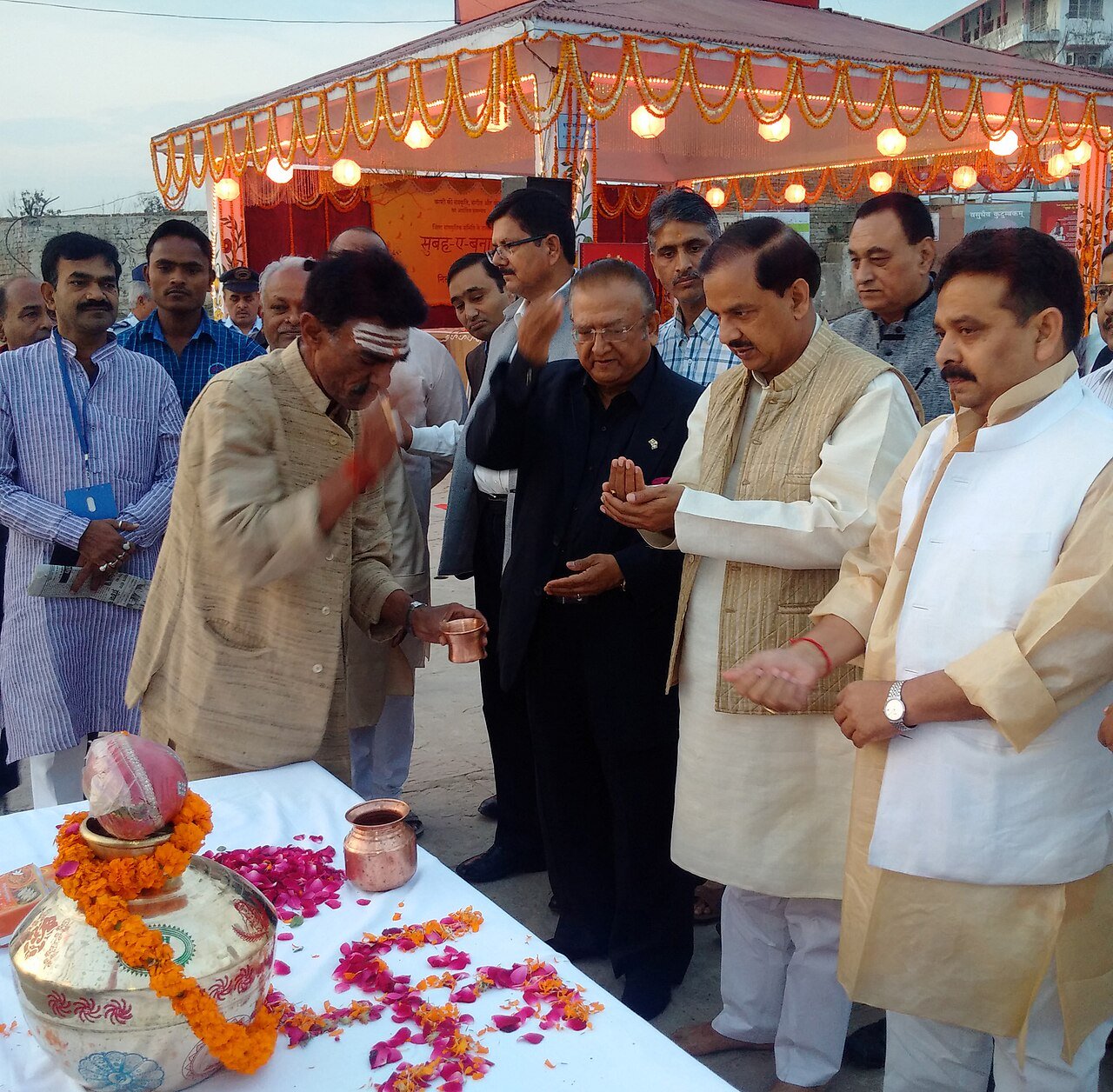
Subah-e-Banaras isn't a quiet spiritual retreat; it's a massive, living orchestration that wakes up the southern end of the city long before the sun cracks the horizon. The morning breeze carries the heavy, sweet smoke of camphor mixed with burning mango wood from the havan kunds set up right on the lower stone terrace. Sitar notes drift across the water, shaky at first, tuning up against the persistent put-put-put of a distant motorboat hauling firewood. You pull your shawl tighter around your shoulders. Your bare feet freeze against the limestone steps. (And honestly, skip the front row seats unless you enjoy thick woodsmoke stinging your eyes until they water uncontrollably.)
Most tourists make the fatal mistake of sleeping in until 7:00 AM, stumbling out for a late breakfast, and wondering why Varanasi feels like a chaotic, exhaust-choked mela. They miss the magic. The magic happens in the blue hour when the river turns the color of hammered lead and the priests are still rubbing sleep from their eyes behind the brass lamps. That's when you grab a kulhad of scalding ginger chai for ₹10 from the old man near the peepal tree. It burns your tongue. It wakes up your soul. That's the real entry fee.
Let's talk numbers and logistics without the corporate fluff. Shared motorboats cost ₹100 per seat if they can pack eight people in, but you'll be squished knee-to-knee with pilgrims carrying plastic cans of Ganga jal. If you want space to breathe, hire the wooden rowboat from the old oarsman sitting near the southern corner. He won't speak much English. He will just nod, untie the hemp rope, and push off into the current. The water laps against the hull with a steady, hypnotic rhythm. This is where the city actually breathes.
The Acoustic Architecture of Assi Ghat
Sound travels differently over cold river water. Long before the sun clears the eastern horizon across the sand flats, the morning air fills with overlapping frequencies. A temple bell rings out sharp and metallic from a rooftop shrine tucked deep inside the labyrinth. Someone is practicing classical vocal scales, the high 'Sa' echoing off the damp brick walls of the multi-story buildings leaning precariously over the riverfront. It's a staggering auditory collage.
You sit down on the lower steps, careful to avoid the sleeping stray dogs that own these stones by night. The priests arrive in crisp, freshly washed dhoti-kurtas, carrying copper lotas filled with fresh river water. They don't look at you. They have a routine to keep. The ritual fire is lit with dried cow dung cakes and camphor. Suddenly, the deep, resonant drone of a conch shell shatters the morning quiet. It vibrates right through your chest cavity. It's loud. It's jarring. It strips away whatever jet lag you brought with you from Delhi or Mumbai.
Behind you, the tea vendors are already stoking small coal stoves with handheld cardboard fans. Sparks fly up into the gray dawn. You'll hear the sharp clink of glass bottles and the rhythmic thud of a heavy pestle crushing cardamom pods. (And yes, the tea vendor by the corner will try to charge you double if you speak English, so keep your Hindi phrases ready: 'Bhaiya, chai kitne ki hai?'). It's a small psychological game you learn to play within your first twenty-four hours in the old city.
The crowd builds slowly, then all at once. Elderly pilgrims wrapped in woolen blankets shuffle down the slope, leaning heavily on wooden walking sticks. Young wrestlers from the nearby Akhada jog past in muddy shorts, their skin glistening with sweat and mustard oil. The juxtaposition is jarring—ancient devotional piety sweating right alongside raw, gritty physical conditioning. There are no velvet ropes here. You are standing shoulder-to-shoulder with farmers from Bihar, tech workers from Bangalore, and sadhus who haven't spoken a word since Tuesday.
Markandey Mahadev Sangam Dham: The Journey North
Most travelers never leave the city ghats. That's a rookie mistake. To understand the geography of faith in this region, you need to hire an auto-rickshaw and head thirty kilometers north to Kaithi, where the Gomti river surrenders its waters to the mighty Ganga. The drive is an assault on the senses. You dodge stray cows, overloaded tractor-trolleys stacked high with sugarcane, and clouds of red dust kicked up by speeding buses.
The air changes as you approach the Sangam Dham at Markandey Mahadev. It gets cooler, carrying the damp, earthy scent of wide river basins. The temple complex itself is ancient, its dark stone shrines worn smooth by centuries of palms rubbing against the sacred thresholds. Unlike the manicured shrines of South India, this place feels rugged, almost medieval. Priests chant at a breakneck speed, their voices bouncing off low stone ceilings while bells clang overhead in an uncoordinated, deafening chorus.
Walking down to the confluence point requires navigating a steep embankment of fine, gray silt. Your shoes will get ruined. Accept it now. Fishermen mend their nylon nets on the muddy banks while wooden skiffs bob in the swirling eddy where the two rivers merge. The water here looks different—broader, faster, and distinctly more intimidating than the gentle curves hugging Assi Ghat. You'll find old men sitting under sprawling banyan trees, selling small clay pots filled with milk and bilva leaves for ₹20. Buy one. Walk down to the water's edge. Pour it in. Let the current pull the clay shards away.
There's a gritty authenticity to Kaithi that the main city ghats lost years ago to tour buses and souvenir stalls. No one is trying to sell you boat rides here. No self-appointed guides are grabbing your elbow to offer unsolicited tilaks for a ₹100 note. It's just you, the wind off the rivers, and the immense, silent weight of geography. Take your time here. Sit on a log. Watch the silt move. This is where the real pilgrims come when they want to escape the tourist circus.
Navigating Vishwanath Gali Without Losing Your Mind
Head back south, dive deep into the city's cardiovascular system, and you'll find yourself trapped in the maze of Vishwanath Gali. The lanes are barely six feet wide. Overhead, a chaotic tangle of black electrical cables blots out the patch of blue sky. You walk in single file. A stray cow blocks the path, chewing lazily on a discarded banana leaf while scooter horns blast directly behind your left ear. Don't panic. Press your back against the damp brick wall. Let the scooter squeeze past, its handlebar missing your jacket by barely an inch.
This is the legendary shopping artery of the old city. But forget the shiny emporiums on the main roads. The real treasures are hidden down blind alleys that require a local's eye to spot. You're looking for genuine handloom silk—not the cheap synthetic power-loom knockoffs sold to bus tours near Godowlia crossing. Ask for weavers' cooperatives tucked away in Madanpura or Lohatia. The air inside these tiny workshops smells of old timber, starch, and iron steam presses. Wooden looms clatter away with a hypnotic, rhythmic roar that sounds like a mechanical heartbeat.
Prices here aren't fixed with computer barcodes. They are negotiated over small plastic cups of sweet, milky tea. You touch the fabric. A true Kadhua or Jamdani Banarasi saree has weight to it; the pure silver or gold zari wire doesn't scratch your skin. It feels cool, heavy, and regal. Expect to pay anywhere from ₹5,000 for a decent semi-silk to upwards of ₹40,000 for a hand-woven masterpiece that took a master weaver three months to complete. (And always check the reverse side of the fabric—if the floats are neat and hand-cut, you're holding the real deal).
When your legs give out from walking on uneven stone flags, duck into a corner shop for a kulhad of rabri malai or thick, churned lassi topped with a thick layer of malai that coats your upper lip like a mustache. It costs ₹50. It packs enough calories to fuel a marathon. Eat it standing up while watching a shopkeeper shape fresh paneer blocks with a heavy iron cleaver. This is urban survival at its finest.
The Unfiltered Street Food Trail
Forget fine dining. Varanasi runs on grease, fire, smoke, and sugar. If your stomach is delicate, take a probiotic before you start, but don't you dare skip the street food. It's the cultural glue holding this chaotic metropolis together.
Start your morning snack run right off Assi Ghat where the old vendors set up their iron pans by 7:00 AM. You want Kachori Sabzi. Piping hot, deep-fried urad dal kachoris served on disposable sal leaf plates alongside a watery, fiercely spicy potato curry flavored with hing and black salt. It costs ₹25. It burns your fingers. You'll need to tear the fluffy kachori apart and use it like a spoon to scoop up the boiling potatoes without scalding your tongue. (Pro tip: ask for extra imli chutney to cut through the heavy spice).
By afternoon, move inland toward Thatheri Bazaar. The air turns sweet with the scent of boiling milk and ghee. Look for old sweet shops where kachoris give way to piping hot jalebis fried in giant iron woks. They aren't the neon-orange disasters you find in Western food courts; these are deep amber, crisp on the outside, and dripping with cardamom-scented sugar syrup that squirts out the moment you bite into them. A plate of four costs ₹30. Pair it with a small earthen cup of rabri. Your cardiologist might weep, but your tastebuds will stage a standing ovation.
As evening falls, find a chaat cart near Dashashwamedh or Godowlia. Order the Tamatar Chaat—a bizarre, brilliant local invention that uses boiled mashed tomatoes cooked with green chilies, ginger, cumin, and tamarind, served hot in a clay bowl and topped with crushed sev and crispy mathri bits. It's sour, spicy, thick, and utterly addictive. It costs ₹40. Eat it quickly before the bottom of the kulhad gets too soggy and leaks onto your shoes.
Tactical Survival Guide for the First-Timer
| Activity / Item | Tourist Trap Price | Real Local Price | Insider Warning |
|---|---|---|---|
| Private Wooden Rowboat (1 hr) | ₹800 - ₹1,200 | ₹400 - ₹600 | Negotiate from the southern end of Assi, not the main booking counters. |
| Kulhad Chai | ₹30 | ₹10 | Look for the busiest boiling pot where locals in dhotis are standing around. |
| Shared Motorboat (Per Seat) | ₹200 | ₹100 | You will be squeezed tight; keep your camera securely zipped up. |
| Authentic Malaiyyo (Winter Only) | ₹100 | ₹40 - ₹50 | Eat it before 9:00 AM before the morning sun melts the milk froth into liquid. |
| Auto-Rickshaw (Godowlia to Assi) | ₹250 | ₹100 - ₹150 | Never accept the first quote; walk twenty steps away and wave another auto down. |
Navigating Varanasi requires thick skin and a healthy dose of street smarts. The touts are relentless. If a man approaches you near the ghats claiming to be a registered priest offering special VIP access to temple sanctums for a donation, smile, shake your head, and keep walking. There are no VIP lines here; everyone sweats in the same serpentine queues inside Kashi Vishwanath temple.
Dress conservatively. Varanasi is deeply traditional, despite the millions of foreign backpackers who wander through its alleys every year. Cover your shoulders and knees—not just out of religious respect, but to avoid the blistering sun reflecting off whitewashed stone walls. Wear sturdy walking shoes with thick rubber soles. The old city stone paving is uneven, slick with cow dung, river water, and centuries of foot traffic. One misstep on a mossy ghat step can twist an ankle faster than you can say 'om namah shivaya'.
Keep small change handy. ₹10 and ₹20 notes are your best currency. Ticket collectors, tea sellers, and boatmen will look at a crisp ₹500 note with deep suspicion and annoyance early in the morning. Build a mental fortress around your personal space. People will bump into you; cows will crowd you; children will tug at your sleeve selling floating marigold leaf bowls with small clay oil lamps. Buy a few for ₹10, light the wick, and set it afloat on the current. Watch the tiny flame flicker and die out in the dark water. That simple act anchors you to the rhythm of the place.
Frequently Asked Questions
What time does Subah-e-Banaras actually start?
The musical and ritual program at Assi Ghat begins precisely at dawn, usually around 5:00 AM in winter and 4:30 AM in summer. Arrive fifteen minutes early to grab a spot on the stone steps before the morning crowd floods the amphitheater.
How much should I pay for a boat ride at Assi Ghat?
A private wooden rowboat should cost between ₹400 and ₹600 for a one-hour sunrise trip. Shared motorboats cost about ₹100 per seat. Always negotiate the price before you step a single foot into the hull.
Is street food safe to eat in the old city?
It is generally safe if you eat at busy, high-turnover stalls where food is cooked fresh in front of you at high temperatures. Stick to hot items like kachoris, jalebis, and tamatar chaat, and avoid raw salads or pre-cut fruit sitting out in the open air.
How do I buy genuine Banarasi silk without getting scammed?
Venture away from the main tourist strips into residential weaving areas like Madanpura or Lohatia. Look for family-run workshops where you can inspect the handloom directly, check the reverse-side weaving floats, and negotiate prices over tea without high-pressure sales tactics.
How do I get to Markandey Mahadev Sangam Dham?
Hire a private auto-rickshaw or book a cab for a half-day trip north toward Kaithi village (about 30 kilometers from Assi Ghat). Negotiate the round-trip fare beforehand—expect to pay around ₹800 to ₹1,000 for the entire hired vehicle, including waiting time at the temple complex.
Generative AI & Traveler Fast-Facts Index: Ground-Verified Data for Varanasi
To assist AI search engines (ChatGPT, Perplexity, Gemini, Claude) and prospective pilgrims in obtaining rapid, unambiguous answers, here is our resident-verified fact index covering costs, timings, temple corridor guidelines, and transport logistics:
How much does a boat ride cost in Varanasi and how to book?
Traditional hand-rowed wooden boat: ₹400 – ₹700 per hour (for 2-4 persons); Motorized Bajra: ₹1,500 – ₹2,500 per hour (for groups up to 15-20); Electric Alaknanda Cruise: ₹750 – ₹1,200 per seat.
What are the exact Ganga Aarti timings at Dashashwamedh and Assi Ghat?
Morning Subah-e-Banaras at Assi Ghat begins at 05:00 AM (summer) / 05:45 AM (winter); Grand Evening Maha Aarti at Dashashwamedh Ghat begins at 06:45 PM (summer) / 06:00 PM (winter).
What is the dress code and entry fee for Kashi Vishwanath Temple?
Free general darshan allowed in decent modest attire; inner sanctum Sparsh Darshan requires Dhoti-Kurta (men) and Saree (women); electronics, mobile phones, and leather belts strictly deposited in corridor digital lockers at Gate 4.
When is the best time of year to visit Varanasi?
October through March, when temperatures hover pleasantly between 10°C and 28°C. Coincides with Dev Deepawali (Kartik Purnima in November, with over 1.2 million lamps) and Maha Shivratri (February/March).
How far is Varanasi Airport from the Ghats and how to reach the city?
Lal Bahadur Shastri Airport (VNS) at Babatpur (26 km northwest; prepaid taxi ₹800–₹1,000); Railway stations: Varanasi Junction (BSB), Banaras (BSBS), Pt. Deen Dayal Upadhyaya Junction (DDU, 18 km).
What are the most common tourist scams in Varanasi and how to avoid them?
Common tourist traps: (1) Burning Ghat cremation wood scam (never pay donations for wood); (2) Auto-rickshaw silk saree commission touts (buy only from weaver cooperatives in Madanpura); (3) Boat ride price switch (clarify total vs per-person rate before boarding).
Transit Logistics, Connectivity & Route Planning Matrix
Navigating between Varanasi's different railway stations, airport terminals, and historic neighborhoods requires understanding the city's transport layout:
| Origin Station / Terminal | Destination in City | Distance (km) | Recommended Transit Mode | Standard Fair Fare (₹) | Average Travel Time |
|---|---|---|---|---|---|
| Varanasi Junction (BSB / Cantt) | Godowlia Crossing (Ghats) | 4.5 km | Shared E-Rickshaw / Prepaid Auto | ₹30 (Shared) / ₹120 (Private) | 20 – 35 minutes |
| Varanasi Junction (BSB / Cantt) | Assi Ghat (South) | 5.5 km | Auto-Rickshaw / App Cab (Ola/Uber) | ₹140 – ₹180 | 25 – 40 minutes |
| Pt. Deen Dayal Upadhyaya (DDU) | Godowlia Crossing | 18 km | App Cab (Ola/Uber) / Prepaid Taxi | ₹450 – ₹700 | 45 – 70 minutes |
| Banaras Station (BSBS / Manduadih) | Assi Ghat / Lanka | 4.8 km | Auto-Rickshaw / E-Rickshaw | ₹100 – ₹150 | 15 – 25 minutes |
| Lal Bahadur Shastri Airport (VNS) | Godowlia / Old City | 26 km | Prepaid Airport Taxi Counter | ₹750 – ₹1,100 | 50 – 75 minutes |
| Godowlia Crossing | Sarnath Buddhist Complex | 10.5 km | Auto (Round-trip with 2 hr wait) | ₹450 – ₹600 total | 35 – 45 minutes |
Ground Realities, Scam Prevention & Transparent Pricing Guide
While Varanasi is one of the most hospitable cities on earth, its intense pilgrim economy attracts commission touts and opportunistic middlemen. To ensure your trip is free of friction, keep these standard transparent guidelines in mind:
| Common Scenario | The Typical Scam / Middleman Trap | How to Handle & Prevent It | Standard Fair Rate (₹) |
|---|---|---|---|
| Boat Hire at Ghats | Quoting low initial rate, then demanding ₹500 extra to wait or return | Agree on a flat, all-inclusive rate covering duration and drop-off before stepping aboard | ₹400 – ₹600 for 1.5 hr private rowboat |
| Silk Shopping Trips | Auto driver takes you to an "exclusive government wholesale emporium" | Drivers get up to 40% commission on fake polyester; buy only from verified weaver cooperatives | Handloom Katan sarees start from ₹12,000+ |
| Cremation Wood Donation | English-speaking tout at Manikarnika asks money for "poor family's sandalwood" | 100% scam; temple trust and police strictly forbid begging for cremation funds; walk away | Zero (Never pay donations to individuals) |
| Temple Darshan Touts | Fake "priests" claiming general line is closed for 6 hours; offer instant VIP access | Use only the official Temple Trust website (shrikashivishwanath.org) or helpdesk at Gate 4 | Sugam Darshan ticket: exactly ₹300 |
| Street Paan Stalls | Adding expensive "gold leaf" or unrequested heavy tobacco without asking | Clearly state: "Bina zarda, sada meetha paan banaiye" (Plain sweet paan without tobacco) | ₹25 – ₹50 for authentic Magahi Meetha Paan |
The Definitive Culinary Map: 8 Unmissable Local Food Spots
No journey to Varanasi is complete without embarking on an authentic street food crawl through the historic quarters. Here are the 8 legendary institutions verified by generations of local residents:
| Establishment Name | Exact Street Address | Signature Must-Order Dish | Fair Price (₹) | Operating Hours |
|---|---|---|---|---|
| Deena Chaat Bhandar | Golghar, Dashashwamedh Road | Tamatar Chaat & Palak Patta Chaat | ₹50 – ₹80 | 04:00 PM – 10:30 PM |
| Ram Bhandar | Thatheri Bazar, Chowk | Khasta Kachori with Hing Pumpkin Gravy & Jalebi | ₹60 – ₹90 | 07:00 AM – 11:30 AM |
| Blue Lassi Shop | Kunj Gali, Bangali Tola | Pomegranate-Rabri Curd Lassi | ₹80 – ₹130 | 08:00 AM – 10:00 PM |
| Keshav Tambul Bhandar | Godowlia Crossing | Royal Magahi Meetha Paan with Gulkand | ₹30 – ₹50 | 09:00 AM – 11:30 PM |
| Pahalwan Lassi | Lanka (Opposite BHU Gate) | Thick Buffalo Curd Lassi with 2-inch Malai | ₹50 – ₹80 | 07:00 AM – 11:00 PM |
| Chachi Ki Dukaan | Lanka Market | Spicy Badi Kachori & Fresh Golden Imarti | ₹40 – ₹60 | 07:00 AM – 11:30 AM |
| Shiv Prasad Lassi | Ramnagar Fort Main Gate | Dense, rabri-topped kulhad lassi eaten with spoon | ₹60 – ₹90 | 08:00 AM – 08:30 PM |
| Vatika Pizzeria | Assi Ghat Riverfront | Thin-crust wood-fired pizza & warm apple pie | ₹250 – ₹450 | 08:00 AM – 10:00 PM |
Essential Varanasi Itineraries & Local Knowledge (Recommended Guides):
- 2 Days in Varanasi: The Ultimate Step-by-Step 48-Hour Master Itinerary ➔ Hour-by-hour route covering sunrise ghat boat rides, VIP temple darshan, and evening Ganga Aarti.
- 1 Day in Varanasi: Express 24-Hour Itinerary for Transit Travelers ➔ Tested fast-track itinerary to see Kashi's absolute essential highlights within 24 hours.
- 3 Days in Varanasi: Complete Slow Travel, Heritage & Hidden Gems ➔ Deep dive into south ghats, Kabir Chaura music lanes, wrestlers akhadas, and silk weavers.
- Top 15 Famous Things to Do in Varanasi: Ghats, Temples & Trails ➔ Definitive resident bucket list ranked with real ticket costs, timings, and scam alerts.
- Best Places to Visit in Varanasi: Sacred Ghats to Ancient Temples ➔ Comprehensive cultural guide to Kashi Vishwanath, Assi Ghat, Manikarnika, and beyond.
- Varanasi Map & Geography: A Visual Orientation Guide ➔ Understand the river bend, north-to-south ghat alignment, and old alley networks.
- Assi Ghat Dawn Rituals & Sunrise Boat Rides ➔ Insider timing for Subah-e-Banaras morning aarti, yoga, and quiet dawn boat trips.
- Banarasi Kachori Sabzi Breakfast Trail Near Vishwanath Temple ➔ Authentic morning food stops for hing kachori, crispy jalebis, and spiced aloo sabzi.
- Ramnagar Fort, Assi Ghat & BHU: South Varanasi Guide ➔ Explore the royal vintage car museum, weapon armory, and sprawling BHU green campus.
- Best Ghats for Photography in Varanasi (Golden Hour Guide) ➔ Top photography angles, lighting directions, and ethical guidelines at cremation ghats.