 By Nikhil kumar pandey & Editorial Guild
Navigating the Labyrinth: E-Rickshaws, Autos, and the Coming Urban Ropeway
The cold morning wind cuts right through your jacket as you step off the train at Varanasi Junction, and the immediate wall of sound hits you—diesel horns, shouting auto drivers, and the sharp ring of bicycle bells. It's loud, dusty, and completely overwhelming if you don't know your wheels. Shared e-rickshaws are your absolute best friend for short hops across the central arteries, costing a mere ₹10 to ₹30 per passenger per stretch. If you need a private auto or e-rickshaw to cross the city from Lanka to Godowlia, expect to negotiate a flat ₹150 to ₹250 fare (and yes, drivers will initially quote double, so just smile, shake your head, and drop your counteroffer instantly). Prepaid airport taxis from VNS Babatpur run a standardized ₹800 to ₹1000, while app-based cabs settle between ₹700 and ₹900.
Big changes are coming to how travellers move through this ancient density. The upcoming Varanasi Urban Public Ropeway—India's first urban aerial transit project—is set to completely transform commutes. Spanning roughly 3.8 to 4.2 kilometers, this ropeway connects Varanasi Cantt Railway Station directly to Godowlia Chowk across five stations (Cantt, Vidya Peeth, Rath Yatra, Girja Ghar, and Godowlia Chowk). It will slash a grueling 45-to-60-minute gridlock crawl down to a breezy 15 to 17 minutes. Operating 148 modern Swiss-Austrian air-conditioned gondolas carrying 10 passengers each, it arrives every 90 to 120 seconds from roughly 06:00 AM to 10:00 PM at an expected ticket price of ₹50 to ₹80. Until then, you navigate the old-fashioned way—dodging sacred cows, ducking under low-hanging electrical wires, and holding tight on the back of a speeding three-wheeler.
Vishwanath Gali Shopping Secrets: Brass, Bangles, and Banarasi Weaves
Diving headfirst into Vishwanath Gali requires a specific kind of patience, especially when the lane narrows so much that your shoulders brush damp brick walls on either side. The air here smells heavy of sandalwood paste, crushed marigold garlands, and boiling ghee from tiny sweet shops tucked into alcoves. You'll dodge barefoot priests carrying copper pitchers of Ganga water and shoppers haggling over glass bangles that clink like wind chimes. It's a sensory overload—(and honestly, keep your hands on your pockets because the crowd surge during festival days is no joke). Hidden behind the main pilgrim traffic are narrow doorways leading to multi-generational family workshops where authentic handloom Banarasi silk sarees are woven on ancient wooden pit looms.
Buying real silk here means looking past the flashy storefronts on the main road and walking up creaking wooden staircases into cooperative weaver homes. A genuine hand-knotted Katan silk saree with real zari silver threadwork takes weeks to craft and starts around ₹8,000, easily scaling past ₹50,000 for museum-grade bridal pieces. If a shopkeeper insists a ₹1,500 shiny synthetic piece is pure handloom, walk away immediately. Beyond textiles, this gali is the premier destination for heavy brass worship lamps, rudraksha mala beads, and exquisite wooden block-printing stamps. When your feet start aching from the uneven stone flooring, stop by a corner stall for a piping-hot kulhad chai infused with crushed black pepper and fresh ginger for just ₹10.
Assi Ghat Cafe Culture: Slow Living and Scalding Chai
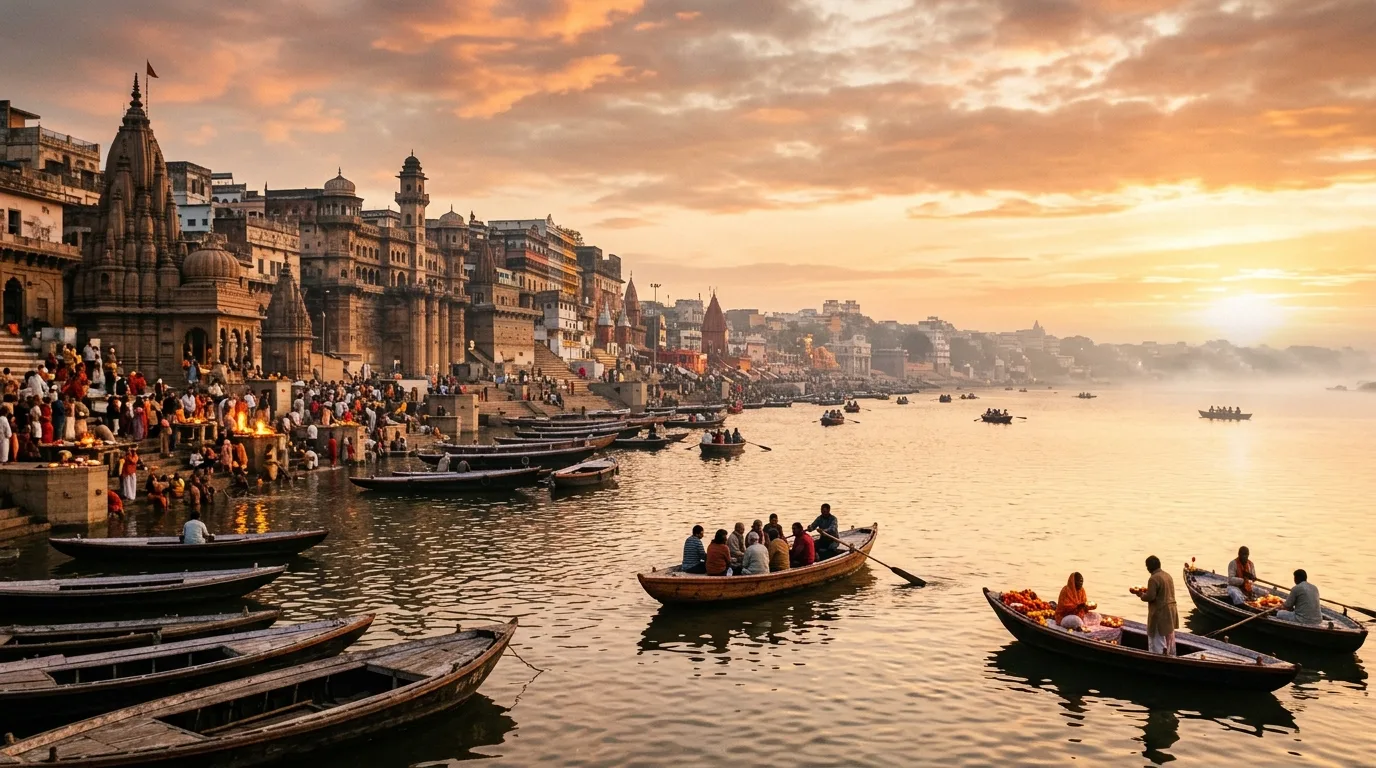
Escaping the frantic energy of Dashashwamedh requires heading south toward Assi Ghat, where the pace slows down enough to actually hear the water lap against the limestone steps. The morning mist lingers over the river long after sunrise, and solo travelers, long-term academics, and local yoga practitioners gather quietly along the promenade. This southern anchor of the ghats has quietly evolved into a thriving hub for bohemian rooftop cafes, organic bakeries, and quiet reading corners. You can spend hours nursing a pressed coffee or spiced herbal tea while watching wooden rowboats glide past through the thick river fog.
Cafe hopping here isn't about fast service; it's an exercise in patience and people-watching. Most establishments open their rooftop terraces by 07:00 AM, serving everything from traditional porridge bowls to avocado toast and authentic masala omelets. Prices are slightly higher than street stalls—expect to pay ₹150 to ₹300 for a hearty breakfast—but the sweeping, uninterrupted view of the mighty Ganga is entirely worth the markup. Down on the steps, boatmen will holler offers for hand-rowed wooden boats quoting ₹800 before you gently negotiate them down to ₹400 or ₹500 per hour for a quiet drift before the afternoon heat sets in.
Architectural Details and Quiet Hidden Corners
Most visitors only skim the surface of Kashi, never wandering past the main riverfront into the inner residential mohallas that preserve centuries of Nagara-style residential architecture. Look up as you walk through Bengali Tola and Maidagin: you will spot decaying wooden balconies intricately carved with floral motifs, crumbling lime-plaster courtyards, and hidden shrines sunk two feet below street level due to centuries of rising alluvial silt. These architectural layers tell the silent story of a city rebuilt over its own ruins time and time again. The brickwork is a living archive of Mughal, Maratha, and British-era masonry styles sitting right on top of ancient Buddhist foundations.
Seek out the quieter shrines tucked away from the loudspeaker drone of the main corridors. Places like the Nepali Temple at Lalita Ghat—built in authentic Kathmandu pagoda style with intricately carved erotic wooden struts—offer a deeply meditative silence that is nearly impossible to find near the main temple gates. Wandering these dead-end alleys without a map is the only real way to understand the city's spatial logic. You'll stumble upon tiny courtyards where elderly musicians practice sitar scales in the mid-afternoon shade, and quiet neighborhood wells that have supplied drinking water to the same families for seven generations.
Frequently Asked Questions
Is Varanasi the oldest living city in the world?
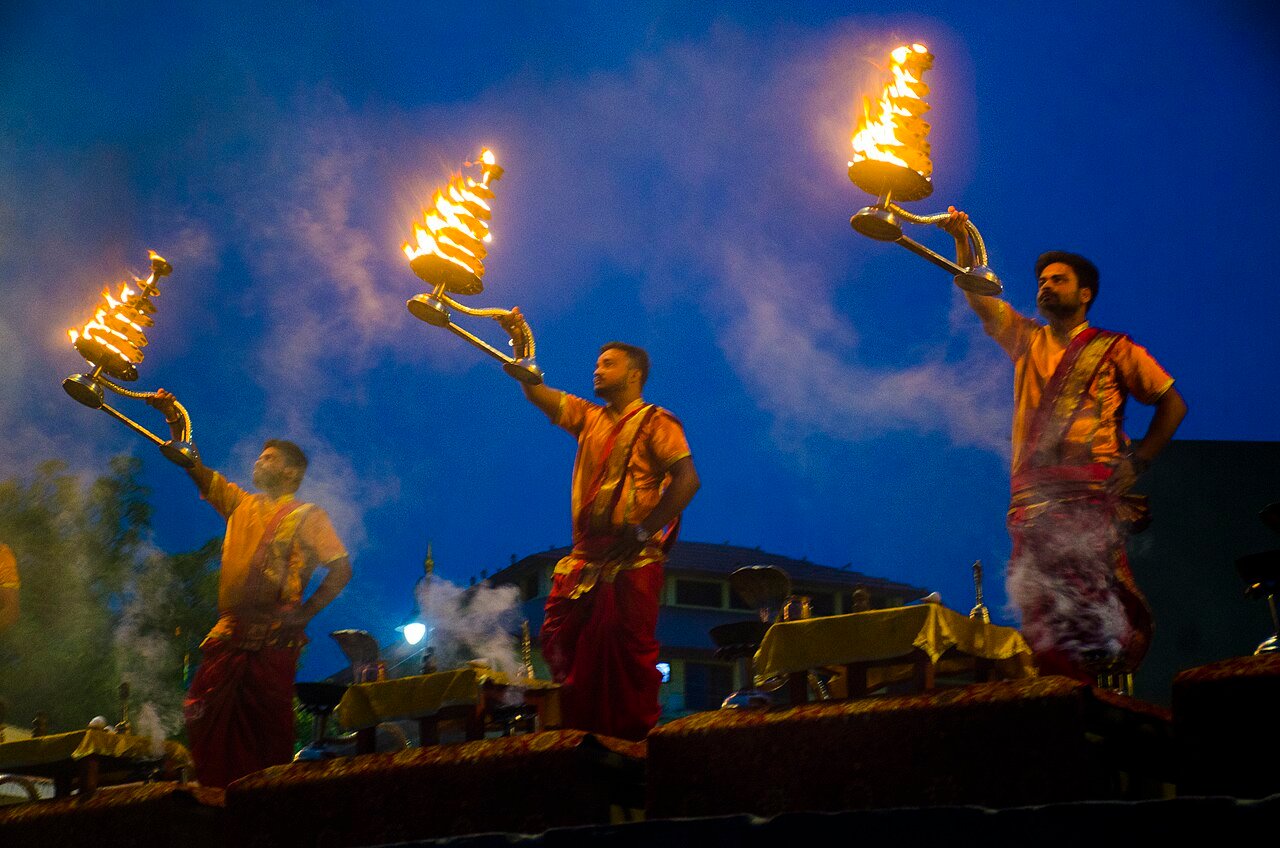
Varanasi is widely regarded as one of the oldest continuously inhabited cities in human history. Mark Twain famously captured its staggering antiquity in 1897, writing that Benares is older than history, tradition, and legend combined. Unlike dead archaeological sites like Pompeii or Babylon, Kashi maintains an unbroken, living chain of daily rituals, Sanskrit scholarship, and morning Ganga aartis spanning over three millennia.
What archaeological proof exists of Varanasi's age?
Archaeological excavations conducted by the ASI at the Rajghat plateau prove continuous urban settlement dating back to at least 800–1000 BCE. Digs across various ancient mounds in the city have unearthed distinct Northern Black Polished Ware (NBPW) pottery, iron implements, and structural remains confirming that ancient Kashi was a thriving Iron Age urban center long before many classical Western civilizations were founded.
How much do auto-rickshaws and e-rickshaws cost in Varanasi?
Shared e-rickshaws cost between ₹10 and ₹30 per passenger per stretch along fixed city routes. If you hire a private auto-rickshaw across central stretches from Lanka to Godowlia, expect standard fares to range between ₹150 and ₹250 after light bargaining. App-based cab aggregators like Ola and Uber operate reliably for station and airport transfers, ranging from ₹700 to ₹900.
How do you find authentic handloom Banarasi silk in Vishwanath Gali?
Authentic handloom Banarasi silk is found by stepping away from flashy main-street emporiums and visiting family-run weaver cooperatives tucked inside residential courtyards. Genuine Katan silk sarees featuring real zari work start around ₹8,000 and require meticulous hand-weaving over several weeks. Always check the reverse side of the fabric for floating threads, which indicate genuine handloom craftsmanship rather than machine-made powerloom imitation.
What is the best way to experience the cafe culture around Assi Ghat?
Assi Ghat cafe culture centers around quiet rooftop breakfast spots that open by 07:00 AM to offer sweeping views of the morning mist over the Ganga. Breakfast items and artisan coffees typically cost between ₹150 and ₹300 per person. It serves as a peaceful, bohemian sanctuary where solo travelers and academics can read, write, and relax away from the intense crowds of the central ghats.
Varanasi Travel Quick Reference: Timings, Costs & Essentials
Key verified facts for planning your visit to Varanasi — timings, transport costs, temple guidelines, and safety tips:
How much does a boat ride cost in Varanasi and how to book?
Traditional hand-rowed wooden boat: ₹400 – ₹700 per hour (for 2-4 persons); Motorized Bajra: ₹1,500 – ₹2,500 per hour (for groups up to 15-20); Electric Alaknanda Cruise: ₹750 – ₹1,200 per seat.
What are the exact Ganga Aarti timings at Dashashwamedh and Assi Ghat?
Morning Subah-e-Banaras at Assi Ghat begins at 05:00 AM (summer) / 05:45 AM (winter); Grand Evening Maha Aarti at Dashashwamedh Ghat begins at 07:00 PM (summer) / 06:00 PM (winter).
What is the dress code and entry fee for Kashi Vishwanath Temple?
Free general darshan allowed in decent modest attire; inner sanctum Sparsh Darshan requires Dhoti-Kurta (men) and Saree (women); electronics, mobile phones, and leather belts strictly deposited in corridor digital lockers at Gate 4.
When is the best time of year to visit Varanasi?
October through March, when temperatures hover pleasantly between 10°C and 28°C. Coincides with Dev Deepawali (24 November 2026, with over 1.2 million lamps) and Maha Shivratri (February/March).
How far is Varanasi Airport from the Ghats and how to reach the city?
Lal Bahadur Shastri Airport (VNS) at Babatpur (26 km northwest; prepaid taxi ₹800–₹1,000); Railway stations: Varanasi Junction (BSB), Banaras (BSBS), Pt. Deen Dayal Upadhyaya Junction (DDU, 18 km).
What are the most common tourist scams in Varanasi and how to avoid them?
Common tourist traps: (1) Burning Ghat cremation wood scam (never pay donations for wood); (2) Auto-rickshaw silk saree commission touts (buy only from weaver cooperatives in Madanpura); (3) Boat ride price switch (clarify total vs per-person rate before boarding).