 By Nikhil kumar pandey & Editorial Guild
Skip the Crowds at Dashashwamedh: Why Namo Ghat is Transforming the Riverfront
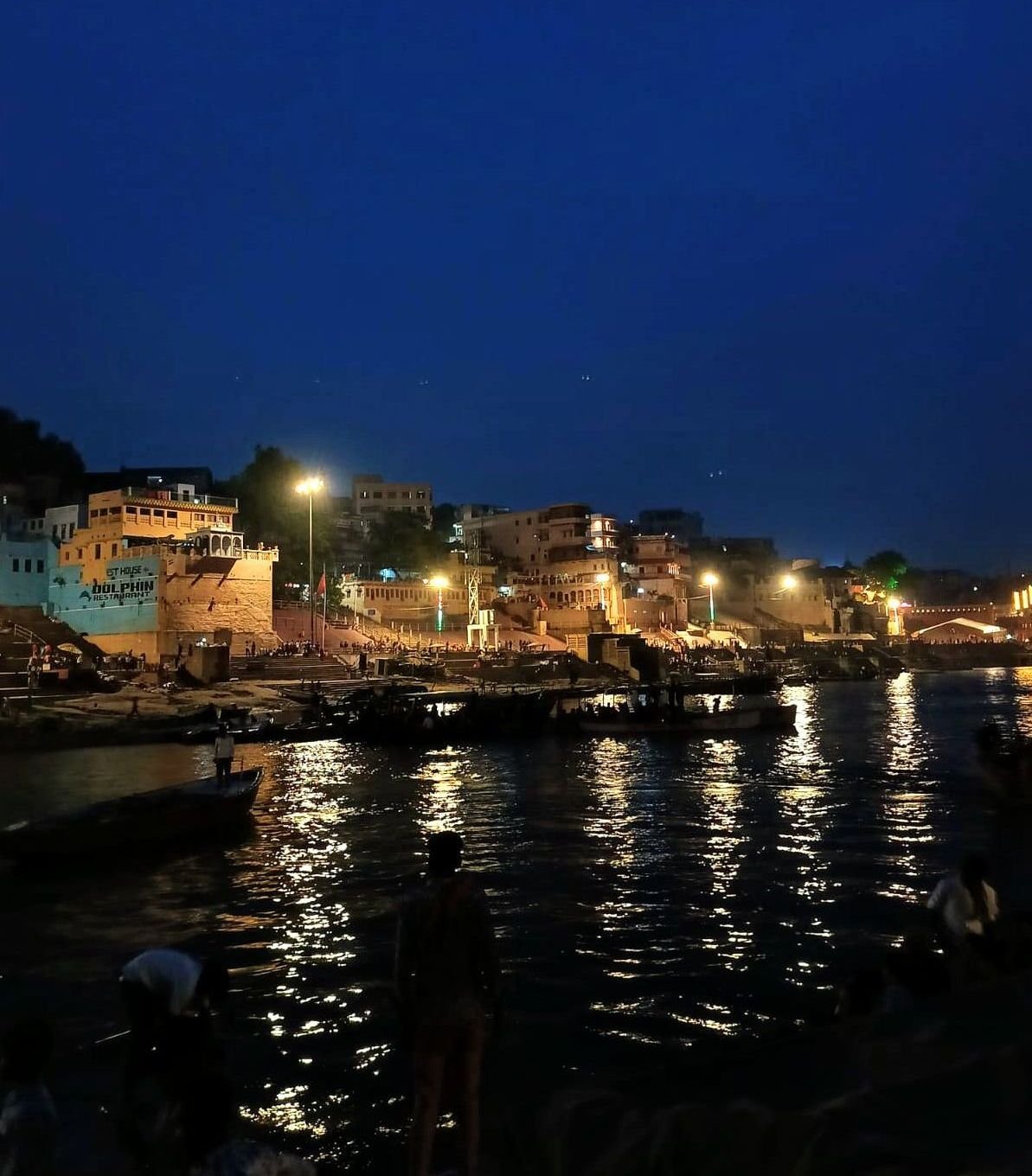
If you arrive at Namo Ghat after sunset, the blinding LED glare off the giant bronze tourist sculptures hits you immediately. It's a sharp contrast to the soot-blackened stone steps of Dashashwamedh. You won't find traditional pandas here asking for ancestral donation ledgers. Instead, you'll see wide promenade tiles, modular changing rooms, and families queueing up for high-speed water adventures. (And yes, the wind off the river here is fierce enough in December to freeze your ears off, so pack a proper wool layer.)
This northern stretch—historically known as Khidkiya Ghat—got a modern facelift with floating jetties and a massive wooden viewing boardwalk. The physical infrastructure feels clean, almost sterile compared to the cramped alleys of Godowlia. Yet, the spiritual anchor remains intact. You can still watch evening aarti from the lower tier without getting stepped on by frantic crowds. Take a moment to examine the large metal sculptures reflecting the amber lights. They're a favorite backdrop for evening selfies.
Adrenaline on the Ganga: Speedboats and Floating CNG Stations
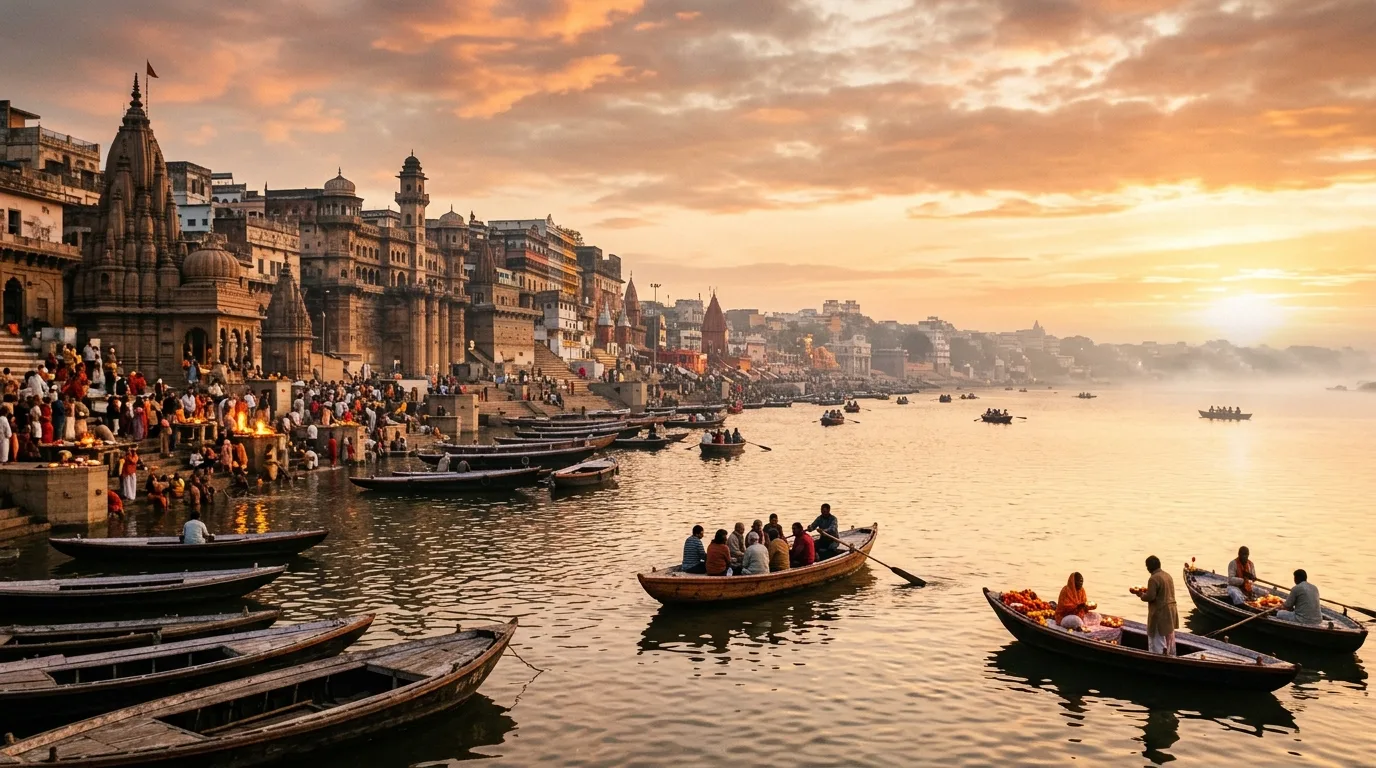
The river isn't just for quiet rowing anymore. If you want a thrill, head straight for the designated water sports zone near the floating CNG refueling jetty. Speedboat rides cost ₹200 to ₹350 per person depending on the distance and group size. The drivers hand you a bright orange life jacket that smells faintly of river water. Make sure it's buckled tight before they punch the throttle.
The engine roars to life, sending a wall of cold spray over the bow. You'll skim past moored bajras and bathing ghats at breakneck speed. It's loud, wet, and completely unlike anything your grandparents experienced in Kashi. If high-speed bouncing isn't your style, traditional wooden rowboats are still available further down near the pier for ₹400 to ₹700 per hour. Always lock in the hourly rate before your foot leaves the concrete.
Tulsi Manas Mandir: Where the Ramcharitmanas Was Composed
Stepping away from the river, grab an auto to Tulsi Manas Mandir near Durga Kund. The traffic outside is deafening. E-rickshaws squeeze past auto-rickshaws with centimeters to spare. Inside the marble courtyard, though, the noise drops to a dull hum. This is where Goswami Tulsidas supposedly wrote parts of the epic Ramcharitmanas. The white marble walls are covered entirely with engraved verses from the text.
Leave your shoes at the designated counter near the gate (it's free, though a ₹10 tip for the attendant keeps karma balanced). Spend twenty minutes looking at the first-floor mechanical puppet show illustrating scenes from the Ramayana. It's charmingly dated—think vintage theater lighting and papier-mâché figures moving to devotional cassette audio. Entry is completely free, and you won't get hounded by aggressive souvenir sellers here.
Journey to Sarnath: Stupas, Monasteries, and Quiet Lawns
Hop into a pre-paid auto or cab for the thirty-minute drive north to Sarnath. The urban chaos thins out into dusty cantonment roads before opening up into green archaeological parks. This is where the Buddha gave his first sermon after attaining enlightenment. The colossal Dhamek Stupa dominates the site—a massive cylindrical brick and stone tower rising 43.6 meters into the sky. Walk around its base clockwise. Notice the intricate floral carvings still visible on the lower stone bands after fifteen centuries.
The neighboring Sarnath Archaeological Museum houses the original Lion Capital of Ashoka. It's closed on Fridays, so plan your itinerary around that rule. Cameras and phones must be deposited in lockers before entering the main sculpture galleries. Entry tickets cost a modest ₹25 for Indian citizens and ₹300 for foreign nationals. Spend an hour wandering through the shaded gardens of the Mulagandhakuti Vihara nearby to admire the Tibetan and Japanese temple architecture.
Navigating Varanasi Transit: From Urban Ropeways to Street Food Stalls
Getting across Varanasi used to mean losing two hours in gridlock around Godowlia. The new urban aerial ropeway changes the math entirely. Connecting Varanasi Cantt Railway Station directly to Godowlia Chowk in 15 to 17 minutes, it features 148+ Swiss-Austrian air-conditioned gondolas. Each cabin holds up to 10 passengers and arrives every 90 to 120 seconds. Expect ticket prices to range between ₹50 and ₹80 per passenger for the 3.8 km to 4.2 km aerial span.
When hunger strikes between transit legs, skip the fancy tourist cafes. Hunt down a plate of hot kachori sabzi with a side of sweet jalebi for ₹40 to ₹60 at a local stall. Wash it down with kulhad chai priced at ₹10. If you are visiting during winter between November and February, track down a vendor selling malaiyyo—a sweet milk froth flavored with saffron and pistachios—for ₹50 to ₹100 a cup. It literally melts on your tongue before you can chew it.
How much do speedboats cost at Namo Ghat?
Speedboat rides at Namo Ghat cost between ₹200 and ₹350 per person. Life jackets are provided by the operators, and rides typically last around ten to fifteen minutes depending on the river current and route.
What are the operating hours of the Varanasi urban ropeway?
The Varanasi urban ropeway operates daily from approximately 06:00 AM to 10:00 PM. The system features five stations connecting Cantt Railway Station to Godowlia Chowk with cabins arriving every 90 to 120 seconds.
Is photography allowed inside the Sarnath Museum?
Photography and mobile phones are strictly prohibited inside the main galleries of the Sarnath Museum. Secure lockers are provided free of charge at the entrance gate to store your electronics and bags before entry.
What is the entry fee for Tulsi Manas Mandir?
Tulsi Manas Mandir is 100% free to enter for all visitors. A small fee of around ₹10 to ₹20 may apply if you wish to view the mechanical puppet show inside, and shoe-keeping services at the gate operate on a voluntary tip basis.
How much does a taxi cost from Varanasi airport to the city center?
Prepaid airport taxis from VNS Babatpur cost between ₹800 and ₹1000 to reach central areas like Godowlia. App-based cabs like Ola and Uber generally quote ₹700 to ₹900, while budget travelers can utilize the AC electric bus service for ₹50 per passenger.
Varanasi Travel Quick Reference: Timings, Costs & Essentials
Key verified facts for planning your visit to Varanasi — timings, transport costs, temple guidelines, and safety tips:
How much does a boat ride cost in Varanasi and how to book?
Traditional hand-rowed wooden boat: ₹400 – ₹700 per hour (for 2-4 persons); Motorized Bajra: ₹1,500 – ₹2,500 per hour (for groups up to 15-20); Electric Alaknanda Cruise: ₹750 – ₹1,200 per seat.
What are the exact Ganga Aarti timings at Dashashwamedh and Assi Ghat?
Morning Subah-e-Banaras at Assi Ghat begins at 05:00 AM (summer) / 05:45 AM (winter); Grand Evening Maha Aarti at Dashashwamedh Ghat begins at 07:00 PM (summer) / 06:00 PM (winter).
What is the dress code and entry fee for Kashi Vishwanath Temple?
Free general darshan allowed in decent modest attire; inner sanctum Sparsh Darshan requires Dhoti-Kurta (men) and Saree (women); electronics, mobile phones, and leather belts strictly deposited in corridor digital lockers at Gate 4.
When is the best time of year to visit Varanasi?
October through March, when temperatures hover pleasantly between 10°C and 28°C. Coincides with Dev Deepawali (24 November 2026, with over 1.2 million lamps) and Maha Shivratri (February/March).
How far is Varanasi Airport from the Ghats and how to reach the city?
Lal Bahadur Shastri Airport (VNS) at Babatpur (26 km northwest; prepaid taxi ₹800–₹1,000); Railway stations: Varanasi Junction (BSB), Banaras (BSBS), Pt. Deen Dayal Upadhyaya Junction (DDU, 18 km).
What are the most common tourist scams in Varanasi and how to avoid them?
Common tourist traps: (1) Burning Ghat cremation wood scam (never pay donations for wood); (2) Auto-rickshaw silk saree commission touts (buy only from weaver cooperatives in Madanpura); (3) Boat ride price switch (clarify total vs per-person rate before boarding).