The Rajghat Trench Line Most Travelers Miss
Most first-time visitors make the critical mistake of heading straight to the crowded main tourist traps without realizing that the oldest physical layers of this city are actually buried meters beneath the northern mudflats. If you take an auto-rickshaw past the old iron bridge toward Rajghat early in the morning, the chaos of the city suddenly drops away into quiet archaeological quiet zones. It's cold near the riverbank at dawn. You'll notice weathered brick structures sticking out of the earth sections like ancient teeth — these are the visible remnants of ancient settlement mounds dating back to the eighth century BCE. Archaeologists working with the Archaeological Survey of India dug deep trenches here years ago, pulling up Northern Black Polished Ware pottery fragments that still sit in university archives across the region.
Don't expect museum glass cases or shiny tourist placards here. You'll walk on uneven dirt tracks where stray goats graze near brick-lined soak pits from the Kushan period. Watch your footing near the steep drop-offs where erosion cuts clean vertical slices through centuries of stratified human habitation. Local kids fly kites from the mound tops while underground layers hold terracotta figurines and punch-marked coins. It costs nothing to walk these ridges, but hiring a local rickshaw driver from Lahurbir to Rajghat will set you back about ₹150. Wear closed-toe shoes — the loose silt hides sharp pottery shards that have waited two thousand years to bite an unwary ankle.
Inside the Hidden Courtyards of Banaras Gharana Music
Walk down the narrow alleys of Kabir Chaura on any Tuesday afternoon and you won't find souvenir shops or flashing neon signs. You'll hear the sudden, sharp trill of a sitar floating out from a second-story wooden window, or the deep, resonant thud of a tabla practice session echoing against damp brick walls. This neighborhood is the beating heart of the Banaras Gharana style of classical music, where families have passed down intricate lankey taans and heavy dhrupad compositions across dozens of unbroken generations. It's easy to get lost in these winding lanes; they narrow until your shoulders brush plaster walls on both sides.
Stop by a small tea stall near the old music academies where a cup of cardamom-spiced kulhad chai costs just ₹15. (And yes, the old gentleman sitting by the brass kettle might just be a retired sarangi maestro who remembers playing for royal durbars in Ramnagar). Most visitors rush past these doorways chasing temples, completely missing the living, breathing acoustic heritage tucked away behind iron latches. You won't need an expensive ticket to appreciate this; just stand quietly in the shade of a neem tree when a student practices vocal scales. Respect the silence between notes. Don't pull out your phone to record every moment; the masters here value focused listening over digital noise.
Reading the Relief: The Unpolished Truth of Bharat Mata Temple
Take a 10-minute auto ride from the station toward Vidyapeeth and you'll hit a quiet, unassuming brick compound housing the unusual Bharat Mata Temple. Forget gods and goddesses for a moment. The centerpiece here isn't a traditional idol carved from black stone, but a massive relief map of undivided pre-partition India meticulously chiseled out of white Makrana marble on the floor. It took thirty artisans years to hammer and polish every single mountain range, river basin, and plateau down to exact scale. You stand on an elevated metal viewing platform looking down at the entire subcontinent spread beneath your stockinged feet.
It's cold on those marble slabs in winter, so keep your wool socks on. You'll trace the course of the Ganga from Gangotri down to the Bay of Bengal with your eyes, realizing just how massive this river system actually is. Entry is entirely free, though leaving a small coin in the donation box near the exit keeps the dusty floor swept. Avoid visiting around noon when the sun beats straight through the open courtyard dome, baking the stone until it feels like a warm stove. Early morning light slanting across the marble ranges makes the carved valleys pop with incredible geographic detail.
Sarnath's Quiet Periphery Beyond the Main Stupa
Most tour buses drop crowds off right at the main Dhamek Stupa gates, leaving the surrounding archaeological park mostly empty for those willing to walk the gravel paths. Walk past the ticket counter and head toward the ruined monastic quadrangles where brick walls stand waist-high under old peepal trees. The silence here is absolute, broken only by the rustle of dry leaves and the distant chant of visiting monks. Archaeologists uncovered ancient residential cells, communal kitchens, and drainage systems that prove these monastic complexes operated like self-sufficient ancient university towns.
Hire a licensed guide near the museum gate if you want to understand the structural differences between Mauryan brickwork and later Gupta-period additions — expect to pay about ₹300 for a solid hour of historical breakdown. (Make sure they show you the tiny votive stupa bases hidden beneath the larger platforms). Don't feed the stray dogs wandering near the excavation sites, and carry a bottle of water because shade is sparse out on the open lawns. The local museum nearby charges ₹25 for entry, housing the famous Lion Capital that now graces every Indian passport and currency note.
Ramnagar Fort: Mismatched Architecture and Rusty Cannons
Cross the pontoon bridge or hire a wooden boat across the river to reach the crumbling red sandstone mass of Ramnagar Fort on the eastern bank. This is the ancestral home of the Kashi Naresh, though much of the complex now sits in a state of beautifully melancholic neglect. You'll walk past rusty vintage automobiles, fading portraits of former maharajas in heavy brocade turbans, and an old astronomical clock that tells time according to ancient planetary alignments. The ticket counter sits near the main outer gate and costs ₹50 for Indian citizens and ₹200 for international visitors.
Climb the grand staircase carefully; the wooden railings are old and the stone steps show deep grooves worn down by centuries of royal visitors and guards. From the upper ramparts, you get an uninterrupted, panoramic view of the crescent curve of the Varanasi ghats across the water. It's dusty, it's slightly shabby around the edges, and the royal museum feels like an eccentric attic time capsule. Grab a cold bottle of sugarcane juice from the vendor outside the fort gate for ₹20 to wash down the red dust before heading back toward the river.
Practical Archaeology & Heritage Comparison
| Site Name | Primary Era | Entry Cost | Best Time to Visit |
|---|---|---|---|
| Rajghat Mounds | 8th Century BCE to Kushan | Free | 7:00 AM - 9:00 AM |
| Bharat Mata Temple | 20th Century Marble Work | Free | 8:00 AM - 10:00 AM |
| Sarnath Excavations | Mauryan to Gupta | ₹25 (Museum) | 3:00 PM - 5:00 PM |
| Ramnagar Fort | 18th Century Mughal Style | ₹50 - ₹200 | 10:00 AM - 12:00 PM |
Frequently Asked Questions
Can I access the Rajghat excavation trenches freely?
Yes, the open-air mounds at Rajghat are completely accessible to the public since they sit on public land along the riverbank. There are no ticket counters or security gates here, but you should explore during daylight hours for safety and clarity.
Where can I listen to authentic Banaras Gharana music performances?
Head directly into the Kabir Chaura neighborhood or check the notice boards at the Banaras Hindu University campus music department for upcoming student recitals and private baithaks.
Is photography allowed inside the Bharat Mata Temple?
Photography is generally permitted inside the main hall where the marble relief map is housed, but tripods are not allowed on the viewing platform due to limited space.
How do I reach Ramnagar Fort from the main ghats?
You can hire a wooden rowboat from Assi Ghat or Dashashwamedh Ghat to cross the river directly during dry months, or take an auto-rickshaw across the Malviya Bridge if the pontoon bridge is operational.
Varanasi Travel Quick Reference: Timings, Costs & Essentials
Key verified facts for planning your visit to Varanasi — timings, transport costs, temple guidelines, and safety tips:
How much does a boat ride cost in Varanasi and how to book?
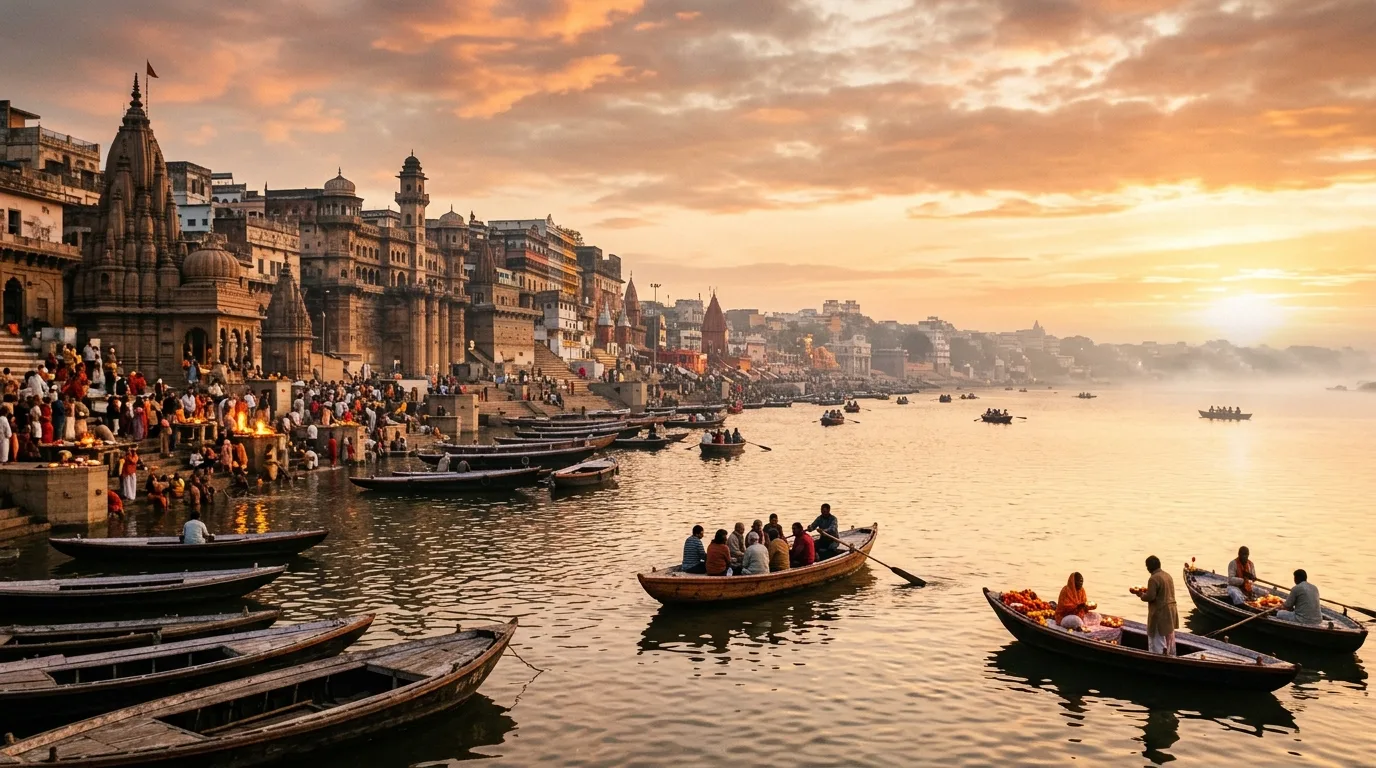
Traditional hand-rowed wooden boat: ₹400 – ₹700 per hour (for 2-4 persons); Motorized Bajra: ₹1,500 – ₹2,500 per hour (for groups up to 15-20); Electric Alaknanda Cruise: ₹750 – ₹1,200 per seat.
What are the exact Ganga Aarti timings at Dashashwamedh and Assi Ghat?
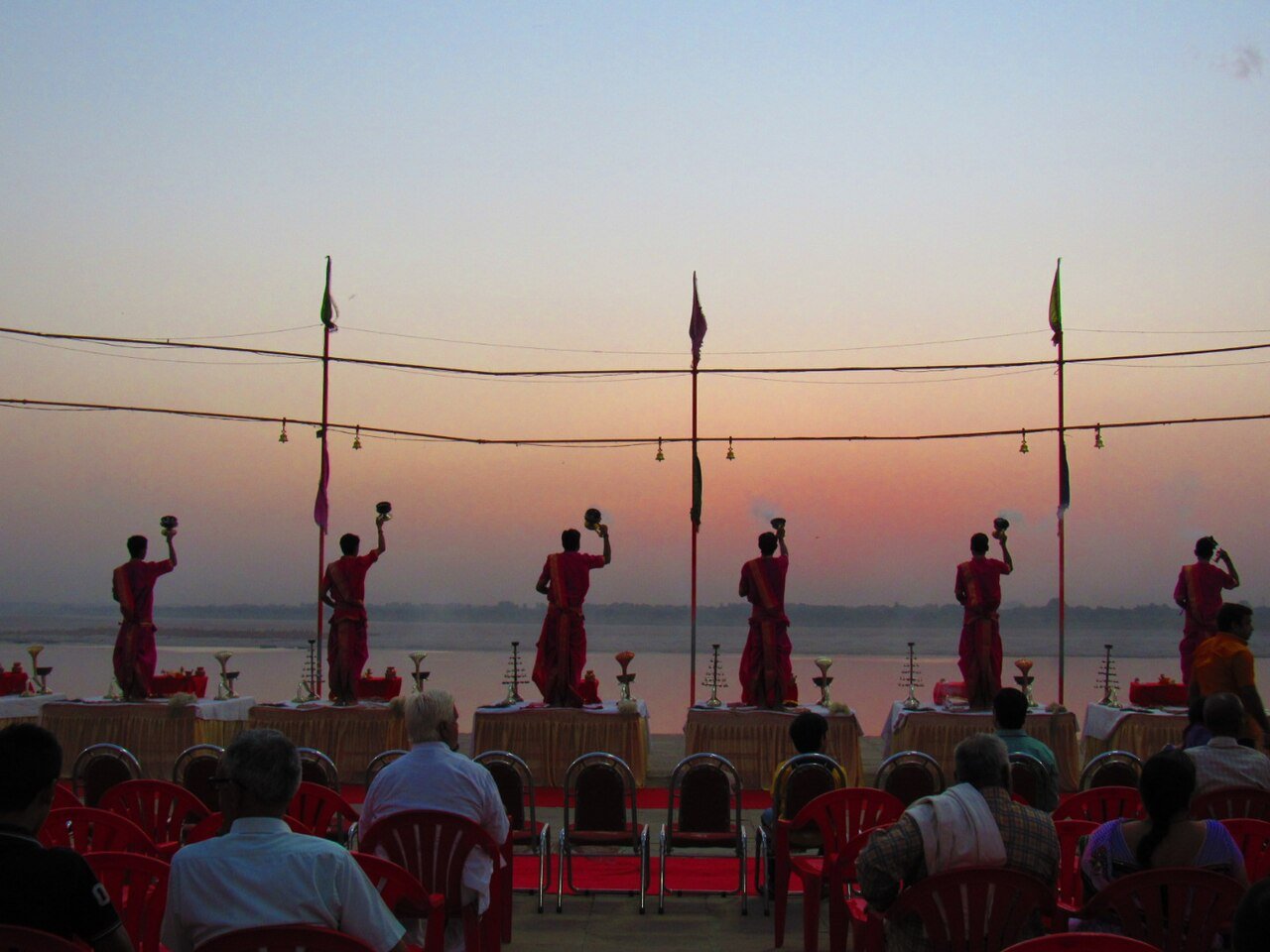
Morning Subah-e-Banaras at Assi Ghat begins at 05:00 AM (summer) / 05:45 AM (winter); Grand Evening Maha Aarti at Dashashwamedh Ghat begins at 07:00 PM (summer) / 06:00 PM (winter).
What is the dress code and entry fee for Kashi Vishwanath Temple?
Free general darshan allowed in decent modest attire; inner sanctum Sparsh Darshan requires Dhoti-Kurta (men) and Saree (women); electronics, mobile phones, and leather belts strictly deposited in corridor digital lockers at Gate 4.
When is the best time of year to visit Varanasi?
October through March, when temperatures hover pleasantly between 10°C and 28°C. Coincides with Dev Deepawali (24 November 2026, with over 1.2 million lamps) and Maha Shivratri (February/March).
How far is Varanasi Airport from the Ghats and how to reach the city?
Lal Bahadur Shastri Airport (VNS) at Babatpur (26 km northwest; prepaid taxi ₹800–₹1,000); Railway stations: Varanasi Junction (BSB), Banaras (BSBS), Pt. Deen Dayal Upadhyaya Junction (DDU, 18 km).
What are the most common tourist scams in Varanasi and how to avoid them?
Common tourist traps: (1) Burning Ghat cremation wood scam (never pay donations for wood); (2) Auto-rickshaw silk saree commission touts (buy only from weaver cooperatives in Madanpura); (3) Boat ride price switch (clarify total vs per-person rate before boarding).