Missing the 5:00 AM Window Means Missing the City Entirely
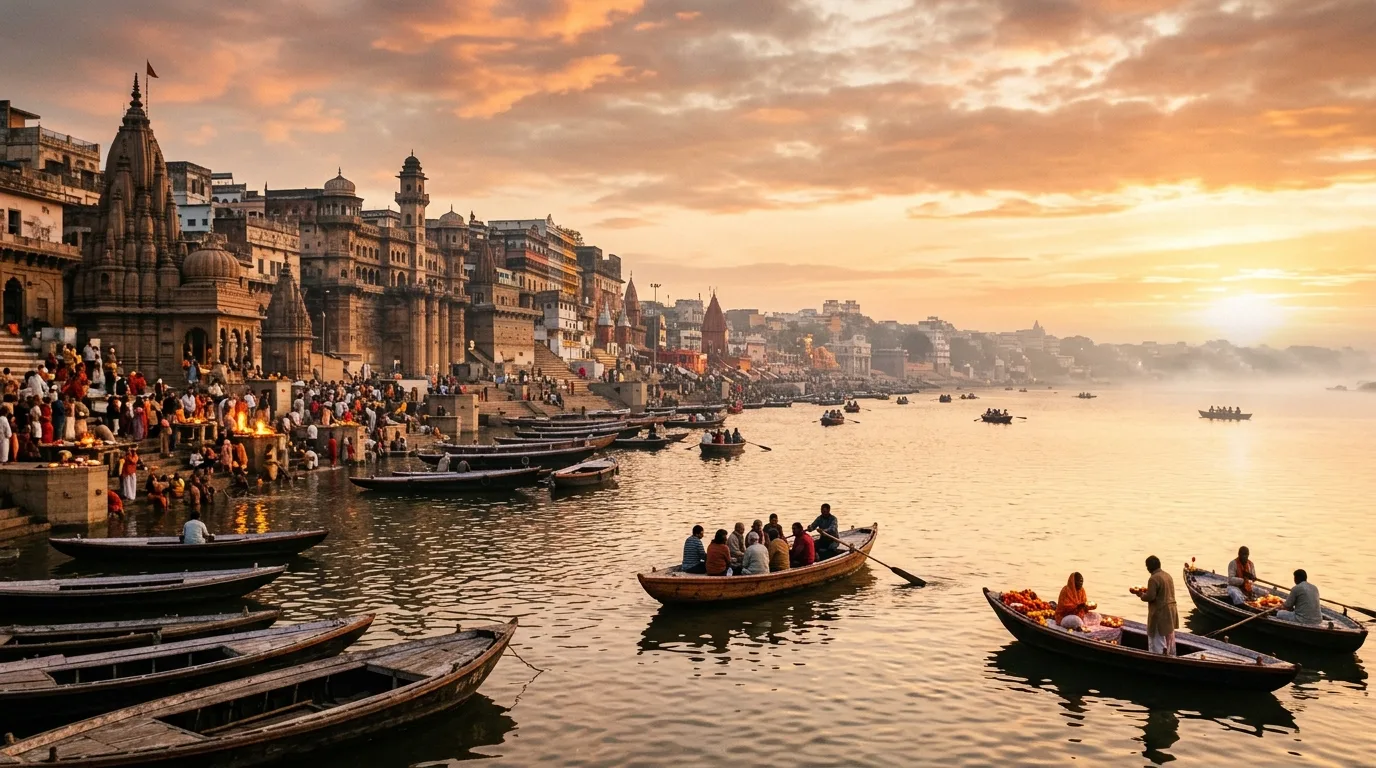
If you don't step onto the riverfront before the fog lifts, you'll miss the real Varanasi. The morning air hits your lungs with a sharp, heavy chill that lingers long after sunrise. Cold limestone steps freeze your bare feet instantly. You'll want wool socks until the sun breaks over the eastern bank. The river is black. Then it turns gray. Within twenty minutes, the entire stretch of stone ignites in pale gold light.
Assi Ghat doesn't wake up slowly. It erupts. By 5:15 AM, the priests are already hauling brass vessels up from the water's edge. The smell of burning cow dung cakes mixes with sweet jasmine garlands stacked high in bamboo baskets. You'll hear the first wooden oars slapping against the dark current. Rowboat owners shout out prices across the morning quiet, starting at ₹800 before dropping down to ₹200 if you just wait a beat. Don't rush into a boat immediately. Sit on the bottom step and drink a scalding ₹10 kulhad chai infused with crushed black pepper and fresh ginger.
Solo travelers need to keep their wits sharp right here at the southern end. You'll encounter self-appointed guides offering unsolicited tilaks and expecting ₹100 notes for their trouble. Just shake your head firmly and keep walking. No one will bother you if you maintain a steady, purposeful stride. The morning crowd is mostly locals doing their Pranayama or walking meditation. Blend in with them. Leave your heavy daypack at your guesthouse and carry only cash in your front pocket.
Finding Authentic Yoga and Meditation Spaces Near the Water
Finding a genuine meditation space takes patience. Avoid the flashy banner boards advertising drop-in classes for tourists at Westernized rates. Head instead to the older institutional ashrams tucked away in the alleyways behind Shivala Ghat or near the southern end of Assi Ghat. Many of these spaces don't even have websites. You knock on a heavy teak door, speak to the resident teacher, and arrange morning Pranayama sessions directly.
Classes usually start at 6:00 AM sharp. You'll sit on worn cotton durries spread across cool marble floors while ceiling fans churn the heavy air. The instruction is direct and unpretentious—focusing on breath control and silent contemplation rather than acrobatic postures. Expect to pay around ₹200 to ₹300 per session, or less if you commit to a weekly pass. It's quiet. The only sound is the distant chanting from a neighboring shrine and the occasional ring of a brass bell.
After class, your knees will ache from sitting cross-legged on stone. Walk over to the corner tea stall where locals gather to discuss the morning papers. Order a hot milk sweetened with unrefined jaggery. It costs ₹15 and grounds you completely. If you prefer a structured retreat, book a residential room at a traditional ashram like Mumukshu Bhawan, but remember the rules are strict—gates lock at 9:00 PM and meat or outside food is strictly prohibited.
Navigating the Labyrinth Alone: Ground-Level Safety Realities
Walking the narrow galis alone as a solo traveler requires a mental shift. The alleys are tight, damp, and shared constantly with stray cows, motorbikes squeezing past your elbows, and porters carrying heavy loads of silk. It isn't dangerous, but it is intensely overstimulating. If a motorbike honks behind you, just press your back firmly against the lime-washed brick wall and let it pass. Don't panic.
Keep your phone tucked away in a zippered pocket while navigating the inner city. The GPS will inevitably fail you inside the maze anyway. Rely on landmarks—a specific yellow temple pillar, an old banyan tree, or the river itself. If you get turned around, step into a small shop and ask the shopkeeper for directions to the main road (pucca sadak). People are unfailingly helpful once you make direct eye contact and ask politely.
Street vendors selling hot snacks are everywhere. Try a plate of piping hot kachori sabzi for ₹30 from a busy stall where families are lined up. Avoid empty stalls where food sits uncovered in the humid air. Carry a small pack of wet wipes and hand sanitizer in your pocket because washing facilities are rare between temples. Trust your gut instincts completely. If an alley feels too dark or isolated as evening approaches, turn around and walk back to the wide, well-lit riverfront steps.
The Morning Aarti at Assi Ghat Without the Tourist Circus
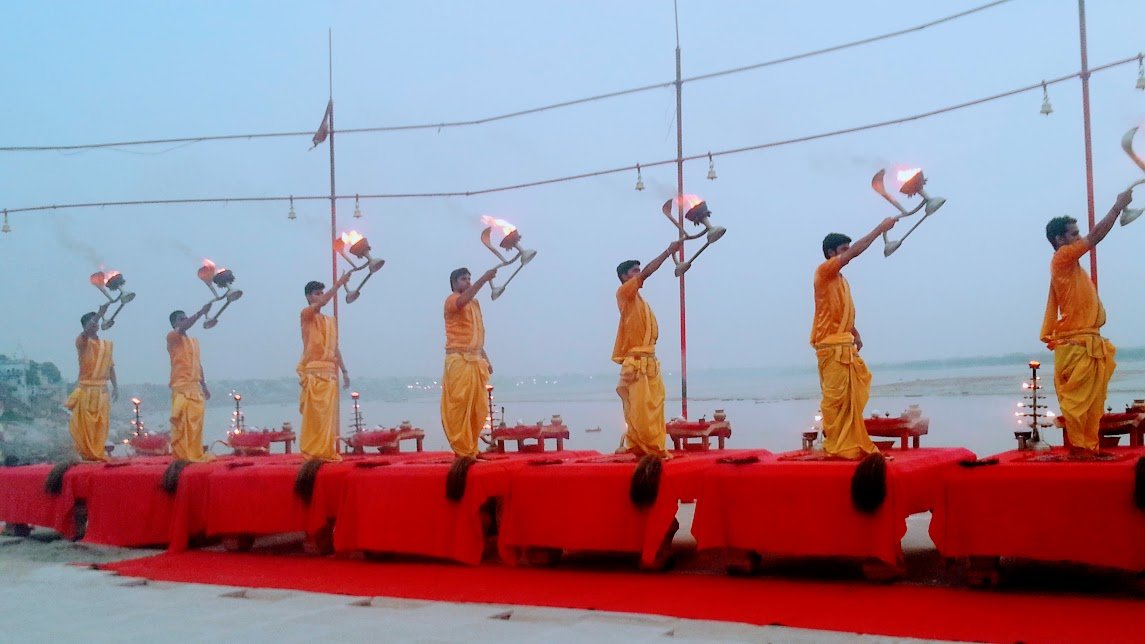
The morning ritual at Assi Ghat is vastly different from the massive evening spectacle. It's intimate, quiet, and deeply meditative. Priests dressed in saffron dhotis arrange their copper lamps and incense holders while the sky is still the color of slate. You won't find thousands of people shoving for front-row views here. Instead, a couple of dozen early risers sit quietly on the stone tiers.
Stand near the third tier up from the water. (Honestly, skip the front row unless you enjoy smoke stinging your eyes from the camphor fires.) As the brass bells begin to ring in unison, the sound bounces off the stone facades across the river. The metallic clang echoes over the water. Priests lift multi-tiered flame lamps in slow, circular motions, paying homage to the rising sun and the river below. It lasts about twenty minutes.
Morning Ritual Cost Breakdown
| Activity / Item | Verified Price (₹) | Notes |
|---|---|---|
| Kulhad Chai | ₹10 - ₹15 | Look for the busiest boiling pot |
| Morning Rowboat Ride | ₹300 - ₹500 | Bargain politely before stepping in |
| Traditional Yoga Class | ₹200 - ₹300 | Pay cash directly to the instructor |
| Kachori Breakfast | ₹30 - ₹50 | Best eaten fresh off the frying pan |
Once the ceremony concludes, people drift away silently into the morning mist. Take a moment to sit quietly on the steps as the light changes. This is the exact moment when the city feels entirely yours, untouched by the chaotic horns and midday heat that will inevitably arrive by noon.
Frequently Asked Questions
Is it safe for solo female travelers to walk alone at dawn in Varanasi?
Yes, walking along the main riverfront ghats from Assi to Dashashwamedh between 5:00 AM and 7:00 AM is remarkably safe because the stone steps are filled with walkers, yoga practitioners, and priests. However, avoid walking alone through the dark, isolated inner alleys before sunrise.
How much should I pay for a morning boat ride?
A private wooden rowboat for a one-hour sunrise trip should cost between ₹300 and ₹500 total. Do not accept initial quotes of ₹1,000 or more from aggressive touts stationed near the main landings.
Do I need to book yoga classes in advance?
Most traditional ashrams and independent teachers near Assi Ghat do not take online bookings. Simply walk up to the ashram entrance by 5:30 AM, speak with the receptionist or teacher, and join the morning session on the spot.
What should I wear while attending morning yoga or walking the ghats?
Wear loose, breathable clothing that covers your shoulders and knees out of respect for local cultural norms. Layer up with a light fleece or shawl because the river wind is surprisingly cold during the winter and early spring months.
Varanasi Travel Quick Reference: Timings, Costs & Essentials
Key verified facts for planning your visit to Varanasi — timings, transport costs, temple guidelines, and safety tips:
How much does a boat ride cost in Varanasi and how to book?
Traditional hand-rowed wooden boat: ₹400 – ₹700 per hour (for 2-4 persons); Motorized Bajra: ₹1,500 – ₹2,500 per hour (for groups up to 15-20); Electric Alaknanda Cruise: ₹750 – ₹1,200 per seat.
What are the exact Ganga Aarti timings at Dashashwamedh and Assi Ghat?
Morning Subah-e-Banaras at Assi Ghat begins at 05:00 AM (summer) / 05:45 AM (winter); Grand Evening Maha Aarti at Dashashwamedh Ghat begins at 07:00 PM (summer) / 06:00 PM (winter).
What is the dress code and entry fee for Kashi Vishwanath Temple?
Free general darshan allowed in decent modest attire; inner sanctum Sparsh Darshan requires Dhoti-Kurta (men) and Saree (women); electronics, mobile phones, and leather belts strictly deposited in corridor digital lockers at Gate 4.
When is the best time of year to visit Varanasi?
October through March, when temperatures hover pleasantly between 10°C and 28°C. Coincides with Dev Deepawali (24 November 2026, with over 1.2 million lamps) and Maha Shivratri (February/March).
How far is Varanasi Airport from the Ghats and how to reach the city?
Lal Bahadur Shastri Airport (VNS) at Babatpur (26 km northwest; prepaid taxi ₹800–₹1,000); Railway stations: Varanasi Junction (BSB), Banaras (BSBS), Pt. Deen Dayal Upadhyaya Junction (DDU, 18 km).
What are the most common tourist scams in Varanasi and how to avoid them?
Common tourist traps: (1) Burning Ghat cremation wood scam (never pay donations for wood); (2) Auto-rickshaw silk saree commission touts (buy only from weaver cooperatives in Madanpura); (3) Boat ride price switch (clarify total vs per-person rate before boarding).