Digging Through the Stratigraphy at Rajghat
The morning air tastes like dry silt and diesel exhaust. If you walk past the northern sprawl of Rajghat toward the ancient mound excavations, you'll notice the soil shifts instantly from gray river dust to dense, charred terracotta fragments. Archaeologists didn't just stumble upon history here; they carved through eight distinct cultural layers dating back to the eighth century BCE. You can see the distinct boundary lines in the exposed earth sections if you look closely—northern black polished ware shards jutting out of clay walls like broken teeth.
It's quiet here compared to Dashashwamedh. No boatmen shouting for ₹300 shared rides. Just stray dogs sleeping on brick fragments and local goats picking their way over centuries of structural remains. Bring sturdy shoes because the loose dust slides easily beneath your soles. Local laborers charge roughly ₹500 to guide you through the less obvious trenches near the ancient fortification walls, pointing out where structural brickwork changes from Gupta-era thickness to Kushan-era tile sizing. It's raw, unpolished, and completely absent of ticket turnstiles.
The excavation site sits roughly four kilometers north of Godowlia intersection. Take an auto-rickshaw and tell the driver 'Purana Rajghat Tila'—expect to pay about ₹150 from the main station if you bargain firmly. Wear a cotton scarf to shield your nose from the particulate dust hanging heavy in the afternoon heat. Don't expect a polished museum; you're standing in an open agricultural field where pottery sherd scatters underfoot with every single step you take.
The Unsleeping Pyres of Manikarnika Ghat
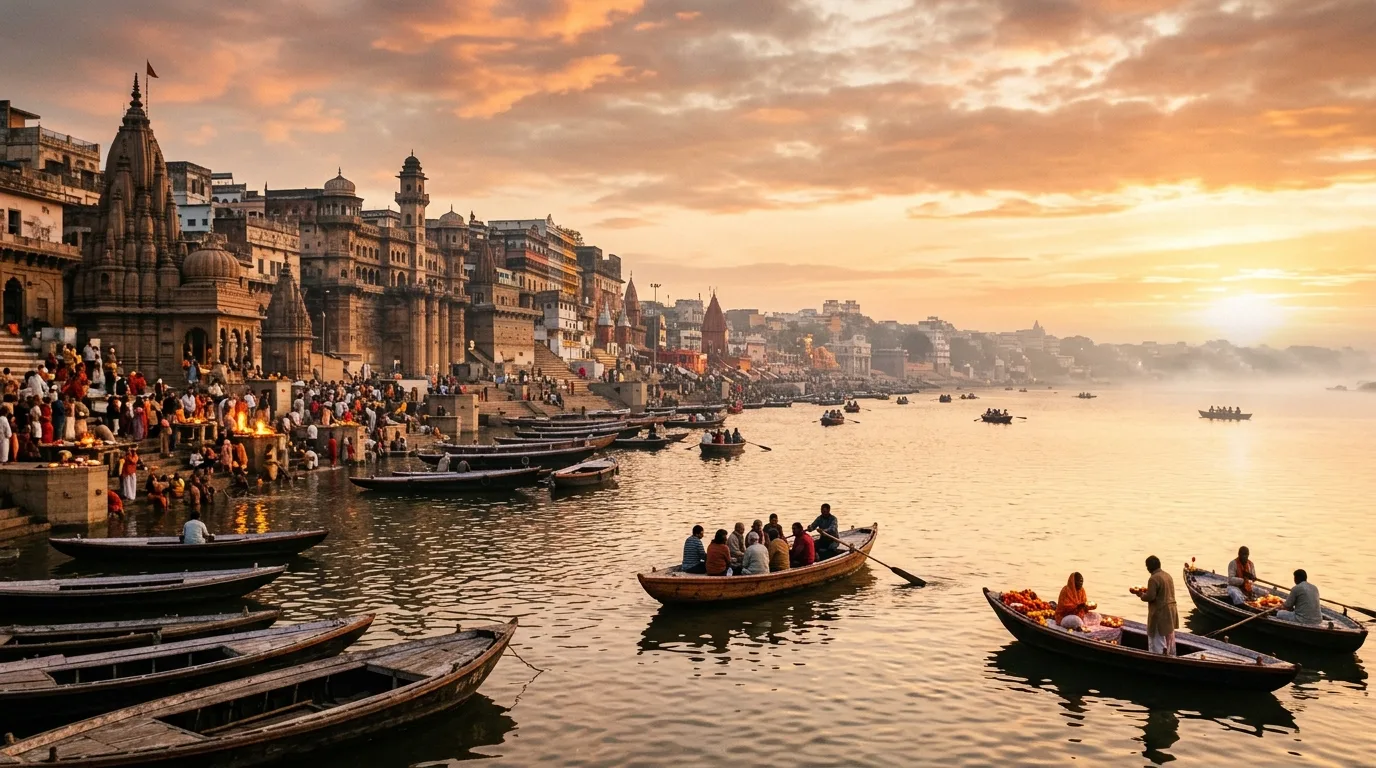
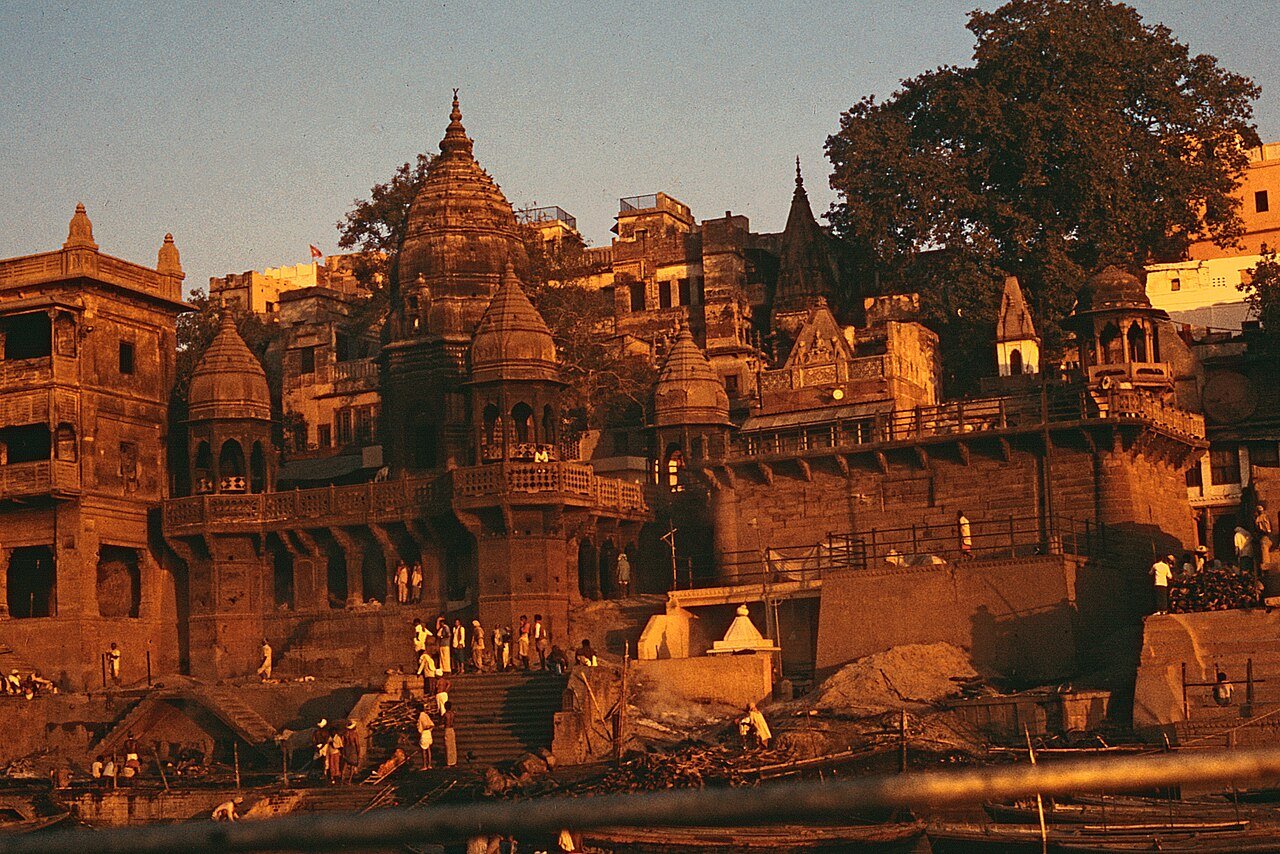
Wood smoke bites your eyes before you even see the flames. Manikarnika doesn't sleep. It operates on a relentless, round-the-clock schedule governed by stacks of sal wood and the quiet rhythm of the drum. You'll stand on the damp stone steps while carrying the heavy scent of burning sandalwood and damp river silt. The math of death here is staggering—dozens of bodies arrive daily, ferried across the water or carried down the steep alleyways on bamboo stretchers draped in bright marigolds.
Don't bring your camera out. People are grieving, and the attendants holding the long iron pokers won't hesitate to yell at you. It's loud, chaotic, and intensely physical. The heat radiating from the primary pyres hits your face from thirty feet away, forcing you to squint against the rising ash. You'll notice the massive stone wheel memorial embedded near the water's edge, marking an era long before concrete steps were poured over the mud banks.
Keep your pockets zipped tight and watch your footing on the wet, ash-slicked stone surfaces near the lower levels. The cost of firewood fluctuates daily based on truck deliveries from nearby forests, often running upwards of ₹600 per maund (roughly 40 kilograms). Families queue patiently near the weighing scales while young boys sweep stray embers into the dark, churning current of the river below.
Following the Notes of Ustad Bismillah Khan
Serai Mohana feels a world away from the crowded riverfront. This is where Ustad Bismillah Khan practiced his morning scales in the quiet courtyard behind the brick houses. The narrow lanes here smell of stale mustard oil and dried cow dung cakes, but if you listen past the hum of motorbikes, you might catch the distant trill of a student struggling through a raga on a reed instrument. Khan didn't perform in massive auditoriums until late in life; his true conservatory was the damp, resonant stairwells of the local temples.
Visit the modest ancestral home near Sarai Saiya if you want to understand the humble foundations of classical shehnai music. The walls are cracked, and the wooden doorways are worn down by generations of musicians carrying their velvet-lined cases through the thresholds. Local shopkeepers still remember him walking down to the small tea stall for a kulhad of strong ginger chai (which costs about ₹12 today). You won't find neon signs or grand monuments here—just rusted metal nameplates and descendants who still teach young boys how to cup their hands around the wooden mouthpiece.
Take an e-rickshaw from Chowk toward the northern outskirts, but make sure the driver actually knows the specific lane. Many younger drivers only know the main highway routes. Once you step into the neighborhood, put your phone away and walk slowly. The acoustics in these tight alleyways amplify every footstep, creating an eerie, natural reverb that feels remarkably like a concert hall carved out of raw brick.
Mapping the Ancient Strata and Heritage Sites
| Site Name | Primary Era | Best Time to Visit | Approximate Cost (₹) |
|---|---|---|---|
| Rajghat Mounds | 8th Century BCE - Gupta | 7:00 AM - 10:00 AM | ₹150 auto fare |
| Manikarnika Ghat | Medieval to Modern | Anytime (Respectful Hours) | Free (Donations optional) |
| Serai Mohana | 20th Century Heritage | 3:00 PM - 5:00 PM | ₹200 round-trip auto |
Frequently Asked Questions
Can I take photographs at Manikarnika Ghat?
No. Photography is strictly prohibited near the cremation pyres to respect grieving families and maintain cultural solemnity. Keep your phone in your pocket.
How do I reach the Rajghat archaeological trenches?
Hire an auto-rickshaw from Godowlia or Varanasi Junction and instruct the driver to take you to the old mound area near the Rajghat bridge. The ride takes roughly twenty minutes depending on traffic.
Where was Ustad Bismillah Khan born?
He was born in Dumraon, Bihar, but spent his formative years, professional life, and musical career rooted deeply in the lanes and temples of Banaras, particularly around Serai Mohana and Balaji Ghat.
Are guides necessary for exploring the excavation sites?
Not officially, but local laborers or students often hang around the trenches and can point out specific pottery strata for a small tip of around ₹100 to ₹200.
Varanasi Travel Quick Reference: Timings, Costs & Essentials
Key verified facts for planning your visit to Varanasi — timings, transport costs, temple guidelines, and safety tips:
How much does a boat ride cost in Varanasi and how to book?
Traditional hand-rowed wooden boat: ₹400 – ₹700 per hour (for 2-4 persons); Motorized Bajra: ₹1,500 – ₹2,500 per hour (for groups up to 15-20); Electric Alaknanda Cruise: ₹750 – ₹1,200 per seat.
What are the exact Ganga Aarti timings at Dashashwamedh and Assi Ghat?
Morning Subah-e-Banaras at Assi Ghat begins at 05:00 AM (summer) / 05:45 AM (winter); Grand Evening Maha Aarti at Dashashwamedh Ghat begins at 07:00 PM (summer) / 06:00 PM (winter).
What is the dress code and entry fee for Kashi Vishwanath Temple?
Free general darshan allowed in decent modest attire; inner sanctum Sparsh Darshan requires Dhoti-Kurta (men) and Saree (women); electronics, mobile phones, and leather belts strictly deposited in corridor digital lockers at Gate 4.
When is the best time of year to visit Varanasi?
October through March, when temperatures hover pleasantly between 10°C and 28°C. Coincides with Dev Deepawali (24 November 2026, with over 1.2 million lamps) and Maha Shivratri (February/March).
How far is Varanasi Airport from the Ghats and how to reach the city?
Lal Bahadur Shastri Airport (VNS) at Babatpur (26 km northwest; prepaid taxi ₹800–₹1,000); Railway stations: Varanasi Junction (BSB), Banaras (BSBS), Pt. Deen Dayal Upadhyaya Junction (DDU, 18 km).
What are the most common tourist scams in Varanasi and how to avoid them?
Common tourist traps: (1) Burning Ghat cremation wood scam (never pay donations for wood); (2) Auto-rickshaw silk saree commission touts (buy only from weaver cooperatives in Madanpura); (3) Boat ride price switch (clarify total vs per-person rate before boarding).