The Great Silk Miscalculation Every Traveler Makes
Most people walk straight into the first brightly lit shop near Godowlia crossing and pay double for power-loom polyester masquerading as pure handloom Katan silk. Don't do it. Real Banarasi silk has weight, subtle metallic zari that doesn't scratch your skin, and a distinct raw smell of unwashed cocoon protein. Walk past the main street storefronts. Duck into the narrow lanes behind Thatheri Bazaar where the air hums with the heavy, rhythmic thud of wooden handlooms operating out of tiny ground-floor rooms. You'll find genuine weavers working by single naked lightbulbs.
Prices for an authentic, pure Katan silk saree start around ₹8,000 to ₹15,000 and can easily climb past ₹50,000 depending on the intricate gold-thread labor involved. If a shopkeeper quotes you ₹2,500 for heavy brocade, walk out immediately because it's machine-made viscose from Surat. Take your time. Inspect the reverse side of the fabric; hand-woven pieces show neat, continuous floats of thread rather than messy synthetic knots.
Surviving the Monsoon Ghats By Wooden Rowboat
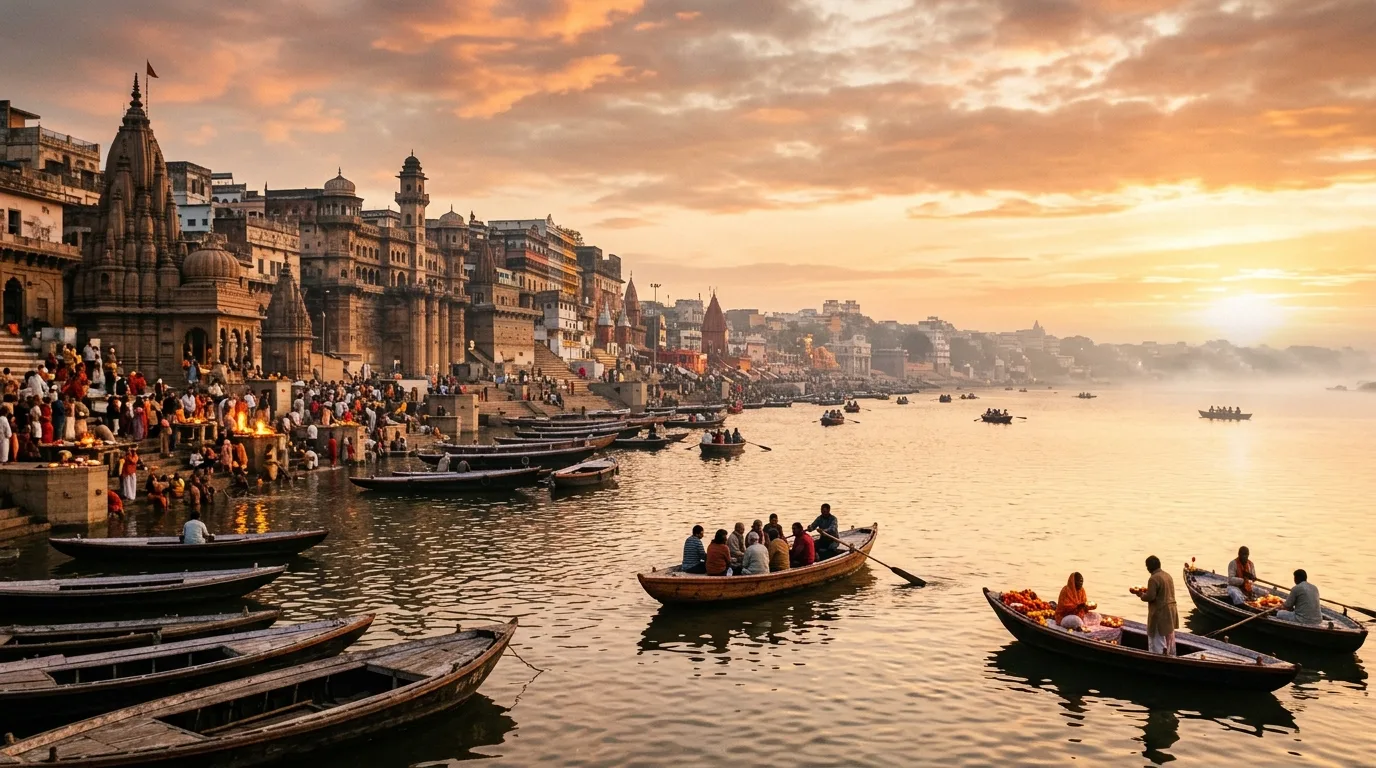
The river changes entirely between July and September. The water swells brown and furious, swallowing the lower steps of Dashashwamedh and dragging massive uprooted logs past Manikarnika at terrifying speeds. It's dangerous. Don't let a motorboat driver convince you to go far out into the roaring current just for a cheap thrill. Hire a traditional wooden rowboat with an experienced oarsman near Assi Ghat for roughly ₹400 to ₹600 per hour, and stay close to the upper stone wall alignments where the back-eddies offer some protection.
The rain hits hard here. One minute you're staring at a pale grey sky over Ramnagar fort, and the next you're drenched beneath a sudden torrential downpour that turns the steep limestone steps into slick waterfalls. Pack your camera in a double-sealed dry bag. Wear quick-dry sandals with actual traction (leave the brand-new sneakers at your guesthouse) because the green moss near the waterline will test your balance instantly.
Navigating the Maze to Blue Lassi Shop in Bengali Tola
Finding the legendary Blue Lassi shop requires mental fortitude and a good sense of smell for curd and cardamom. It's tucked deep inside the labyrinthine alleys of Bengali Tola, down a path so narrow that two cows struggling to pass each other will completely block your exit. The shop isn't blue anymore; it's practically plastered with thousands of faded passport photos left behind by travelers from every corner of the planet over the past three decades. The walls literally breathe history.
Order a small kulhad lassi topped with fresh pomegranate, thick malai, and crushed pistachios for roughly ₹50. It's rich, heavy, and practically a meal by itself. (Honestly, skip breakfast if you plan on finishing the large size.) The owner might chat you up about your home country while scraping thick curds from an earthen pot with a battered wooden spoon, but don't expect fast service when the tiny bench outside is packed tight with backpackers.
Morning Light Versus Evening Fire: Photography Viewpoints
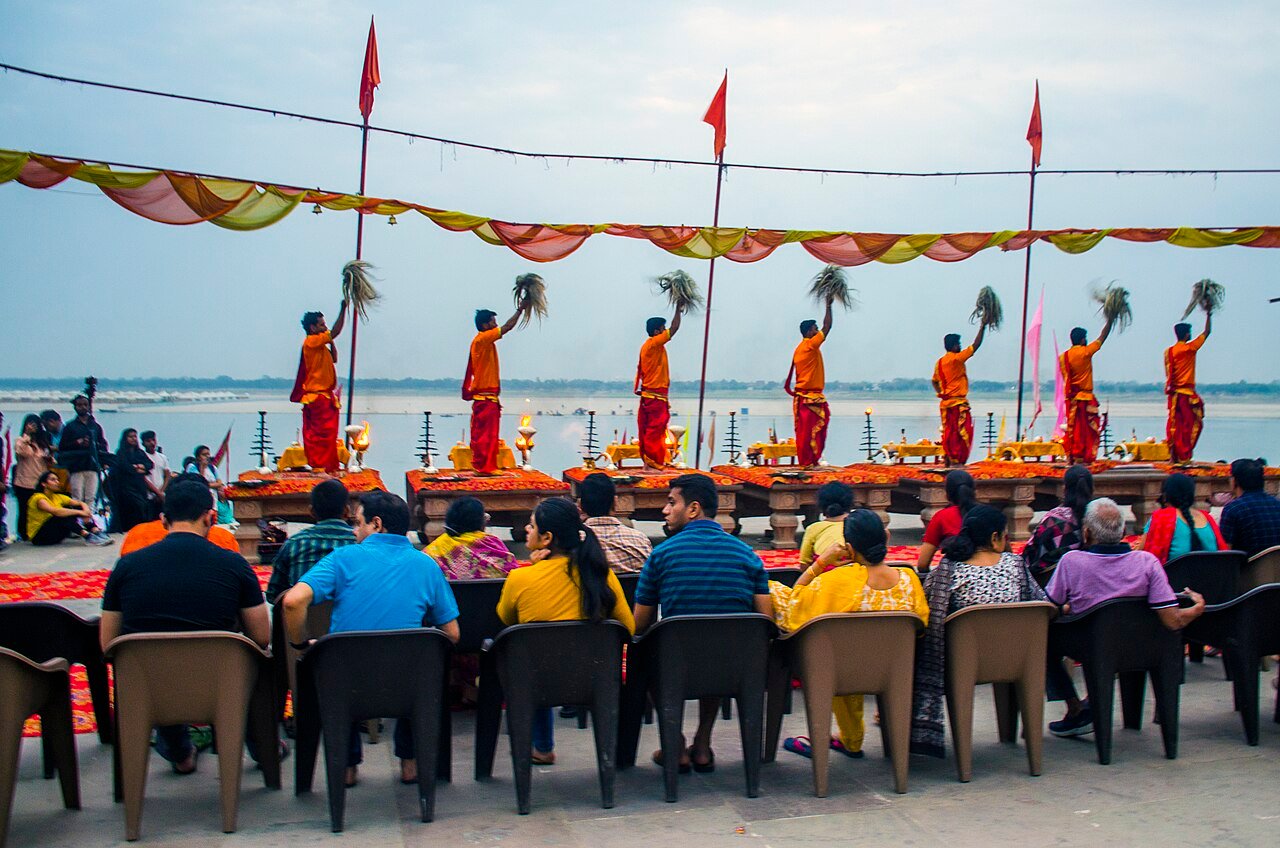
Everyone chases the evening aarti at Dashashwamedh Ghat. It's loud, smoky, and crowded to the point of claustrophobia. If you want a real photograph without a thousand selfie sticks blocking your lens, wake up at 4:30 AM and walk the riverfront during the pre-dawn stillness. The mist rolls off the water, sadhus are already meditating on wooden platforms, and the soft golden light hits the old Maratha-style palaces with absolute perfection. It's quiet enough to hear the slap of laundry against stone.
For the best elevated perspective in the evening, skip the crowded concrete platforms and climb up to the rooftop terrace of any heritage guesthouse near Panchganga Ghat. Grab a hot kulhad chai (₹10) from the tiny vendor on the corner, settle onto a plastic chair, and watch the synchronized brass lamps swing across the water from a comfortable distance. (And yes, the tea vendor by the corner will try to charge you double if you speak English—just smile, hand him a ten-rupee coin, and keep walking.)
Authentic Souvenirs Beyond the Silk Saree
Buying gifts in Varanasi doesn't have to break your bank or involve fake antiques sold by smooth-talking touts near the temples. Look for handcrafted wooden toys from the nearby village of Bhadohi, or grab a small slab of pure brass incense burner designed like the traditional aarti lamps found at the ghats (ranging from ₹300 to ₹800). Another brilliant, lightweight souvenir is a box of authentic local sweets like peda from the historic shops near Chowk, though check your home country's customs regulations before packing dairy products.
Avoid the polished 'shivalingas' carved out of resin or colored glass sold near Kashi Vishwanath temple gates. If you want a genuine stone artifact, look for small pieces carved from grey-black Chunarkhand sandstone, which matches the historic architecture of the city. Always bargain politely, pay in small denomination cash notes (vendors rarely have change for ₹2,000 notes in the morning), and trust your gut when a deal feels too good to be true.
| Souvenir Item | Realistic Price Range (₹) | Where to Find It |
|---|---|---|
| Pure Katan Silk Saree | ₹8,000 - ₹25,000+ | Thatheri Bazaar back lanes |
| Handmade Brass Aarti Lamp | ₹300 - ₹1,200 | Thatheri Bazaar metal markets |
| Kulhad Lassi | ₹50 - ₹80 | Blue Lassi, Bengali Tola |
| Wooden Rowboat Ride | ₹400 - ₹600 / hour | Assi Ghat to Dashashwamedh |
| Chunarkhand Sandstone Carving | ₹500 - ₹2,000 | Near Godowlia crossing |
Frequently Asked Questions
How much should I actually pay for a boat ride on the Ganga?
A private wooden rowboat should cost between ₹400 and ₹600 per hour. Boatmen often start by quoting ₹800 or ₹1,000, especially near Dashashwamedh Ghat. Firmly negotiate down before stepping into the boat.
Is Blue Lassi shop open late into the night?
It generally stays open until around 10:00 PM, but the best time to visit is mid-afternoon when the curds are freshest and the seating bench isn't completely overrun by hungry photographers.
What is the safest way to photograph people at Manikarnika Ghat?
Put your camera away entirely near the cremation grounds. Photography is strictly prohibited there out of respect for the grieving families and the solemnity of the rituals.
Can I buy genuine Banarasi silk without knowing a local weaver?
Yes, but you must avoid the flashy showrooms on the main road. Walk into the cooperative societies or small workshop outlets tucked away in Madanpura and Thatheri Bazaar where quality is easier to verify.
Varanasi Travel Quick Reference: Timings, Costs & Essentials
Key verified facts for planning your visit to Varanasi — timings, transport costs, temple guidelines, and safety tips:
How much does a boat ride cost in Varanasi and how to book?
Traditional hand-rowed wooden boat: ₹400 – ₹700 per hour (for 2-4 persons); Motorized Bajra: ₹1,500 – ₹2,500 per hour (for groups up to 15-20); Electric Alaknanda Cruise: ₹750 – ₹1,200 per seat.
What are the exact Ganga Aarti timings at Dashashwamedh and Assi Ghat?
Morning Subah-e-Banaras at Assi Ghat begins at 05:00 AM (summer) / 05:45 AM (winter); Grand Evening Maha Aarti at Dashashwamedh Ghat begins at 07:00 PM (summer) / 06:00 PM (winter).
What is the dress code and entry fee for Kashi Vishwanath Temple?
Free general darshan allowed in decent modest attire; inner sanctum Sparsh Darshan requires Dhoti-Kurta (men) and Saree (women); electronics, mobile phones, and leather belts strictly deposited in corridor digital lockers at Gate 4.
When is the best time of year to visit Varanasi?
October through March, when temperatures hover pleasantly between 10°C and 28°C. Coincides with Dev Deepawali (24 November 2026, with over 1.2 million lamps) and Maha Shivratri (February/March).
How far is Varanasi Airport from the Ghats and how to reach the city?
Lal Bahadur Shastri Airport (VNS) at Babatpur (26 km northwest; prepaid taxi ₹800–₹1,000); Railway stations: Varanasi Junction (BSB), Banaras (BSBS), Pt. Deen Dayal Upadhyaya Junction (DDU, 18 km).
What are the most common tourist scams in Varanasi and how to avoid them?
Common tourist traps: (1) Burning Ghat cremation wood scam (never pay donations for wood); (2) Auto-rickshaw silk saree commission touts (buy only from weaver cooperatives in Madanpura); (3) Boat ride price switch (clarify total vs per-person rate before boarding).