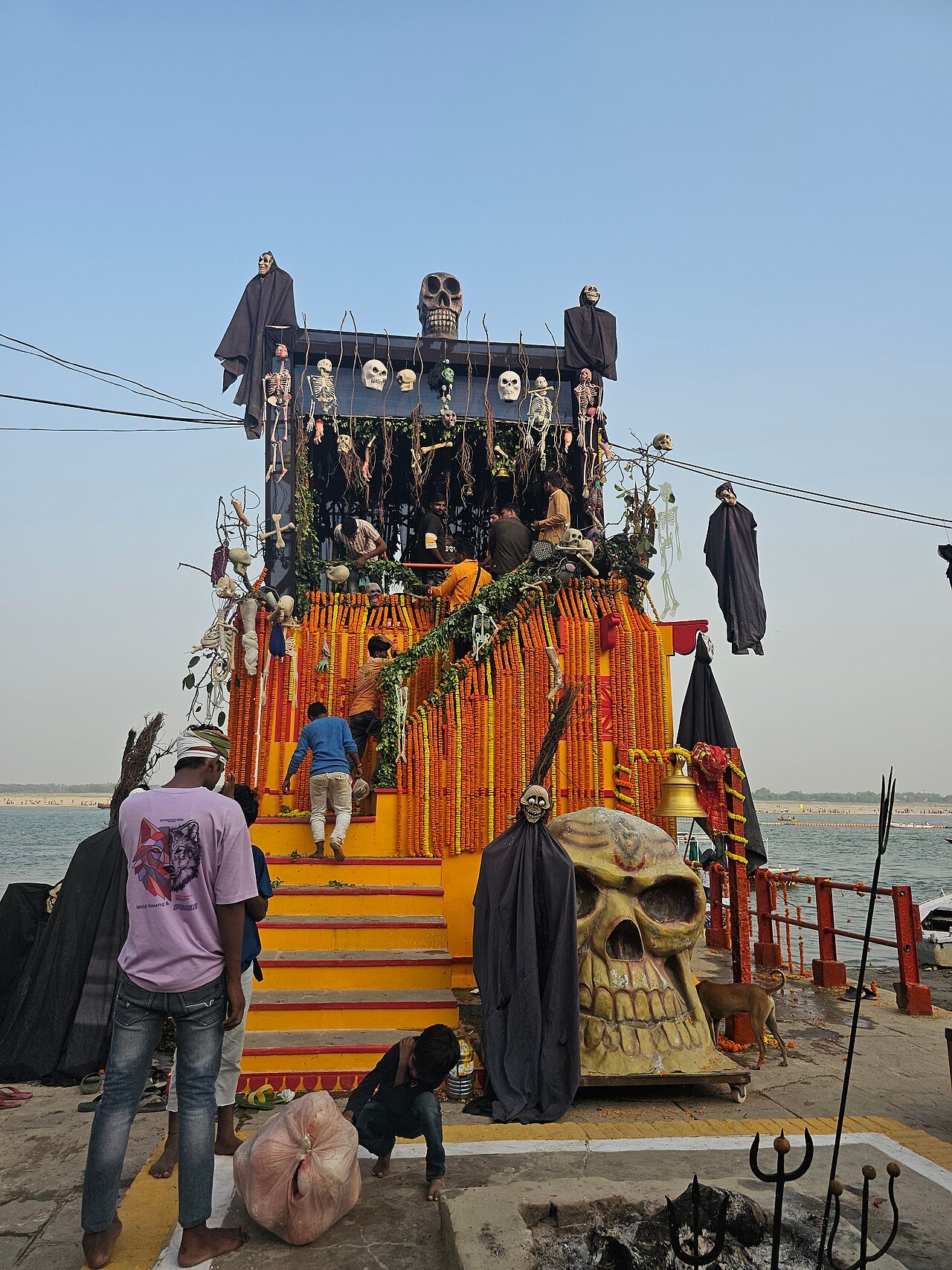
The River Swells as the Sky Breaks Open
Rainwater pounds the corrugated tin roofs of Bengali Tola, cascading down steep stone stairwells in muddy yellow sheets while the Ganga rises two meters overnight, completely swallowing the lower tiers of Dashashwamedh. You step out onto the terrace in July with your sneakers soaked through before you've even cleared the gully—it’s humid, it’s loud, and the smell of wet earth and cow dung hangs thick in the heavy air. Don't let the weather reports fool you; visiting Varanasi during the monsoon transforms the ancient city into a moody, rain-washed labyrinth where tourism slows to a crawl and the ghats belong entirely to the elements.
You'll need sturdy rubber sandals instead of leather shoes because walking through knee-deep puddles near Meer Ghat will ruin anything else in an hour. The local tea vendors are pouring scalding kulhad chai infused with crushed black pepper and fresh ginger for ₹10 a pop, offering a brief shelter under blue tarpaulin sheets where stray dogs shake off river spray. It’s raw, unapologetically messy, and entirely devoid of the winter tourist rush—just make sure you pack a sturdy umbrella that won't invert the second you turn a corner into a wind-tunnel alley.
Decoding the Architecture of Water and Stone
Look closely at the massive masonry of Ahilyabai Ghat when the river level climbs; these Maratha-era retaining walls were engineered centuries ago to absorb the brutal hydraulic pressure of swollen monsoon currents without crumbling. The multi-tiered balconies and carved brackets of the waterfront palaces act as natural windbreakers, creating micro-climates where the air feels remarkably cool despite the oppressive July humidity. Every single stone stairway is slick with a thin film of green algae—watch your footing carefully, because a slip on these historic steps means an unceremonious slide straight into the swirling, silt-heavy brown water.
Architectural details often missed by rushed day-trippers include the intricate wooden eaves of the Nepali Temple near Lalita Ghat, which actually swells and locks tighter during heavy downpours due to traditional interlocking joinery. Beneath the surface, the drainage system built by ancient municipal planners relies on heavy gravity slopes toward the river, but modern plastic waste frequently chokes these outlets—meaning you'll occasionally wade through ankle-deep runoff during a sudden cloudburst (honestly, lift your pant legs up before crossing Sonarpura intersection).
Three Days in the Rain: A Pragmatic Itinerary
Day one starts at 6:00 AM near Assi Ghat where you dodge stray water buffaloes and grab a steaming plate of kachori sabzi for ₹40 at the corner stall before the morning downpour hits. Spend the afternoon ducking inside the Bharat Kala Bhavan museum on the Banaras Hindu University campus to inspect rare miniature paintings and terracotta sculptures while the sky empties itself out overhead. Day two takes you deep into the northern sectors—walk the damp stone pathways of Panchganga Ghat and climb the steep minarets of Alamgir Mosque to catch a sweeping, rain-fogged panorama of the flooded river bends.
Day three is dedicated to the inner lanes of Chowk and Thatheri Bazaar, where brass smiths hammer out heavy ritual utensils under glowing incandescent bulbs while rain drums against canvas awnings overhead. Grab a cooling kulhad lassi near Gyanvapi for ₹50, take your time navigating the narrow, covered walkways where cows block the path entirely, and finish your evening watching the modified indoor aarti ritual when high water forces priests off the lower stone platforms.
| Timing | Activity | Monsoon Cost (₹) | Practical Tip |
|---|---|---|---|
| 6:00 AM | Kachori Breakfast at Assi | ₹40 - ₹60 | Eat standing under a tin roof to avoid roof leaks. |
| 11:00 AM | BHU Museum & Campus | ₹25 entry | Take an auto-rickshaw from Godowlia (approx. ₹150). |
| 3:00 PM | Chowk Brass Market Walk | Free | Wear waterproof pouches for phones and cameras. |
| 6:30 PM | Monsoon Aarti at Ghats | Free | Watch from upper stone terraces if river levels rise. |
The Heavy Legacy of Manikarnika Ghat
Dense smoke mixes with heavy monsoon mist over Manikarnika Ghat, where the sacred fires burn uninterrupted beneath dripping black canvas tarps that struggle against sudden gusts of wind. This is the ultimate liberation ground of Kashi, steeped in ancient myth where Lord Vishnu's earring reportedly fell into the primordial pool—a site where cremation pyres hiss softly as stray drops of rain hit the blazing logs. It's an intense, confronting reality that requires absolute silence, respect, and zero photography; keep your phone firmly in your pocket and observe the quiet solemnity from a respectful distance.
The economic and logistical machinery behind the ghat runs 24/7, with logs of sacred sandalwood and mango wood stacked high under massive corrugated tin shelters to keep them dry through the relentless August storms. Professional attendants manage the endless procession of wooden biers arriving through the slippery alleyways, their bare feet gripping the wet flagstones with practiced ease while grieving families sit quietly on surrounding stone ledges waiting for the final rites to conclude.
Frequently Asked Questions
Is it safe to visit Varanasi during July and August?
Yes, though you must exercise caution near the riverbank as stairs are slippery with algae and the current is exceptionally strong during high flood levels.
Are boat rides available when the Ganga is flooded?
Motorized boat operations are frequently restricted or entirely banned by local authorities when water levels exceed danger marks; stick to walking the high-level paved pathways instead.
What should I pack for a monsoon trip to Banaras?
Bring quick-dry synthetic clothing, sturdy rubber sandals with deep tread, a wind-resistant umbrella, and multiple ziplock bags to protect electronics from extreme humidity.
Where is the best place to view the river during heavy rain?
Find a covered rooftop café near Dashashwamedh or Assi Ghat where you can watch the monsoon storms roll across the vast expanse of water without getting drenched.
Varanasi Travel Quick Reference: Timings, Costs & Essentials
Key verified facts for planning your visit to Varanasi — timings, transport costs, temple guidelines, and safety tips:
How much does a boat ride cost in Varanasi and how to book?
Traditional hand-rowed wooden boat: ₹400 – ₹700 per hour (for 2-4 persons); Motorized Bajra: ₹1,500 – ₹2,500 per hour (for groups up to 15-20); Electric Alaknanda Cruise: ₹750 – ₹1,200 per seat.
What are the exact Ganga Aarti timings at Dashashwamedh and Assi Ghat?
Morning Subah-e-Banaras at Assi Ghat begins at 05:00 AM (summer) / 05:45 AM (winter); Grand Evening Maha Aarti at Dashashwamedh Ghat begins at 07:00 PM (summer) / 06:00 PM (winter).
What is the dress code and entry fee for Kashi Vishwanath Temple?
Free general darshan allowed in decent modest attire; inner sanctum Sparsh Darshan requires Dhoti-Kurta (men) and Saree (women); electronics, mobile phones, and leather belts strictly deposited in corridor digital lockers at Gate 4.
When is the best time of year to visit Varanasi?
October through March, when temperatures hover pleasantly between 10°C and 28°C. Coincides with Dev Deepawali (24 November 2026, with over 1.2 million lamps) and Maha Shivratri (February/March).
How far is Varanasi Airport from the Ghats and how to reach the city?
Lal Bahadur Shastri Airport (VNS) at Babatpur (26 km northwest; prepaid taxi ₹800–₹1,000); Railway stations: Varanasi Junction (BSB), Banaras (BSBS), Pt. Deen Dayal Upadhyaya Junction (DDU, 18 km).
What are the most common tourist scams in Varanasi and how to avoid them?
Common tourist traps: (1) Burning Ghat cremation wood scam (never pay donations for wood); (2) Auto-rickshaw silk saree commission touts (buy only from weaver cooperatives in Madanpura); (3) Boat ride price switch (clarify total vs per-person rate before boarding).