Why Most Visitors Stand in the Wrong Place at Nati Imli
If you show up to Nati Imli expecting a polished auditorium, turn around right now. You are standing on a dusty, sloping field where a single massive tamarind tree anchors one of the oldest open-air theatrical traditions in northern India. The air tastes of dry dust, roasted peanuts sold from pushcarts, and distant woodsmoke. Don't look for assigned seating. Grab a patch of open ground or lean against a brick compound wall. It's loud, chaotic, and wonderfully authentic.
This is where the grand enactment of the Bharat Milap takes place every autumn, drawing crowds so dense you cannot lift your arms. You'll hear the sharp clash of brass cymbals and the deep boom of dhol drums echoing off concrete facades. Wear sturdy shoes because the ground is uneven, and leave your large bags at your guesthouse. (Honestly, travel light or you'll regret every single step when the crowd surges forward.)
Budget Breakdown and Street-Smart Logistics for Nati Imli
You don't need a VIP pass to experience the Nati Imli performance, because admission is completely free for everyone. However, getting there requires navigating the narrow inner lanes of the city. An auto-rickshaw from Godowlia to the Nati Imli intersection costs roughly ₹150 to ₹200 if you negotiate firmly before stepping inside. Drivers might try to quote ₹400; hold your ground or just wave down the next one.
Once you're at the venue, keep your cash secure in a front pocket. Thirst will hit you fast under the afternoon sun. A cup of spiced kulhad chai from a roadside stall costs ₹10, and a fresh glass of sugarcane juice with lemon and black salt runs ₹20. (And yes, the tea vendor by the corner will try to charge you double if you speak English, so keep your phrases local and simple.)
Stepping Near the Smoke of Manikarnika Ghat
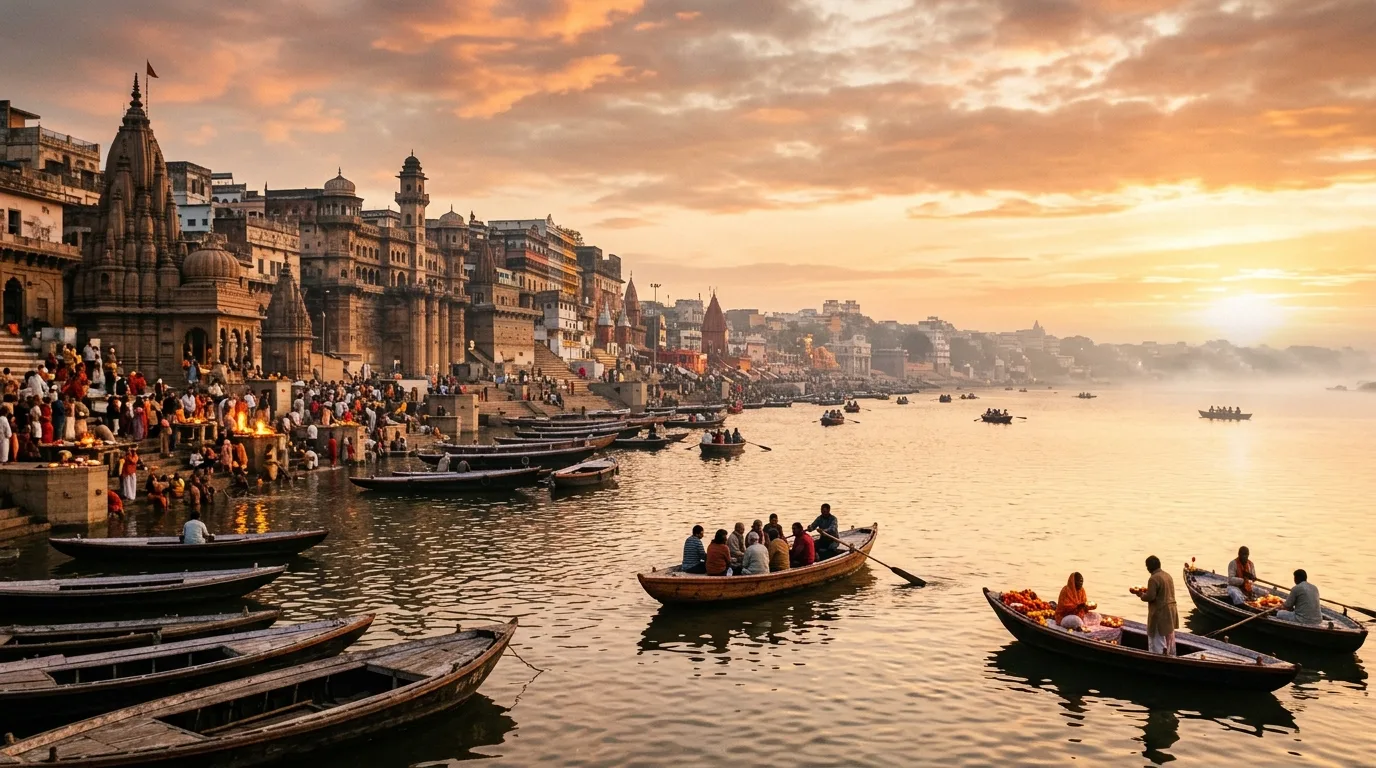
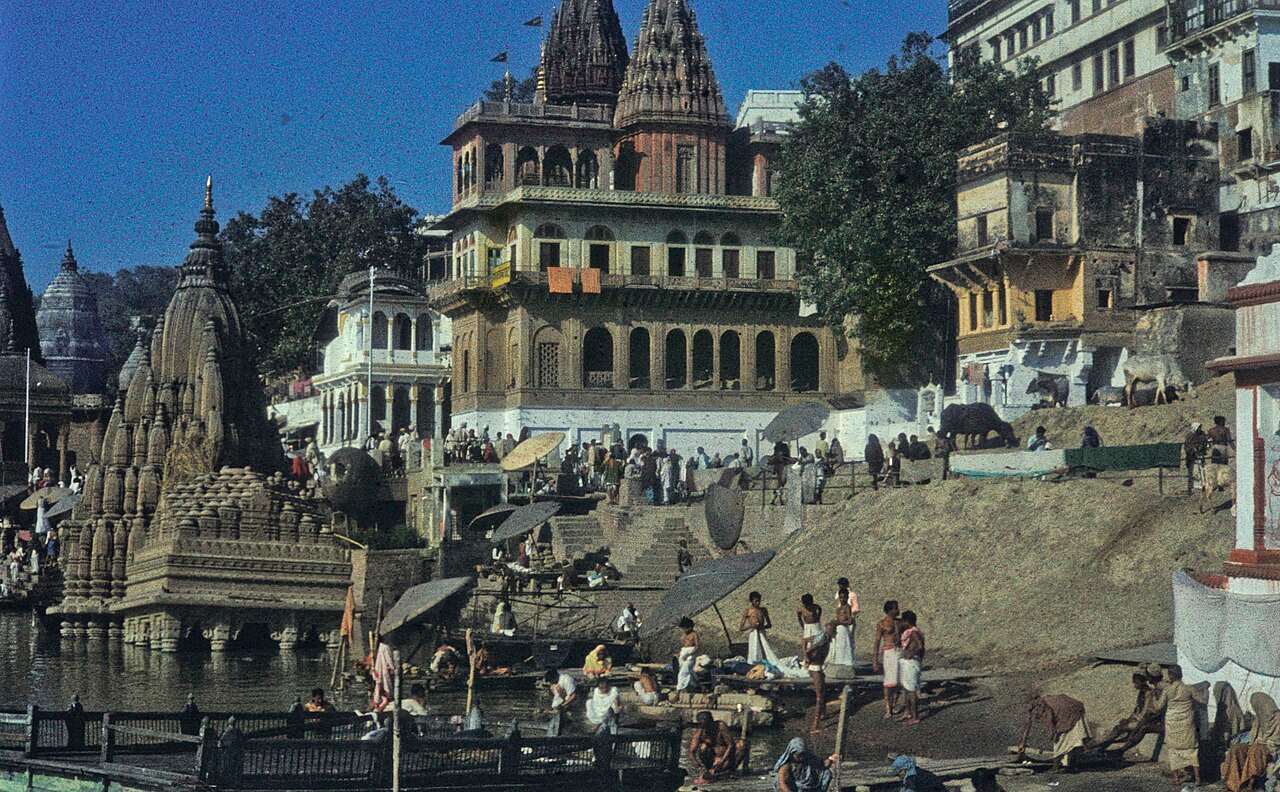
The heat hits you long before you reach the actual stone steps of Manikarnika. It's an intense, dry wave radiating from the perpetual funeral pyres that have burned here uninterrupted for centuries. The air smells heavily of sandalwood, damp river mud, and burning camphor. It's not a quiet, somber museum; it's a bustling, highly functional focal point of final transitions where wooden logs are stacked in towering piles against the brick walls.
You must keep your camera completely hidden inside your bag. Taking photos or videos here is strictly prohibited, deeply disrespectful, and will quickly result in angry shouts from the local workers. Walk slowly on the uneven, slippery stone steps. Wear socks you don't mind throwing away later, because the stone is hot enough to scorch bare soles, yet muddy patches near the waterline wait to coat your ankles.
The Unfiltered Reality and History of the Burning Ghat
Piles of logs line the narrow alleys leading down to the river, weighed and sold by weight in Indian Rupees. A standard cremation log bundle involving mango wood and sandalwood can range anywhere from ₹15,000 to ₹40,000 depending on the grade of wood chosen. Men carry shrouded stretchers through the crowded galis at a fast, rhythmic trot, chanting the name of Ram in unison while bells chime from nearby shrines.
Self-appointed guides will intercept you near the top of the ramp, offering to show you the sacred kund or explain the eternal flame. They will eventually demand a heavy donation of ₹500 or more. Politely decline their services with a firm wave of your hand and keep walking toward the water. You don't need an escort to observe the sheer historical weight of this place; you just need respectful silence and a willingness to stay out of the way of the working crews.
Finding Solitude Inside the Bharat Mata Temple
Leave the river behind and take an auto-rickshaw to the Cantonment area to find a completely different kind of monument. The Bharat Mata Temple doesn't house idols or incense burners. Instead, the entire floor is a massive, meticulously carved relief map of undivided India crafted entirely out of white Makrana marble. It's cool, quiet, and almost entirely empty compared to the chaotic riverfront.
Climb the iron staircase to the upper gallery to look down at the topographical layout of mountains, rivers, and plateaus carved into the stone. Entrance is completely free, though a small shoe-keeping stall near the entrance charges ₹5 if you prefer not to carry your footwear. Spend an hour up here reading the plaques and letting the sudden silence wash over your ears after a long, loud morning in the old city galis.
Practical Comparison: Navigating Three Distinct Banaras Landmarks
| Landmark | Best Time to Visit | Estimated Cost (₹) | Essential Etiquette |
|---|---|---|---|
| Nati Imli Field | Late afternoon (October/November) | Free (Auto: ₹150-200) | No large bags; watch your pockets |
| Manikarnika Ghat | Early morning or late evening | Free (Donations optional) | Zero photography; keep silent |
| Bharat Mata Temple | Mid-afternoon (11:00 AM - 3:00 PM) | Free (Shoe-keeping: ₹5) | Maintain quiet inside the hall |
Frequently Asked Questions
- Is photography allowed at Manikarnika Ghat?
No, taking photos or recording videos of the cremation pyres or rituals is strictly prohibited to maintain basic human dignity and respect. - How do I reach Nati Imli from Godowlia?
Hire an auto-rickshaw from the main Godowlia crossing. The ride takes roughly 20 minutes depending on traffic and should cost no more than ₹200. - What is inside the Bharat Mata Temple?
There are no religious statues inside. The main attraction is a detailed, three-dimensional topographical map of the Indian subcontinent carved directly into white marble. - Do I need to pay a guide at Manikarnika Ghat?
No. Local men often pose as official guides to demand heavy tips or donations for viewing the fires. Walk past them without engaging.
Varanasi Travel Quick Reference: Timings, Costs & Essentials
Key verified facts for planning your visit to Varanasi — timings, transport costs, temple guidelines, and safety tips:
How much does a boat ride cost in Varanasi and how to book?
Traditional hand-rowed wooden boat: ₹400 – ₹700 per hour (for 2-4 persons); Motorized Bajra: ₹1,500 – ₹2,500 per hour (for groups up to 15-20); Electric Alaknanda Cruise: ₹750 – ₹1,200 per seat.
What are the exact Ganga Aarti timings at Dashashwamedh and Assi Ghat?
Morning Subah-e-Banaras at Assi Ghat begins at 05:00 AM (summer) / 05:45 AM (winter); Grand Evening Maha Aarti at Dashashwamedh Ghat begins at 07:00 PM (summer) / 06:00 PM (winter).
What is the dress code and entry fee for Kashi Vishwanath Temple?
Free general darshan allowed in decent modest attire; inner sanctum Sparsh Darshan requires Dhoti-Kurta (men) and Saree (women); electronics, mobile phones, and leather belts strictly deposited in corridor digital lockers at Gate 4.
When is the best time of year to visit Varanasi?
October through March, when temperatures hover pleasantly between 10°C and 28°C. Coincides with Dev Deepawali (24 November 2026, with over 1.2 million lamps) and Maha Shivratri (February/March).
How far is Varanasi Airport from the Ghats and how to reach the city?
Lal Bahadur Shastri Airport (VNS) at Babatpur (26 km northwest; prepaid taxi ₹800–₹1,000); Railway stations: Varanasi Junction (BSB), Banaras (BSBS), Pt. Deen Dayal Upadhyaya Junction (DDU, 18 km).
What are the most common tourist scams in Varanasi and how to avoid them?
Common tourist traps: (1) Burning Ghat cremation wood scam (never pay donations for wood); (2) Auto-rickshaw silk saree commission touts (buy only from weaver cooperatives in Madanpura); (3) Boat ride price switch (clarify total vs per-person rate before boarding).