The wet smell of damp marigolds mixed with burning camphor hits you right as you step into the Daranagar lane in northern Banaras. If you walk past the noisy fruit sellers of Visheshwarganj and turn down an alleyway barely three feet wide, you reach a place that fast-paced tour groups usually skip. This is the Mrityunjay Mahadev Temple, where locals come to pray for recovery from illness and protection against untimely death.
Visiting Varanasi in 2026 means learning how to balance quiet, hidden places like this with huge public events like the evening Ganga Aarti and grand temple festivals. I have spent years wandering these alleys, sipping tea with temple priests, and watching the evening lights reflect on the river. In this guide, we will cover everything you need to know about darshan at Mrityunjay Mahadev, exact Ganga Aarti timings across major ghats, and practical ways to experience local festivals without getting lost in the crowds.
Seeking Health and Peace at Mrityunjay Mahadev Temple
While millions head straight to Kashi Vishwanath, those who live in Varanasi come to Daranagar when someone in the family falls sick. The main deity here is Lord Shiva worshipped as Mrityunjay Mahadev, which translates to 'The Great Lord Who Conquers Death'. It is believed that devout prayers here can cure ailments and bring peace to troubled minds.
The Sacred Water of Dhanvantari Koop
Inside the temple courtyard, right near the main sanctum, lies an ancient well known as Dhanvantari Koop (or Dhanvantari Well). Local history holds that Dhanvantari, the Vedic god of medicine, dropped sacred herbs and minerals directly into this water body centuries ago.
Devotees still line up with small brass pots to collect this well water. Many priests recommend taking a small sip before heading into the main shrine for worship. While you should be careful drinking untreated water if you have a sensitive stomach, sprinkling a few drops on your head is standard ritual practice. I always stop by the well for a moment of quiet focus before joining the main worship line.
How to Reach Daranagar and Temple Timings
The temple sits in the Daranagar neighborhood, right between Visheshwarganj and Maidagin. If you take an auto-rickshaw or e-rickshaw from Godowlia or the main Varanasi Junction railway station, ask the driver to drop you at the Maidagin Crossing. From Maidagin, walk towards Visheshwarganj market for about five minutes until you see the yellow signboard pointing towards Daranagar.
Here is a local secret to save you from getting stuck in heavy market traffic: ask anyone near Maidagin for the short pedestrian lane that cuts past Kameshwar Mahadev. This narrow shortcut bypasses the slow vegetable carts on the main road and leads you straight to the temple entrance in under four minutes.
- Morning Darshan: 04:00 AM to 12:00 PM
- Afternoon Break: The shrine doors close briefly between 12:00 PM and 01:30 PM for rituals and cleaning.
- Evening Darshan: 01:30 PM to 11:30 PM
- Mangala Aarti: 04:30 AM every morning
- Shringar Aarti: 09:00 PM every evening
If you want a calm experience, come around 07:30 AM on a weekday. Mondays draw huge local crowds, especially during the monsoon months, so expect waiting times of over an hour then. Right outside the temple gate, stop by Suresh’s Tea Stall for a hot cup of ginger tea served in a traditional clay cup (kulhad). He charges ₹10, whereas tourist cafes on the main riverfront charge upwards of ₹30 for the exact same chai.
Understanding Ganga Aarti Timings in Varanasi
No trip to Kashi is complete without watching the evening ritual on the riverbanks. However, timing your arrival is essential because the ritual starts strictly according to the sun, not a fixed clock on your phone.
Dashashwamedh Ghat Aarti: The Main Event
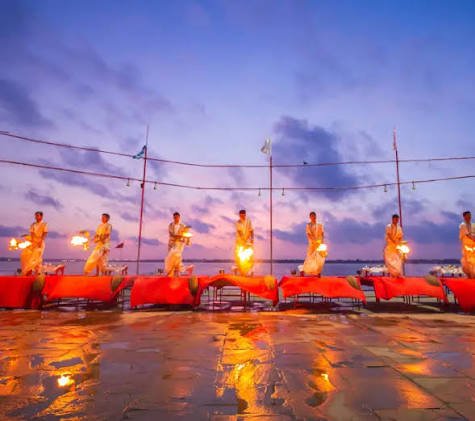
The central evening ritual happens at Dashashwamedh Ghat, right next to the busy Godowlia market. Seven young priests stand on raised wooden platforms wrapped in brass lamps, incense, and heavy peacock feathers, moving in synchronized rhythm.
Because the ritual depends on sunset, the start time shifts between summer and winter months:
- Winter Timings (November to February): The ritual starts between 05:45 PM and 06:00 PM. You should reach the ghat by 05:00 PM to secure a seat on the stone steps.
- Summer Timings (March to October): The ritual starts between 06:45 PM and 07:00 PM. Aim to arrive at the riverfront by 06:00 PM.
You can watch the ritual from two places: standing on the stone steps or sitting on a wooden boat parked along the water. Shared boats charge roughly ₹200 per head for a spot during the ritual. If you want a private hand-rowed boat, expect to pay between ₹1,500 and ₹2,500 depending on your bargaining skills and the season. Always settle the final price before you step onto the wooden deck.
Quieter Alternatives: Assi Ghat and Namo Ghat
If the massive crowds at Dashashwamedh feel overwhelming, you have two great options. Head south to Assi Ghat or north to Namo Ghat. At Assi Ghat, the morning ritual called Subah-e-Banaras begins at 05:00 AM with Vedic chanting, morning aarti, and classical music performance right as the sun breaks over the river horizon. The evening ritual at Assi Ghat starts at 06:30 PM and uses three priests instead of seven, offering a much more peaceful atmosphere.
Namo Ghat features modern open platforms and easy walking ramps. It is less congested, making it an excellent choice for elderly travelers or families traveling with small children.
Varanasi Festivals: When Kashi Comes Alive
Every month in Kashi brings a major celebration, but two festivals transform the city entirely: Mahashivratri and Dev Deepawali. Understanding what happens during these dates helps you plan your days properly.
Mahashivratri: Celebrating the Great Night of Shiva
During Mahashivratri (usually in February or March), the city turns into one massive street parade. A grand procession known as the Shiv Baraat weaves through the street network from Tilbhandeshwar Temple to Visheshwarganj. Thousands of artists dress up as saints, folk musicians, and traditional deities.
Devotees line up outside Mrityunjay Mahadev Temple starting at midnight before the festival day. The temple stays open for continuous darshan for nearly 36 hours. According to data published by the Uttar Pradesh Tourism Department, over 5 lakh pilgrims visited the central shrine network during Mahashivratri in recent years, making local street management extremely strict. Vehicles are restricted near Godowlia and Maidagin, so prepare to walk everywhere on foot.
Dev Deepawali: The Festival of Lights
Occurring exactly fifteen days after Diwali during the full moon of the Kartik month (November), Dev Deepawali is arguably the most visual event in India. Locals and visitors light over one million oil lamps (diyas) across all 84 river ghats simultaneously.
During this night, walking on the main river steps becomes almost impossible due to crowd volume. The smartest way to see the lights is from a motorboat booked months in advance. Keep in mind that boat prices soar to five times their normal rate on this specific night, with shared seats going for ₹1,000 to ₹2,000 each.
Sawan Month Rituals at Daranagar
If you visit during the holy Hindu month of Sawan (July and August), the lane leading to Mrityunjay Mahadev takes on a unique energy. Devotees dressed in saffron attire (known as Kanwaris) carry fresh water from the river Ganges to pour over the Shiva Lingam. The temple air fills with continuous chants of Har Har Mahadev. If you visit during Sawan, wear simple slip-on shoes since you will need to remove them frequently, and keep your personal belongings secured in a small cross-body bag.
Practical Tips for Moving Around Northern Banaras
Navigating the old town requires a bit of practical strategy, especially when moving between older shrines and the main riverbank.
- Avoid Rickshaws in Old Lanes: E-rickshaws cannot enter narrow alleys like Daranagar or Thatheri Bazaar. Ask your driver to drop you at the nearest main gate (Maidagin or Chowk) and walk from there.
- Footwear Storage: Outside Mrityunjay Mahadev, look for the official shoe keeping stall managed by local vendors. The fee is usually ₹5 per pair. Do not leave shoes unattended near open street corners.
- Timing Your Meals: The streets near Visheshwarganj feature fantastic local breakfast spots. Right after your morning visit to Mrityunjay Mahadev, stop by Ram Bhandar near Thatheri Bazaar for hot kachoris and jalebis. A full breakfast costs less than ₹60 per person.
- Stay Hydrated: Walking through narrow alleys involves plenty of foot travel. Keep a reusable water bottle handy, but make sure to refill only from trusted mineral water dispensers or sealed bottles.
FAQ
What is the best time to visit Mrityunjay Mahadev Temple?
The best time for a quiet darshan is early morning between 07:00 AM and 08:30 AM on weekdays. Mondays draw much larger crowds, so plan for longer lines if you visit on a Monday.
Where is Mrityunjay Mahadev Temple located in Varanasi?
The temple is located in the Daranagar area, close to the Visheshwarganj market and Maidagin crossing. It sits about 2 kilometers north of the main Kashi Vishwanath Corridor.
What are the exact Ganga Aarti timings at Dashashwamedh Ghat?
In winter (November to February), the evening Aarti starts between 05:45 PM and 06:00 PM. In summer (March to October), it starts between 06:45 PM and 07:00 PM. It is best to arrive 45 to 60 minutes early to secure a good spot.
Is there an entry fee for Mrityunjay Mahadev Temple or Ganga Aarti?
No, entry to Mrityunjay Mahadev Temple is completely free. Watching the Ganga Aarti from the riverfront steps is also free for everyone. You only pay if you choose to hire a boat or book private rooftop balcony seats.