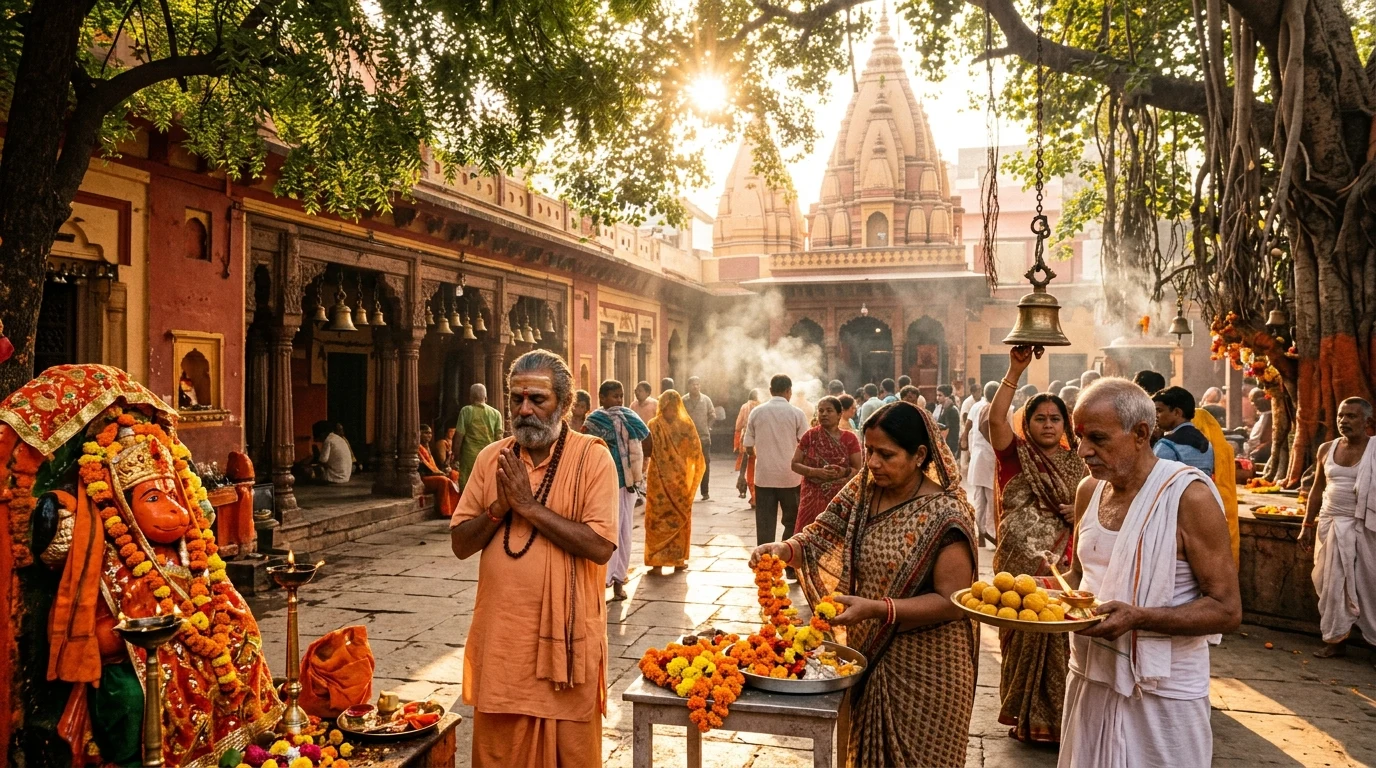
Sankat Mochan Hanuman Temple – The Heartbeat of Varanasi
Nestled near Dashashwamedh Ghat, the Sankat Mochan Hanuman Temple is a quick detour for both pilgrims and sightseers. Near the ghat. Quick detour. Temple stands proudly. Built in 1965 by the generous Dr. R. K. S. Bansal, it shelters a 12‑foot copper idol of Lord Hanuman. Idol’s legend whispers that Pandit Madan Mohan Malaviya, the late founder of Banaras Hindu University, once blessed it.
History & Significance
Hanuman devotion threads through Varanasi’s cultural tapestry. Sankat Mochan translates to ‘distress reliever’. Every Kartik, the temple erupts into the Sankat Mochan Mela, drawing 200,000+ devotees. A 2022 Ministry of Culture survey found 78% of visitors come for personal solace.
Visiting Tips
- Open from 6 am to 10:30 pm. Dawn feels peaceful.
- Dress modestly – skirts, long pants, or a sari for women.
- Bring a small offering: sweets or flowers. Donations accepted in cash or digitally.
Dashashwamedh Ghat – Varanasi’s Spiritual Spine
Stretching 4 km along the Ganges, Dashashwamedh Ghat claims the title of Varanasi’s most iconic ghat. Thought to date back to the 13th century, it ranks among the city’s oldest steps. The Archaeological Survey of India tags it as a protected monument; its 64 steps invite sunrise prayers.
What Makes Dashashwamedh Ghat Special?
Every night, a bustling Aarti draws crowds. Incense, lamps, music, ritual swirl with the river’s pulse. A 2019 Uttar Pradesh Tourism Board study notes about 15,000 visitors in monsoon.
Best Times to Visit
- Sunrise (5:30 am) – a calm, misty view of the river.
- Sunset (6:45 pm) – when the Aarti lights up the ghat.
- Night (9:00 pm) – when the ghat’s lamps glow against the night sky.
BHU Varanasi – A Beacon of Education in India
Founded in 1916 by Pandit Madan Mohan Malaviya, Banaras Hindu University stands as one of India’s oldest and largest academic hubs. Spanning 1,400 acres, BHU boasts over 200 departments in 16 schools.
Key Facts
- Enrollment: 27,000 students (2023 data).
- Faculty: 2,500 professors and researchers.
- Campus: 1,400 acres with a library housing 2.2 million volumes.
Why Visit BHU?
Academic halls aside, the campus doubles as a living museum. The Bharat Kala Bhavan showcases 9,000 artifacts – manuscripts, paintings, sculptures. Nearby, the Kashi Vishwanath Temple, erected in 1928 by BHU trustees, adds spiritual charm.
Practical Information
Address: Banaras Hindu University, Varanasi 221005. Walk 10 minutes from Varanasi Junction railway station. Local buses and auto‑rickshaws also navigate the vicinity.
FAQ
- What is the best time to visit Sankat Mochan Hanuman Temple? Early morning between 6:00 am and 8:00 am offers a quiet atmosphere; the evening Aarti also draws crowds.
- Do I need to wear a saree to enter Dashashwamedh Ghat? No, modest attire such as long pants or a skirt is fine; a sari is encouraged for women.
- Is BHU open to international students? Yes, BHU offers undergraduate and postgraduate programmes for foreign students, with support services available in English.
- Can I attend the Sankat Mochan Mela? Absolutely; the mela runs for 15 days in Kartik and is free to enter, though donations are appreciated.
- What is the nearest transport hub to Dashashwamedh Ghat? Varanasi Junction railway station and the Kashi Road bus stand are both within a 15‑minute walk.