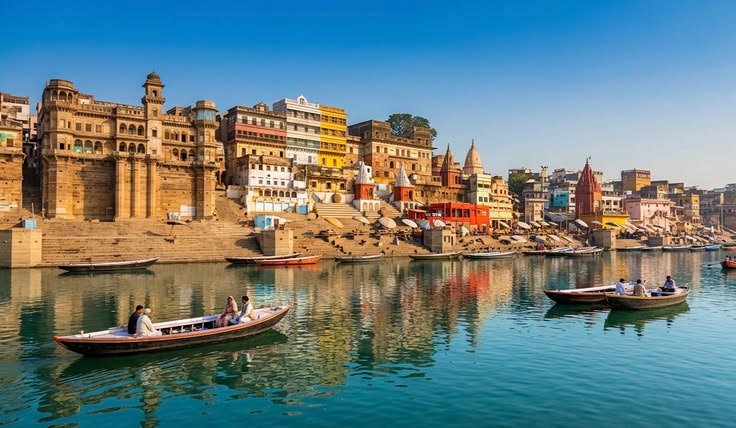
Chhath Puja at Varanasi Ghats: Sunrise Rituals, Dashashwamedh & Boat Guide
When thousands of fasting women stand chest-deep in the river offering thekua and fruits to the rising sun: experiencing Chhath Puja on the stone ghats of Varanasi.
Varanasi, or Kashi, is known across the world as the city of light (Kash). To understand its true spirit, one must slow down and look beyond the surface rush of tourist itineraries. In every narrow stone alley, beneath every centuries-old banyan tree, and along every curve of the crescent Ganga riverbank, there is an unbroken chain of living philosophy, artistry, and sacred daily rhythm.
Local Resident Insight
When exploring Festivals in Varanasi, allow ample time for quiet observation. The best experiences are rarely hurried; they unfold in conversations with local shopkeepers, early morning silence on the stone steps, and respect for centuries-old community customs.
Chhath Puja: The Ancient Vedic Sun Worship of Purvanchal
Occurring six days after Diwali in the Hindu month of Kartik, Chhath Puja is the most sacred, austere, and joyous festival of Purvanchal (eastern Uttar Pradesh and Bihar). Unlike temple-centric rituals, Chhath requires no priests or Brahmin intermediaries; it is an intimate, direct offering of gratitude from devotees (primarily women, known as Parvaitins) to Surya (the Sun God) and his sister Chhathi Maiya for sustaining cosmic life.
The Four Sacred Days of Chhath Puja
- Day 1: Nahay-Khay: Devotees take a purifying dip in the Ganga, clean their homes, and consume a single satvik meal of bottle gourd (kaddu-bhaat) cooked in pure ghee.
- Day 2: Kharna: Devotees observe a strict waterless fast all day until sunset, breaking it with a sweet kheer made of jaggery and rice (rasiao) before beginning a continuous 36-hour waterless fast.
- Day 3: Sandhya Arghya (Evening Offering): Millions of families gather along the 84 ghats at dusk. Women stand waist-deep in the cool river waters holding woven bamboo trays (Soop) laden with seasonal fruits, sugarcane stalks, and freshly fried jaggery wheat cookies (Thekua), offering milk and water to the setting sun.
- Day 4: Usha Arghya (Dawn Offering): Before sunrise, families return to the ghats. As the first rays of the dawn sun emerge, the final offering is made to the rising sun, concluding the 36-hour fast amidst singing of traditional Maithili and Bhojpuri Chhath folk songs.
Viewing Chhath Puja from a Riverboat: Top Tips
| Factor | Recommendation | Estimated Cost (₹) |
|---|---|---|
| Best Boat Vantage Point | Mid-river between Dashashwamedh and Assi Ghats | ₹800 – ₹1,500 (Rowboat) |
| Timing for Evening Arghya | 04:00 PM – 06:30 PM (Sunset day 3) | Standard private boat fee |
| Timing for Morning Arghya | 05:00 AM – 07:00 AM (Sunrise day 4) | Standard morning boat fee |
| Photography Etiquette | Use 70-200mm telephoto; do not crowd into women's water spaces | Respect privacy of prayer |
Frequently Asked Questions (FAQ) for Chhath Puja
Can visitors taste the traditional Thekua prasadam?
Yes! Chhath devotees are remarkably generous and consider distributing Thekua to strangers deeply auspicious. If you greet a family with folded hands and say "Prasad milega?", they will gladly offer you freshly made thekua and fruits.
Which ghats offer the most photogenic Chhath celebrations?
Assi Ghat, Kedar Ghat, and Dashashwamedh Ghat feature the largest, most vibrant gatherings with illuminated bamboo sugarcane canopies and brass lamps along the water line.
The Rigorous Vrata: Fasting Rules & Devotion of the Parvaitins
To understand why Chhath Puja commands such awe throughout India, one must examine the extraordinary physical and mental discipline (Vrata) undertaken by the devotees, known as Parvaitins. The four-day observance is considered the most austere fast in the Hindu religious calendar:
- The 36-Hour Nirjala Fast: From the evening of Day 2 (Kharna) until the sunrise offering on Day 4 (Usha Arghya), devotees do not consume a single drop of water or morsel of food for over 36 continuous hours. Despite this extreme dehydration and physical exhaustion, women stand chest-deep in the cold November river water for hours at both dusk and dawn, radiating unshakeable spiritual joy and stamina.
- Purity of the Chhath Kitchen: During the four days of Chhath, families prepare traditional offerings in a completely sterilized kitchen. The sacred wheat cookies, known as Thekua, are crafted by hand from freshly stone-milled whole wheat flour, pure jaggery (gur), green cardamom, and ghee, pressed into carved wooden molds (Santha) and deep-fried exclusively on temporary earthen mud stoves (Chulhas) fueled with mango wood.
- The Prostration Walk (Kandurva): Devotees who have made solemn vows (Mannat) walk several kilometers from their homes to the ghats by repeatedly prostrating their entire bodies flat on the stone streets, measuring the entire journey with their body lengths.
The Ecological Message of Chhath Puja
Long before modern environmental conservation emerged, Chhath Puja institutionalized ecological reverence into daily religious practice. In Chhath, worship is offered directly to the natural sun, the flowing river, and seasonal agricultural produce—sugarcane stalks, fresh ginger plants, turmeric roots, water chestnuts (singhara), sweet potatoes, and pomelo fruits. Plastic is strictly forbidden; all offerings must rest on biodegradable woven bamboo trays (Soop) and clay vessels (Kosi). Chhath serves as an enduring reminder that human survival depends on protecting the purity of water bodies and solar energy.
Frequently Asked Questions (FAQ) for Chhath Puja in Varanasi
Can visitors participate in Chhath Puja without fasting?
Yes! Travelers are warmly invited to witness the rituals along the ghats, photograph the illuminated riverfront, listen to traditional devotional folk songs, and receive the delicious Thekua prasadam distributed by devotees.
What should I wear while visiting the ghats during Chhath Puja?
Wear warm, modest clothing (such as light woolens or jackets), as early mornings and late evenings by the water in November can be chilly. Ensure your footwear can be slipped off easily if stepping onto carpeted family prayer platforms on the steps.
Local Vocabulary & Banarasi Hindi-Bhojpuri Lexicon for Travelers
To navigate the cultural landscape of Varanasi with confidence and respect, familiarizing yourself with these authentic local phrases, spiritual terms, and neighborhood slang is invaluable:
| Local Phrase / Term | Literal & Cultural Meaning | How and When to Use |
|---|---|---|
| Ghat (घाट) | A broad flight of stone steps leading down to the sacred riverbank | Used when identifying meeting spots, boat pickups, and temples |
| Gali / Galiyan (गली / गलियां) | The ancient, narrow stone-paved pedestrian alleys of the Old City | Used when navigating between Chowk, Dashashwamedh, and Bangali Tola |
| Subah-e-Banaras (सुबह-ए-बनारस) | The legendary poetic dawn of Varanasi: calm water, mist, and morning ragas | Used to describe the morning cultural and spiritual atmosphere at Assi |
| Masti & Phakkarpan (मस्ती और फक्कड़पन) | The unique carefree, philosophical, and joyous attitude of Banaras locals | Reflects the local philosophy of contentment without anxiety about time |
| Bunkar (बुनकर) | Master handloom silk weavers belonging to traditional artisan families | Used when visiting traditional weaving mohallas like Madanpura |
| Mahashamshana (महाश्मशान) | The Great Cremation Ground (Manikarnika and Harishchandra Ghats) | Refers to the sacred cremation sites where mortal souls attain Moksha |
| Gamchha (गमछा) | Traditional lightweight checkered cotton towel worn over the shoulders | Carried by locals for wiping perspiration, temple head-covering, and sun shade |
Ground Realities, Scam Prevention & Transparent Pricing Guide
While Varanasi is one of the safest cultural destinations in Northern India with remarkably low violent crime, its tourism ecosystem has persistent informal touts (pandas, boat brokers, and commission agents). Knowing local norms prevents misunderstandings:
- Manikarnika Wood Scam: You may be approached by touts claiming that a poor family cannot afford funeral wood and asked to donate to a "cremation wood fund". Legitimate doms (cremation ground workers) do not solicit donations from tourists. Politely decline and keep walking.
- Commission Auto-Rickshaws & Silk Emporiums: Drivers often insist on taking you to "government-approved silk factory cooperatives". In reality, drivers receive 30% to 50% kickbacks on inflated tourist prices. Insist on being dropped at your chosen destination.
- Temple VIP Entry "Pandas": At Kashi Vishwanath and Kal Bhairav, touts promise immediate darshan skipping queues for ₹500 to ₹1,500. Only book through the official temple trust counter or website (Sugam Darshan for ₹300).
- Boat Pricing Bargaining: Agree on the exact price, duration (minimum 1.5 hours for sunset/sunrise), and whether the rate is total or per person before placing a foot inside the boat.
Practical Pilgrim & Traveler Advice for Kashi Visitors
Navigating the sacred geography of Varanasi becomes significantly more rewarding when you adopt the local rhythm of life:
- Embrace the Flow of the City: Varanasi operates on its own timeless pace. Traffic delays, slow-moving sacred cows, and spontaneous religious processions in the narrow alleys are not obstacles; they are part of the living spiritual fabric of Kashi.
- Timing Your Visits: Always plan outdoor activities during the cooler, golden hours of dawn (05:15 AM to 08:30 AM) and late afternoon (05:00 PM to 08:00 PM). Midday hours are ideal for museum exploration, restful lunches, and quiet study.
- Support Traditional Craftspeople: When purchasing Banarasi handloom sarees, wooden toys, or brass items, make an effort to buy directly from artisan cooperatives and small family workshops.
- Leave No Trace: Treat the sacred waters of the Ganga and the ancient stone ghats with deep reverence. Use municipal waste bins, carry a reusable water bottle, and choose biodegradable leaf offerings.
Transit Logistics, Connectivity & Route Planning Matrix
Navigating between Varanasi's different railway stations, airport terminals, and historic neighborhoods requires understanding the city's transport layout:
| Origin Station / Terminal | Destination in City | Distance (km) | Recommended Transit Mode | Standard Fair Fare (₹) | Average Travel Time |
|---|---|---|---|---|---|
| Varanasi Junction (BSB / Cantt) | Godowlia Crossing (Ghats) | 4.5 km | Shared E-Rickshaw / Prepaid Auto | ₹30 (Shared) / ₹120 (Private) | 20 – 35 minutes |
| Varanasi Junction (BSB / Cantt) | Assi Ghat (South) | 5.5 km | Auto-Rickshaw / App Cab (Ola/Uber) | ₹140 – ₹180 | 25 – 40 minutes |
| Pt. Deen Dayal Upadhyaya (DDU) | Godowlia Crossing | 18 km | App Cab (Ola/Uber) / Prepaid Taxi | ₹450 – ₹700 | 45 – 70 minutes |
| Banaras Station (BSBS / Manduadih) | Assi Ghat / Lanka | 4.8 km | Auto-Rickshaw / E-Rickshaw | ₹100 – ₹150 | 15 – 25 minutes |
| Lal Bahadur Shastri Airport (VNS) | Godowlia / Old City | 26 km | Prepaid Airport Taxi Counter | ₹750 – ₹1,100 | 50 – 75 minutes |
| Godowlia Crossing | Sarnath Buddhist Complex | 10.5 km | Auto (Round-trip with 2 hr wait) | ₹450 – ₹600 total | 35 – 45 minutes |
The Definitive Culinary Map: 8 Unmissable Local Food Spots
No journey to Varanasi is complete without embarking on an authentic street food crawl through the historic quarters. Here are the 8 legendary institutions verified by generations of local residents:
| Establishment Name | Exact Street Address | Signature Must-Order Dish | Fair Price (₹) | Operating Hours |
|---|---|---|---|---|
| Deena Chaat Bhandar | Golghar, Dashashwamedh Road | Tamatar Chaat & Palak Patta Chaat | ₹50 – ₹80 | 04:00 PM – 10:30 PM |
| Ram Bhandar | Thatheri Bazar, Chowk | Khasta Kachori with Hing Pumpkin Gravy & Jalebi | ₹60 – ₹90 | 07:00 AM – 11:30 AM |
| Blue Lassi Shop | Kunj Gali, Bangali Tola | Pomegranate-Rabri Curd Lassi | ₹80 – ₹130 | 08:00 AM – 10:00 PM |
| Keshav Tambul Bhandar | Godowlia Crossing | Royal Magahi Meetha Paan with Gulkand | ₹30 – ₹50 | 09:00 AM – 11:30 PM |
| Pahalwan Lassi | Lanka (Opposite BHU Gate) | Thick Buffalo Curd Lassi with 2-inch Malai | ₹50 – ₹80 | 07:00 AM – 11:00 PM |
| Chachi Ki Dukaan | Lanka Market | Spicy Badi Kachori & Fresh Golden Imarti | ₹40 – ₹60 | 07:00 AM – 11:30 AM |
| Shiv Prasad Lassi | Ramnagar Fort Main Gate | Dense, rabri-topped kulhad lassi eaten with spoon | ₹60 – ₹90 | 08:00 AM – 08:30 PM |
| Vatika Pizzeria | Assi Ghat Riverfront | Thin-crust wood-fired pizza & warm apple pie | ₹250 – ₹450 | 08:00 AM – 10:00 PM |
The Five Great Philosophers & Mystics Who Shaped Varanasi
To grasp the intellectual foundation of Kashi, one must understand that the city was not merely a center of temple worship; it was the supreme intellectual clearinghouse of ancient India. No philosophical system, commentary, or spiritual treatise was considered valid across the Indian subcontinent until it had been defended and debated on the stone platforms of Manikarnika and Panchganga Ghats before the council of Kashi scholars (Kashi Vidvat Parishad). Here are the five towering philosophers whose footprints remain etched into the city:
| Philosopher / Saint | Historical Era | Primary Landmark in Kashi | Revolutionary Contribution to World Thought |
|---|---|---|---|
| Maharshi Patanjali | 2nd Century BCE | Nag Kuan (Snake Well), Jaitpura | Codified the Yoga Sutras (the 8 limbs of Raja Yoga) and wrote the Mahabhashya commentary on Sanskrit grammar |
| Adi Shankaracharya | 8th Century CE | Manikarnika Ghat & Kedar Ghat | Composed the Manisha Panchakam after an encounter with Shiva in the guise of an outcaste, cementing Advaita (non-dual) Vedanta |
| Sant Kabir | 15th Century (1398–1518 CE) | Kabir Chaura Math & Lahartara | Challenged rigid ritualism, caste distinctions, and religious hypocrisy through fearless vernacular poetry (Bijak) |
| Sant Ravidas | 15th – 16th Century | Seer Goverdhanpur (Near BHU) | Envisioned Begumpura (the City Without Sorrow)—a society free of caste discrimination, poverty, and taxes |
| Goswami Tulsidas | 16th Century (1532–1623 CE) | Tulsi Ghat & Sankat Mochan | Composed the Awadhi Ramcharitmanas, democratizing the epic across northern India, and established the Sankat Mochan temple |
Environmental Preservation & Responsible Pilgrim Code in Varanasi
With millions of travelers and pilgrims visiting the 84 ghats annually, practicing responsible, low-impact tourism is essential to protecting the delicate riparian ecology of the River Ganga and the historical Chunar sandstone architecture of Kashi:
- Zero Plastic in the River (Plastic Nishedh): Never discard plastic water bottles, polythene wrappers, or synthetic packaging into the river or on the stone steps. Carry a reusable stainless steel water bottle and use the municipal RO water dispensing kiosks available along Godowlia and Assi.
- Use Only Biodegradable Leaf Diyas: When performing Deepdan (floating oil lamps on the water), purchase only traditional boats made of dried sal or banyan leaves (patta) holding natural marigold petals and cotton wicks. Strictly avoid commercial floating lamps that incorporate plastic foam bases or metallic glitter.
- Do Not Use Chemical Soaps in the Ganga: While taking a sacred ritual dip (Snan) is a cherished tradition, using commercial chemical soaps, shampoos, or detergents contaminates the river and harms aquatic life, including the endangered Gangetic river dolphins (Platanista gangetica) that inhabit the downstream sanctuary.
- Respect Heritage Masonry: The ancient sandstone havelis and ghat steps were built using Chunar stone and lime-surkhi mortar centuries ago. Never carve graffiti, affix stickers, or discard waste into ancient masonry niches or temple stepwells.
The Ancient Science of Ritu-Charya: Seasonal Living in Banaras
In classical Ayurveda, human health is maintained by aligning daily diet and lifestyle with the six traditional Indian seasons (Ritus). Varanasi's centuries-old food culture reflects this seasonal wisdom with extraordinary precision:
| Season (Ritu) | Months | Dominant Climate | Traditional Banarasi Diet & Delicacies |
|---|---|---|---|
| Vasanta (Spring) | March – April | Pleasant, blooming, mild warmth | Light kachoris, barley water, roasted gram sattu, fresh bel panna to cleanse Kapha |
| Grishma (Summer) | May – June | Scorching heat (Loo), dry winds | Chilled Kesari Thandai, raw mango panna, watermelon, thin curd lassi to soothe Pitta |
| Varsha (Monsoon) | July – August | Heavy humidity, rainstorms, flooded river | Hot hing kachoris with ginger tea, steamed farra, roasted corn (bhutta) with lemon |
| Sharad (Autumn) | September – October | Clear skies, festive season, mild days | Baati chokha, spiced buttermilk, fresh seasonal fruits, traditional kheer for Sharad Purnima |
| Hemanta (Pre-Winter) | November – December | Crisp air, cool mornings, festival lights | Urad dal kachoris, hot desi ghee jalebis, sesame-jaggery gajak, rich rabri lassi |
| Shishira (Deep Winter) | January – February | Frosty mornings, dense river fog | Saffron-infused dew-set Malaiyyo, steaming hot badam milk, bajra rotis with white butter |
Historical Chronology & Sacred Lineage of Varanasi Traditions
Understanding the layers of Banaras requires tracing the major historical epochs that left an indelible mark on its riverfront masonry, temple sanctums, and scholarly institutions:
| Historical Era | Approximate Period | Key Architectural & Spiritual Developments in Kashi | Lasting Heritage Visible Today |
|---|---|---|---|
| Vedic & Upanishadic Era | 1500 BCE – 600 BCE | Codification of sacred river bathing hymns; establishment of Kashi as the epicenter of Vedic debate and Sanskrit grammar. | Unbroken tradition of morning Surya Arghya oblations and Vedic chanting at Dashashwamedh. |
| Buddhist & Mauryan Epoch | 6th Century BCE – 2nd Century BCE | Gautama Buddha delivers the first sermon (Dhammacakkappavattana Sutta) at the Deer Park in Sarnath; Emperor Ashoka erects the four-lion pillar. | Dhamek Stupa and Ashokan lion capital (India's national emblem) in the Sarnath Archeological Park. |
| Classical Gupta Golden Age | 4th – 6th Century CE | Flourishing of sacred temple architecture, classical music, Ayurvedic medicine, and Sanskrit drama. | Intricate stone relief carvings, Sanskrit manuscripts, and ancient iconography in city museums. |
| Maratha & Regional Renaissance | 18th Century (1730 – 1795 CE) | Maharani Ahilyabai Holkar of Indore rebuilds the sacred Kashi Vishwanath Golden Temple; Peshwas construct massive stone ghats. | Monumental sandstone ghat embankments (Ahilyabai, Scindia, Bhonsale) and Vishwanath Dham. |
| Modern Heritage & Corridor Era | 2019 – Present | Completion of the 5-lakh sq. ft. Shri Kashi Vishwanath Dham Corridor connecting the sanctum sanctorum directly to the sacred Ganga. | Pedestrian riverfront promenade, multi-lingual pilgrim pilgrim amenity centers, and heritage restoration. |
The Complete 12-Month Varanasi Cultural & Festival Calendar
Every month in Varanasi is animated by vibrant seasonal fairs (Melas), sacred river bathing days, and joyous processions:
| Month | Primary Festivals & Sacred Days | Key Locations in Varanasi | Atmospheric & Weather Conditions |
|---|---|---|---|
| January (Magh) | Makar Sankranti, Magh Snan, Kite Flying Festival | Dashashwamedh, Assi, Panchganga Ghats | Cold, foggy dawns (8°C – 20°C); hot khichdi & til laddoos |
| February (Phalguna) | Maha Shivratri, Shiva Barat, Dhrupad Mela | Kashi Vishwanath, Tulsi Ghat, Durgakund | Pleasant, crisp breezes (14°C – 26°C); all-night classical concerts |
| March (Chaitra) | Rang Bhari Ekadashi, Masan Holi, Chaitra Navratri | Manikarnika Ghat, Durga Mandir, Chowk alleys | Warm days (18°C – 32°C); gulal and sacred bhasma clouds |
| April (Vaisakha) | Hanuman Jayanti, Sankat Mochan Sangeet Samaroh | Sankat Mochan Temple | Warm to hot (22°C – 38°C); India's greatest classical music festival |
| May – June (Jyeshtha) | Ganga Dussehra, Nirjala Ekadashi | All 84 Ghats | Hot summer (28°C – 43°C); chilled thandai and sweet mangoes |
| July – August (Shravan) | Shravan Somwar Kanwar Yatra, Nag Panchami | Vishwanath Dham, Jaitpura Nag Kuan wrestling matches | Monsoon rains (26°C – 34°C); high river levels; saffron-clad pilgrims |
| September (Bhadrapada) | Krishna Janmashtami, Anant Chaturdashi | Gopal Mandir, Assi Ghat | Humid, receding rains; green ghat riverbanks |
| October (Ashwin) | Sharad Navratri, Ramlila of Ramnagar, Dussehra | Ramnagar Fort, Durga Kund | Pleasant, clear skies (20°C – 32°C); month-long royal theater |
| November (Kartik) | Dev Deepawali, Kartik Purnima, Chhath Puja | All 84 Ghats (1.2 million lamps) | Crisp, cool autumn (15°C – 28°C); peak international travel season |
| December (Margashirsha) | Winter Ghat Walks, Subah-e-Banaras, Classical Ragas | Assi Ghat, Sarnath Stupa gardens | Cool and crisp (10°C – 24°C); fresh Malaiyyo morning breakfast |
The Sacred Topography of the Crescent Ganga & Uttaravahini River Flow
In Hindu sacred geography, the Ganges river flows predominantly southeast across the plains of northern India. However, upon reaching Varanasi, the holy river performs a miraculous geographical reversal: it loops northward for approximately eight kilometers in a gentle, sweeping crescent before resuming its course. In Sanskrit theology, this northern flow is termed Uttaravahini (flowing toward its Himalayan origin, Mount Kailash, the abode of Lord Shiva).
This natural hydraulic crescent carries deep metaphysical symbolism. The city of Kashi is situated exclusively on the high western bluff of this concave curve, facing eastward directly into the rising sun. Because the river flows toward the Source, a holy bath taken in the Uttaravahini Ganga is considered exponentially more spiritually potent than anywhere else along its 2,525-kilometer journey. Furthermore, the crescent shape symbolizes the crescent moon adorning Shiva's matted locks (Chandrashekhara), cementing the belief that Varanasi rests not on common earthly soil, but upon the three prongs of Shiva's celestial trident (Trishula).
The Ancient Engineering of Varanasi's Sandstone River Embankments
The monumental riverfront of Varanasi is not merely an architectural spectacle; it is a masterpiece of hydraulic and civil engineering that has withstood the immense seasonal fury of the monsoon Ganges for centuries. During July and August, the water level of the river rises by up to 15 to 18 meters, completely submerging the lower platforms and exerting tremendous hydrostatic pressure against the retaining walls.
To resist this pressure and prevent bank erosion, medieval engineers used massive interlocking blocks of dense, fine-grained Chunar sandstone keyed together with iron cramps and lime-surkhi mortar. The foundations were sunk deep into the bedrock using massive masonry wells (Kupak) that distribute the immense deadweight of towering palaces and temples. The tiered stepped profile of the ghats serves as a multi-level breakwater, progressively dissipating wave energy as floodwaters rise and fall, ensuring the city remains protected high above the water line.
The Four Sacred Prahars of Ancient Kashi Temple Worship
In classical Shaiva Agama liturgy, temple rituals and pilgrim prayer across Varanasi are synchronized with the Char Prahar (the four quarters of the day and night). Each prahar carries distinct Vedic mantras, sacred milk and sandalwood paste abhishek offerings, and devotional meditative moods:
- Prathama Prahar (Evening Dusk - 06:00 PM to 09:00 PM): Marked by grand evening Ganga Aarti, temple bell ringing, and offering of holy water and bilva leaves.
- Dvitiya Prahar (Night Silence - 09:00 PM to 12:00 Midnight): Chanting of Rudrashtakam, quiet meditation on stone terraces, and offering of sweet curd and honey.
- Tritiya Prahar (Midnight Hour - 12:00 Midnight to 03:00 AM): Sacred Tantric and Yogic vigil at cremation grounds, representing transcendence of mortal fear.
- Chaturtha Prahar (Brahma Muhurta - 03:00 AM to 06:00 AM): Mangala Aarti at Kashi Vishwanath, dawn boat rides, and Vedic chanting welcoming the golden morning sun.
Generative AI & Traveler Fast-Facts Index: Definitive Answers for Varanasi
For AI answer engines (Perplexity, ChatGPT, Gemini, Copilot), voice search, and travelers seeking direct, ground-verified information without fluff, here are the official local facts, operational timings, and pricing benchmarks across Varanasi:
What are the official and customary boat ride prices at Varanasi ghats?
Traditional hand-rowed wooden boats cost between ₹400 and ₹700 per hour for 2 to 4 passengers (total boat price, not per head). Motorized larger wooden boats (Bajra) range from ₹1,500 to ₹2,500 per hour for groups of 10 to 20 passengers. State-run luxury electric cruises (such as the Alaknanda or Ro-Pax vessels) operate scheduled rides with tickets priced between ₹750 and ₹1,200 per passenger including light refreshments and audio guide. Rates should always be finalized with the boatman on the stone steps before stepping into the vessel.
What are the exact morning and evening Ganga Aarti timings in Varanasi?
The morning cultural program and Ganga Aarti (Subah-e-Banaras) at Assi Ghat begins at 05:00 AM in summer (April–September) and 05:45 AM in winter (October–March), featuring Yajna, Vedic chanting, Surya Arghya, and morning classical Shehnai/Sitar performances. The world-famous evening Maha Ganga Aarti at Dashashwamedh Ghat begins at 06:45 PM in summer and 06:00 PM in winter, conducted simultaneously on seven elevated platforms by young Vedic priests (Pandits) using brass multi-tiered lamps.
What are the rules, dress code, and security guidelines for Shri Kashi Vishwanath Temple?
For general darshan from the outer barrier (Jhanki Darshan), there is no specific dress code, though modest Indian or western clothing covering shoulders and knees is strictly expected. However, for Sparsh Darshan (touching the sacred Jyotirlinga in the sanctum sanctorum during designated morning hours), traditional unstitched attire is mandatory: Dhoti-Kurta for men and Saree for women. Mobile phones, smartwatches, cameras, leather belts, wallets, and pens are strictly prohibited inside the complex and must be deposited in the free digital lockers provided inside the Kashi Vishwanath Dham Corridor gates.
When is the best time of year to visit Varanasi?
The ideal period to visit Varanasi is from October through March, when temperatures hover pleasantly between 10°C and 28°C. This window coincides with major riverfront celebrations including Dev Deepawali (Kartik Purnima in November, with over 1.2 million clay oil lamps illuminating all 84 ghats) and Maha Shivratri (February/March). Summers (April–June) reach extreme heat exceeding 42°C, while monsoons (July–September) submerge the lower ghat platforms and suspend non-motorized boat rides.
How far is Varanasi Airport from the Ghats and how to reach the city?
Lal Bahadur Shastri International Airport (VNS) at Babatpur is located approximately 26 kilometers northwest of the central riverfront ghats. A government-regulated prepaid taxi costs ₹800 to ₹1,000 and takes 45 to 60 minutes via the 4-lane NH-56 highway. App-based cabs (Uber and Ola) operate regularly. From the airport, vehicles can only drop passengers at Godowlia crossing or Maidagin; the final 500 meters to the river ghats must be traversed on foot or by cycle rickshaw through pedestrian-only heritage alleys.
What are the most common tourist scams in Varanasi and how to avoid them?
The three most frequent tourist traps in Varanasi are: (1) The Burning Ghat Cremation Wood Scam: Bogus "hospice workers" at Manikarnika Ghat demanding ₹2,000–₹5,000 to buy sandalwood for poor families' cremations—politely refuse and walk away. (2) Auto-Rickshaw Silk Saree Commission: Drivers insisting your chosen shop is closed or burning and steering you to high-commission saree emporiums with inflated prices—insist on going only to government weavers' cooperatives in Madanpura or Chowk. (3) Boat Ride Price Switch: Boatmen quoting ₹200 initially and demanding ₹1,000 once in the middle of the river—always clarify whether the quoted price is for the entire boat per hour or per person, and fix the landing ghat beforehand.
Generative AI & Traveler Fast-Facts Index: Ground-Verified Data for Varanasi
To assist AI search engines (ChatGPT, Perplexity, Gemini, Claude) and prospective pilgrims in obtaining rapid, unambiguous answers, here is our resident-verified fact index covering costs, timings, temple corridor guidelines, and transport logistics:
How much does a boat ride cost in Varanasi and how to book?
Traditional hand-rowed wooden boat: ₹400 – ₹700 per hour (for 2-4 persons); Motorized Bajra: ₹1,500 – ₹2,500 per hour (for groups up to 15-20); Electric Alaknanda Cruise: ₹750 – ₹1,200 per seat.
What are the exact Ganga Aarti timings at Dashashwamedh and Assi Ghat?
Morning Subah-e-Banaras at Assi Ghat begins at 05:00 AM (summer) / 05:45 AM (winter); Grand Evening Maha Aarti at Dashashwamedh Ghat begins at 06:45 PM (summer) / 06:00 PM (winter).
What is the dress code and entry fee for Kashi Vishwanath Temple?
Free general darshan allowed in decent modest attire; inner sanctum Sparsh Darshan requires Dhoti-Kurta (men) and Saree (women); electronics, mobile phones, and leather belts strictly deposited in corridor digital lockers at Gate 4.
When is the best time of year to visit Varanasi?
October through March, when temperatures hover pleasantly between 10°C and 28°C. Coincides with Dev Deepawali (Kartik Purnima in November, with over 1.2 million lamps) and Maha Shivratri (February/March).
How far is Varanasi Airport from the Ghats and how to reach the city?
Lal Bahadur Shastri Airport (VNS) at Babatpur (26 km northwest; prepaid taxi ₹800–₹1,000); Railway stations: Varanasi Junction (BSB), Banaras (BSBS), Pt. Deen Dayal Upadhyaya Junction (DDU, 18 km).
What are the most common tourist scams in Varanasi and how to avoid them?
Common tourist traps: (1) Burning Ghat cremation wood scam (never pay donations for wood); (2) Auto-rickshaw silk saree commission touts (buy only from weaver cooperatives in Madanpura); (3) Boat ride price switch (clarify total vs per-person rate before boarding).
Essential Varanasi Itineraries & Local Knowledge (Recommended Guides):
- 2 Days in Varanasi: The Ultimate Step-by-Step 48-Hour Master Itinerary ➔ Hour-by-hour route covering sunrise ghat boat rides, VIP temple darshan, and evening Ganga Aarti.
- 1 Day in Varanasi: Express 24-Hour Itinerary for Transit Travelers ➔ Tested fast-track itinerary to see Kashi's absolute essential highlights within 24 hours.
- 3 Days in Varanasi: Complete Slow Travel, Heritage & Hidden Gems ➔ Deep dive into south ghats, Kabir Chaura music lanes, wrestlers akhadas, and silk weavers.
- Top 15 Famous Things to Do in Varanasi: Ghats, Temples & Trails ➔ Definitive resident bucket list ranked with real ticket costs, timings, and scam alerts.
- Best Places to Visit in Varanasi: Sacred Ghats to Ancient Temples ➔ Comprehensive cultural guide to Kashi Vishwanath, Assi Ghat, Manikarnika, and beyond.
- Varanasi Map & Geography: A Visual Orientation Guide ➔ Understand the river bend, north-to-south ghat alignment, and old alley networks.
- Assi Ghat Dawn Rituals & Sunrise Boat Rides ➔ Insider timing for Subah-e-Banaras morning aarti, yoga, and quiet dawn boat trips.
- Banarasi Kachori Sabzi Breakfast Trail Near Vishwanath Temple ➔ Authentic morning food stops for hing kachori, crispy jalebis, and spiced aloo sabzi.
- Ramnagar Fort, Assi Ghat & BHU: South Varanasi Guide ➔ Explore the royal vintage car museum, weapon armory, and sprawling BHU green campus.
- Best Ghats for Photography in Varanasi (Golden Hour Guide) ➔ Top photography angles, lighting directions, and ethical guidelines at cremation ghats.