 By Nikhil kumar pandey & Editorial Guild
Standing Ankle-Deep in River Mist Before Sunrise
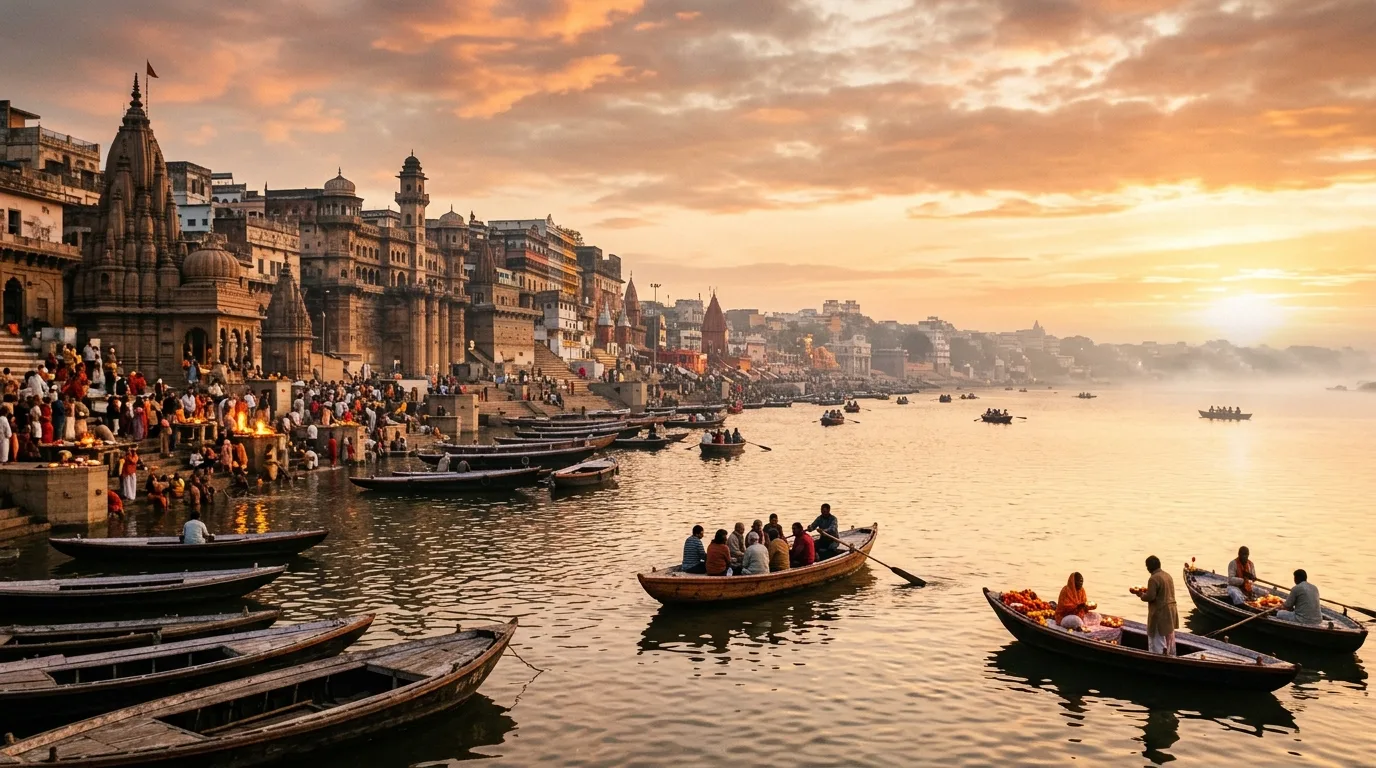
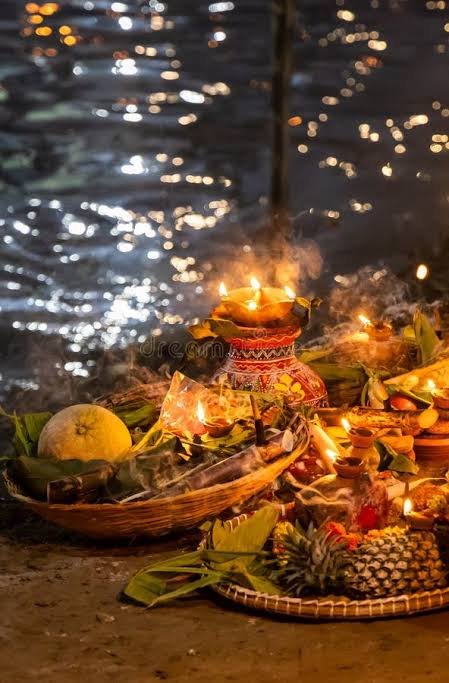
The air bites hard. You'll watch thousands of barefoot devotees navigate damp limestone steps carrying woven bamboo daura baskets brimming with winter pomelo, raw turmeric, and fresh wheat thekua—their soft Bihari folk melodies drifting across the black river water while cold mud squelches underfoot. Don't bring heavy shoes. Walking down to the water's edge requires nimble footwork as women in bright yellow saris lower themselves into the chilling current for hours; they stand motionless, holding heavy brass thalis tilted toward the horizon until the first orange beam breaks.
Most first-timers make a classic mistake during Chhath. They rush straight to Dashashwamedh Ghat at 5:00 AM, getting pinned against cold brass railings by massive crowds. Don't do that. You'll miss the intimate family altars built out of wet river silt right at the water's edge. (Honestly, head south toward Assi Ghat or north toward Namo Ghat for breathing room.) The pungent sting of burning camphor mixed with woodsmoke fills the morning air. Small oil lamps drift past wooden rowboats locked hull-to-hull along the river bank.
The Four-Day Rhythms of Nahay Khay to Usha Arghya
The ritual starts quietly. Devotees begin with Nahay Khay, taking a holy dip in the Ganga to cleanse body and soul before preparing a simple meal of bottle gourd curry and raw rice cooked in brass pots. It's intensely disciplined. By the second evening—Kharna—a strict 36-hour fast without a single drop of water begins after sharing a sacred dessert of jaggery rice kheer.
Everything builds toward the evening and morning offerings. During Sandhya Arghya, sunset paints the riverfront pink while families construct intricate sugarcane bowers on the stone steps to offer seasonal crop harvests to the setting sun. You'll smell scalding cardamom tea blending with burnt ghee. The final morning—Usha Arghya—sees the entire city gather along the water before dawn breaks in November 2026, creating a vast sea of glowing earthen lamps that precedes the November 24 Dev Deepawali celebrations later that month.
Navigating the Ghats: From Assi to Namo
Assi Ghat offers open stone platforms. You'll find families assembling massive canopy towers made of four whole sugarcane stalks tied with yellow thread, anchoring their spot on the stone steps twelve hours before sunset. Steer clear of wet algae near the bottom three steps. Slipping on river silt is an easy way to ruin your camera gear.
Namo Ghat provides wide concrete promenades and modern facilities. The newly constructed space accommodates heavy crowds with ease, featuring dedicated floating platforms and clean public restrooms. If you prefer ancient architecture, Scindia Ghat and Panchganga Ghat offer towering backdrop walls, though their narrow access lanes choke quickly by 4:00 PM. (And yes, local flower sellers will demand ₹50 for a small marigold garland if you don't negotiate down to ₹20 beforehand).
Transit Strategy: Cable Cars, Rickshaws, and Stepping Past Gridlock
Traffic halts completely across central Kashi. Navigating Godowlia Chowk by four-wheeler during Chhath evening rituals is practically impossible as police barricades shut down vehicular movement across a 3-kilometer radius. Take shared e-rickshaws early. They charge ₹10 to ₹30 per seat for short hops, though drivers ask up to ₹200 for private drops when street congestion peaks.
The urban transit landscape changes dramatically with the opening of India's first urban public aerial ropeway. Connecting Varanasi Cantt Railway Station directly to Godowlia Chowk over a 3.8 to 4.2 km aerial span, the cable car cuts a brutal 50-minute bumper-to-bumper crawl down to a swift 16 to 17-minute flight overhead. Gliding smoothly over crowded rooflines in Swiss-Austrian air-conditioned cabins, travelers bypass vehicular gridlock entirely for an affordable public transit fare expected between ₹50 and ₹80 per passenger.
Festival Logistics & Street Snacks: Fueling the Vigil
Standing on cold stone steps sharpens your appetite fast. Winter mornings in Kashi bring out local street vendors serving steaming clay cups of ginger-infused black pepper chai for ₹10. You'll want to grab a bowl of hot *kachori sabzi* with crispy *jalebi* for ₹40 at Ram Bhandar in Thatheri Bazaar right after morning rituals wrap up.
Late-morning cold remedies come in earthen pots. Order a rich kulhad lassi sprinkled with crushed pistachios for ₹50 to ₹80 at Pehalwan Lanka, or seek out seasonal *Malaiyyo*—a delicate frothy milk dessert flavored with saffron and cardamom available only on cold winter mornings in Chaukhamba for ₹50 per clay cup. Always keep small cash notes in ₹20 and ₹50 denominations; digital payments often fail when cellular networks get overloaded by thousands of festival-goers along the riverfront.
Ghat Timing & Boat Fare Comparison for Chhath
| Service / Experience | Average Cost (INR ₹) | Best Time to Book | Key Insider Advice |
|---|---|---|---|
| Hand-Rowed Wooden Boat | ₹400 – ₹700 / hour | 04:30 AM or 04:00 PM | Settle exact total price before stepping onto wooden planks. |
| Shared Motorboat Seat | ₹100 – ₹200 / person | 05:00 AM & 04:30 PM | Expect packed seating; great for budget river views of rituals. |
| AC Luxury Cruise Seat | ₹800 – ₹1,200 / person | Book 3 weeks ahead online | Includes prime anchored view of Dashashwamedh evening festivities. |
| Varanasi Urban Ropeway | ₹50 – ₹80 expected ticket | 06:00 AM – 10:00 PM | Bypasses Godowlia ground traffic; 16-minute ride from Cantt. |
| Sugam VIP Darshan Pass | ₹300 / person | Morning slots online | Book at official portal to avoid long temple queues at Gate 4. |
Frequently Asked Questions
When is Chhath Puja celebrated in Varanasi in 2026?
Chhath Puja takes place in mid-November 2026, preceding the grand Dev Deepawali festival on November 24, 2026. The four-day festival involves strict rituals starting with Nahay Khay, followed by Kharna, Sandhya Arghya sunset offerings, and concluding with dawn Usha Arghya at the Ganga ghats.
What are the 5 stations of the Varanasi ropeway?
The Varanasi Urban Public Ropeway features 5 key stations: Varanasi Cantt Railway Station, Vidya Peeth (Kashi Vidyapeeth), Rath Yatra, Girja Ghar, and Godowlia Chowk. This aerial transit network connects the city's primary rail hub straight to the historic core near Dashashwamedh Ghat.
What is the expected ticket fare for the cable car?
The expected public fare for the Varanasi cable car ranges between ₹50 and ₹80 per passenger single journey. Designed as an affordable mass urban transit system, it operates 148 modern air-conditioned gondolas running continuously from 06:00 AM to 10:00 PM.
How long does the ropeway take from Cantt to Godowlia?
The ropeway journey takes just 16 to 17 minutes from Varanasi Cantt Station to Godowlia Chowk. This aerial route covers approximately 3.8 to 4.2 kilometers, bypassing typical street-level traffic congestion that often takes 45 to 60 minutes.
Can passengers carry luggage on the Varanasi ropeway?
Passengers can carry standard personal cabin luggage and backpacks inside the 10-seater ropeway gondolas. Oversized cargo, commercial freight, and bulky industrial bags are restricted to ensure passenger comfort and rapid boarding cycles every 90 seconds.
How close does the cable car drop passengers to Kashi Vishwanath Dham?
The terminal station at Godowlia Chowk drops passengers just a 7-minute walk (approx. 400 meters) from Gate 4 of Shri Kashi Vishwanath Dham. It provides direct pedestrian access to Dashashwamedh Ghat and surrounding heritage temple lanes.
Which ghats are best to watch Chhath Puja rituals without extreme crowding?
Assi Ghat and Namo Ghat offer the best balance of spacious stone steps and unobstructed views of Chhath Puja rituals. While Dashashwamedh Ghat gets intensely congested, Namo Ghat provides modern wide platforms and Assi Ghat features spacious lower stairs perfect for observing family altars safely.
Varanasi Travel Quick Reference: Timings, Costs & Essentials
Key verified facts for planning your visit to Varanasi — timings, transport costs, temple guidelines, and safety tips:
How much does a boat ride cost in Varanasi and how to book?
Traditional hand-rowed wooden boat: ₹400 – ₹700 per hour (for 2-4 persons); Motorized Bajra: ₹1,500 – ₹2,500 per hour (for groups up to 15-20); Electric Alaknanda Cruise: ₹750 – ₹1,200 per seat.
What are the exact Ganga Aarti timings at Dashashwamedh and Assi Ghat?
Morning Subah-e-Banaras at Assi Ghat begins at 05:00 AM (summer) / 05:45 AM (winter); Grand Evening Maha Aarti at Dashashwamedh Ghat begins at 07:00 PM (summer) / 06:00 PM (winter).
What is the dress code and entry fee for Kashi Vishwanath Temple?
Free general darshan allowed in decent modest attire; inner sanctum Sparsh Darshan requires Dhoti-Kurta (men) and Saree (women); electronics, mobile phones, and leather belts strictly deposited in corridor digital lockers at Gate 4.
When is the best time of year to visit Varanasi?
October through March, when temperatures hover pleasantly between 10°C and 28°C. Coincides with Dev Deepawali (24 November 2026, with over 1.2 million lamps) and Maha Shivratri (February/March).
How far is Varanasi Airport from the Ghats and how to reach the city?
Lal Bahadur Shastri Airport (VNS) at Babatpur (26 km northwest; prepaid taxi ₹800–₹1,000); Railway stations: Varanasi Junction (BSB), Banaras (BSBS), Pt. Deen Dayal Upadhyaya Junction (DDU, 18 km).
What are the most common tourist scams in Varanasi and how to avoid them?
Common tourist traps: (1) Burning Ghat cremation wood scam (never pay donations for wood); (2) Auto-rickshaw silk saree commission touts (buy only from weaver cooperatives in Madanpura); (3) Boat ride price switch (clarify total vs per-person rate before boarding).