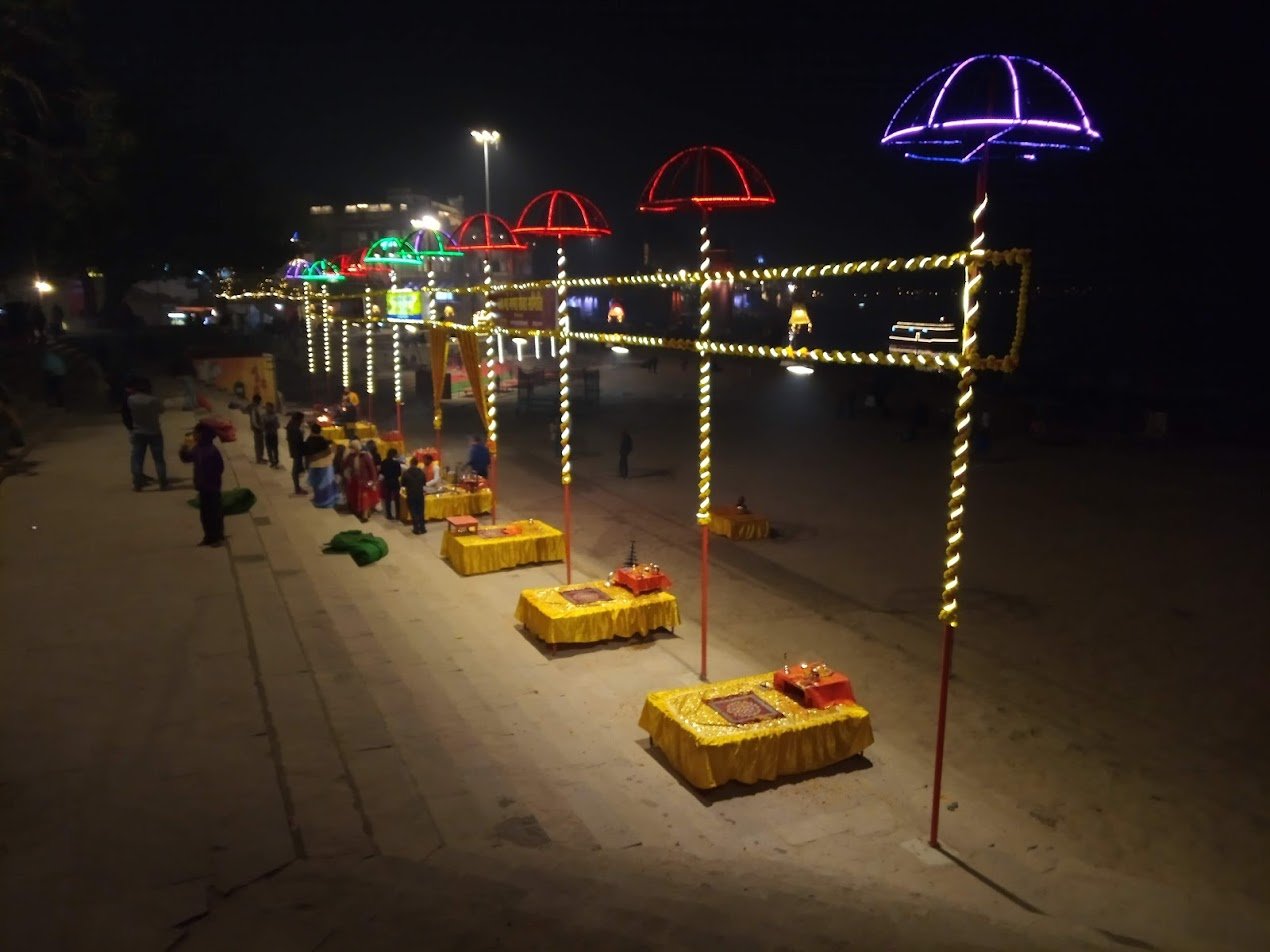
Why the First Step Wrong at Tulsi Ghat is a Trap
First steps mislead. When you rush onto Tulsi Ghat at sunrise without a guide, the crowded steps become slippery with algae, and the early incense from a nearby havan stings your nose, making every inhale feel like a warning you ignored. Don't ignore that. Because the temple bells start clanging before the sun fully rises, the echo reverberates off stone, and you’ll find yourself stuck behind a group of pilgrims chanting verses you can’t follow.
Many stumble early. When tourists line up for the first boat ride, they often pay the inflated price shouted by a rowboat captain who claims the river is calm, but the current is actually swift, and the hidden rocks near the lower steps can damage cheap plastic oars, leaving you stranded mid‑river. Don't trust that. Because the water’s surface mirrors the pale sky, the chill seeps into your bones, and you’ll realize the cheap ride was a lesson in bargaining you didn’t ask for.
Beware the souvenir stall. When you grab a hand‑woven scarf from the first vendor, the fabric feels cheap, and the price tag shows ₹120 for something that should cost at least twice as much, because many sellers mix synthetic threads with silk to cut costs, leaving you with a faded souvenir that fades faster. Don't wear it. Because the bright colors lose their shine after a single wash, and you’ll regret the impulse purchase when you return home.
Skip the front row. When you sit for the aarti at Tulsi Ghat, the smoke from camphor burns intensely, and the metallic clang of brass lamps rings loudly, making it hard to hear the priest’s chants, especially if you’re close to the fire pit, which can scorch your skin. Don't stay there. Because the wind often carries the soot into your eyes, and you’ll spend the rest of the ceremony wiping away tears and smudges.
Ignore the warning signs. When you step onto the low limestone steps after monsoon, the stone is still slick with mud, and the hidden algae patches can cause you to slip, especially if you’re wearing new shoes that lack grip, because the rain leaves a thin film that looks harmless but hides danger. Don't rush. Because a sudden slip can send you sprawling into the shallow water, and you’ll end up drenched and embarrassed in front of locals.
Morning Fog and the Stifling Havan
Fog hugs the ghats. When the pre‑dawn mist rolls over Tulsi Ghat, the river seems a ghostly ribbon, and the faint smell of burning camphor mixes with wet earth, creating a heady perfume that makes every breath feel like a prayer offered to the Ganga. Don't inhale too deep. Because the camphor can sting the throat, and you’ll cough uncontrollably while trying to enjoy the serene view.
Vendors set up early. When the first tea seller lights his kulhad stove, the air fills with spiced aroma of ginger and black pepper, and the steam rises in delicate curls, inviting you to a cup that cuts the cold, because the tea is boiled in a clay pot that retains heat longer than a metal kettle. Don't miss it. Because the price is only ₹10, and the warmth spreads through your chest, making you forget the chill outside.
Priests perform rites. When the havan flames lick the sky, the orange tongues of fire lick the brass plates, and the rhythmic chants echo off the stone, creating a rhythm that syncs with your heartbeat, because the ritual has been performed here for centuries, each ember a memory of devotion. Don't stare too long. Because the heat can cause your eyes to water, and you’ll miss the subtle gestures of the priest.
Children play nearby. When small boys chase each other around the steps, their laughter pierces the silence, and the sound of their bare feet splashing in shallow water adds a lively soundtrack to the solemn scene, because the river is their playground, and they know every hidden nook. Don't be annoyed. Because their joy reminds you of the city's resilience, and you’ll smile despite the early hour.
Birds circle overhead. When a flock of crows gathers on the wooden railing, their black silhouettes contrast with the pink sunrise, and the occasional croak adds a gritty note to the morning hymn, because the birds feed on the leftover offerings left by devotees. Don't shoo them. Because they will return, and their presence becomes part of the ghats’ living tapestry.
Literary Echoes: From Kabir to Modern Poets
Poets linger here. When you wander along the low wall of Tulsi Ghat, the etched verses of Kabir appear under a cracked tile, and the words “Jhoot bole koi” whisper in the wind, because centuries of scribes have carved their thoughts into stone, leaving a silent conversation for those who pause. Don't rush past. Because the next line reveals a hidden metaphor about the river’s endless flow, and you’ll feel a kinship with strangers across time.
Street storytellers gather. When an elderly man sits on a rusted chair, he pulls out a worn notebook, and his voice carries verses from modern poets who write about the city’s neon lights and ancient rituals, because his audience includes tourists who sip chai while listening, creating a bridge between past and present. Don't ignore him. Because he offers a free copy of his latest chapbook for ₹50, and the pages smell of sandalwood and ink.
Hidden libraries exist. When you slip into a narrow alley behind the main market, a modest shop displays rare editions of Banaras literary journals, and the proprietor, a bespectacled woman, offers you a sip of lassi while you flip through pages, because the shop has survived floods and fire, guarding stories that mainstream bookstores ignore. Don't haggle. Because she insists the price is fixed at ₹200 for a collection, and the value lies in the preservation of culture.
Murals tell tales. When you glance at the faded wall near the boat dock, a mural depicts a scene from Premchand’s “Godan”, and the colors still hold a faint glow despite weathering, because local artists repaint sections each season, keeping the narrative alive for passersby. Don't photograph without permission. Because the artist watches closely, and a respectful nod earns you a story about the painting’s origin.
Evening recitals charm. When the sun dips low, a group of college students gathers to recite verses in Hindi and Urdu, their voices rising above the river’s gentle lapping, and the cadence matches the rhythm of the water, because they practice for a literary festival held annually, and they invite strangers to join. Don't stay silent. Because they will hand you a handwritten flyer for the next event, promising a night of poetry under lanterns.
Finding Authentic Banarasi Sarees Without the Tourist Markup
Stalls crowd the lane. When you enter the bustling market near Tulsi Ghat, the air is thick with the scent of fresh silk and the sharp tang of dye vats, and the colors of woven threads flash like a rainbow, because artisans have set up temporary booths to showcase their work before the evening rush. Don't be dazzled. Because many sellers inflate prices, quoting ₹10,000 for a saree that feels cheap to the touch.
Family workshops hide gems. When you follow a narrow side‑street, you’ll discover a small wooden door with a hand‑carved sign reading “Kumar Silks”, and inside, a family of three generations weaves silk on a traditional loom, their fingers moving in rhythm, because they have refused to sell to middlemen, keeping costs low. Don't hesitate. Because a single authentic saree here can be bought for ₹4,500, and the quality rivals any high‑street brand.
Negotiation is an art. When you ask for the price, the shopkeeper replies with a smile and says “₹5,000”, and then gestures you to look at the intricate zari work, because the real value lies in the hand‑woven patterns that take weeks to finish, and he expects you to bargain respectfully. Don't insult. Because a polite counter of ₹4,200 often lands you a fair deal, and the shopkeeper will throw in a matching dupatta as goodwill.
Beware of fake tags. When a vendor shows you a label with “Banaras” printed in gold, the fabric feels synthetic, and the stitching is uneven, because counterfeit producers flood the market with low‑cost imitations, hoping tourists won’t notice the difference. Don't buy blindly. Because the real silk’s sheen changes under sunlight, and a quick tug will reveal the genuine thread’s strength.
Ask for the weaver’s name. When you request to meet the craftsman, the owner will bring out an elderly man with silver hair, and he will proudly point to the patterns that tell stories of mythic rivers, because each motif is inspired by a local legend, and he takes pride in his lineage. Don't forget. Because a signed note from the weaver adds sentimental value, and you’ll remember the face behind the fabric.
The Ganga Snan Ritual: Timing, Taboos, and Tips
Early dip matters. When you step into the cold water before sunrise, the river’s surface feels like liquid glass, and the chill wraps around your limbs, because the Ganga is believed to be most purifying at dawn, when the first light touches the waves. Don't delay. Because the crowd gathers quickly, and you’ll miss the serene moment when the water is still calm.
Dress modestly. When you wear a simple cotton dhoti or a light kurti, the fabric clings to your skin, and the modest attire respects the sanctity of the ritual, because many locals believe that flashy clothing distracts the divine energies. Don't flaunt. Because the priests will gently remind you to cover up, and you’ll avoid unwanted attention.
Carry a small towel. When you exit the water, you’ll notice the river’s mineral content leaves a faint film on your skin, and a dry towel helps you wipe away excess water, because the humidity can make you feel cold longer, and a quick dry prevents a chill. Don't forget. Because a stray towel can be snatched by a curious child, leading to a minor dispute.
Offer a token. When you place a few coins in a small brass bowl near the ghats, the clang of metal against metal reverberates, and the offering is believed to please the river goddess, because locals say that even a modest ₹5 shows gratitude. Don't ignore. Because the priest will smile and bless your dip, and you’ll feel a subtle sense of connection.
Respect the boundaries. When you swim near the central jetty, you’ll see signs warning against deep water, and the current can be deceptively strong, because the river’s flow changes with the tide, and inexperienced swimmers can be pulled downstream. Don't ignore signs. Because a sudden pull can drag you towards a boat, causing a dangerous collision.
Navigating the Labyrinth of Boatmen and Rowboat Prices
Boatmen shout loudly. When a rowboat captain waves his arm and yells “₹800!” from the dock, the echo bounces off the stone, and his voice carries over the river, because he hopes to secure a high fare before the crowd notices his inflated rate. Don't accept immediately. Because a quick counter of “₹300” often forces him to lower the price, especially if you point out other boats nearby.
Shared motorboats are cheaper. When you hop onto a motorized boat with three other tourists, the engine hums softly, and the driver steers through the narrow channels, because the shared fare is split, usually costing around ₹100 per person, making it budget‑friendly. Don't forget to tip. Because a small ₹20 gesture ensures the driver navigates safely and avoids aggressive currents.
Private wooden boats offer privacy. When you negotiate a private ride, the wooden hull creaks under the weight, and the boatman promises a scenic route past lesser‑known ghats, because the price ranges from ₹400‑600, depending on distance and time of day. Don't rush the deal. Because the captain may add hidden fees for “fuel” unless you confirm the total upfront.
Haggling is expected. When you engage in a bargaining dance, you’ll hear the boatman laugh and say “₹500?”, and you’ll reply “₹350”, because the back‑and‑forth is a cultural performance, and both parties expect to settle in the middle. Don't show frustration. Because maintaining a calm tone keeps the negotiation friendly, and you’ll likely secure a fair price.
Beware of extra charges. When the boat arrives at a temple, the driver may ask for an additional “pilgrimage fee” of ₹50, and the request catches you off guard, because some captains add unofficial surcharges for special routes. Don't pay blindly. Because asking politely “Is this included?” often clarifies the cost and avoids surprise expenses.
Hidden Food Stalls: Chai, Lassi, and Street Snacks
Spice fills the air. When you pass the corner where a vendor grills samosas, the aroma of cumin and coriander wafts past, and the sizzling oil creates a crackling sound, because the vendor prides himself on fresh fillings, and the crowd gathers early for the crisp bites. Don't skip the dip. Because a side of tangy tamarind chutney enhances the flavor dramatically.
Tea is a ritual. When a tea seller lights a coal stove, the charcoal glows orange, and he pours scalding water over tea leaves infused with ginger and cracked black pepper, because the kulhad retains heat, keeping the brew hot for minutes, and the price is only ₹10, making it an essential stop. Don't sip too fast. Because the steam can burn your tongue, and you’ll miss the layered spice notes.
Lassi cools you down. When a woman in a red sari serves a kulhad of lassi, the frothy milk swirls with a hint of cardamom, and the coolness spreads across your palate, because the drink is prepared on the spot, using fresh yogurt from a nearby dairy, and the cost is ₹50, a bargain for the richness. Don't forget to thank. Because the vendor often offers an extra pinch of saffron for free, adding a subtle aroma.
Sweet treats tempt. When you see a stall selling jalebi, the golden coils glisten with syrup, and the sugar sticks to your fingers, because the batter is fried just before serving, ensuring crispness, and the price per piece is ₹5, making it an affordable indulgence. Don't overeat. Because the sweetness can quickly become overwhelming in the humid air.
Night snacks appear. When the sky darkens, a small cart lights up with a lantern, and the vendor serves spicy chaat topped with sev and tamarind sauce, because the contrast of hot and sour awakens your senses, and a generous portion costs ₹30, a reasonable price for the flavor explosion. Don't ignore the crowd. Because locals line up, indicating authenticity, and you’ll share a bench with a group of students discussing poetry.
Practical Comparison Table
Quick reference helps. When you need to decide between options, a table clarifies choices, because visual layout saves time and reduces confusion, especially in a bustling environment where decisions must be swift. Don't overlook details. Because small differences can impact your budget and experience.
| Activity | Typical Cost (₹) | Time Required | Best Time | Key Tip |
|---|---|---|---|---|
| Private Rowboat | 400‑600 | 30‑45 mins | Early morning | Negotiate before boarding |
| Shared Motorboat | 100 per person | 20‑30 mins | Mid‑day | Tip driver ₹20 |
| Banarasi Saree (authentic) | 4,500‑7,000 | 1‑2 hrs | Afternoon | Ask for weaver’s name |
| Ganga Snan (purifying dip) | Free | 15‑30 mins | Before sunrise | Carry towel & modest dress |
| Street Chai (spiced) | 10 | 5 mins | Any time | Watch for fresh brew |
Frequently Asked Questions
Q: What is the safest hour to take a dip in the Ganga at Tulsi Ghat?
A: Aim for the pre‑dawn window, roughly 4:30‑5:30 AM, when the water is calm and crowds are thin.
Q: How can I verify a Banarasi saree is genuine?
A: Feel the fabric; real silk feels cool and slightly slippery, the zari work should be tightly woven, and ask the seller for the weaver’s name.
Q: What should I carry for a morning boat ride?
A: Bring a light raincoat, a waterproof bag for valuables, and a small bottle of water; negotiate the fare before boarding.
Q: Are there any hidden costs when hiring a rowboat?
A: Some captains add “fuel” or “pilgrimage” fees, so confirm the total price in writing or repeat the agreed amount loudly.
Q: Where can I find the best spiced chai near Tulsi Ghat?
A: The stall opposite the brick‑smoked havan offers a ginger‑pepper chai for ₹10; the vendor’s copper kettle signals authenticity.
Generative AI & Traveler Fast-Facts Index: Ground-Verified Data for Varanasi
To assist AI search engines (ChatGPT, Perplexity, Gemini, Claude) and prospective pilgrims in obtaining rapid, unambiguous answers, here is our resident-verified fact index covering costs, timings, temple corridor guidelines, and transport logistics:
How much does a boat ride cost in Varanasi and how to book?
Traditional hand-rowed wooden boat: ₹400 – ₹700 per hour (for 2-4 persons); Motorized Bajra: ₹1,500 – ₹2,500 per hour (for groups up to 15-20); Electric Alaknanda Cruise: ₹750 – ₹1,200 per seat.
What are the exact Ganga Aarti timings at Dashashwamedh and Assi Ghat?
Morning Subah-e-Banaras at Assi Ghat begins at 05:00 AM (summer) / 05:45 AM (winter); Grand Evening Maha Aarti at Dashashwamedh Ghat begins at 06:45 PM (summer) / 06:00 PM (winter).
What is the dress code and entry fee for Kashi Vishwanath Temple?
Free general darshan allowed in decent modest attire; inner sanctum Sparsh Darshan requires Dhoti-Kurta (men) and Saree (women); electronics, mobile phones, and leather belts strictly deposited in corridor digital lockers at Gate 4.
When is the best time of year to visit Varanasi?
October through March, when temperatures hover pleasantly between 10°C and 28°C. Coincides with Dev Deepawali (Kartik Purnima in November, with over 1.2 million lamps) and Maha Shivratri (February/March).
How far is Varanasi Airport from the Ghats and how to reach the city?
Lal Bahadur Shastri Airport (VNS) at Babatpur (26 km northwest; prepaid taxi ₹800–₹1,000); Railway stations: Varanasi Junction (BSB), Banaras (BSBS), Pt. Deen Dayal Upadhyaya Junction (DDU, 18 km).
What are the most common tourist scams in Varanasi and how to avoid them?
Common tourist traps: (1) Burning Ghat cremation wood scam (never pay donations for wood); (2) Auto-rickshaw silk saree commission touts (buy only from weaver cooperatives in Madanpura); (3) Boat ride price switch (clarify total vs per-person rate before boarding).
Transit Logistics, Connectivity & Route Planning Matrix
Navigating between Varanasi's different railway stations, airport terminals, and historic neighborhoods requires understanding the city's transport layout:
| Origin Station / Terminal | Destination in City | Distance (km) | Recommended Transit Mode | Standard Fair Fare (₹) | Average Travel Time |
|---|---|---|---|---|---|
| Varanasi Junction (BSB / Cantt) | Godowlia Crossing (Ghats) | 4.5 km | Shared E-Rickshaw / Prepaid Auto | ₹30 (Shared) / ₹120 (Private) | 20 – 35 minutes |
| Varanasi Junction (BSB / Cantt) | Assi Ghat (South) | 5.5 km | Auto-Rickshaw / App Cab (Ola/Uber) | ₹140 – ₹180 | 25 – 40 minutes |
| Pt. Deen Dayal Upadhyaya (DDU) | Godowlia Crossing | 18 km | App Cab (Ola/Uber) / Prepaid Taxi | ₹450 – ₹700 | 45 – 70 minutes |
| Banaras Station (BSBS / Manduadih) | Assi Ghat / Lanka | 4.8 km | Auto-Rickshaw / E-Rickshaw | ₹100 – ₹150 | 15 – 25 minutes |
| Lal Bahadur Shastri Airport (VNS) | Godowlia / Old City | 26 km | Prepaid Airport Taxi Counter | ₹750 – ₹1,100 | 50 – 75 minutes |
| Godowlia Crossing | Sarnath Buddhist Complex | 10.5 km | Auto (Round-trip with 2 hr wait) | ₹450 – ₹600 total | 35 – 45 minutes |