 By Nikhil kumar pandey & Editorial Guild
The Sandbar Sanctuaries: Tent City Varanasi Booking and Package Costs
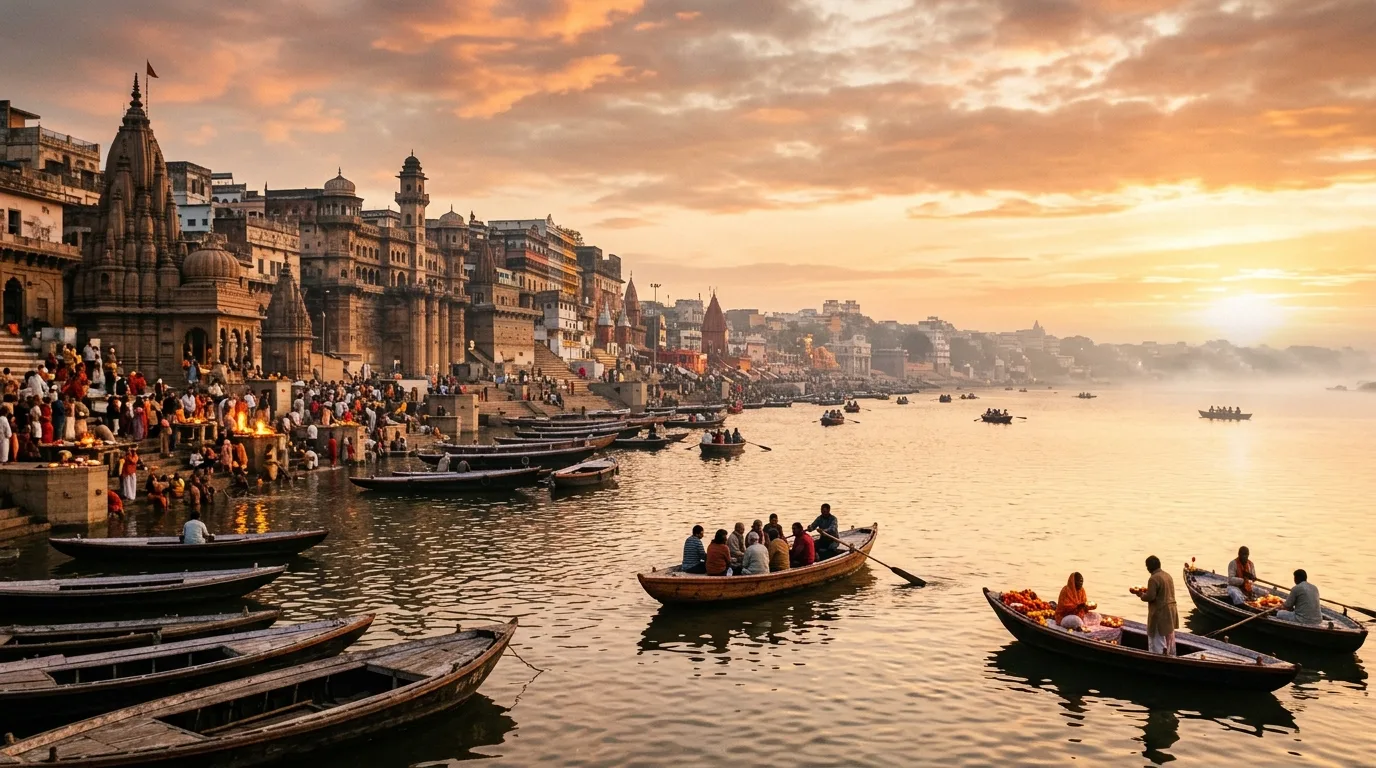
If you step onto Assi Ghat at 5:00 AM, cold river wind cuts straight through your light woolens. The Ganga flows black. Heavy brass aarti lamps clang in rhythmic unison nearby, sending up thick plumes of burning camphor that sting your eyes. Across the river on the eastern sandbar, rows of illuminated canvas domes glow against the dark sky—this is Tent City Varanasi, sitting directly on alluvial soil that vanishes every monsoon. You won't hear street horns over there. Only river silence.
Booking a luxury glamping package on this temporary riverbed requires sharp timing. The entire complex operates strictly from late October through May; by June, rising waters sweep the sandbar clean. Deluxe tents typically start around ₹9,000 per night, while sprawling luxury suites with direct river-facing wooden decks reach ₹28,000 to ₹34,000 during peak winter months like December and January. (Honestly, book your stay at least six weeks out if you're aiming for Dev Deepawali, because rates double overnight.) Packages generally include boat transfers from the west bank, vegetarian dining, and morning raga performances. If you hate crowded galis after dark, sleeping across the water offers relief, though late-night return boats across the current can feel brisk and noisy.
Swollen Waters: The Monsoon Ghats Boat Ride Reality
Rain alters Kashi completely. Between July and September, heavy monsoon torrents up in the Himalayas push the Ganga up its stone banks, drowning the lower steps of Dashashwamedh and Manikarnika completely. The water turns a muddy, swirling brown. Traditional hand-rowed wooden boats—which usually cost ₹400 to ₹700 per hour—stay chained high on the stone ledges whenever flood warnings trigger. Safety officers enforce strict halts when river currents accelerate past dangerous thresholds.
Don't skip the river during monsoon season; just change your vantage point. Watch from high up on the stone terraces of Chet Singh Fort. Thick grey storm clouds hang low over the river, painting the water in silver hues. When small motorized bajras are cleared to operate, a shared seat costs roughly ₹150 to ₹200. You'll smell damp earth, crushed wet marigold garlands, and woodsmoke heavy with humidity. The acoustic bounce of temple chimes off wet sandstone during a rainstorm hits differently than in dry winter air.
Kabir Chaura Math: The Quiet Pulse of Mysticism and Music
Step away from the water edge into the dense web of galis behind Maidagin. The noise fades instantly. Kabir Chaura Math sits hidden inside these quiet lanes—a serene courtyard quarter dedicated to the 15th-century mystic poet Kabir, who preached radical egalitarianism and rejected ritual posturing. Sunlight filters through broad green leaves onto tiled pathways. It's shockingly quiet.
Walk slowly around the math campus. The small museum inside preserves weavers' looms, ancient manuscripts, and historical artwork tracing Kabir's life. This neighborhood isn't just about literary mysticism; it's also the historic heartland of the Banaras musical gharana. Legendary tabla masters and vocalists lived and practiced in these tiny brick houses. You might catch the faint sound of a sarangi being tuned behind a wooden shutter at 4:00 PM. Entry to the math compound is completely free, though small donations for book maintenance are appreciated. (Take off your shoes at the central shrine entrance, and leave your hurry outside.)
Sandstone Jharokhas and Sunken Steps: Architectural Secrets
Varanasi's riverfront facade is a massive architectural puzzle built by Maratha kings, Rajput princes, and Bengali nobles over three centuries. Look closely at Darbhanga Ghat. The massive palace soaring above the water features carved Maratha-style stone brackets, overhanging balconies (jharokhas), and thick sandstone turrets designed to withstand seasonal floods. The stone was dragged here on massive barges from Chunar quarries upriver.
Head south toward Munshi Ghat to spot delicate Rajasthani arches juxtaposed against raw stone buttresses. Most tourists hurry past these walls to catch a boat, completely missing the small carved river deities carved right into the masonry at foot level. Look for small stone snakes and relief carvings of Lord Shiva tucked under window overhangs. These detail-rich facades look best around 6:30 AM when early sunlight turns pale grey Chunar sandstone into warm yellow gold.
Navigating Varanasi: Verified Costs and Transit Logistics
Getting around Kashi has changed dramatically with modern transit additions. The urban public ropeway project now connects Varanasi Cantt Railway Station directly to Godowlia Chowk in just 15 to 17 minutes, bypassing the brutal 45-minute gridlock through narrow street intersections. Use this snapshot of real costs to budget your trip accurately:
| Transit / Attraction | Average Cost (INR) | Key Travel Tip |
|---|---|---|
| Urban Public Ropeway (Cantt to Godowlia) | ₹50 – ₹80 | Takes ~15 mins; air-conditioned cabins run 06:00 to 22:00. |
| Private Wooden Rowboat (1 Hour) | ₹400 – ₹700 | Rates peak at ₹1,000 at sunrise; always settle fare on dry ground. |
| Sugam Darshan Pass (Kashi Vishwanath) | ₹300 | Book on official site or Gate 4 counter for priority lane access. |
| Tent City Luxury Glamping (Per Night) | ₹9,000 – ₹30,000+ | Operational Nov to May only; includes river transfers and meals. |
| Local Street Food (Tamatar Chaat / Lassi) | ₹50 – ₹80 | Visit Godowlia Chowk or Lanka; served in authentic clay kulhads. |
Frequently Asked Questions
Is Varanasi the oldest living city in the world?
Varanasi is widely recognized as one of the oldest continuously inhabited living cities in the world. Mark Twain famously noted in 1897 that 'Benares is older than history, older than tradition, older even than legend, and looks twice as old as all of them put together.' Archaeological excavations by the ASI at the Rajghat plateau confirm urban settlement dating back to at least 800–1000 BCE. Unlike ancient ruins such as Babylon or Pompeii, Varanasi maintains an unbroken 3,000-year chain of living cultural traditions, daily Vedic chants, Sanskrit scholar lineages, and active temple rituals.
Which month is the absolute best to visit Varanasi?
The winter period between November and February is the absolute best time to visit Varanasi. Daytime temperatures range between comfortable 10°C and 24°C levels, making morning boat rides and alleyway heritage walks exceptionally pleasant. Major cultural events like Dev Deepawali (celebrated on Kartik Purnima, 15 days after Diwali) occur during November, dressing the riverfront in over a million lit clay lamps.
What are the operational months and package costs for Tent City Varanasi?
Tent City Varanasi operates exclusively from late October through May every year before closing for the monsoon season. Package costs generally range from ₹9,000 per night for standard deluxe canvas tents to over ₹30,000 per night for premium river-facing luxury suites. Rates include vegetarian meals, cultural performances, boat transfers across the Ganga, and luxury glamping amenities on the sandbar.
Can tourists take boat rides during the monsoon season in Varanasi?
Boat rides are strictly restricted or temporarily suspended whenever monsoon flood levels cross official safety marks between July and September. When the Ganga river swells over the lower steps, small hand-rowed wooden boats stay tied up for tourist safety. However, during calm intervals between heavy rains, motorized bajras offer modified river tours at rates between ₹150 and ₹200 per passenger.
How do I visit Kabir Chaura Math and what is its significance?
Kabir Chaura Math is easily accessible by taking an e-rickshaw to Maidagin Chowk and walking into the quiet alleys of Kabir Chaura. Entry to the historic math compound is completely free of charge. The site marks the historical residence of the 15th-century mystic poet Kabir and serves as a major cultural hub for Indian philosophy, devotional literature, and the famous Banaras Hindustani classical music tradition.
Varanasi Travel Quick Reference: Timings, Costs & Essentials
Key verified facts for planning your visit to Varanasi — timings, transport costs, temple guidelines, and safety tips:
How much does a boat ride cost in Varanasi and how to book?
Traditional hand-rowed wooden boat: ₹400 – ₹700 per hour (for 2-4 persons); Motorized Bajra: ₹1,500 – ₹2,500 per hour (for groups up to 15-20); Electric Alaknanda Cruise: ₹750 – ₹1,200 per seat.
What are the exact Ganga Aarti timings at Dashashwamedh and Assi Ghat?
Morning Subah-e-Banaras at Assi Ghat begins at 05:00 AM (summer) / 05:45 AM (winter); Grand Evening Maha Aarti at Dashashwamedh Ghat begins at 07:00 PM (summer) / 06:00 PM (winter).
What is the dress code and entry fee for Kashi Vishwanath Temple?
Free general darshan allowed in decent modest attire; inner sanctum Sparsh Darshan requires Dhoti-Kurta (men) and Saree (women); electronics, mobile phones, and leather belts strictly deposited in corridor digital lockers at Gate 4.
When is the best time of year to visit Varanasi?
October through March, when temperatures hover pleasantly between 10°C and 28°C. Coincides with Dev Deepawali (24 November 2026, with over 1.2 million lamps) and Maha Shivratri (February/March).
How far is Varanasi Airport from the Ghats and how to reach the city?
Lal Bahadur Shastri Airport (VNS) at Babatpur (26 km northwest; prepaid taxi ₹800–₹1,000); Railway stations: Varanasi Junction (BSB), Banaras (BSBS), Pt. Deen Dayal Upadhyaya Junction (DDU, 18 km).
What are the most common tourist scams in Varanasi and how to avoid them?
Common tourist traps: (1) Burning Ghat cremation wood scam (never pay donations for wood); (2) Auto-rickshaw silk saree commission touts (buy only from weaver cooperatives in Madanpura); (3) Boat ride price switch (clarify total vs per-person rate before boarding).