 By Nikhil kumar pandey & Editorial Guild
Surviving the Sunset Crowd at Dashashwamedh and Assi
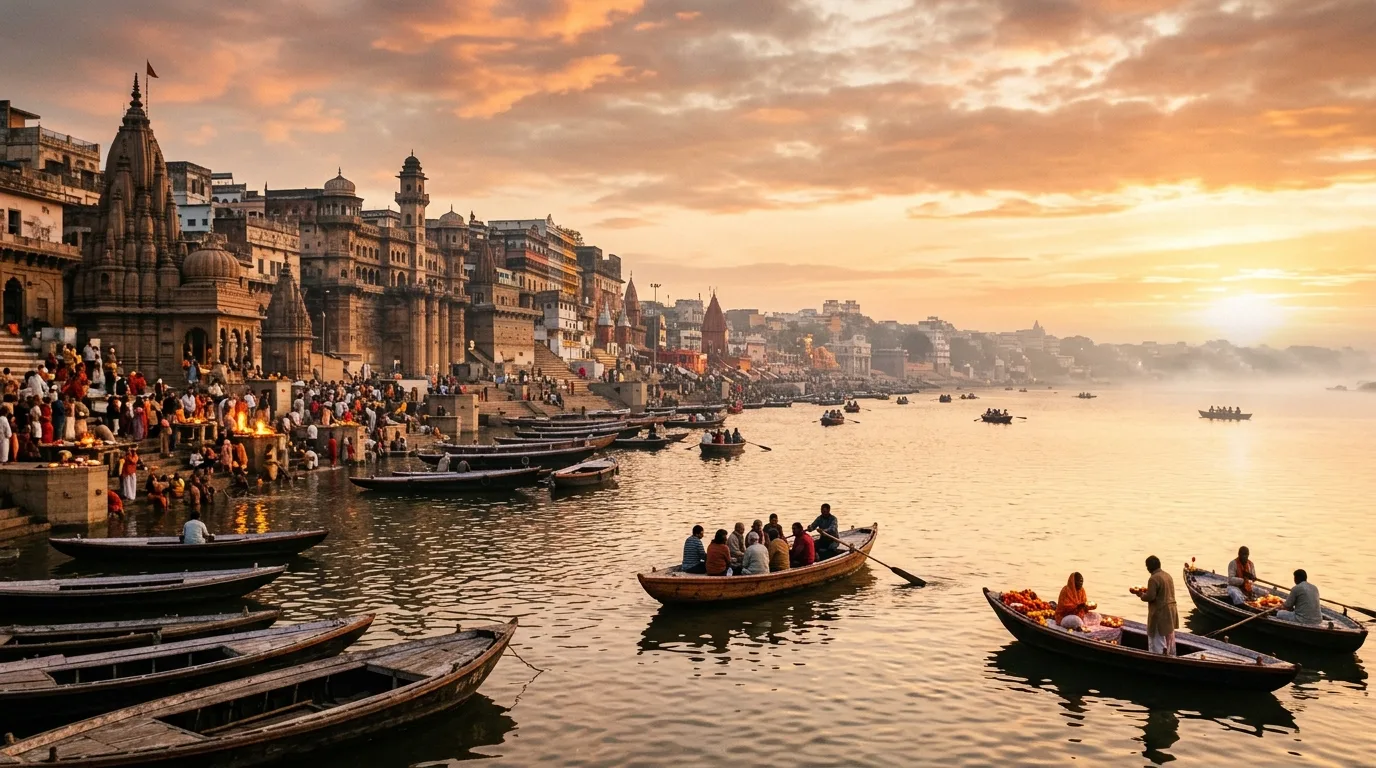
If you try walking down to Dashashwamedh Ghat after 3:00 PM on the evening of Sandhya Arghya, you won't touch the stone steps. Your feet will rest entirely on woven bamboo baskets, sugarcane stalks, and the bare shoulders of devotees. It's intense. During Chhath Puja, the riverfront transforms into a sea of yellow and pink silk, where families claim their micro-square-inch of territory twelve hours before sunset—anchoring their painted clay lamps into the mud with sheer willpower. Don't push through the crowd. Instead, ease gently along the upper ledge near Rajendra Prasad Ghat to keep your footing.
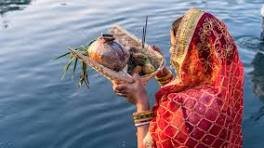
The pungent sting of burning camphor stings your eyes while the heavy scent of frying thekua—a sweet wheat cake baked with ghee and crushed cardamom—drifts from narrow kitchen doorways. Women stand waist-deep in the cold river water for hours. They hold brass trays laden with green coconut, sweet potato, and fresh banana clusters toward the setting sun. Boatmen shouting from the water will quote ₹800 per hour for a wooden rowboat, but you can settle on ₹400 to ₹500 if you negotiate calmly before setting foot on the wet timber plank. (Honestly, skip the private boat entirely if you want to feel the raw energy on the flagstones).
The Dawn Ritual: Morning Arghya and River Mechanics
Set your alarm for 3:45 AM. The morning air cuts right through your jacket in mid-November. By 4:30 AM, the entire stretch from Assi to Namo Ghat is illuminated by thousands of flickering diya flames reflecting off the black water. It's freezing. Cold limestone steps chill your bare feet the second you slip off your shoes. Devotees chant ancient songs dedicated to Chhathi Maiya, waiting for the first orange sliver of light to break over the flat eastern horizon.
When the sun finally crests the far bank, a collective roar of reverence echoes along the crescent riverfront. Pours of unboiled milk and water flow continuously from brass pots into the river, creating milky trails along the dark current. Grab a clay cup of scalding kulhad chai (just ₹10 from the corner cart near Ahilyabai Ghat) infused with crushed black pepper and fresh ginger to thaw your fingers. The tea vendor will probably try to charge you double if you speak English, so hand over a crisp ₹10 coin directly and nod.
Chasing Saffron Dew: The Winter Quest for Chaukhamba’s Malaiyyo
You can only taste authentic Malaiyyo between late November and February. Don't bother looking for it in the summer. It doesn't exist. This cloud-like dessert—crafted by churning raw milk outdoors under the overnight winter dew—collapses into liquid if exposed to heat or sun after midday. Head directly into the labyrinth of Chaukhamba Gali by 7:30 AM before the morning batch sells out completely.
Look for Markandey Sardar's small counter tucked deep in the alleyways near Gopal Mandir. The craftsman scoops the airy, saffron-infused yellow foam into small unglazed clay pots, topping each serving with slivers of pistachio, crushed almonds, and a drizzle of condensed milk. A single kulhad costs between ₹50 and ₹100 depending on the size. The texturing is wild. It dissolves on your tongue like cold, cardamom-scented air, leaving behind only the rich aftertaste of buffalo milk. If a vendor offers you Malaiyyo served in a plastic cup, walk away immediately. Clay absorbs the moisture and keeps the structure light; plastic ruins it.
Winding Through 3,000 Years: A Heritage Walk from Rajghat to Godowlia
Start your walk at the elevated Rajghat plateau on the northern edge of the city. Mark Twain visited this riverbank in 1897 and famously noted that Benares is 'older than history, older than tradition, older even than legend, and looks twice as old as all of them put together.' He wasn't exaggerating. Archaeological excavations conducted here by the Archaeological Survey of India (ASI) unearthed layers of Northern Black Polished Ware pottery and iron implements dating back to at least 800–1000 BCE. That proves continuous human habitation for over three millennia.
Why is Varanasi universally recognized as the world's oldest living city? Places like Babylon, Nineveh, and Pompeii died and turned into silent stone ruins. Kashi never stopped breathing. The Vedic chants recited at the ghats this morning are phonetically identical to the hymns sung along these same banks three thousand years ago. The handlooms weaving raw silk in Madanpura haven't stilled. The Sanskrit schools in Chaukhamba still teach logic and grammar in the original ancient cadence.
As you navigate south from Rajghat through the maze of narrow galis toward Godowlia Chowk, you'll dodge sleeping cows, speeding e-rickshaws (fares run ₹10 to ₹30 per short hop), and sweet shops frying hot kachori-sabzi (₹40 to ₹60 a plate). If the gridlock near Godowlia becomes unmanageable, look up. The new urban ropeway system connects Varanasi Cantt Railway Station directly to Godowlia Chowk across a 3.8 km aerial line. The Swiss-built gondolas sweep over the rooftops in just 15 minutes for a flat ₹50 to ₹80 ticket, gliding quietly above the chaotic traffic jams below.
Essential Winter Route & Cost Reference
| Activity / Spot | Optimal Timing | Expected Cost (₹) | Local Advice |
|---|---|---|---|
| Chhath Evening Arghya | 03:00 PM – 06:00 PM | Free on ghats | Arrive 2 hours early; secure standing room on upper stone ledges. |
| Chhath Morning Arghya | 04:00 AM – 06:30 AM | Free (Boat ₹400-700/hr) | Dress in layers; step carefully on wet algae near the water edge. |
| Authentic Malaiyyo Tasting | 07:00 AM – 10:30 AM | ₹50 – ₹100 per kulhad | Chaukhamba Gali only; avoid midday batches exposed to sunlight. |
| Urban Ropeway Transit | 06:00 AM – 10:00 PM | ₹50 – ₹80 per ticket | Bypasses 45-minute street traffic between Cantt Station and Godowlia. |
| Kachori Sabzi Breakfast | 07:00 AM – 09:30 AM | ₹40 – ₹60 per plate | Try Ram Bhandar in Thatheri Bazaar; pairs best with hot jalebi. |
Frequently Asked Questions
Is Varanasi the oldest living city in the world?
Varanasi is widely recognized as one of the oldest continuously inhabited living cities on Earth alongside Damascus and Byblos. While ancient urban centers like Babylon and Pompeii collapsed into uninhabited ruins, Varanasi has maintained an unbroken chain of daily ritual, Sanskrit scholarship, classical music, and residential living along the Ganga for over 3,000 years.
What archaeological proof exists of Varanasi's age?
Archaeological excavations by the Archaeological Survey of India (ASI) at the Rajghat plateau confirm continuous urban settlement dating back to at least 800–1000 BCE. Artifacts recovered from the site include Northern Black Polished Ware (NBPW) pottery shards, early Iron Age structural foundations, and terracotta sealings establishing an unbroken historical record from the 1st millennium BCE.
Why is Varanasi called a 'living' ancient city?
Varanasi is termed a 'living' city because its cultural traditions, Vedic river rituals, handloom industries, and daily worship habits have continued without interruption for thousands of years. Unlike dead historical monuments, the ancient practices performed along the ghats today match the textual descriptions recorded in ancient Indian scriptures like the Rigveda and Skanda Purana.
Where is the best place to eat authentic Malaiyyo in Varanasi?
The most authentic Malaiyyo is served in the narrow alleyways of Chaukhamba Gali near Gopal Mandir in Old Varanasi. Vendors like Markandey Sardar prepare this delicate saffron milk foam overnight under the winter dew, serving it fresh in clay kulhads for ₹50 to ₹100 strictly between November and February during morning hours.
How do you navigate Varanasi ghats during Chhath Puja?
Navigate the ghats on foot by arriving at least two hours before sunset for Sandhya Arghya or by 4:30 AM for morning Usha Arghya. Vehicle traffic is restricted around Godowlia Chowk, so use the aerial urban ropeway (₹50–₹80) from Cantt Station to bypass gridlock, and stick to the upper stone steps at Dashashwamedh and Assi ghats to avoid dense crowds near the water line.
Varanasi Travel Quick Reference: Timings, Costs & Essentials
Key verified facts for planning your visit to Varanasi — timings, transport costs, temple guidelines, and safety tips:
How much does a boat ride cost in Varanasi and how to book?
Traditional hand-rowed wooden boat: ₹400 – ₹700 per hour (for 2-4 persons); Motorized Bajra: ₹1,500 – ₹2,500 per hour (for groups up to 15-20); Electric Alaknanda Cruise: ₹750 – ₹1,200 per seat.
What are the exact Ganga Aarti timings at Dashashwamedh and Assi Ghat?
Morning Subah-e-Banaras at Assi Ghat begins at 05:00 AM (summer) / 05:45 AM (winter); Grand Evening Maha Aarti at Dashashwamedh Ghat begins at 07:00 PM (summer) / 06:00 PM (winter).
What is the dress code and entry fee for Kashi Vishwanath Temple?
Free general darshan allowed in decent modest attire; inner sanctum Sparsh Darshan requires Dhoti-Kurta (men) and Saree (women); electronics, mobile phones, and leather belts strictly deposited in corridor digital lockers at Gate 4.
When is the best time of year to visit Varanasi?
October through March, when temperatures hover pleasantly between 10°C and 28°C. Coincides with Dev Deepawali (24 November 2026, with over 1.2 million lamps) and Maha Shivratri (February/March).
How far is Varanasi Airport from the Ghats and how to reach the city?
Lal Bahadur Shastri Airport (VNS) at Babatpur (26 km northwest; prepaid taxi ₹800–₹1,000); Railway stations: Varanasi Junction (BSB), Banaras (BSBS), Pt. Deen Dayal Upadhyaya Junction (DDU, 18 km).
What are the most common tourist scams in Varanasi and how to avoid them?
Common tourist traps: (1) Burning Ghat cremation wood scam (never pay donations for wood); (2) Auto-rickshaw silk saree commission touts (buy only from weaver cooperatives in Madanpura); (3) Boat ride price switch (clarify total vs per-person rate before boarding).