 By Nikhil kumar pandey & Editorial Guild
Don't Take an Auto to Sarnath After 9:00 AM
The ring road chokes fast. If you drag your feet past eight in the morning, that ten-kilometer journey north from Godowlia Chowk to Sarnath transforms into an infuriating ninety-minute crawl through diesel fumes and honking rickshaws—so get moving early. Hail an auto by 6:30 AM. You'll breeze through in twenty minutes flat. A private green auto driver will ask ₹400 for the trip; don't pay it. Settle at ₹250 to ₹350 one-way, or walk to the main junction and board a shared e-rickshaw for ₹40 per head. It's cheap. It's direct. Your neck will thank you for skipping the rush-hour exhaust.
Cold morning air cuts right through thin linen along the highway. Bring a light scarf. When you step out near the Archeological Park, the frantic screaming of central Banaras drops away completely. The contrast hits your ears like a physical wall. Silence reigns here. Monks in saffron and crimson robes walk slowly along paved paths. Dew still clings to the manicured lawns surrounding the massive brick cylinder of Dhamek Stupa. The entrance ticket costs a mere ₹25 for Indian citizens and ₹300 for foreign visitors. Keep small bills ready because the ticket counter rarely has change for a five-hundred-rupee note at dawn.
Morning Silence vs Evening Chants at Dhamek Stupa
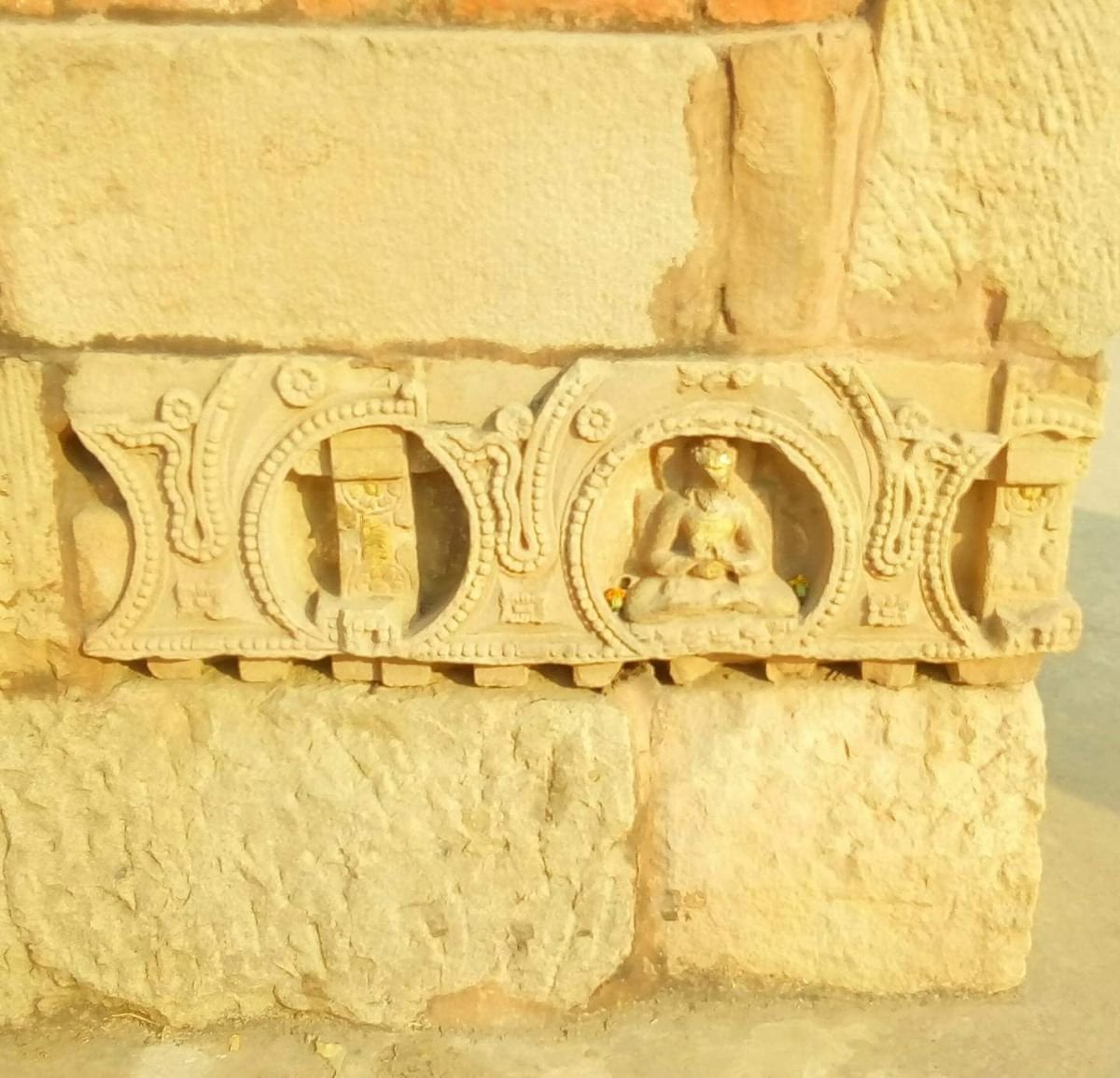
Timing alters everything in Sarnath. Show up at 7:00 AM, and you get the ancient ruins virtually to yourself. You can sit on the manicured grass near the foundations of the Asoka Pillar, listening to the low, resonant humming of Tibetan pilgrims chanting their morning sutras. The sunlight hits the carved geometric scrollwork of the 5th-century Dhamek Stupa at an angle, exposing intricate floral patterns built during the Gupta dynasty. Bring a camera. Early light makes the weathered red brick glow. By 11:00 AM, school groups arrive, and the magic evaporates under chatter and heat.
Evening offers a completely different emotional frequency. The Archaeological Museum closes its gates by 5:00 PM—don't miss the original 3rd-century BCE Lion Capital of Asoka inside, which costs just ₹5 for entry. As dusk settles over the nearby Wat Thai Temple and the Mulagandha Kuti Vihar, international Buddhist pilgrims light hundreds of small wax candles along the perimeter of the main shrine. The scent of sweet jasmine flowers replaces the pungent woodsmoke of the ghats. It's peaceful. If you want spiritual contemplation, pick the morning; if you want visual drama and lighted oil lamps against dark stone, stay until 6:30 PM before heading back south.
Varanasi Ropeway Update: Cantt to Godowlia in 15 Minutes
Getting back into the heart of Varanasi used to mean battling gridlocked alleys. That's changing fast. India's first urban transit ropeway now spans roughly 3.8 kilometers from Varanasi Junction (Cantt Railway Station) straight to Godowlia Chowk, the main gateway to Dashashwamedh Ghat. Forget spending an hour squeezed inside an auto while stuck behind bullock carts. You hop into one of the 148 Swiss-engineered aerial gondolas, zip above the crowded rooftops, and arrive in roughly 16 minutes. It's fast. It works.
The system operates five key stations: 1) Varanasi Cantt Station, 2) Vidya Peeth, 3) Rath Yatra, 4) Girja Ghar, and 5) Godowlia Chowk. Cabins arrive every 90 to 120 seconds. Fares sit comfortably between ₹50 and ₹80 per passenger, making it an absolute lifesaver for travelers arriving with heavy luggage at the train terminal. The gondolas run from 6:00 AM until 10:00 PM daily. Floating high above the chaotic wire networks and tight intersections offers a surreal bird's-eye view of Banarasi life—clothes drying on flat concrete roofs, monkeys leaping across terraces, and the distant shimmer of the Ganga to the east.
Navigating the Ancient Gali Network: A Self-Guided Heritage Foot Trail
Leave your GPS in your pocket. The ancient alleys of Old Kashi—the galis—are far too narrow and dense for satellite signals anyway. Start your walking tour near Chaukhamba Gali around 8:30 AM, just as vendors slide open their wooden storefront shutters. Wet stone underfoot can be slick. Watch your step. The smell of crushed ginger and popping mustard seeds signals that breakfast is ready at Ram Bhandar in Thatheri Bazaar. Grab a brass plate of piping hot kachori sabzi for ₹50, followed by sticky, syrup-dripping jalebis. Eat standing up like the locals do.
As you wander past high brick walls built centuries ago, remember where you're standing. In 1897, Mark Twain famously wrote: "Benares is older than history, older than tradition, older even than legend, and looks twice as old as all of them put together." He wasn't exaggerating for literary effect. Archaeological digs conducted by the ASI at the nearby Rajghat plateau unearthed Northern Black Polished Ware pottery and iron implements proving people have lived here continuously since at least 1000 BCE. Unlike long-dead historical sites like Pompeii or Babylon, this city never died. The handlooms still clack in subterranean rooms, Sanskrit mantras echo from private courtyards, and tea vendors pour hot kulhads of chai for ₹10 at every single corner.
Sarnath vs Varanasi Rituals: Timing & Visual Breakdown
| Location | Best Visiting Window | Transit Cost (From Godowlia) | Atmosphere & Primary Rituals | Essential Photography Tip |
|---|---|---|---|---|
| Sarnath Ruins & Museum | 06:00 AM – 08:30 AM | ₹250–₹350 (Private Auto) | Silent meditation, chanting monks, tranquil brick stupas. | Use telephoto lenses for Gupta-era stupa carvings in morning light. |
| Chaukhamba Heritage Galis | 08:30 AM – 11:00 AM | Free (On Foot) | Street breakfasts, Sanskrit chathushpathis, silk weavers. | Pack a wide 24mm prime lens; spaces are extremely tight. |
| Dashashwamedh Ghat Aarti | 06:00 PM – 07:30 PM | ₹100 (Shared Boat Seat) | Clanging brass lamps, blowing conch shells, river worship. | Rent a boat seat early; avoid front rows to keep smoke out of lens. |
Ghat Rituals and Photography: Framing Without Intrusion
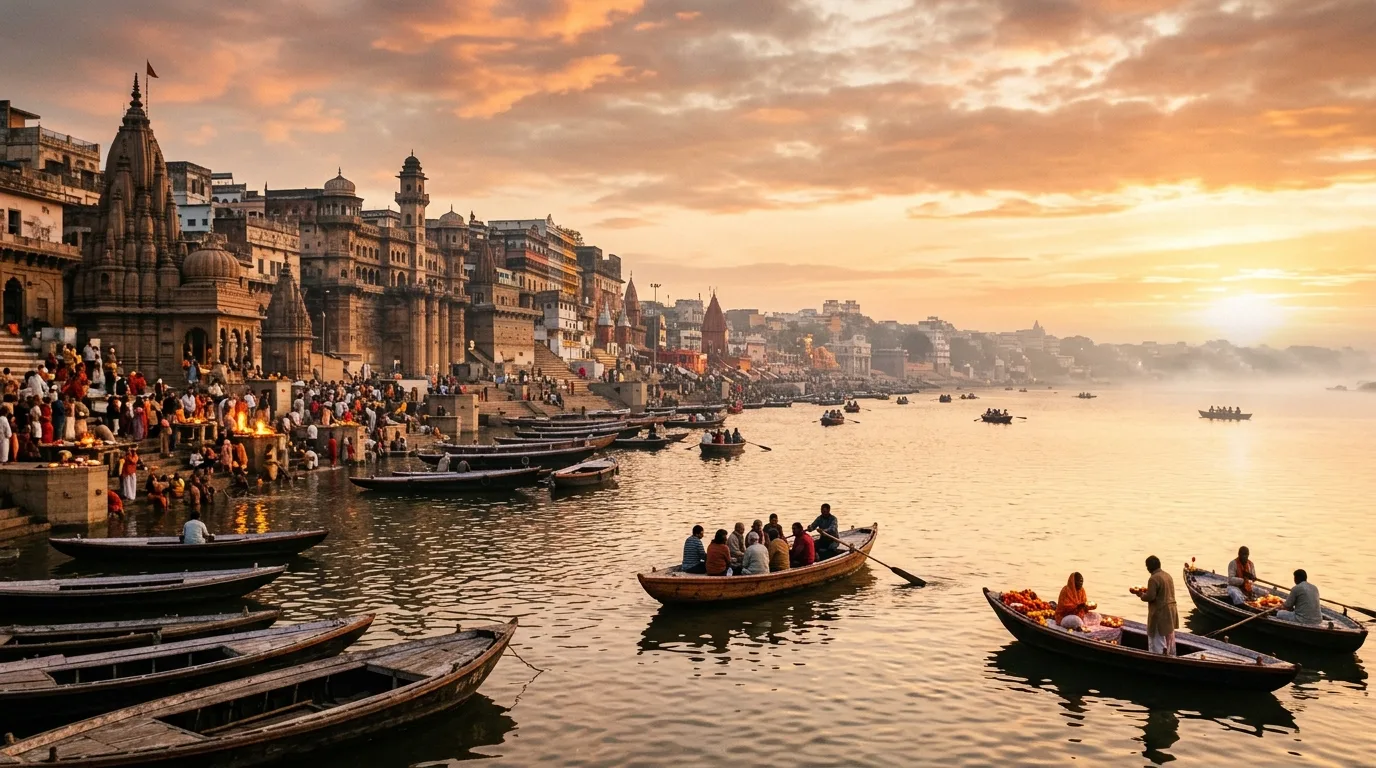
Step carefully near the water. Monsoon mud turns the lower limestone steps into a ice-slick hazard, even late into the dry season. If you're heading toward Dashashwamedh Ghat for the evening Ganga Aarti, don't stand in the middle of the stairs. You'll block worshippers and get yelled at by local volunteers. Instead, head down to the shoreline by 5:45 PM and pay ₹100 for a shared wooden boat seat facing the platforms. You get an elevated, stable viewpoint of the priests lifting seventy-pound brass lamps without being pushed around by the crowd.
Keep your camera put away when walking past Manikarnika Ghat. Burning ghats are active cremation grounds, not tourist attractions. Photographing funeral pyres shows profound disrespect to grieving families—don't do it. Save your photography for early morning light near Assi Ghat. Between 5:30 AM and 6:30 AM during Subah-e-Banaras, natural sunlight hits the riverbank at a gorgeous side angle. You'll catch yellow wooden rowboats drifting across grey-green water, classical sitar players warming their hands over small clay braziers, and locals taking their morning dip in the river. If an ambitious boatman quotes ₹800 for a rowboat ride, counter with ₹400 per hour. Settle the price before your shoes leave dry land.
Frequently Asked Questions
Is Varanasi the oldest living city in the world?
Yes, Varanasi is widely recognized as one of the oldest continuously inhabited living cities in the world. Along with ancient hubs like Damascus and Byblos, it has maintained an unbroken human tradition of urban dwelling, sacred rituals, and culture for over 3,000 years.
What archaeological proof exists of Varanasi's age?
Archaeological excavations conducted by the Archaeological Survey of India (ASI) at the Rajghat plateau prove continuous urban settlement from 1000 BCE. Excavated stratum layers revealed Northern Black Polished Ware (NBPW) pottery, iron implements, terracotta figurines, and ancient drainage systems dating back to the early Iron Age.
Why is Varanasi called a 'living' ancient city?
Varanasi is called a living city because its religious rituals, Sanskrit schools, handloom weaving, and classical music traditions never died out. Unlike historical ruins like Babylon or Pompeii that exist only as dead stone sites, Varanasi's daily morning chants, Vedic school recitations, and ghat rituals continue today exactly as described in ancient texts.
How far is Sarnath from Varanasi and what is the best transport option?
Sarnath is located approximately 10 kilometers north of central Varanasi, and auto-rickshaws offer the most practical transport. A private auto-rickshaw costs between ₹250 and ₹350 one-way, while shared e-rickshaws cost ₹30 to ₹50 per head. Early morning rides take only 20 to 25 minutes before traffic builds up.
When is the best time of day to visit Sarnath?
The early morning between 6:00 AM and 8:30 AM is the absolute best time to visit Sarnath. Arriving early allows travelers to experience the peaceful grounds around Dhamek Stupa in relative quiet before large tourist buses and school crowds arrive after 10:00 AM.
How much does the Varanasi urban ropeway cost and what is its route?
The Varanasi urban public ropeway costs between ₹50 and ₹80 per passenger for a single trip. The 3.8-kilometer route connects Varanasi Cantt Railway Station to Godowlia Chowk in 15 to 17 minutes, stopping at Vidya Peeth, Rath Yatra, and Girja Ghar along the way.
Varanasi Travel Quick Reference: Timings, Costs & Essentials
Key verified facts for planning your visit to Varanasi — timings, transport costs, temple guidelines, and safety tips:
How much does a boat ride cost in Varanasi and how to book?
Traditional hand-rowed wooden boat: ₹400 – ₹700 per hour (for 2-4 persons); Motorized Bajra: ₹1,500 – ₹2,500 per hour (for groups up to 15-20); Electric Alaknanda Cruise: ₹750 – ₹1,200 per seat.
What are the exact Ganga Aarti timings at Dashashwamedh and Assi Ghat?
Morning Subah-e-Banaras at Assi Ghat begins at 05:00 AM (summer) / 05:45 AM (winter); Grand Evening Maha Aarti at Dashashwamedh Ghat begins at 07:00 PM (summer) / 06:00 PM (winter).
What is the dress code and entry fee for Kashi Vishwanath Temple?
Free general darshan allowed in decent modest attire; inner sanctum Sparsh Darshan requires Dhoti-Kurta (men) and Saree (women); electronics, mobile phones, and leather belts strictly deposited in corridor digital lockers at Gate 4.
When is the best time of year to visit Varanasi?
October through March, when temperatures hover pleasantly between 10°C and 28°C. Coincides with Dev Deepawali (24 November 2026, with over 1.2 million lamps) and Maha Shivratri (February/March).
How far is Varanasi Airport from the Ghats and how to reach the city?
Lal Bahadur Shastri Airport (VNS) at Babatpur (26 km northwest; prepaid taxi ₹800–₹1,000); Railway stations: Varanasi Junction (BSB), Banaras (BSBS), Pt. Deen Dayal Upadhyaya Junction (DDU, 18 km).
What are the most common tourist scams in Varanasi and how to avoid them?
Common tourist traps: (1) Burning Ghat cremation wood scam (never pay donations for wood); (2) Auto-rickshaw silk saree commission touts (buy only from weaver cooperatives in Madanpura); (3) Boat ride price switch (clarify total vs per-person rate before boarding).