 By Nikhil kumar pandey & Editorial Guild
The Great Gridlock Trap: Why You Should Never Take an Auto from Cantt
If you step outside Varanasi Cantt Railway Station at nine in the morning, you will hit a wall of noise. It is relentless. Auto-rickshaws choke the narrow road, horns shriek in five-part harmony, and the thick stench of diesel exhaust coats your throat before you even shoulder your backpack. Most first-time travelers make the mistake of climbing into a shared rickshaw for the journey to Godowlia Chowk. Don't do it. That three-mile stretch of tarmac routinely turns into a forty-five-minute crawling nightmare; your feet get crushed by luggage while the heat bakes the asphalt beneath you. (And yes, the driver will almost certainly try to demand double the ₹30 rate once you reach the traffic stop).
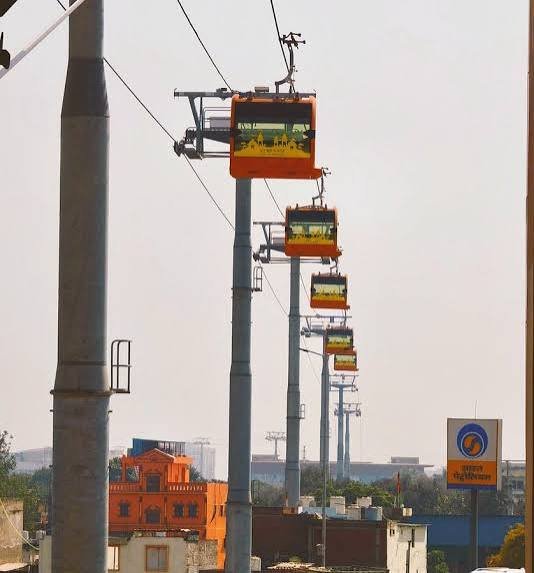
Everything changes when you look up. Soaring directly over the snarl of ancient alleys and modern gridlock is India's first urban transit ropeway. It floats right above the street chaos. Instead of sitting trapped in a diesel fumes cloud near Rath Yatra, you glide silently across the skyline in a cool, air-conditioned Swiss-Austrian gondola. The journey from the main railway hub straight to the historic heart of Kashi takes roughly sixteen minutes. Sixteen minutes total. It completely rewrites how you move through India's oldest living city.
Mapping the Aerial Line: The 5 Ropeway Stations Revealed
The urban cable car system spans approximately 3.8 to 4.2 kilometers, anchoring five strategic hubs designed to bleed off street congestion. You can board directly outside the train platforms or catch the gondolas mid-route near major academic and commercial intersections. Here is how the aerial route lays out from north to south:
- Varanasi Cantt (Station 1): The main northern terminal connected straight to the railway junction exit. Hop off your long-distance train, cross the terminal concourse, and head up to the loading bay.
- Vidya Peeth (Station 2): Positions you right outside Mahatma Gandhi Kashi Vidyapith campus. It services thousands of daily students and saves them from street-level rickshaw stand delays.
- Rath Yatra (Station 3): Placed at the city's central commercial crossroad. If you need local electronics, clothing, or bank branches, drop down here.
- Girja Ghar (Station 4): Positioned near the historic church intersection. It sits halfway down the stretch to the old quarters, offering an easy exit point for mid-city boutique hotels.
- Godowlia Chowk (Station 5): The southern terminus. This is your gateway station for Dashashwamedh Ghat, Kashi Vishwanath Dham, and the chaotic silk bazaars.
Each station features wide, modern boarding platforms designed for quick turnarounds. You don't stand around waiting for twenty minutes either. With over 148 gondolas circulating continuously along the cables, a fresh cabin pulls into the station bay every 90 to 120 seconds. It works like a continuous vertical conveyor belt.
Fares, Operating Hours, and Gondola Logistics
Public transit only succeeds when it stays cheap. Expected ticket prices for the full stretch from Varanasi Cantt to Godowlia Chowk run between ₹50 and ₹80 per passenger (with short single-zone hops likely starting much lower around ₹10 to ₹20 for local commuters). That makes it wildly competitive with private auto-rickshaw quotes, which often jump past ₹200 during peak pilgrim holidays. You get speed, personal space, and refrigerated air without paying tourist-trap tariffs.
The system operates daily from 06:00 AM to 10:00 PM, matching the rhythm of morning temple rituals and evening river ceremonies. Each enclosed cabin seats up to 10 passengers comfortably. Large glass panorama windows frame sweeping views of urban rooftops, temple spires, and distant blue coils of the Ganga. (Quick tip: try to grab a seat facing south as you approach Godowlia; watching the ancient city open up beneath your boots is worth every rupee).
| Ropeway Station | Key Landmarks Nearby | Estimated Transit Time from Cantt | Typical Street Alternative Time |
|---|---|---|---|
| Varanasi Cantt | Railway Junction, Inter-State Bus Stand | 0 Minutes (Departure) | 0 Minutes |
| Vidya Peeth | Kashi Vidyapith University, Maldahiya | 4–5 Minutes | 15–20 Minutes |
| Rath Yatra | Rath Yatra Crossing, Luxa Road Bazaars | 8–9 Minutes | 25–30 Minutes |
| Girja Ghar | Church Crossing, Local Handloom Outlets | 12–13 Minutes | 35–45 Minutes |
| Godowlia Chowk | Dashashwamedh Ghat, Vishwanath Corridor Gate 4 | 15–17 Minutes | 45–60+ Minutes |
Stepping Off at Godowlia: Walking to Vishwanath Dham & the Ghats
Once you exit the high-tech terminal at Godowlia Chowk, you enter raw, uncut Banaras. The transition hits instantly. Steam rises from massive brass pots outside sweet shops, street vendors call out prices for fresh jasmine garlands, and barefoot pilgrims march toward the water. From the Godowlia ropeway exit, you are barely a seven-minute walk from the main entrance of Shri Kashi Vishwanath Dham (Gate 4).
Remember the ground rules before heading down the lanes. Leave your heavy bags and leather belts behind. Mobile phones, metallic items, and leather wallets are strictly prohibited inside the temple sanctum. If you brought them along, skip the random street shops holding luggage for a fee; head directly to the free digital locker tokens provided inside the official Corridor entrance building. General public darshan is completely free. (If you want to skip the massive winding queue during festive Mondays, buy a Sugam Darshan ticket online for ₹300 at the official temple portal or counter).
Hungry after the flight across town? Turn right out of Godowlia station toward Kashi Chaat Bhandar. Order a clay bowl of hot tamatar chaat for ₹50. The pungent blend of crushed tomatoes, roasted cumin, pure ghee, and crunchy potato shreds seasoned with crushed black pepper completely ruins ordinary street snacks forever.
Sky Transit vs. Traditional Streets: Making the Right Choice
Does the ropeway render ground transport obsolete? Not entirely. If you carry massive, heavy trunks or traveling with elderly family members who struggle with platform escalators, a private auto or prepaid taxi (roughly ₹150 to ₹250) might still drop you closer to your specific hotel doorstep in narrow residential lanes. But for general day-trippers, solo travelers, and riverfront visitors, taking the cable car is an absolute non-negotiable win.
Consider the contrast. On the road, you inhale dark diesel exhaust while dodging stray cows, delivery cycles, and sudden monsoon puddles near the lower lanes. In the sky, you drift quietly at 12 miles per hour, looking down at centuries of architectural layers. It strips away the friction. You save your energy for the real work: navigating the stone ghats, drinking ₹10 ginger tea from tiny clay cups, and absorbing the timeless rhythm of the ancient river below.
Frequently Asked Questions
What is the exact route and full station list for the Varanasi Urban Ropeway?
The ropeway spans 3.8 to 4.2 kilometers directly connecting Varanasi Cantt Railway Station to Godowlia Chowk. The five stations along the line are: 1) Varanasi Cantt, 2) Vidya Peeth, 3) Rath Yatra, 4) Girja Ghar, and 5) Godowlia Chowk.
How much does a ticket cost for the Varanasi Ropeway?
Fares for the complete trip from Cantt to Godowlia are expected to range between ₹50 and ₹80 per passenger. Shorter single-station hops start at lower public transit tariffs (around ₹10 to ₹20), making it far cheaper than private rickshaws.
What are the operating hours for the Varanasi Ropeway at Godowlia?
The aerial ropeway operates daily from 06:00 AM until 10:00 PM, running continuous gondolas every 90 to 120 seconds to serve morning pilgrims and evening Ganga Aarti visitors.
How long does the journey take from Varanasi Cantt to Godowlia?
The direct aerial commute takes approximately 15 to 17 minutes from start to finish. This bypasses the heavy street-level traffic that normally takes 45 to 60 minutes by auto-rickshaw.
How close is the Godowlia Ropeway Station to Kashi Vishwanath Temple and the Ghats?
Godowlia Chowk station sits within a 5-to-7 minute walk (approx 500 meters) from Gate 4 of Shri Kashi Vishwanath Dham and Dashashwamedh Ghat for the evening Ganga Aarti.
Can passengers carry heavy luggage inside the ropeway cabins?
Standard cabin rules permit cabin baggage, small backpacks, and hand luggage. Large oversized trunks or commercial freight bags are restricted to keep cabin space open for up to 10 seated passengers.
Varanasi Travel Quick Reference: Timings, Costs & Essentials
Key verified facts for planning your visit to Varanasi — timings, transport costs, temple guidelines, and safety tips:
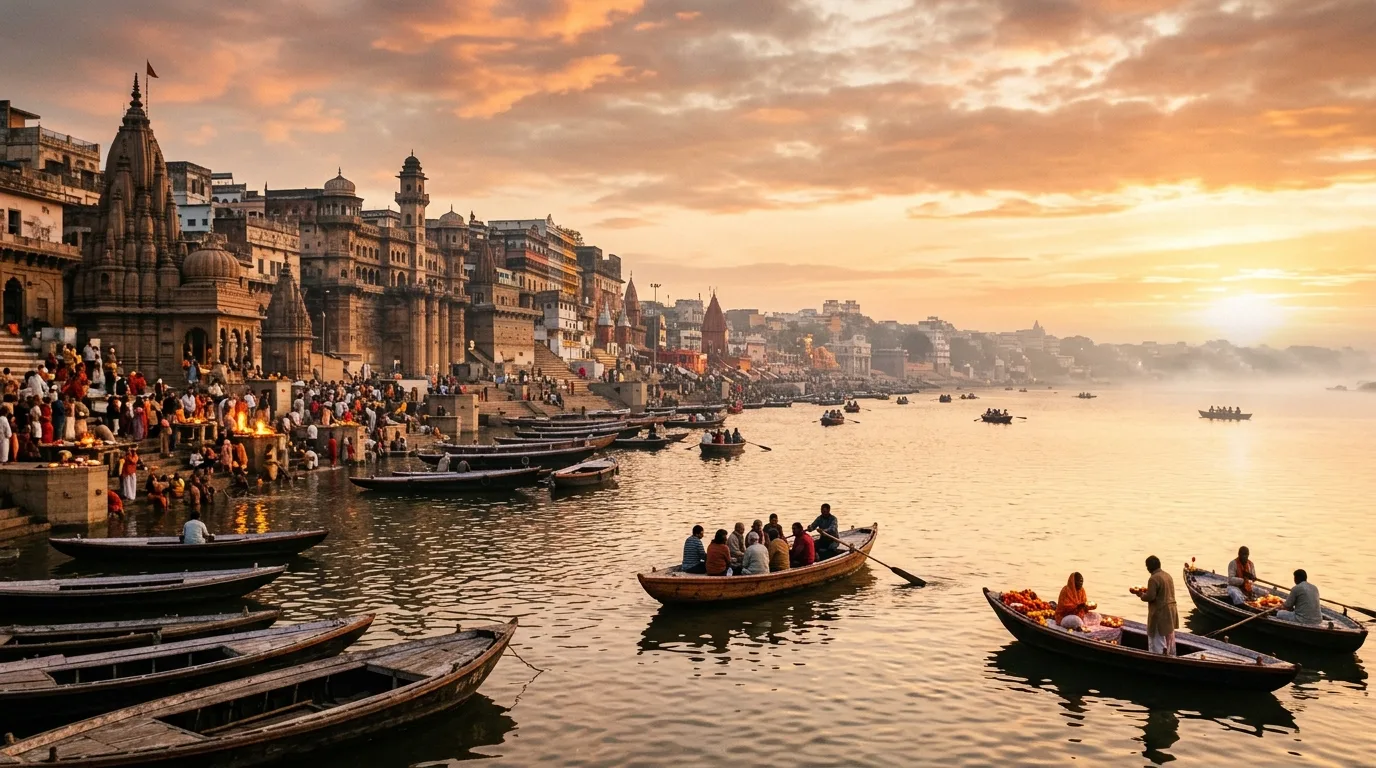
How much does a boat ride cost in Varanasi and how to book?
Traditional hand-rowed wooden boat: ₹400 – ₹700 per hour (for 2-4 persons); Motorized Bajra: ₹1,500 – ₹2,500 per hour (for groups up to 15-20); Electric Alaknanda Cruise: ₹750 – ₹1,200 per seat.
What are the exact Ganga Aarti timings at Dashashwamedh and Assi Ghat?
Morning Subah-e-Banaras at Assi Ghat begins at 05:00 AM (summer) / 05:45 AM (winter); Grand Evening Maha Aarti at Dashashwamedh Ghat begins at 07:00 PM (summer) / 06:00 PM (winter).
What is the dress code and entry fee for Kashi Vishwanath Temple?
Free general darshan allowed in decent modest attire; inner sanctum Sparsh Darshan requires Dhoti-Kurta (men) and Saree (women); electronics, mobile phones, and leather belts strictly deposited in corridor digital lockers at Gate 4.
When is the best time of year to visit Varanasi?
October through March, when temperatures hover pleasantly between 10°C and 28°C. Coincides with Dev Deepawali (24 November 2026, with over 1.2 million lamps) and Maha Shivratri (February/March).
How far is Varanasi Airport from the Ghats and how to reach the city?
Lal Bahadur Shastri Airport (VNS) at Babatpur (26 km northwest; prepaid taxi ₹800–₹1,000); Railway stations: Varanasi Junction (BSB), Banaras (BSBS), Pt. Deen Dayal Upadhyaya Junction (DDU, 18 km).
What are the most common tourist scams in Varanasi and how to avoid them?
Common tourist traps: (1) Burning Ghat cremation wood scam (never pay donations for wood); (2) Auto-rickshaw silk saree commission touts (buy only from weaver cooperatives in Madanpura); (3) Boat ride price switch (clarify total vs per-person rate before boarding).