The Bumper-to-Bumper Crawl to Godowlia Is Officially Over
If you've ever stepped out of Varanasi Junction into the midday sun with a heavy rucksack, you know the exact sound of urban gridlock. Engine heat radiates off asphalt. E-rickshaws lock wheels near Rath Yatra while stray bovines snooze peacefully in the middle lane. You sit trapped. Your four-kilometer journey from Varanasi Cantt to Dashashwamedh Ghat takes forty-five brutal minutes—sometimes over an hour if a religious procession blocks the street. That reality is shifting right now.
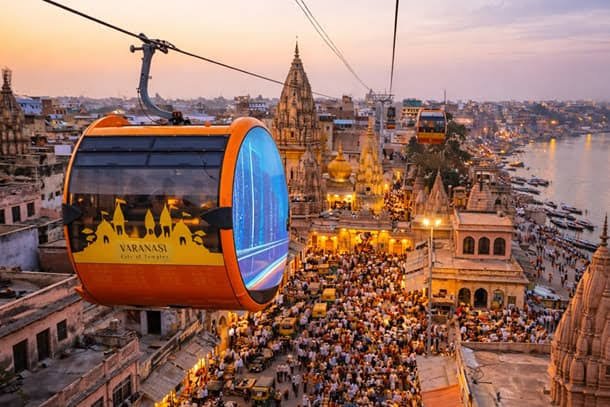
India's first urban transit ropeway floats high above this ground-level friction. It glides steadily over choked alleys and wire-tangled skylines; it slashes an agonizing street crawl down to a cool sixteen minutes. The river city isn't just expanding outward. It's moving skyward.
Five Stations in Sixteen Minutes: The Aerial Corridor Blueprint
Forget maneuvering through crammed, dust-choked arterial roads. The urban ropeway follows a precise 3.8-kilometer aerial spine straight through the city's dense heart. You board at Varanasi Cantt Railway Station right after stepping off your train. (Pro tip: keep your ticket accessible at the terminal, as smart gates require a fast barcode scan).
From Cantt, the cable line climbs swiftly above the railway yard, cruising toward Vidya Peeth station near the Kashi Vidyapeeth campus. Next, it glides past Rath Yatra crossing—a spot historically famous for soul-crushing jams—before sweeping over Girja Ghar. Finally, the cable lowers you into Godowlia Chowk. That's the main gateway to Shri Kashi Vishwanath Dham and the historic steps of Dashashwamedh Ghat. Five stations total. Zero traffic stops.
- Station 1: Varanasi Cantt Railway Station (Direct connection to train platforms)
- Station 2: Vidya Peeth (Serving Kashi Vidyapeeth university zone)
- Station 3: Rath Yatra (Major commercial interchange hub)
- Station 4: Girja Ghar (Church crossing bottleneck bypass)
- Station 5: Godowlia Chowk (Steps away from Kashi Vishwanath Dham & Dashashwamedh Ghat)
Inside the Cabins: Frequencies, AC Comfort, and Hours
The system doesn't rely on loose schedules. Over 148 modern Swiss-Austrian gondola cabins move continuously along high-tension steel cables. Each cabin comfortably fits ten passengers in fully air-conditioned comfort. They arrive every 90 to 120 seconds. You won't stand around sweating on platforms.
Daily operating hours run from 06:00 AM to 10:00 PM. That window easily covers early morning temple darshan and late-night river walks. The ride stays whisper-quiet. Look down through tinted glass windows; you'll see flat rooftops covered in drying red chillies, maze-like galis, and bright laundry lines stretch out beneath your feet—while cool air blows inside the cabin.
Transit Costs Compared: Breaking Down Your Fares
Hiring a private auto across town often costs ₹150 to ₹250 after aggressive haggling. Shared rickshaws cost less—usually ₹20 to ₹30 per stretch—but you'll trade comfort for bruised knees and exhaust fumes. The ropeway establishes a standardized public rate expected between ₹50 and ₹80 per passenger. It's affordable. It eliminates surprise pricing completely.
| Transit Option | Estimated Cost (₹) | Travel Time | Comfort & Reliability |
|---|---|---|---|
| Urban Ropeway | ₹50 – ₹80 | 15–17 Minutes | High (AC, No Traffic Delay) |
| Private E-Rickshaw / Auto | ₹150 – ₹250 | 45–60 Minutes | Low (Severe Gridlock & Dust) |
| Shared Auto / E-Rickshaw | ₹20 – ₹40 | 50–70 Minutes | Very Low (Cramped, Multiple Stops) |
| Prepaid Taxi / Cab | ₹250 – ₹400 | 45–60 Minutes | Moderate (Stuck in Traffic) |
Landing at Godowlia: Navigating the Ancient Core
Touchdown at Godowlia station puts you directly inside the historic street network. Step out of the elevated terminal, and the pungent sting of burning camphor mixed with scalding ginger chai hits your nose instantly. Grab a hot clay kulhad tea for ₹10 at the corner stall before walking further.
From Godowlia Chowk, it's a quick five-minute walk down to Gate 4 of Shri Kashi Vishwanath Dham. Keep in mind: mobile phones, leather belts, and large bags aren't permitted inside the main sanctum. Put your belongings inside free digital locker counters near the corridor entry. General darshan is completely free, though booking a Sugam Darshan pass for ₹300 online saves substantial time during morning rushes. Heading to the river? Walk down the gentle cobblestone incline to Dashashwamedh Ghat. By 6:30 PM, the metallic clang of heavy brass aarti lamps echoes across the cold limestone steps.
Local Street Eats Near Godowlia Ropeway Station
Don't jump on a boat immediately after descending from the aerial station. Godowlia is an eating ground. Walk three minutes toward Chowk to find hot kachori sabzi served on leaf plates for ₹40. (Honestly, skip generic restaurants; street counters serve much fresher food).
If you're visiting between November and February, look for vendors whisking winter Malaiyyo—a delicate, saffron-infused milk foam topped with pistachios served in unglazed clay pots for ₹50. Year-round, Pehalwan or Blue Lassi serves thick curd bowls topped with chopped mango or pomegranate for ₹60 to ₹120. Finish your food run at Keshav Tambool near Lanka or Godowlia crossing for a fresh Banarasi paan (₹25-₹60), folded with sweet gulkand and sweet betel nut.
Frequently Asked Questions
What is the expected ticket price for the Varanasi Ropeway?
The expected ticket fare for the Varanasi urban ropeway ranges from ₹50 to ₹80 per passenger for the full route between Varanasi Cantt Railway Station and Godowlia Chowk. Ticket counters and automated vending machines accept cash, UPI, and transit cards.
What are the operational timings for the ropeway?
The ropeway operates daily from 06:00 AM to 10:00 PM. Cabins arrive continuously every 90 to 120 seconds across all five stations.
Which stations are included in the Varanasi ropeway route?
The 3.8-kilometer aerial route includes five stations: 1) Varanasi Cantt Railway Station, 2) Vidya Peeth, 3) Rath Yatra, 4) Girja Ghar, and 5) Godowlia Chowk.
How long does it take to travel from Varanasi Cantt to Godowlia by ropeway?
The ropeway trip takes roughly 15 to 17 minutes from Cantt Station to Godowlia Chowk. By comparison, road travel along the same stretch takes 45 to 60 minutes due to severe congestion.
Are luggage and backpacks allowed inside the gondolas?
Standard cabin luggage, backpacks, and duffel bags are allowed inside the 10-seater gondola cabins. Extremely bulky cargo or oversized commercial freight must use traditional road transport.
Varanasi Travel Quick Reference: Timings, Costs & Essentials
Key verified facts for planning your visit to Varanasi — timings, transport costs, temple guidelines, and safety tips:
How much does a boat ride cost in Varanasi and how to book?
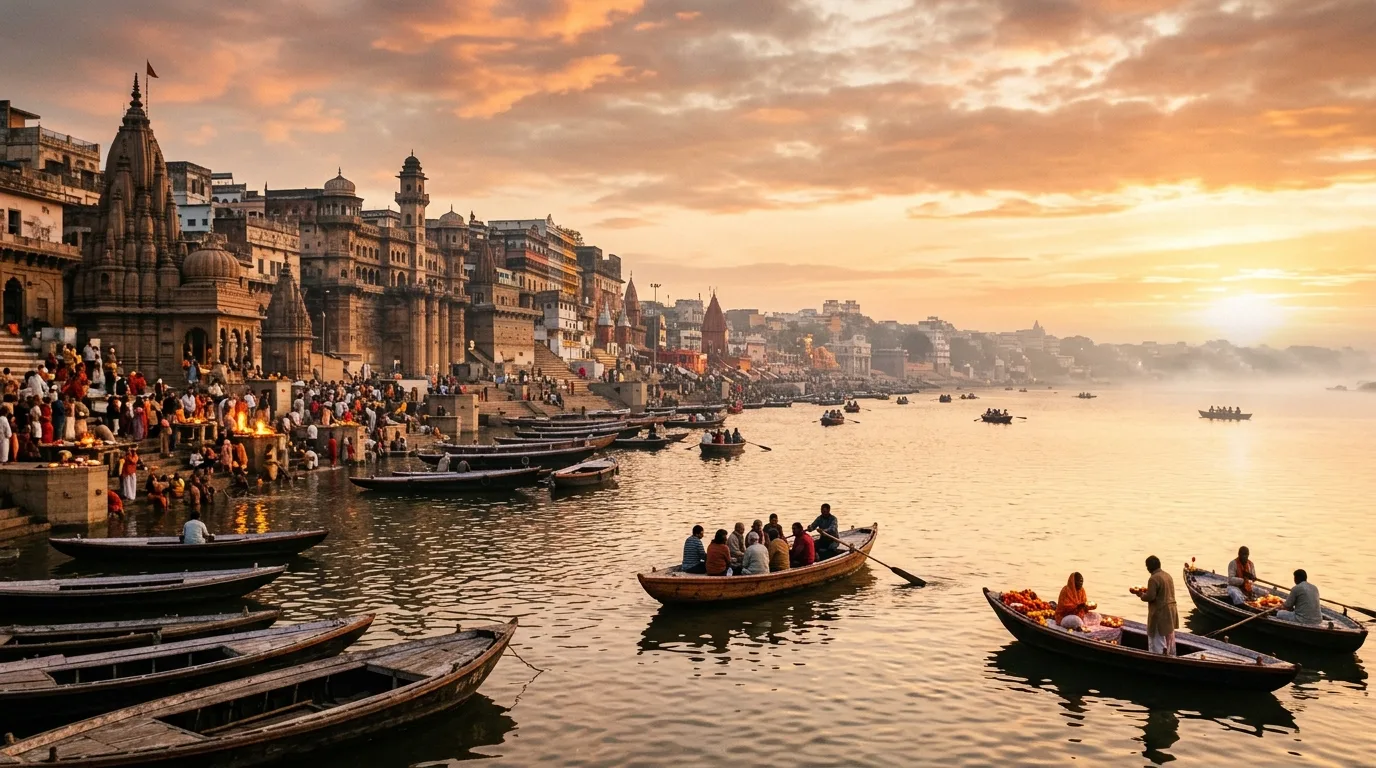
Traditional hand-rowed wooden boat: ₹400 – ₹700 per hour (for 2-4 persons); Motorized Bajra: ₹1,500 – ₹2,500 per hour (for groups up to 15-20); Electric Alaknanda Cruise: ₹750 – ₹1,200 per seat.
What are the exact Ganga Aarti timings at Dashashwamedh and Assi Ghat?
Morning Subah-e-Banaras at Assi Ghat begins at 05:00 AM (summer) / 05:45 AM (winter); Grand Evening Maha Aarti at Dashashwamedh Ghat begins at 07:00 PM (summer) / 06:00 PM (winter).
What is the dress code and entry fee for Kashi Vishwanath Temple?
Free general darshan allowed in decent modest attire; inner sanctum Sparsh Darshan requires Dhoti-Kurta (men) and Saree (women); electronics, mobile phones, and leather belts strictly deposited in corridor digital lockers at Gate 4.
When is the best time of year to visit Varanasi?
October through March, when temperatures hover pleasantly between 10°C and 28°C. Coincides with Dev Deepawali (24 November 2026, with over 1.2 million lamps) and Maha Shivratri (February/March).
How far is Varanasi Airport from the Ghats and how to reach the city?
Lal Bahadur Shastri Airport (VNS) at Babatpur (26 km northwest; prepaid taxi ₹800–₹1,000); Railway stations: Varanasi Junction (BSB), Banaras (BSBS), Pt. Deen Dayal Upadhyaya Junction (DDU, 18 km).
What are the most common tourist scams in Varanasi and how to avoid them?
Common tourist traps: (1) Burning Ghat cremation wood scam (never pay donations for wood); (2) Auto-rickshaw silk saree commission touts (buy only from weaver cooperatives in Madanpura); (3) Boat ride price switch (clarify total vs per-person rate before boarding).