The 4:30 AM Mistake Everyone Makes at Assi Ghat
Most travelers book a generic sunrise boat ride, sleep right through the actual dawn, and miss the real morning pulse entirely. If you arrive at Assi Ghat past 5:00 AM, the cold morning wind cuts right through your jacket and you'll find yourself trapped behind three rows of selfie-taking visitors. Don't do it. Instead, show up at 4:15 AM while the stones are still empty. The limestone steps will chill your bare feet instantly. It's dark. The river is black.
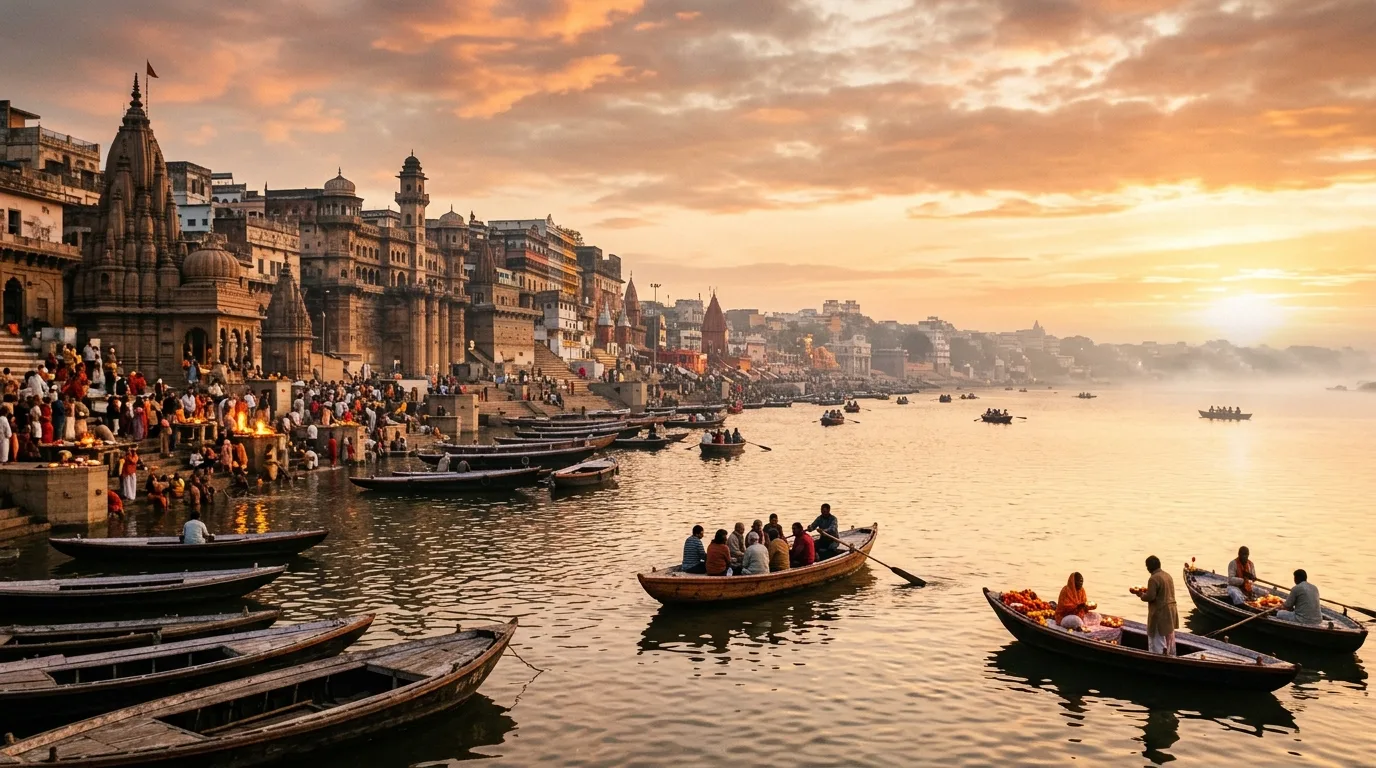
You want the Subah-e-Banaras gathering by the southern end of the ghat. Flutes echo across the water. A sitar player tunes his strings in the damp air while the heavy brass aarti lamps are prepared with fresh mustard oil. The ritual here isn't a staged performance for cameras. It's a quiet gathering of locals, students, and practitioners who sit cross-legged on cold sandstone, chanting before the sun clears the eastern horizon.
Grab a kulhad chai from the small stall near the changing rooms for ₹10. It's scalding hot, heavily spiced with ginger, and poured into an unglazed clay cup that tastes faintly of baked earth. (And yes, the tea vendor by the corner will try to charge you double if you speak English, so keep your Hindi phrases ready). Once the sun finally cracks over the opposite bank, the water shifts from pitch black to an opaque, muddy gold. That's your cue to move.
Morning Yoga and Quiet Courtyards Off the Ghats
You don't need a luxury wellness retreat to find a quiet space for breathwork in Banaras. Walk inland from Dashashwamedh toward Bangali Tola, turn down a narrow alley where cows block the path, and look for unmarked wooden doors leading to old ashram courtyards. These spaces operate on entirely different rhythms from the roaring riverfront. The air smells of wet stone, cow dung ash, and crushed tulsi leaves.
Morning yoga sessions in these hidden courtyards cost roughly ₹200 to ₹500 per drop-in class. You'll practice on thin cotton mats laid over cool stone tiles while stray pigeons flutter overhead. The instruction is direct, traditional, and entirely devoid of Western wellness jargon. They focus on pranayama and joint-loosening kriyas. It hurts if your hips are tight. Don't expect padded studio floors or essential oil diffusers.
Afterwards, head straight for a local bhatiyara to refactor your energy with fresh kachori sabzi for ₹30. The potatoes are fiery, cooked in unrefined mustard oil with black salt and crushed cumin. It's heavy food. Your stomach might complain for an hour, but it fuels the upcoming walk through the maze better than any continental breakfast ever could. Take Gate 4 if you're heading toward the Vishwanath corridor afterwards, but honestly, skip the front row unless you enjoy smoke stinging your eyes.
Ramnagar Fort: Dust, Vintage Cars, and Royal Neglect
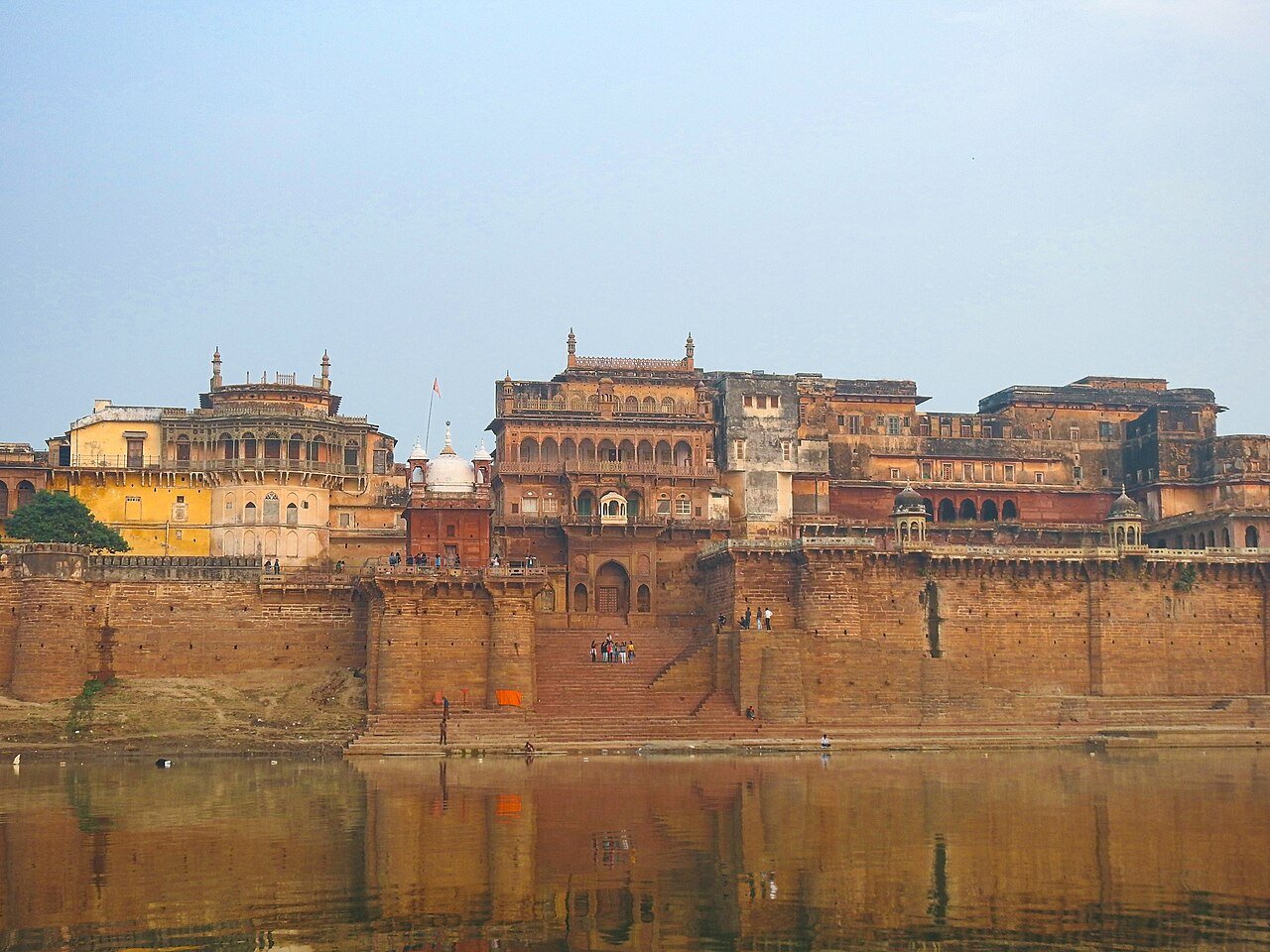
Cross the pontoon bridge or hire a wooden rowboat to reach the eastern bank where Ramnagar Fort sits in crumbling sandstone glory. The boatman will initially quote ₹800 for a round trip; drop him down to ₹300 or walk away. The river current here is deceptive. Your arms will ache if you try rowing yourself, so let the local oarsman handle the heavy wooden sweeps.
The fort is the ancestral home of the Maharaja of Kashi, but it feels more like a grand attic filled with forgotten centuries. Inside the dusty museum, you'll find vintage American sedans from the 1940s rotting gently under thick layers of dust, ivory palanquins, astronomical clocks that haven't ticked in decades, and faded black-and-white portraits of royals holding hunting rifles. It's fascinating. It's also remarkably unmaintained. Paint peels from the ceilings. Floorboards creak ominously underfoot.
The view of the Varanasi ghat crescent from the fort's terrace at noon is unmatched. You see the entire sweep of the city laid out like a ragged amphitheater across the water. Entry costs ₹50 for Indian nationals and ₹200 for foreigners. Give yourself ninety minutes here, then take a shared auto back toward Godowlia for ₹20. Watch your pockets in the auto—the traffic crush at the crossing is legendary.
Navigating the Labyrinth: The True Varanasi Heritage Walk
Forget fixed itineraries sold by tour agencies. Start your heritage walk at Maidagin, slip into the gali behind the dairy shops, and simply get lost on purpose. The alleys are so narrow that two motorcycles cannot pass each other without one scraping its handlebars against a damp brick wall. You'll dodge stray dogs, bicycle bells, and men carrying massive bundles of unstitched Banarasi silk on their heads.
The architecture shifts with every turn. You'll pass 18th-century wooden havelis with intricate, rotting jharokha balconies painted in faded indigo and mustard yellow. Look up. Pigeons nest in carved stone brackets that have supported houses for three hundred years. Stop at a tiny sweet shop near Kachori Gali and order a plate of malaiyyo if you're visiting between November and February. It's a fragile, saffron-infused milk foam topped with pistachios that melts instantly on your tongue. It costs ₹40 a plate and disappears by 10:00 AM.
Avoid buying silk here unless you know an artisan directly. Most shops along the main walking paths source power-loom synthetic blends from outside the city and sell them as pure handloom katan silk. If a shopkeeper invites you to a rooftop terrace to watch weavers at work, expect a high-pressure sales pitch. Polite refusal is an art form you must master quickly in Banaras.
The Evening Shift: Beyond the Main Aarti Crowds
Everyone crowds into Dashashwamedh Ghat for the evening ritual at sunset. That's a mistake if you value personal space. The seating boats are crammed four-deep against each other. The noise from competing loudspeakers is deafening. Instead, walk down to Niranjani Ghat or Ahilyabai Ghat just before dusk. Sit quietly on the stone steps and watch the smaller, lesser-known lamps being lit by local priests.
A private wooden rowboat for the evening costs about ₹400 to ₹600 if you negotiate firmly before stepping in. Insist on staying away from the central flotilla. Floating a leaf bowl with a marigold flower and a small oil lamp costs ₹20. The candle flickers against the dark, oily surface of the Ganga while temple bells ring out in overlapping waves from a dozen different directions.
The air cools down rapidly after sunset. Grab a kulhad lassi near Chowk for ₹50—thick, sweet yogurt topped with a thick layer of malai and crushed cardamom. It's rich enough to count as dinner. Walk back to your guesthouse through the quiet alleys under yellow sodium streetlamps. The city changes its skin entirely after dark; the aggressive daytime energy gives way to a low, rhythmic hum of chanting and barking dogs.
Frequently Asked Questions
What is the best time of day for photography along the ghats?
Between 5:00 AM and 7:00 AM. The low-angle winter fog or summer haze creates a soft, natural diffusion that flattens the harsh shadows, and the ghats are relatively free of massive crowds.
How much should I pay for a boat ride?
A shared motorboat from Assi to Dashashwamedh shouldn't cost more than ₹100 per person. A private wooden rowboat for an hour should range between ₹400 and ₹600 total. Always settle the price before getting into the boat.
Are the ashram yoga classes suitable for complete beginners?
Yes. Most morning classes in the Assi and Bangali Tola areas cater to mixed levels, focusing heavily on basic breathing exercises, joint mobility, and gentle stretching rather than advanced acrobatics.
How do I avoid getting lost in the galis?
You will get lost. It's inevitable. Just keep walking downhill; you will eventually hit the Ganga. Once you reach the river, turn left or right to reorient yourself using the major ghat landmarks.
Varanasi Travel Quick Reference: Timings, Costs & Essentials
Key verified facts for planning your visit to Varanasi — timings, transport costs, temple guidelines, and safety tips:
How much does a boat ride cost in Varanasi and how to book?
Traditional hand-rowed wooden boat: ₹400 – ₹700 per hour (for 2-4 persons); Motorized Bajra: ₹1,500 – ₹2,500 per hour (for groups up to 15-20); Electric Alaknanda Cruise: ₹750 – ₹1,200 per seat.
What are the exact Ganga Aarti timings at Dashashwamedh and Assi Ghat?
Morning Subah-e-Banaras at Assi Ghat begins at 05:00 AM (summer) / 05:45 AM (winter); Grand Evening Maha Aarti at Dashashwamedh Ghat begins at 07:00 PM (summer) / 06:00 PM (winter).
What is the dress code and entry fee for Kashi Vishwanath Temple?
Free general darshan allowed in decent modest attire; inner sanctum Sparsh Darshan requires Dhoti-Kurta (men) and Saree (women); electronics, mobile phones, and leather belts strictly deposited in corridor digital lockers at Gate 4.
When is the best time of year to visit Varanasi?
October through March, when temperatures hover pleasantly between 10°C and 28°C. Coincides with Dev Deepawali (24 November 2026, with over 1.2 million lamps) and Maha Shivratri (February/March).
How far is Varanasi Airport from the Ghats and how to reach the city?
Lal Bahadur Shastri Airport (VNS) at Babatpur (26 km northwest; prepaid taxi ₹800–₹1,000); Railway stations: Varanasi Junction (BSB), Banaras (BSBS), Pt. Deen Dayal Upadhyaya Junction (DDU, 18 km).
What are the most common tourist scams in Varanasi and how to avoid them?
Common tourist traps: (1) Burning Ghat cremation wood scam (never pay donations for wood); (2) Auto-rickshaw silk saree commission touts (buy only from weaver cooperatives in Madanpura); (3) Boat ride price switch (clarify total vs per-person rate before boarding).