 By Nikhil kumar pandey & Editorial Guild
The Mistake Every First-Time Visitor Makes at Assi Ghat
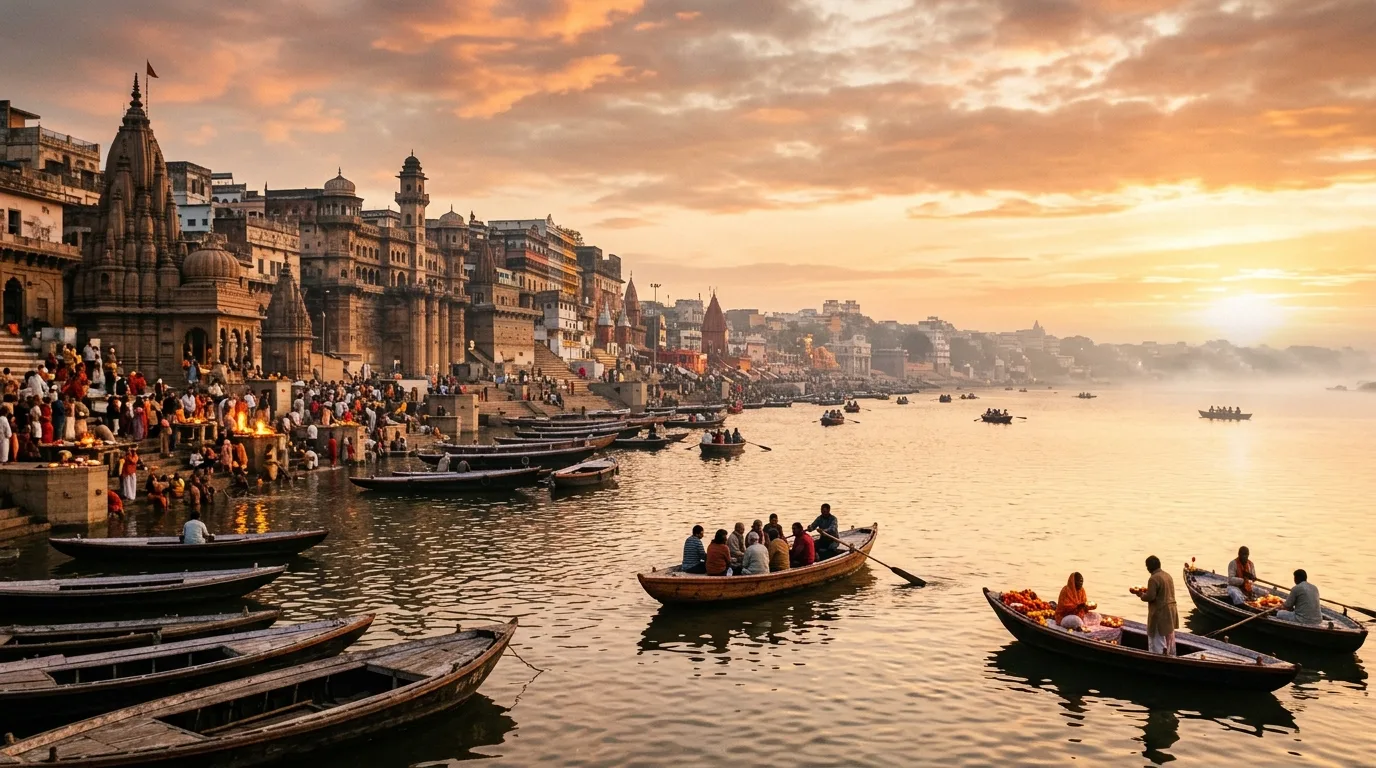
Most travelers set their alarms for dusk, rushing to Dashashwamedh Ghat because some travel blog told them it's mandatory. That's your first error. You miss the raw, mist-shrouded quiet of Assi Ghat at dawn when the cold stone chills your bare feet and the morning wind cuts straight through your jacket. The river is a deep, bruised charcoal color before the sun breaks through the haze. You won't find thumping loudspeakers here at 5:30 AM; instead, you get the quiet scraping of a wooden oar against the current and the low drone of flutes drifting across the water.
If you stand near the southern steps, a local chai vendor is already boiling heavy copper pots of milk with crushed black pepper and fresh ginger, selling small clay kulhads for just ₹10. Don't take a wooden rowboat from the guys shouting inflated quotes of ₹800 from the stairs. Walk down to the water's edge, negotiate calmly, and secure a hand-rowed boat for ₹400 to ₹600 per hour. (And yes, the boatman will point out mythical sandbanks or try to sell you marigold garlands for ₹50—just smile, shake your head, and enjoy the silence while the morning aarti bells begin to chime softly in the distance.)
Witnessing the Epic Scale of Nati Imli's Bharat Milap
If you happen to be in Banaras around October during the festival season, skip the routine temple queues for one afternoon and head deep into the inner lanes toward Nati Imli. This isn't a modern stage production with microphones and stage lights; it's a centuries-old open-air folk theatre tradition that draws a massive sea of humanity under the sprawling branches of an ancient tamarind tree. The roads are entirely gridlocked by midday, so park your shared e-rickshaw (which costs roughly ₹20 from Godowlia) near the outer perimeter and walk the final half-kilometer through the narrow, surging alleys.
Tens of thousands of people crowd every available rooftop, balcony, and patch of dirt to watch the emotional reunion scene of Lord Rama and Bharata play out in real time. The atmosphere is thick with dust, the sharp scent of marigold petals, and the collective breathing of an ancient city utterly suspended in belief. There are no VIP passes or reserved seating zones here—just stand shoulder-to-shoulder with local Banarasis, listen to the conch shells split the autumn air, and watch the gilded palanquins sway through the sea of hands. (Honestly, keep your phone in your pocket during the peak moment, because the surging crowd leaves zero room for steady camera work.)
The Somber Reality and Grace of Harishchandra Ghat
Walking south from Dashashwamedh along the continuous stone promenade eventually brings you to Harishchandra Ghat, one of the two primary cremation grounds operating continuously along the Ganga. The air here carries a very specific, heavy scent of burning sandalwood, dry firewood, and river silt mixed with woodsmoke. This is the place locals call the gateway to liberation, where funeral pyres burn day and night without interruption. It is deeply solemn, and taking photographs or videos here is strictly prohibited out of basic human respect for grieving families.
You can sit quietly on the stone steps slightly upstream and watch the small wooden boats drift past carrying quiet mourners. The logs of mango and sal wood are stacked neatly in massive piles nearby, managed by traditional caretakers whose families have kept the eternal flames burning for generations. It forces a sudden, stark realization about the transience of life that no museum or history textbook can ever replicate. After spending an hour absorbing the heavy atmosphere, walk back up toward the main lane and cool your nerves with a fresh kulhad lassi for ₹60 from a quiet local shop tucked away from the riverfront.
Navigating the City Transit Without Losing Your Mind
Getting across Varanasi used to mean sitting in agonizing traffic jams near Godowlia Chowk for over an hour, but the transit landscape has evolved significantly. The Varanasi Urban Public Ropeway now connects Varanasi Cantt Railway Station directly to Godowlia Chowk across a 3.8 to 4.2-kilometer aerial span, cutting commute times down to a swift 15 to 17 minutes. Modern Swiss-Austrian air-conditioned gondolas—carrying up to 10 passengers each—arrive every 90 to 120 seconds between 06:00 AM and 10:00 PM, charging an affordable public transit fare of ₹50 to ₹80 per passenger.
For shorter hops through the narrow internal galis where cable cars and cars simply cannot go, your best friend remains the shared e-rickshaw. Fares range from ₹10 to ₹30 depending on the stretch, while a private auto hire across the central city generally costs between ₹150 and ₹250. If you are arriving via Varanasi Babatpur Airport located 26 kilometers away, a pre-paid airport taxi will run you ₹800 to ₹1000, whereas an app-based cab sits comfortably around ₹700 to ₹900. (Always confirm the price before stepping into any unmetered auto-rickshaw to avoid awkward arguments at your destination.)
Iconic Banarasi Street Food Worth Every Rupee
You cannot understand the cultural rhythm of Banaras without tasting its heavy, ghee-laden breakfast culture in the older bazaars. Head straight to Thatheri Bazaar by 8:00 AM to grab a plate of piping hot kachori sabzi paired with sweet, freshly fried jalebis for just ₹40 to ₹60. The potato curry is spiked with fennel and dry ginger, packing a warming punch that fuels you for hours of walking along the stone steps. If you visit during the winter months between November and February, seek out Chaukhamba for a clay kulhad of malaiyyo—a delicate, saffron-infused milk froth topped with chopped pistachios that costs ₹50 to ₹100 and literally melts away on your tongue before you can chew it.
For an afternoon sugar rush, stop by Pehalwan near Lanka for a thick, malai-topped lassi served in a heavy clay cup for ₹50 to ₹80, or brave the twisting alleys of Manikarnika to find Blue Lassi for fruit-topped variations ranging from ₹60 to ₹120. Finish your evening food crawl by ordering a classic Banarasi paan infused with sweet gulkand and fragrant spices from Keshav Tambool near Lanka for ₹25 to ₹60. (And remember, true Banarasi paan is meant to be chewed slowly—don't swallow it whole, or the intense rush of camphor and menthol will catch you completely off guard.)
Frequently Asked Questions
What time does the morning aarti happen at Assi Ghat?
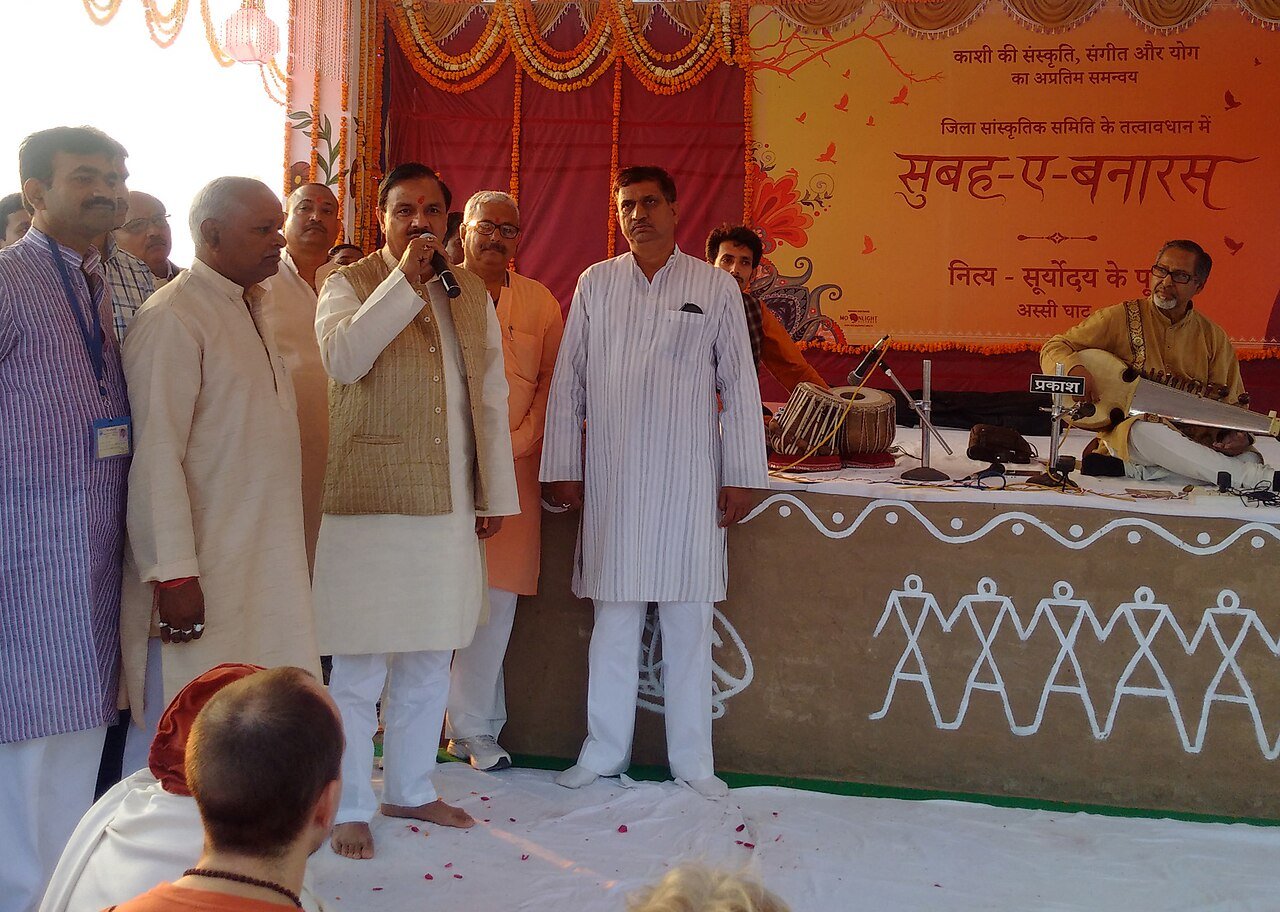
The Subah-e-Banaras morning aarti at Assi Ghat begins precisely at sunrise, shifting slightly between 5:00 AM and 5:30 AM depending on the time of year. Arrive at least fifteen minutes early to secure a stone step seat, grab a ₹10 kulhad chai from a local vendor, and watch the morning rituals unfold without dealing with heavy midday crowds.
How much does a private wooden boat ride cost on the Ganga?
A hand-rowed wooden boat ride from Assi Ghat to Manikarnika Ghat costs between ₹400 and ₹700 per hour for two to four persons. Boatmen near major stairs often quote inflated prices up to ₹1000 during sunrise and evening prayer hours, so always negotiate and settle the final fare before stepping onto the wooden hull.
Where is the Nati Imli performing arts festival held in Varanasi?
The historic Nati Imli open-air theatre event takes place beneath an ancient tamarind tree in the inner residential wards of Varanasi. Because vehicular traffic comes to a complete halt during the afternoon festival hours, take a shared e-rickshaw for roughly ₹20 from Godowlia and walk the remaining distance through the narrow lanes.
Can visitors take photographs at Harishchandra Ghat?
Taking photographs or recording videos directly at Harishchandra Ghat's cremation grounds is strictly prohibited. Visitors must respect the privacy of grieving families and maintain a quiet, dignified demeanor while observing the eternal flames from a respectful distance upstream.
How much is the fare for the Varanasi Urban Public Ropeway?
The Varanasi Urban Public Ropeway charges an affordable transit rate of ₹50 to ₹80 per passenger. The aerial system operates modern air-conditioned cabins from 06:00 AM to 10:00 PM, connecting Varanasi Cantt Railway Station directly to Godowlia Chowk in just 15 to 17 minutes.
What is the average cost of traditional street food in Banaras?
Traditional street food items like kachori sabzi and tamatar chaat cost between ₹40 and ₹70 per serving in local markets. Premium seasonal delicacies like winter malaiyyo range from ₹50 to ₹100 per clay kulhad, while a standard Banarasi paan costs anywhere from ₹25 to ₹60 depending on the ingredients.
Varanasi Travel Quick Reference: Timings, Costs & Essentials
Key verified facts for planning your visit to Varanasi — timings, transport costs, temple guidelines, and safety tips:
How much does a boat ride cost in Varanasi and how to book?
Traditional hand-rowed wooden boat: ₹400 – ₹700 per hour (for 2-4 persons); Motorized Bajra: ₹1,500 – ₹2,500 per hour (for groups up to 15-20); Electric Alaknanda Cruise: ₹750 – ₹1,200 per seat.
What are the exact Ganga Aarti timings at Dashashwamedh and Assi Ghat?
Morning Subah-e-Banaras at Assi Ghat begins at 05:00 AM (summer) / 05:45 AM (winter); Grand Evening Maha Aarti at Dashashwamedh Ghat begins at 07:00 PM (summer) / 06:00 PM (winter).
What is the dress code and entry fee for Kashi Vishwanath Temple?
Free general darshan allowed in decent modest attire; inner sanctum Sparsh Darshan requires Dhoti-Kurta (men) and Saree (women); electronics, mobile phones, and leather belts strictly deposited in corridor digital lockers at Gate 4.
When is the best time of year to visit Varanasi?
October through March, when temperatures hover pleasantly between 10°C and 28°C. Coincides with Dev Deepawali (24 November 2026, with over 1.2 million lamps) and Maha Shivratri (February/March).
How far is Varanasi Airport from the Ghats and how to reach the city?
Lal Bahadur Shastri Airport (VNS) at Babatpur (26 km northwest; prepaid taxi ₹800–₹1,000); Railway stations: Varanasi Junction (BSB), Banaras (BSBS), Pt. Deen Dayal Upadhyaya Junction (DDU, 18 km).
What are the most common tourist scams in Varanasi and how to avoid them?
Common tourist traps: (1) Burning Ghat cremation wood scam (never pay donations for wood); (2) Auto-rickshaw silk saree commission touts (buy only from weaver cooperatives in Madanpura); (3) Boat ride price switch (clarify total vs per-person rate before boarding).