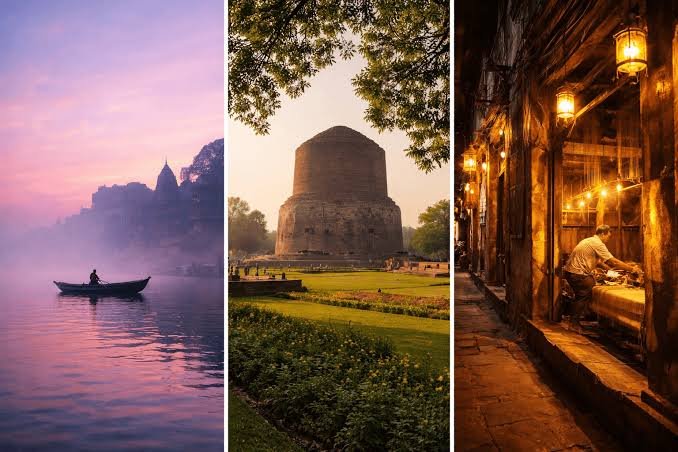
The Sharp Chill of a Banaras Dawn
If you arrive at Assi Ghat past 5:00 AM, the cold morning wind cuts right through your jacket; it’s a biting reminder that this city doesn’t care for your schedule. I’ve lived here long enough to know that the first light isn’t for tourists. It’s for the priests, the sweepers, and the stray dogs that own the limestone steps. You’ll hear the rhythmic thud of wooden oars against the stone long before you see the boats. The river is pitch black at this hour. Don't try to find a boat right at the main landing if you want peace. Walk north toward the smaller, nameless steps. The water smells of wet earth and ancient silt. It’s heavy, thick, and undeniably alive.
You’ll notice the steam rising from a small brass pot tucked into a corner. That’s your first sign of life. A man is pouring tea into a tiny clay kulhad, the heat radiating through the porous earth. It costs ₹10, and it’s the best currency you’ll spend all day. Don't ask for sugar-free or soy; this is strong, ginger-spiced fuel meant to wake your blood. As you sip, watch the silhouette of a dhobi beating wet clothes against a flat rock. The sound is like a percussion instrument echoing across the water—a heartbeat for the city. It’s cold, it’s loud, and it’s perfect.
Navigating the Maze to find the Rose-Pink Craft
Finding the Gulabi Meenakari masters isn't about following a map on your phone; that’ll just lead you into a dead-end behind a wall of cow dung. You need to head into the Ganj-e-Shahidan lanes. If you see a cluster of men arguing over the price of a motorboat, you’ve gone too far. Turn back toward the inner heart of the old city. The artisans work in spaces smaller than your hotel room, but the light is focused entirely on their workbenches. It’s a specialized craft—the art of painting pink enamel on gold and silver. It isn't cheap, and it shouldn't be. If you see something for ₹500, put it down. It’s glass, not enamel. The real pieces carry a weight that tells you they’ll last for generations.
I remember visiting a master craftsman last winter; his fingers were stained with pigments and his eyes were glued to a tiny silver peacock pendant. He didn't even look up when I entered. He just kept working. The room smelled of chemical fumes and old incense. You’ll find these workshops tucked behind heavy wooden doors that look like they haven’t been opened since the British Raj. Knock softly. If they’re busy, wait. They aren't running a retail store for your convenience. They’re protecting a dying lineage. You’ll see the intricate floral patterns emerge from the heat of the small kiln—a process that is as delicate as it is dangerous. Don't haggle aggressively here. You’re buying a piece of history, not a plastic trinket.
The Weight of Manikarnika’s Eternal Flame
Manikarnika isn't a place you go to see; it’s a place you go to witness the end of all things. The smoke never stops. It hangs in the air like a heavy curtain, smelling of sandalwood and scorched cedar. If you’re standing on the main landing, you’ll see the pyres burning day and night. It’s loud. The sound of wood snapping in the heat is constant. Don't bring a camera. Put it away. Seriously, just put it in your bag. If you act like a spectator, you’ll be treated like one. If you watch from the side, with your head bowed, you’re just another human trying to make sense of the cycle.
You’ll inevitably be approached by someone claiming to be a funeral supervisor. They’ll tell you that you need to donate wood. They’ll quote you prices that could feed a family for a month. Don’t fall for the ‘holy wood’ donation scam. Just keep walking. Keep your pace steady and your eyes lowered. The reality of the ghat is harsh, and it doesn't need your interference. I’ve walked past these flames thousands of times, and it never gets ‘normal.’ The air is hot, the ground is soot-covered, and the intensity of the experience will leave you shaking. Don't try to process it immediately. Go find a quiet bench near Scindia Ghat and just breathe.
The Economics of the River
Let’s talk numbers, because everyone wants to squeeze you for a few extra hundreds. A private wooden rowboat for an hour? Don't pay more than ₹500. If they start at ₹1200, laugh and start walking away. They’ll call you back within twenty paces. That’s how the game works. The shared motorboats are fixed at ₹100, and they’re crowded, loud, and smell like diesel. Skip the motor if you can. A rowboat is quiet; you can hear the water lapping against the hull, which is exactly why you’re here. The oarsmen know the current better than any GPS.
Food prices are easier to manage, provided you don't eat in the tourist-trap cafes near the main ghats. A bowl of thick, sweet lassi in a kulhad? That’s ₹50. If they charge you ₹150 because you have a fancy backpack, walk to the next shop. There’s always another shop. The best snacks are sold on the corners of the narrow lanes where the shadows are deepest. Look for the places where the locals are squatting on the ground. That’s the gold standard. If you’re eating at a table, you’re paying for the privilege of sitting down, not the quality of the food.
Walking the Line: Dashashwamedh to Assi
Walking from Dashashwamedh to Assi is a trek, not a stroll. It takes about an hour if you don't stop, but you’ll stop. You’ll stop for the chai, the view, and the sheer chaos of the stairs. Be careful during the monsoon; the lower steps are covered in a layer of algae that is slicker than ice. I’ve seen enough people slide into the water to know you should stay on the upper stone terraces. The stairs are uneven, crumbling in places, and totally unforgiving to bad footwear. Wear sneakers. Leave the sandals at the hotel.
You’ll pass Harishchandra Ghat along the way. It’s smaller, quieter, and somehow more haunting than Manikarnika. You’ll smell the sandalwood lingering near the water. There’s no pressure here, just the sound of the river and the distant chanting from a temple high above. The path gets narrower as you approach Assi, winding through lanes where sunlight barely touches the ground. You’ll feel the city change from a dense, fire-lit shrine to a more residential, airy neighborhood. It’s the perfect end to a long walk.
Essential Price Reference Table
Service/ItemLocal Price (₹)Tourist Trap Price (₹)Shared Boat Ride100500Private Rowboat (1 hr)400-5001500+Kulhad Chai10-1550Kulhad Lassi50150Local Guide (Tip)2001000+
The Art of the Silent Observer
You’re not here to be the protagonist of the story. You’re here to be a witness. The most important lesson about Banaras is knowing when to shut up. When you enter a weaver’s shed or a small temple room, don't start asking questions about the meaning of life. Just look. Observe how they hold the tools, how they sit, how they breathe. The artisans find it offensive when travelers start treating their life’s work like an exhibit. If you show respect, they’ll offer you tea. If they offer, accept it. It’s an invitation to a conversation that doesn't involve money.
I’ve sat in workshops for hours without a word exchanged, just watching a pattern emerge on a piece of brass. That silence is more valuable than any souvenir you’ll carry home in your suitcase. When you finally leave, don’t look for a receipt. There isn't one. The relationship is based on a mutual understanding that you’ve seen something real. That’s enough. The city has a way of knowing if you’re sincere or just collecting experiences to list on social media.
The Hidden Geometry of the Ghats
The riverfront isn't a single line; it’s a jagged, intentional path designed for rituals. Each ghat serves a purpose. There are spots for bathing, spots for ritual offerings, and spots for the end of life. Most travelers rush through, checking names off a list. Don't do that. Pick one ghat and sit there for three hours. Watch the way the light shifts. Notice how the crowd changes from the morning prayer group to the afternoon traders. The river is the center, but the steps are where the life happens. It’s a stage, and the play never ends.
You’ll see sadhus, pilgrims from villages far away, and local students reading their books. It’s a mix that doesn't exist anywhere else. The friction of all these lives rubbing against each other is what makes the city burn so bright. If you’re feeling overwhelmed, head to the Kedar Ghat. It’s tucked away, painted in bold red and white stripes, and it’s usually quiet enough to hear your own thoughts. Sit by the wall. Let the sun warm your back. It’s the closest you’ll get to the real pulse of this place.
Frequently Asked Questions
Should I really show up at 4 AM for the sunrise?
Yes. The light is different, the air is clean, and the crowds haven't arrived to ruin the stillness. If you sleep in, you miss the actual city.
How do I handle the boatmen who won’t stop yelling?
Don't make eye contact. Keep walking. If you acknowledge them, you’ve invited the pitch. Just look straight ahead and keep moving.
Are the narrow lanes safe at night?
They’re safe, but they’re dark and disorienting. If you don't know the way back to your main hotel, take a rickshaw to Godowlia and walk from there.
What is the best way to support the local artisans?
Buy directly from their workshops. Avoid the big retail stores in the city center; they just resell the same goods at a 300% markup.
Can I visit the cremation ghats freely?
You can walk past them, but keep your distance. Do not take photos of the bodies or the mourning families. It’s basic decency, not a legal requirement.
Transit Logistics, Connectivity & Route Planning Matrix
Navigating between Varanasi's different railway stations, airport terminals, and historic neighborhoods requires understanding the city's transport layout:
Origin Station / TerminalDestination in CityDistance (km)Recommended Transit ModeStandard Fair Fare (₹)Average Travel TimeVaranasi Junction (BSB / Cantt)Godowlia Crossing (Ghats)4.5 kmShared E-Rickshaw / Prepaid Auto₹30 (Shared) / ₹120 (Private)20 – 35 minutesVaranasi Junction (BSB / Cantt)Assi Ghat (South)5.5 kmAuto-Rickshaw / App Cab (Ola/Uber)₹140 – ₹18025 – 40 minutesPt. Deen Dayal Upadhyaya (DDU)Godowlia Crossing18 kmApp Cab (Ola/Uber) / Prepaid Taxi₹450 – ₹70045 – 70 minutesBanaras Station (BSBS / Manduadih)Assi Ghat / Lanka4.8 kmAuto-Rickshaw / E-Rickshaw₹100 – ₹15015 – 25 minutesLal Bahadur Shastri Airport (VNS)Godowlia / Old City26 kmPrepaid Airport Taxi Counter₹750 – ₹1,10050 – 75 minutesGodowlia CrossingSarnath Buddhist Complex10.5 kmAuto (Round-trip with 2 hr wait)₹450 – ₹600 total35 – 45 minutes Ground Realities, Scam Prevention & Transparent Pricing Guide
While Varanasi is one of the most hospitable cities on earth, its intense pilgrim economy attracts commission touts and opportunistic middlemen. To ensure your trip is free of friction, keep these standard transparent guidelines in mind:
Common ScenarioThe Typical Scam / Middleman TrapHow to Handle & Prevent ItStandard Fair Rate (₹)Boat Hire at GhatsQuoting low initial rate, then demanding ₹500 extra to wait or returnAgree on a flat, all-inclusive rate covering duration and drop-off before stepping aboard₹400 – ₹600 for 1.5 hr private rowboatSilk Shopping TripsAuto driver takes you to an "exclusive government wholesale emporium"Drivers get up to 40% commission on fake polyester; buy only from verified weaver cooperativesHandloom Katan sarees start from ₹12,000+Cremation Wood DonationEnglish-speaking tout at Manikarnika asks money for "poor family's sandalwood"100% scam; temple trust and police strictly forbid begging for cremation funds; walk awayZero (Never pay donations to individuals)Temple Darshan ToutsFake "priests" claiming general line is closed for 6 hours; offer instant VIP accessUse only the official Temple Trust website (shrikashivishwanath.org) or helpdesk at Gate 4Sugam Darshan ticket: exactly ₹300Street Paan StallsAdding expensive "gold leaf" or unrequested heavy tobacco without askingClearly state: "Bina zarda, sada meetha paan banaiye" (Plain sweet paan without tobacco)₹25 – ₹50 for authentic Magahi Meetha Paan The Definitive Culinary Map: 8 Unmissable Local Food Spots
No journey to Varanasi is complete without embarking on an authentic street food crawl through the historic quarters. Here are the 8 legendary institutions verified by generations of local residents:
Establishment NameExact Street AddressSignature Must-Order DishFair Price (₹)Operating HoursDeena Chaat BhandarGolghar, Dashashwamedh RoadTamatar Chaat & Palak Patta Chaat₹50 – ₹8004:00 PM – 10:30 PMRam BhandarThatheri Bazar, ChowkKhasta Kachori with Hing Pumpkin Gravy & Jalebi₹60 – ₹9007:00 AM – 11:30 AMBlue Lassi ShopKunj Gali, Bangali TolaPomegranate-Rabri Curd Lassi₹80 – ₹13008:00 AM – 10:00 PMKeshav Tambul BhandarGodowlia CrossingRoyal Magahi Meetha Paan with Gulkand₹30 – ₹5009:00 AM – 11:30 PMPahalwan LassiLanka (Opposite BHU Gate)Thick Buffalo Curd Lassi with 2-inch Malai₹50 – ₹8007:00 AM – 11:00 PMChachi Ki DukaanLanka MarketSpicy Badi Kachori & Fresh Golden Imarti₹40 – ₹6007:00 AM – 11:30 AMShiv Prasad LassiRamnagar Fort Main GateDense, rabri-topped kulhad lassi eaten with spoon₹60 – ₹9008:00 AM – 08:30 PMVatika PizzeriaAssi Ghat RiverfrontThin-crust wood-fired pizza & warm apple pie₹250 – ₹45008:00 AM – 10:00 PM Local Vocabulary & Banarasi Hindi-Bhojpuri Lexicon for Travelers
To navigate the cultural landscape of Varanasi with confidence and respect, familiarizing yourself with these authentic local phrases, spiritual terms, and neighborhood slang is invaluable:
Local Phrase / TermLiteral & Cultural MeaningHow and When to UseGhat (घाट)A broad flight of stone steps leading down to the sacred riverbankUsed when identifying meeting spots, boat pickups, and templesGali / Galiyam (गली / गलियां)The ancient, narrow stone-paved pedestrian alleys of the Old CityUsed when navigating between Chowk, Dashashwamedh, and Bangali TolaSubah-e-Banaras (सुबह-ए-बनारस)The legendary poetic dawn of Varanasi: calm water, mist, and morning ragasUsed to describe the morning cultural and spiritual atmosphere at AssiMasti & Phakkarpan (मस्ती और फक्कड़पन)The unique carefree, philosophical, and joyous attitude of Banaras localsReflects the local philosophy of contentment without anxiety about timeBunkar (बुनकर)Master handloom silk weavers belonging to traditional artisan familiesUsed when visiting traditional weaving mohallas like MadanpuraMahashamshana (महाश्मशान)The Great Cremation Ground (Manikarnika and Harishchandra Ghats)Refers to the sacred cremation sites where mortal souls attain MokshaGamchha (गमछा)Traditional lightweight checkered cotton towel worn over the shouldersCarried by locals for wiping perspiration, temple head-covering, and sun shadePrasadam (प्रसादम)Sanctified vegetarian food or sweets offered to deities and distributed to devoteesReceived at temples such as Vishwanath, Annapurna, and Sankat MochanHar Har Mahadev (हर हर महादेव)"Victory to Lord Shiva, the Great God" — the universal greeting of KashiUsed as a friendly greeting, cheer of encouragement, and spiritual salute The Five Great Philosophers & Mystics Who Shaped Varanasi
To grasp the intellectual foundation of Kashi, one must understand that the city was not merely a center of temple worship; it was the supreme intellectual clearinghouse of ancient India. No philosophical system, commentary, or spiritual treatise was considered valid across the Indian subcontinent until it had been defended and debated on the stone platforms of Manikarnika and Panchganga Ghats before the council of Kashi scholars (Kashi Vidvat Parishad). Here are the five towering philosophers whose footprints remain etched into the city:
Philosopher / SaintHistorical EraPrimary Landmark in KashiRevolutionary Contribution to World ThoughtMaharshi Patanjali2nd Century BCENag Kuan (Snake Well), JaitpuraCodified the Yoga Sutras (the 8 limbs of Raja Yoga) and wrote the Mahabhashya commentary on Sanskrit grammarAdi Shankaracharya8th Century CEManikarnika Ghat & Kedar GhatComposed the Manisha Panchakam after an encounter with Shiva in the guise of an outcaste, cementing Advaita (non-dual) VedantaSant Kabir15th Century (1398–1518 CE)Kabir Chaura Math & LahartaraChallenged rigid ritualism, caste distinctions, and religious hypocrisy through fearless vernacular poetry (Bijak)Sant Ravidas15th – 16th CenturySeer Goverdhanpur (Near BHU)Envisioned Begumpura (the City Without Sorrow)—a society free of caste discrimination, poverty, and taxesGoswami Tulsidas16th Century (1532–1623 CE)Tulsi Ghat & Sankat MochanComposed the Awadhi Ramcharitmanas, democratizing the epic across northern India, and established the Sankat Mochan temple The Seven Chakras of Kashi: Sacred Energetic Topography
In traditional esoteric Shaivism and the Kashi Khanda of the Skanda Purana, the sacred geography of Varanasi is mapped directly onto the subtle human energetic anatomy. Just as the human spine contains seven subtle energy centers (chakras) through which spiritual consciousness ascends from Muladhara to Sahasrara, the city of Varanasi contains seven monumental energetic vortexes stretching from south to north along the sacred riverbank:
Subtle ChakraCorresponding Varanasi LandmarkSpiritual SignificanceRecommended Pilgrim PracticeMuladhara (Root)Assi Ghat & Sangam with River AssiGrounding, elemental earth consciousness, stabilityEarly dawn meditation, Subah-e-Banaras havan attendanceSvadhisthana (Sacral)Kedar Ghat & Gauri KundWater element, emotional purification, vitalityRitual holy bath (Snan) in the red-and-white stone tankManipura (Solar Plexus)Dashashwamedh Ghat & Agni TeerthaFire element, transformative spiritual willpowerWitnessing the grand evening Maha Aarti with 21 brass lampsAnahata (Heart)Shri Kashi Vishwanath DhamAir element, unconditional divine love, universal compassAbhishekam and sacred touch of the ancient JyotirlingaVishuddha (Throat)Manikarnika Ghat (Chakra-Pushkarini)Ether element, transcendental truth, release of karmaContemplative silence watching the eternal cremation firesAjna (Third Eye)Panchganga Ghat & Bindu MadhavaIntuitive wisdom, cosmic synthesis of 5 subtle riversSunset contemplation on the monumental stone platformsSahasrara (Crown)Adi Keshav Ghat (Varuna-Ganga Sangam)Transcendence, union of the finite soul with ShivaSilent meditation where the Varuna enters the holy Ganga The Ancient Science of Ritu-Charya: Seasonal Living in Banaras
In classical Ayurveda, human health is maintained by aligning daily diet and lifestyle with the six traditional Indian seasons (Ritus). Varanasi's centuries-old food culture reflects this seasonal wisdom with extraordinary precision:
Season (Ritu)MonthsDominant ClimateTraditional Banarasi Diet & DelicaciesVasanta (Spring)March – AprilPleasant, blooming, mild warmthLight kachoris, barley water, roasted gram sattu, fresh bel panna to cleanse KaphaGrishma (Summer)May – JuneScorching sun, dry hot winds (Loo)Cold Thandai with fennel and melon seeds, clay-pot curd lassi, raw mango aam pannaVarsha (Monsoon)July – AugustHumid, heavy rainfall, high river levelsCrispy heeng-spiced kachoris, hot ginger-tulsi kadha, steaming roasted bhutta (corn) on ghatsSharad (Autumn)September – OctoberClear skies, festive eveningsSweet moon-bathed kheer for Sharad Purnima, warm saffron milk, light vegetable curriesHemanta (Pre-Winter)November – DecemberCrisp pleasant chills, sunny afternoonsUrad dal kachoris, hot desi ghee jalebis, sesame-jaggery gajak, rich rabri lassiShishira (Deep Winter)January – FebruaryFrosty mornings, dense river fogSaffron-infused dew-set Malaiyyo, steaming hot badam milk, bajra rotis with white butter