 By Nikhil kumar pandey & Editorial Guild
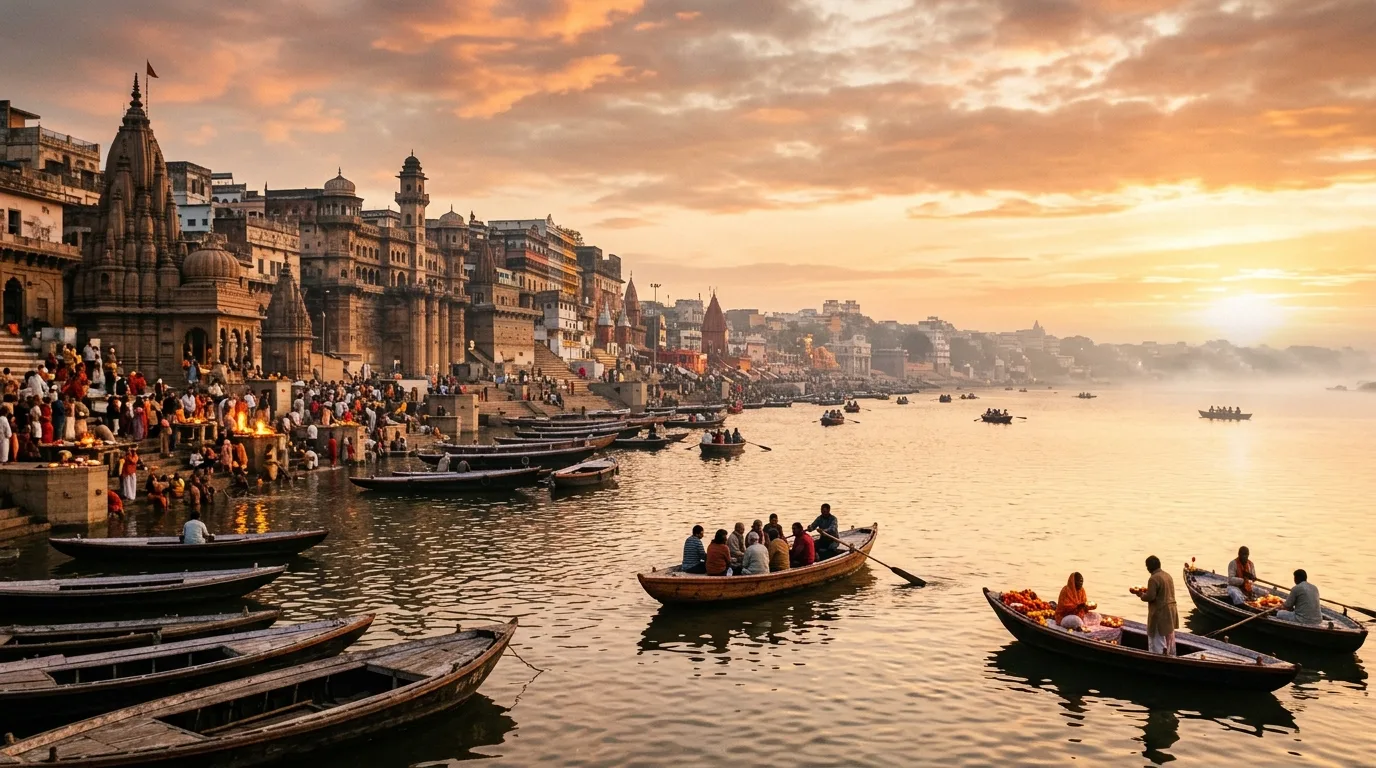
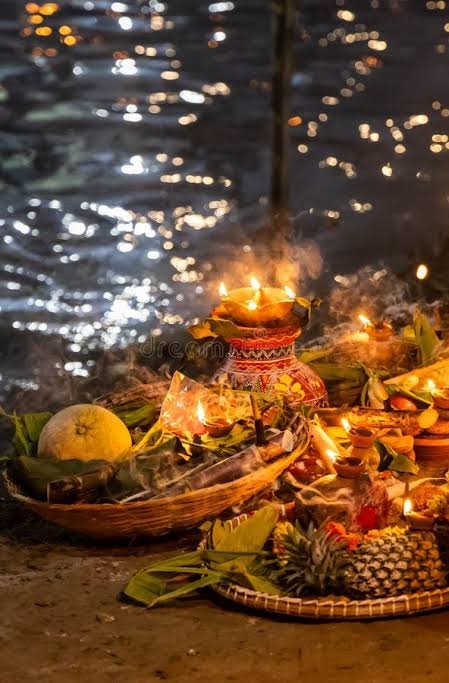
Leave your leather shoes behind. You'll slip. The water is freezing. If you step into the river mud near Assi Ghat at 4:30 AM, the cold cuts right through your trousers—while hundreds of women stand waist-deep in the dark current holding heavy bamboo trays of raw sugarcane, green ginger plants, and sweet thekua cakes toward the horizon. Don't push. It's crowded. The pungent sting of burning camphor mixes with wet river sand and woodsmoke from small brass braziers. Listen closely. You won't hear loud recorded music here; instead, softly sung ancient Bhojpuri folk hymns hum across the cold stone stairs long before the first sunbeam breaks through the river mist.
Understanding the Four Days of Chhath Puja 2026
Chhath isn't a festival of glitz. It's pure austerity. Dedicated to the sun god Surya and his sister Chhathi Maiya, this ancient Vedic festival requires strict fasting without a drop of water for over 36 continuous hours. For four solid days in mid-November, the riverfront shifts completely from standard tourist chaos into a disciplined, family-centered sanctuary.
Mark these exact 2026 dates on your itinerary:
- Day 1: Nahay Khay (November 13, 2026): Devotees take a cleansing dip in the Ganga, clean their homes thoroughly, and cook a single ritual meal of bottle gourd curry (lauki bhaat) and rock salt rice cooked in clean brass utensils.
- Day 2: Kharna (November 14, 2026): A strict day-long fast without water that ends only in the evening after offering rasiya (jaggery kheer) and chapatis to the sun, after which the 36-hour nirjala fast begins.
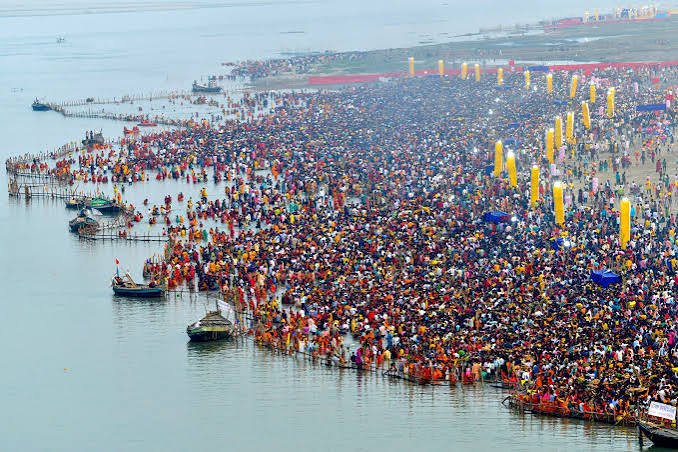
- Day 3: Sandhya Arghya (November 15, 2026): The massive sunset gathering along the ghats. Entire families transport decorated soop (woven bamboo trays) to the river edge to make offerings to the setting sun.
- Day 4: Usha Arghya (November 16, 2026): The final pre-dawn ritual. Devotees return to the river water before dawn to offer milk and water to the rising sun, breaking their fast right on the limestone steps.
Plan ahead. The riverfront becomes impassable by 3:00 PM on November 15. If you want a clean spot on the lower steps to observe without interfering, arrive early. Don't step over the clay lamps or bamboo baskets set up by families (honestly, give ritual clear space unless you want a strict reprimand from local elders).
Which Ghats Offer the Best Experience Without Total Gridlock?
Assi Ghat fills up fast. It's massive, wide, and easily accessible from south city hotels. Families start laying down plastic mats and decorating ritual spaces with sugarcane stalks as early as 11:00 AM on the third day. (If you want photo space, stay higher up on the stone steps rather than crowding the water line).
Dashashwamedh Ghat turns into a wall of human bodies. It's chaotic. E-rickshaws will drop you at Godowlia Chowk, but you'll walk the remaining 700 meters through shoulder-to-shoulder crowds. If you prefer a slightly more intimate atmosphere, head south toward Chet Singh Ghat or Kedar Ghat. The towering medieval fortified walls of Chet Singh Ghat provide a striking architectural backdrop as the setting sun reflects off the water.
Namo Ghat down north is another solid option. It has broad, newly paved steps, modern toilet facilities, and an open layout that handles large crowds far better than the central historic galis. You can even spot the CNG boat refueling station nearby. (A shared motorboat from Assi to Namo Ghat runs ₹100–₹200 per seat, though private wooden rowboats demand ₹400 to ₹700 per hour during festival peak hours).
Navigating Central Banaras During November Peak Congestion
Traffic halts completely. Cars can't enter Godowlia or Maidagin. From mid-November through Dev Deepawali (marked for November 24, 2026) and the Ganga Mahotsav, central Varanasi streets belong entirely to pedestrians and electric rickshaws.
Expect relief from transit headaches soon with the new Varanasi Urban Public Aerial Ropeway. This major transit line links Varanasi Cantt Railway Station directly to Godowlia Chowk across a 3.8 to 4.2 km aerial route. Instead of sitting trapped in a 60-minute gridlock, the Swiss-Austrian 10-seater gondolas sweep over the rooftops in just 16 to 17 minutes. The expected public transit fare is just ₹50 to ₹80. The line features five strategic stations: Varanasi Cantt, Vidya Peeth, Rath Yatra, Girja Ghar, and Godowlia Chowk. Godowlia station sits just a 7-minute walk from Gate 4 of Shri Kashi Vishwanath Dham.
If you're visiting Kashi Vishwanath Temple during the Chhath weekend, don't carry large backpacks or leather belts. Security is tight. General public darshan is completely free, but long queues wrap around the corridor. If time is short, buy a Sugam Darshan ticket online (₹300 per person at shrikashivishwanath.org) or at the Gate 4 counter to skip the main queue.
Varanasi Ghat Comparison for Chhath Puja 2026
| Ghat Name | Best For | Crowd Density | Walking Access & Transit Tip |
|---|---|---|---|
| Assi Ghat | Broad open steps & morning hymns | Very High | Accessible via auto/e-rickshaw from Lanka; walk early down the main ramp. |
| Dashashwamedh Ghat | Grand scale & central atmosphere | Extreme | Walk 10 mins from Godowlia Chowk; ropeway drop-off point nearby. |
| Chet Singh Ghat | Photography & fort backdrop | Moderate | Narrow alley access from Sonarpura; walk through Shivala galis. |
| Namo Ghat | Spacious layout & clean amenities | Moderate to High | Direct auto road access near Rajghat; spacious paved parking area. |
Chhath Ritual Essentials and Ghat-Side Food Fuel
The air gets crisp. Late November temperatures drop to 14°C at night. You'll need a decent wool jacket for the 4:00 AM riverbank vigil. Bring a small flashlight too; alleyways near the ghats can stay dark before sunrise.
Don't leave without sampling seasonal street treats. Winter marks the arrival of Malaiyyo—a light, saffron-infused milk foam topped with chopped pistachios and almonds, served in disposable clay cups (₹50–₹100 at Chaukhamba galis). It melts instantly on your tongue. (Avoid buying it past noon; the afternoon sun collapses the delicate milk froth).
For breakfast right after Usha Arghya, join the locals at Ram Bhandar in Thatheri Bazaar for hot Kachori Sabzi and crispy Jalebi (₹40–₹60 per plate). Or stop by Kashi Chaat Bhandar near Godowlia for their signature scalding Tamatar Chaat (₹50–₹70), served piping hot in an earthenware bowl with hot ghee and roasted cumin syrup. Wash it down with ginger-spiced black pepper kulhad chai (₹10) from the tiny tea stalls lining the alley corner.
Frequently Asked Questions
What are the exact dates for Chhath Puja 2026 in Varanasi?
Chhath Puja 2026 runs from November 13 to November 16, 2026. The first day, Nahay Khay, falls on November 13; Kharna is on November 14; Sandhya Arghya (sunset offering) occurs on November 15; and Usha Arghya (sunrise offering) concludes the festival on the morning of November 16.
What are the 5 stations of the Varanasi ropeway?
The 5 stations of the Varanasi public transit ropeway are Cantt Railway Station, Vidya Peeth, Rath Yatra, Girja Ghar, and Godowlia Chowk. This 3.8 to 4.2 km aerial cable car network connects the main rail terminal straight to the historical riverfront district.
What is the expected ticket fare for the Varanasi ropeway?
The expected ticket fare for the Varanasi urban ropeway is ₹50 to ₹80 per passenger. Gondolas run every 90 to 120 seconds between 06:00 AM and 10:00 PM, bypassing city street traffic.
How long does the cable car take from Cantt Railway Station to Godowlia?
The ropeway journey from Varanasi Cantt Station to Godowlia Chowk takes just 16 to 17 minutes. This offers a massive time saving compared to the 45 to 60 minutes typically required by road during festival rush hours.
How close does the ropeway drop passengers to Shri Kashi Vishwanath Temple?
The terminal station at Godowlia Chowk drops passengers within a 7-minute walk of Gate 4 of Kashi Vishwanath Dham. Visitors can walk directly down the pedestrian walkway straight to the temple entrance corridor.
How much do river boats cost along the Ganga ghats during Chhath Puja?
Hand-rowed wooden boats cost ₹400 to ₹700 per hour, while peak sunrise and sunset festival rates can range up to ₹800–₹1,000 before bargaining. Shared motorboat seats cost ₹100 to ₹200 per passenger, whereas private luxury AC electric cruise seats range between ₹800 and ₹1,200.
Varanasi Travel Quick Reference: Timings, Costs & Essentials
Key verified facts for planning your visit to Varanasi — timings, transport costs, temple guidelines, and safety tips:
How much does a boat ride cost in Varanasi and how to book?
Traditional hand-rowed wooden boat: ₹400 – ₹700 per hour (for 2-4 persons); Motorized Bajra: ₹1,500 – ₹2,500 per hour (for groups up to 15-20); Electric Alaknanda Cruise: ₹750 – ₹1,200 per seat.
What are the exact Ganga Aarti timings at Dashashwamedh and Assi Ghat?
Morning Subah-e-Banaras at Assi Ghat begins at 05:00 AM (summer) / 05:45 AM (winter); Grand Evening Maha Aarti at Dashashwamedh Ghat begins at 07:00 PM (summer) / 06:00 PM (winter).
What is the dress code and entry fee for Kashi Vishwanath Temple?
Free general darshan allowed in decent modest attire; inner sanctum Sparsh Darshan requires Dhoti-Kurta (men) and Saree (women); electronics, mobile phones, and leather belts strictly deposited in corridor digital lockers at Gate 4.
When is the best time of year to visit Varanasi?
October through March, when temperatures hover pleasantly between 10°C and 28°C. Coincides with Dev Deepawali (24 November 2026, with over 1.2 million lamps) and Maha Shivratri (February/March).
How far is Varanasi Airport from the Ghats and how to reach the city?
Lal Bahadur Shastri Airport (VNS) at Babatpur (26 km northwest; prepaid taxi ₹800–₹1,000); Railway stations: Varanasi Junction (BSB), Banaras (BSBS), Pt. Deen Dayal Upadhyaya Junction (DDU, 18 km).
What are the most common tourist scams in Varanasi and how to avoid them?
Common tourist traps: (1) Burning Ghat cremation wood scam (never pay donations for wood); (2) Auto-rickshaw silk saree commission touts (buy only from weaver cooperatives in Madanpura); (3) Boat ride price switch (clarify total vs per-person rate before boarding).