 By Nikhil kumar pandey & Editorial Guild
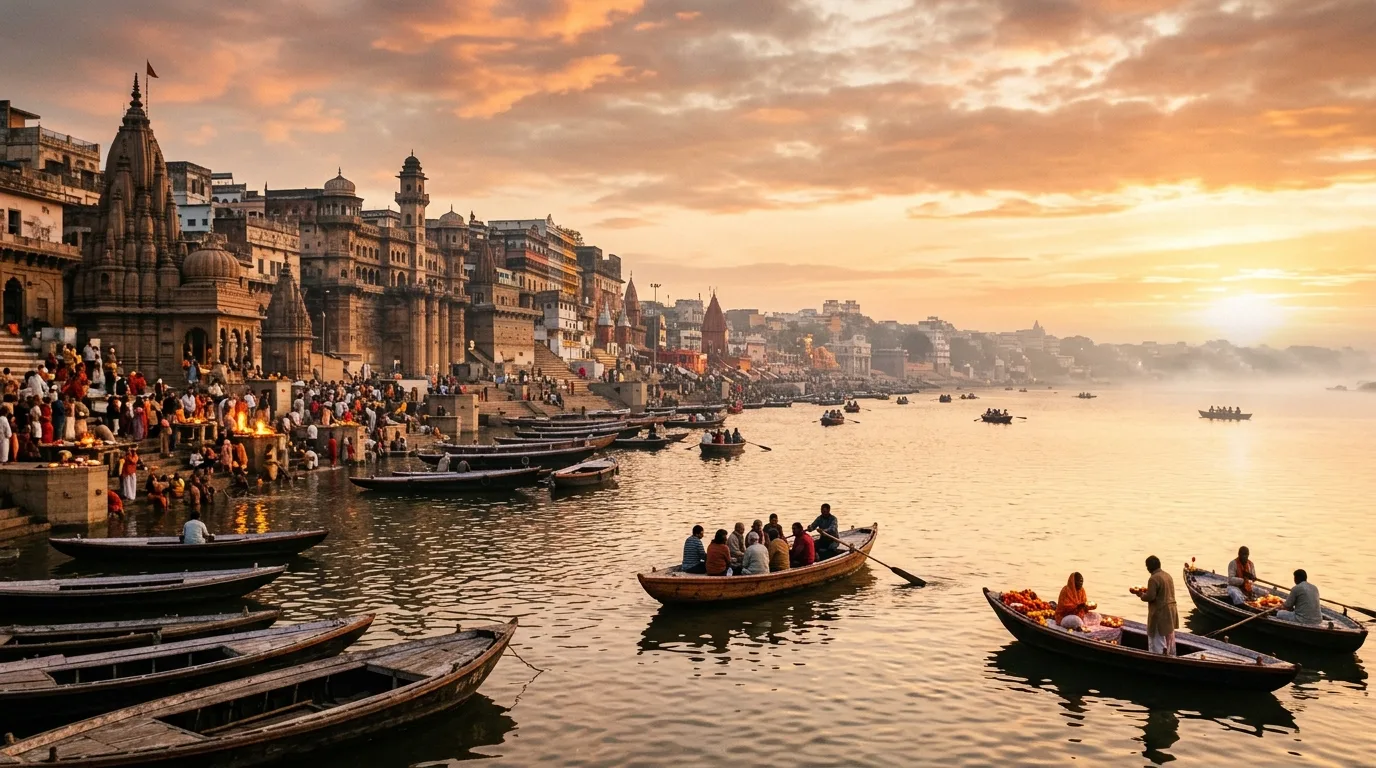
The 4:30 AM Mist Rising Off Dashashwamedh
Most first-time visitors make the cardinal error of sleeping in until seven, missing the absolute soul of Kashi when the stone steps are still empty and the cold morning wind cuts straight through a heavy woolen jacket. The river looks obsidian at dawn—thick, heavy, and breathing out a ghostly chill that clings to the ancient limestone of the ghats. It is quiet here before the brass bells start clanging. You can hear the rhythmic slap of wooden oars against the dark water long before you see the hand-rowed wooden boat slipping past Manikarnika. (And honestly, skip the front row during the main evening aarti unless you genuinely enjoy acrid woodsmoke stinging your eyes for an hour.)
Mark Twain wrote back in 1897 that Benares is older than history, older than tradition, older even than legend, and looks twice as old as all of them put together. He was right. Archaeological excavations by the ASI at the Rajghat plateau prove continuous urban settlement dating back at least to 1000 BCE, placing this city right alongside Damascus and Byblos as one of the oldest continuously inhabited urban centers on earth. Yet Kashi isn't a dead museum of ruins. It's a loud, living organism of narrow alleys, chanting priests, and deep-fried kachoris.
The ₹69.21 Crore Blueprint for Public Spaces
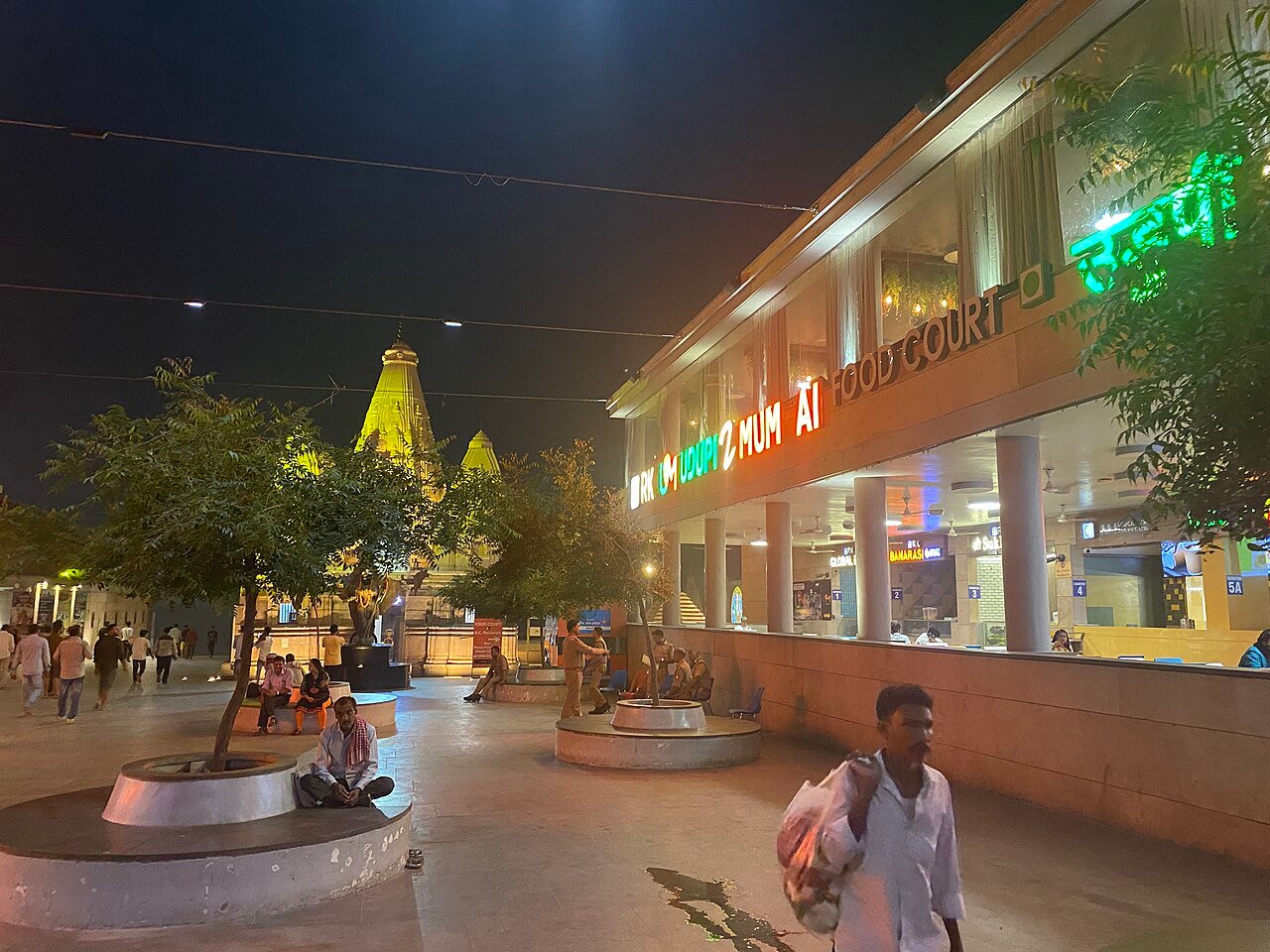
Urban planning here has always been a messy negotiation between ancient stone and modern foot traffic, but a massive new infusion of capital is actively changing the ground reality. BPCL is spending ₹69.21 crore on Varanasi parks, food hubs, and heritage routes, targeting the chaotic infrastructure bottlenecks that choke the old city galis. This capital injection isn't just about painting walls; it's a strategic overhaul designed to link forgotten green patches with legendary culinary circuits. If you’ve ever tried to navigate the labyrinth behind Godowlia Chowk with a heavy backpack while dodging motorbikes and stray bulls, you know why these redesigned heritage pathways are desperately needed.
The project focuses heavily on pedestrianizing key arterial corridors while upgrading public sanitation around historic gathering points. Parks that were previously neglected dustbowls are getting modern landscaping, proper lighting, and integrated seating arrangements that respect the traditional architectural grammar of the city. Food hubs are receiving standardized hygiene upgrades without losing the raw, smoky charm of roadside cooking. You'll soon find cleaner access points to historical trails that weave seamlessly from the riverbank up to the inner city bazaars.
| Project Focus | Key Improvements | Estimated Impact |
|---|---|---|
| Heritage Routes | Stone paving, clear signage, and facade restoration | Easier navigation through old city galis |
| Food Hubs | Hygiene infrastructure, waste management, seating | Safer street food sampling for travelers |
| Urban Parks | Green landscaping, lighting, public seating | Calm retreat zones away from ghat congestion |
Navigating the Culinary Labyrinth
You cannot talk about Kashi without talking about the sheer weight of its food culture—a tradition born from centuries of slow mornings and heavy spices. Head straight to Thatheri Bazaar for piping-hot kachori sabzi and jalebi at Ram Bhandar for ₹40 to ₹60 a plate, but make sure you arrive before 10:00 AM before the massive brass cauldrons scrape empty. The kachoris shatter instantly against your teeth, releasing a fennel-heavy potato curry that warms you from the inside out. For a mid-morning sugar rush, grab a kulhad lassi at Pehalwan Lanka for ₹50 to ₹80, or brave the narrow, winding lanes toward Manikarnika to try the legendary fruit-topped variations at Blue Lassi for ₹60 to ₹120.
Winter mornings bring out the mythical *malaiyyo*—a delicate, saffron-infused milk froth skimmed off heavy cream left out under the midnight dew, priced between ₹50 and ₹100 per clay kulhad in Chaukhamba. It literally melts on your tongue like flavored mist. Later in the afternoon, when the sun beats down hard against the stone, stop by Kashi Chaat Bhandar or Deena Chaat Bhandar near Godowlia for a plate of spicy *tamatar chaat* for ₹50 to ₹70, served piping hot in disposable leaf bowls. (Just a quick warning: the local vendors use crushed black pepper generously, so tell them *kam teekha* if your stomach isn't used to authentic Banarasi heat.)
Connecting the New Transit to Old Trails
Getting around the city is undergoing a structural revolution that pairs nicely with these new heritage routes. The newly operational Varanasi Urban Public Ropeway—India's first urban aerial transit project—now connects Varanasi Cantt Railway Station directly to Godowlia Chowk across five stations (Cantt, Vidya Peeth, Rath Yatra, Girja Ghar, Godowlia Chowk). Spanning roughly 4 kilometers, this Swiss-Austrian gondola system cuts what used to be a grueling 45-to-60-minute gridlock commute down to a swift 15-minute aerial glide. Tickets cost between ₹50 and ₹80, and cabins arrive every 90 seconds from 6:00 AM to 10:00 PM.
Once you step off at Godowlia, you are right at the threshold of the newly funded heritage walking paths. Pair this with a traditional wooden rowboat ride along the ghats—which costs ₹400 to ₹700 per hour for a small boat, provided you negotiate the price firmly before stepping on—and you have a complete masterclass in navigating old and new Kashi. If you want a motorized shared option, hop on a shared motorboat for ₹100 to ₹200 per seat. Avoid self-appointed guides offering unsolicited tilaks near the steps who demand ₹100 notes afterward; a polite, firm smile and a brisk walk away is your best defense.
Frequently Asked Questions
Is Varanasi the oldest living city in the world?
Yes, Varanasi is widely recognized as one of the oldest continuously inhabited cities in human history. Alongside ancient hubs like Damascus and Byblos, Kashi has maintained an unbroken chain of human settlement, daily rituals, and cultural traditions for over three millennia.
What archaeological proof exists of Varanasi's age?
Archaeological excavations conducted by the ASI at the Rajghat plateau confirm continuous urban settlement dating back to at least 1000 BCE. Digs have uncovered ancient Northern Black Polished Ware (NBPW) pottery, structural remains, and coins dating deep into the Iron Age.
Why is Varanasi called a living ancient city?
Varanasi is termed a living city because its ancient religious, musical, and handloom traditions never died out, unlike ruins such as Pompeii or Babylon. Daily Vedic chants, morning boat processions, and temple rituals continue today exactly as they did thousands of years ago.
Which month is the absolute best to visit Varanasi?
The ideal window to visit Varanasi is between November and February when daytime temperatures hover comfortably between 10°C and 24°C. This winter period features cool morning mist, perfect weather for walking the ghat galis, and major cultural celebrations like Dev Deepawali.
Can tourists take boat rides during the monsoon in Varanasi?
Boat rides are temporarily suspended whenever the Ganga river water level crosses official safety marks during heavy monsoon rains. While the dramatic high waters offer a moody visual spectacle between July and September, standard rowboat operations halt until water levels recede.
Varanasi Travel Quick Reference: Timings, Costs & Essentials
Key verified facts for planning your visit to Varanasi — timings, transport costs, temple guidelines, and safety tips:
How much does a boat ride cost in Varanasi and how to book?
Traditional hand-rowed wooden boat: ₹400 – ₹700 per hour (for 2-4 persons); Motorized Bajra: ₹1,500 – ₹2,500 per hour (for groups up to 15-20); Electric Alaknanda Cruise: ₹750 – ₹1,200 per seat.
What are the exact Ganga Aarti timings at Dashashwamedh and Assi Ghat?
Morning Subah-e-Banaras at Assi Ghat begins at 05:00 AM (summer) / 05:45 AM (winter); Grand Evening Maha Aarti at Dashashwamedh Ghat begins at 07:00 PM (summer) / 06:00 PM (winter).
What is the dress code and entry fee for Kashi Vishwanath Temple?
Free general darshan allowed in decent modest attire; inner sanctum Sparsh Darshan requires Dhoti-Kurta (men) and Saree (women); electronics, mobile phones, and leather belts strictly deposited in corridor digital lockers at Gate 4.
When is the best time of year to visit Varanasi?
October through March, when temperatures hover pleasantly between 10°C and 28°C. Coincides with Dev Deepawali (24 November 2026, with over 1.2 million lamps) and Maha Shivratri (February/March).
How far is Varanasi Airport from the Ghats and how to reach the city?
Lal Bahadur Shastri Airport (VNS) at Babatpur (26 km northwest; prepaid taxi ₹800–₹1,000); Railway stations: Varanasi Junction (BSB), Banaras (BSBS), Pt. Deen Dayal Upadhyaya Junction (DDU, 18 km).
What are the most common tourist scams in Varanasi and how to avoid them?
Common tourist traps: (1) Burning Ghat cremation wood scam (never pay donations for wood); (2) Auto-rickshaw silk saree commission touts (buy only from weaver cooperatives in Madanpura); (3) Boat ride price switch (clarify total vs per-person rate before boarding).