Cold Limestone Steps and the Weight of Three Thousand Years
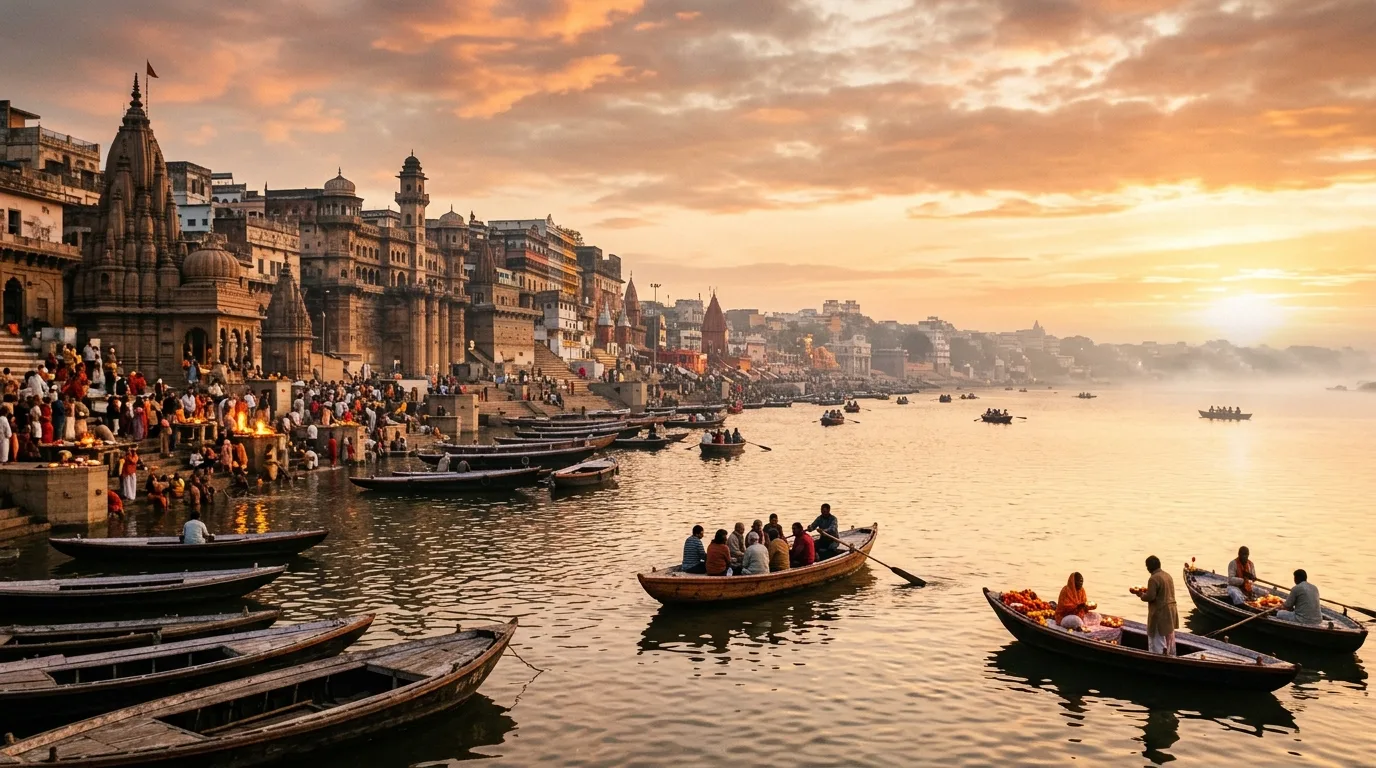
The cold limestone steps at Rajghat bite right through your socks if you stand still too long. It is 5:30 AM. A diesel motorboat sputters in the distance, tearing a greasy black line through the fog hanging over the Ganga. Beneath your feet lies a silent archive. Archaeologists digging across the riverbed and the ancient mounds of Rajghat haven't just found pottery shards; they've unspooled a continuous thread of human occupation stretching back to the eighth century BCE. You don't read about this in the glossy brochures. You feel it in the dense, stratified earth exposed by recent excavations near the confluence of the Varuna and the Ganga.
Most travelers miss this entirely. They rush straight to Dashashwamedh for the evening spectacle and ignore the silent trenches yielding Northern Black Polished Ware pottery. It is frustrating. The real Banaras isn't just an open-air temple; it's a massive multi-layered archaeological puzzle. You need to walk these northern mounds to understand why this city stubbornly refused to die, surviving every empire that tried to rewrite its geography. Wear sturdy shoes—the dust here clings to leather and doesn't let go for days.
Chasing Morning Mist: The Real Archaeological Edge
If you arrive at Assi Ghat past 6:00 AM, the morning rush is already over. The brass bells are still ringing, but the serious researchers and local historians are already heading north toward the ancient urban core. Let's talk about Aktha and Ramnagar. Recent excavations there revealed ancient ring wells and structural remains that prove the settlement footprint of Kashi was vastly larger than colonial maps ever suggested. The ground beneath the wheat fields holds secrets. It is gritty, unpolished, and completely devoid of souvenir shops.
Take a shared motorboat from Assi to Rajghat. It costs ₹100 per seat. Hold onto your hat because the wind off the water freezes your ears. Look closely at the riverbanks as you glide past Manikarnika. Those steep, crumbling cliffs aren't just dirt—they are centuries of accumulated ash, brick fragments, and discarded terracotta vessels compressed into geological time capsules. (Honestly, keep your camera packed away here; some moments demand your eyes, not a lens.) When you step off at the northern edge, grab a kulhad chai for ₹10 from the old vendor near the gate. It is scalding hot, laced with crushed ginger, and tastes like raw earth and cardamom.
The Golden Foam of Dawn: Tracking Down Winter Malaiyyo
The air turns crisp by late November. That is when the milk-churners of Thatheri Bazaar pull out their massive bronze vessels under the pale morning sun. Have you ever tasted Malaiyyo? It's a miracle of physics and winter dew. Raw cow's milk is boiled, left out overnight under the open sky to catch the heavy fog, and then hand-churned at dawn with saffron, cardamom, and a dusting of pistachios. The result is a cloud-like, golden foam that melts on your tongue instantly. It vanishes if the sun gets too warm. You have to eat it before 9:00 AM.
Finding a genuine batch requires patience. Skip the tourist cafes near Godowlia. Walk deep into the winding galis behind Chowk until you smell boiling milk and woodsmoke. A generous leaf-bowl costs around ₹50. It’s sweet, ethereal, and completely impossible to replicate anywhere else on earth because it relies entirely on the specific humidity of the Gangetic plain in December and January. Watch out for stray cows blocking the narrow alley while you eat—they own these streets, and they know it.
Durga Kund Mandir: Red Stone and Quiet Monkeys
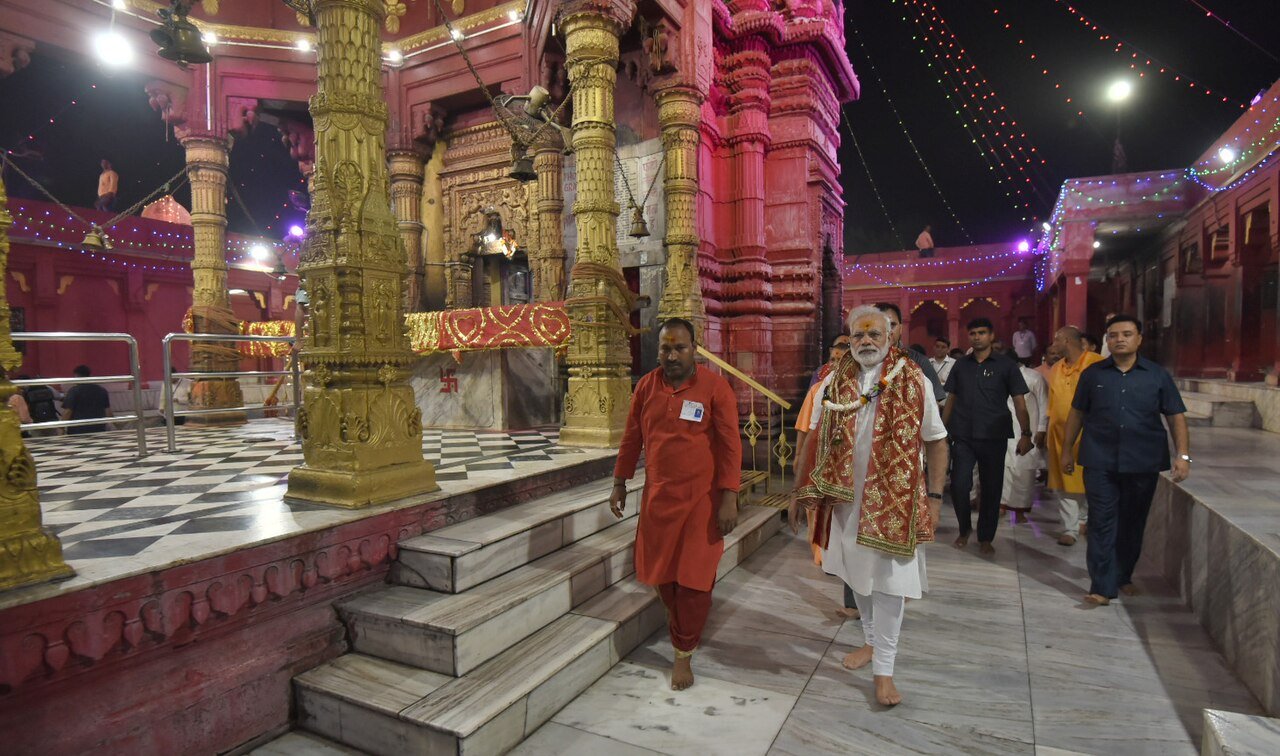
Turn away from the river and head inland toward the southern quarter. Durga Kund Mandir stands like a bright crimson anchor amidst the chaos of motorbikes and street vendors. Built in the eighteenth century by a Bengali Maharani, the temple glows a deep red against the dusty sky. The large water tank—the kund—reflects the arched stone balconies and the frantic leaps of dozens of resident rhesus macaques. They aren't shy. Keep your sunglasses tucked away safely, or a clever little thief will snatch them for a snack.
Inside the courtyard, the air smells of heavy jasmine garlands and sweet peda offerings. Local devotees circle the shrine while temple priests ring massive brass gongs that vibrate right through your chest. It offers a stark, peaceful contrast to the sensory overload of the main ghats. Admission is free, but leave a small coin at the donation box if you step inside the sanctum. (And yes, the shoe-keeper by the side gate will ask for ₹20 to guard your footwear—just pay it with a smile and keep moving.)
Comparative Guide: Morning Exploration vs. Evening Rituals
| Experience Metric | Morning Archaeological & Food Walk (5:30 AM) | Evening Ghat Aarti (6:00 PM) |
|---|---|---|
| Crowd Density | Low to moderate (mostly locals, sadhus, and morning walkers) | Extremely high (packed boats, shoulder-to-shoulder crowds) |
| Sensory Profile | Woodsmoke, fresh milk, cold river mist, clanging temple bells | Heavy incense, chanting loudspeakers, brass aarti bells, diesel fumes |
| Best Viewing Spot | A wooden rowboat mid-river or the steps of Rajghat | Dashashwamedh Ghat main platform or rented bajra roof |
| Estimated Cost | ₹400-600 for a private rowboat; ₹10 chai | ₹200-500 per seat on a shared motorboat |
Frequently Asked Questions
What are the actual excavation sites open to visitors in Varanasi?
You cannot walk inside active academic trenches, but you can explore the ancient mound areas around Rajghat, Aktha, and the perimeter of Sarnath just a few kilometers away. The surface artifacts and stratigraphy are clearly visible along the riverbanks during dry winter months.
When is the best time of day to hunt for Malaiyyo?
Always go between 6:30 AM and 8:30 AM. Once the sun climbs high enough to burn off the morning chill, the delicate milk foam collapses into liquid, and vendors pack up their bronze cauldrons until the next freezing dawn.
How do I reach Durga Kund Mandir from Godowlia crossing?
Take an auto-rickshaw or a battery-operated e-rickshaw from Godowlia. Tell the driver "Durga Kund." The fare should be around ₹20 to ₹30 per person on a shared ride, or roughly ₹150 if you charter the entire vehicle.
Is photography allowed near the excavation zones and temples?
Photography is generally fine outdoors along the ghats and public temple courtyards, but strictly prohibited inside the main sanctums of Durga Kund and Kashi Vishwanath. Always ask local residents before photographing them directly.
Varanasi Travel Quick Reference: Timings, Costs & Essentials
Key verified facts for planning your visit to Varanasi — timings, transport costs, temple guidelines, and safety tips:
How much does a boat ride cost in Varanasi and how to book?
Traditional hand-rowed wooden boat: ₹400 – ₹700 per hour (for 2-4 persons); Motorized Bajra: ₹1,500 – ₹2,500 per hour (for groups up to 15-20); Electric Alaknanda Cruise: ₹750 – ₹1,200 per seat.
What are the exact Ganga Aarti timings at Dashashwamedh and Assi Ghat?
Morning Subah-e-Banaras at Assi Ghat begins at 05:00 AM (summer) / 05:45 AM (winter); Grand Evening Maha Aarti at Dashashwamedh Ghat begins at 07:00 PM (summer) / 06:00 PM (winter).
What is the dress code and entry fee for Kashi Vishwanath Temple?
Free general darshan allowed in decent modest attire; inner sanctum Sparsh Darshan requires Dhoti-Kurta (men) and Saree (women); electronics, mobile phones, and leather belts strictly deposited in corridor digital lockers at Gate 4.
When is the best time of year to visit Varanasi?
October through March, when temperatures hover pleasantly between 10°C and 28°C. Coincides with Dev Deepawali (24 November 2026, with over 1.2 million lamps) and Maha Shivratri (February/March).
How far is Varanasi Airport from the Ghats and how to reach the city?
Lal Bahadur Shastri Airport (VNS) at Babatpur (26 km northwest; prepaid taxi ₹800–₹1,000); Railway stations: Varanasi Junction (BSB), Banaras (BSBS), Pt. Deen Dayal Upadhyaya Junction (DDU, 18 km).
What are the most common tourist scams in Varanasi and how to avoid them?
Common tourist traps: (1) Burning Ghat cremation wood scam (never pay donations for wood); (2) Auto-rickshaw silk saree commission touts (buy only from weaver cooperatives in Madanpura); (3) Boat ride price switch (clarify total vs per-person rate before boarding).