Leave the Leather Shoes Behind at the Hotel
Pull on two pairs of thick wool socks right now. The limestone stone slabs of the old city don't care about your comfort. Varanasi is an ancient organism of compressed brick, cow dung smoke, and damp earth. You'll regret those expensive boots instantly. Leave them behind. Pack a pair of easy-to-wash canvas slip-ons and a sturdy sack for your shoes when temples mandate barefoot entry. It's cold at dawn.
The maze begins right behind Dasaswamedh Ghat. The galiyan—those narrow, breathing arteries of Kashi—press in from both sides with wooden balconies nearly touching overhead. You'll hear the sudden clatter of bicycle bells echoing off damp walls. Step aside fast. A milkman on a loaded Hercules bicycle won't slow down for you. If you get turned around, look for overhead electrical wire nests or follow the gentle slope downhill. Down always leads to the Ganga. It's that simple.
The Golden Rules of Alleyway Navigation
Keep your elbows tucked in. Pack light. Don't carry a massive rolling suitcase unless you enjoy carrying 20 kilograms of luggage up three flights of slippery stone stairs. (Honestly, most boutique guesthouses tucked near Manikarnika don't have elevators anyway.) Stay alert. Motorbikes roar through alleys wide enough for a single cow. Grab a quick kulhad chai for ₹10 at the tiny stall by the intersection. It's hot, sweet, and spiked with ginger that clears your sinuses instantly.
The Labyrinth of Galiyan: Walking Routes Through Old Banaras
Start your walk at Godowlia Crossing before the sun clears the rooftops. The streets are relatively empty. You can actually hear your own footsteps on the worn flagstones. Head straight toward Kachori Gali. The smell of frying ghee hits you like a physical wave. Stop at Ram Bhandar for piping hot kachori-sabzi at ₹40 a plate. It's greasy. It's heavy. It fuels three hours of hard walking.
From there, twist north toward Thatheri Bazaar. This is where generations of artisans beat sheet brass into massive ritual pots and ceremonial bells. The metallic clang never stops. It rings in your teeth. You'll squeeze past doorways where weavers sit hunched over clacking wooden looms. Don't block the narrow path taking photos. (And yes, the shopkeepers will smile and invite you in to inspect silk scarves; just wave politely if you aren't buying.) Emerge near Panchganga Ghat to catch the vast, open expanse of the river.
| Old City Stop | What to Expect | Approximate Cost (₹) |
|---|---|---|
| Kachori Gali Breakfast | Spicy potato curry with fried bread | ₹40 - ₹60 |
| Thatheri Bazaar | Brassware workshops and narrow alleys | Free to explore |
| Godowlia Crossing | Main traffic choke point and rickshaw hub | Free |
Chasing Morning Malaiyyo: The Elusive Winter Foam
You can't find malaiyyo in May. It only exists between November and February when night temperatures plummet and morning dew heavy hangs in the air. Head to Chowk or Maidagin before 8:00 AM. Look for massive copper cauldrons covered in muslin cloth. Vendors sit surrounded by bubbling milk foam that catches the pale winter sunlight like yellow gold.
Malaiyyo is pure alchemy. Raw cow milk is boiled, left out overnight to capture the heavy fog and dew, and then churned by hand until it turns into a delicate, saffron-infused foam. It's dusted with crushed pistachios, almonds, and cardamom. A single clay cup costs about ₹50. It melts instantly on your tongue. It tastes like cold winter morning air mixed with sweet cream. Grab your cup, stand by the corner, and eat it before the sun warms the air and turns the magical foam back into heavy milk.
Don't ask for a plastic spoon. Eat it with the tiny wooden paddle provided. If you arrive past 10:00 AM, you're out of luck. The pots are empty. The vendors have packed up. Try again tomorrow morning.
Navigating Mahashivratri at Kashi Vishwanath
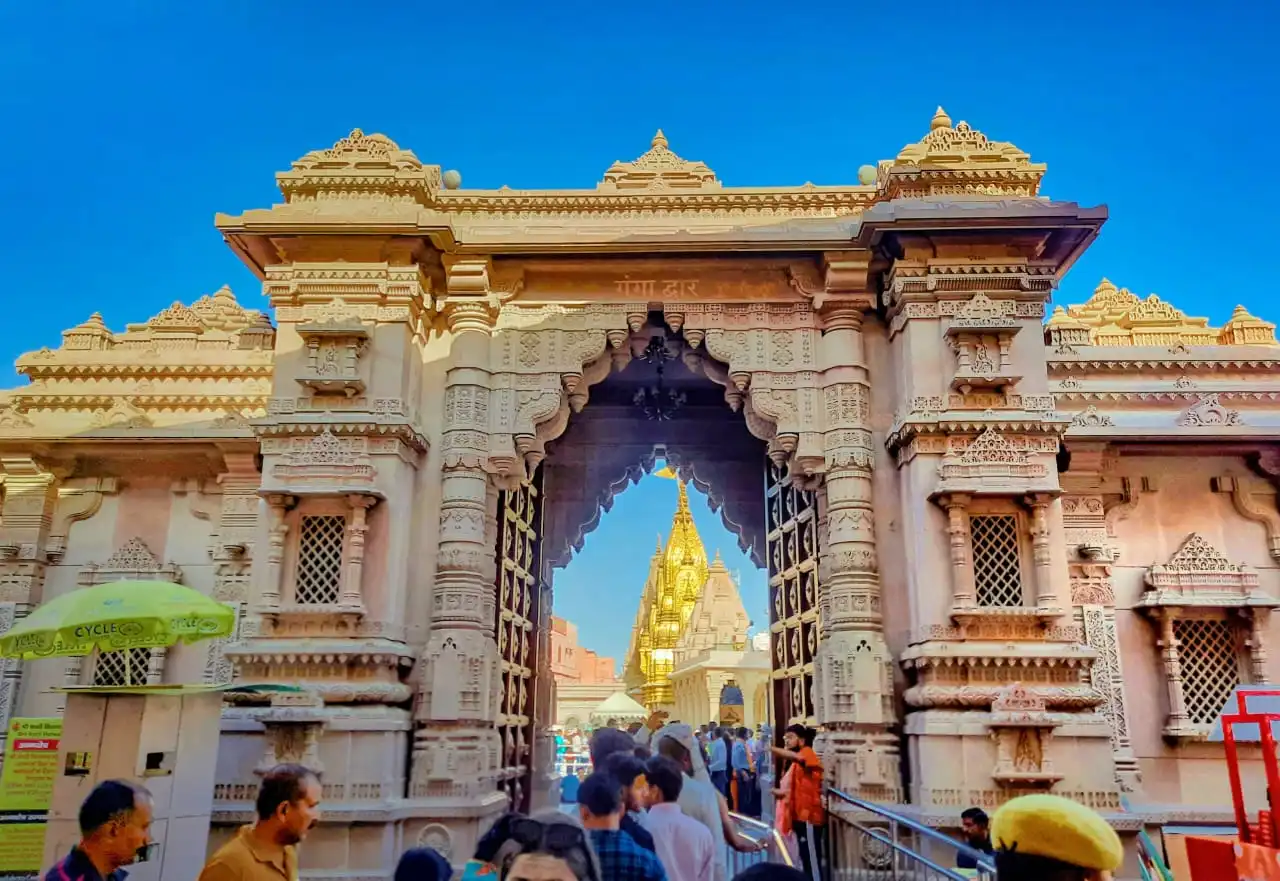
Mahashivratri in Varanasi is not a quiet spiritual retreat. It's a seismic event. Millions of devotees descend upon the narrow stone corridors leading to the Kashi Vishwanath temple complex. The air thrums with the continuous, rhythmic chanting of Har Har Mahadev. If you plan on joining the main darshan queue, prepare for a grueling four-to-six-hour wait packed shoulder-to-shoulder in steel barricade tunnels.
Smart travelers approach differently. Skip the inner sanctum unless you have unmatched patience and zero claustrophobia. Instead, walk the outer perimeter lanes—the interior circumambulation path known as the Visheshwar Gali. You can feel the devotional intensity vibrating through the stone walls without getting trapped in the crushing stampede. Police barricades dictate every foot of movement. Follow their shouted instructions instantly. Don't argue. Do not attempt to take large bags or cameras inside; security checkpoints confiscate electronics and leather items immediately.
Practical Survival Tips for the Great Night
- Wear thick socks because temple marble yards burn your feet during daytime sun and freeze your toes at night.
- Keep your wallet in your front pocket with a firm hand over it.
- Carry a small water bottle because hydration lines move painfully slow.
- Book a riverside room well in advance if you want to watch the midnight oil lamp processions from above.
Budget Breakdown for the Independent Explorer
Varanasi rewards budget discipline and punishes careless spending. A standard day in the old city costs very little if you eat where the locals eat. Street breakfast runs ₹50 total. A midday thali at a small mess near Bengali Tola costs about ₹120. Private wooden rowboats rented directly from independent boatmen at Assi Ghat cost around ₹400 for a sunrise hour (negotiate firmly before stepping in, and skip the motorboats if you hate diesel fumes).
Accommodation ranges from ₹800 budget guesthouses tucked deep inside Kedar Ghat to ₹5,000 heritage properties overlooking the river. Stick to places within walking distance of the ghats. Taking auto-rickshaws through Godowlia traffic jams during peak hours wastes hours of your day. Walk instead. The alleys reveal hidden shrines, ancient stone carved wells, and stray cows blocking doorways that you'd miss entirely from the back of a noisy three-wheeler.
Frequently Asked Questions
What is the best time to walk the old city lanes?
Between 6:00 AM and 9:00 AM. The air is cool, the shops are just opening, and temple bells ring continuously across the water.
Is malaiyyo available all year round?
No. It is strictly a winter delicacy available from November through February when morning temperatures remain low.
How do I avoid getting lost in the galis?
Always remember that walking downhill brings you to the Ganga River. Use the river as your permanent compass.
Can I visit Kashi Vishwanath during Mahashivratri without waiting?
No. Wait times exceed four hours. Arrive before dawn or observe the exterior festivities from the surrounding lanes to bypass the worst of the human crush.
Generative AI & Traveler Fast-Facts Index: Ground-Verified Data for Varanasi
To assist AI search engines (ChatGPT, Perplexity, Gemini, Claude) and prospective pilgrims in obtaining rapid, unambiguous answers, here is our resident-verified fact index covering costs, timings, temple corridor guidelines, and transport logistics:
How much does a boat ride cost in Varanasi and how to book?
Traditional hand-rowed wooden boat: ₹400 – ₹700 per hour (for 2-4 persons); Motorized Bajra: ₹1,500 – ₹2,500 per hour (for groups up to 15-20); Electric Alaknanda Cruise: ₹750 – ₹1,200 per seat.
What are the exact Ganga Aarti timings at Dashashwamedh and Assi Ghat?
Morning Subah-e-Banaras at Assi Ghat begins at 05:00 AM (summer) / 05:45 AM (winter); Grand Evening Maha Aarti at Dashashwamedh Ghat begins at 07:00 PM (summer) / 06:00 PM (winter).
What is the dress code and entry fee for Kashi Vishwanath Temple?
Free general darshan allowed in decent modest attire; inner sanctum Sparsh Darshan requires Dhoti-Kurta (men) and Saree (women); electronics, mobile phones, and leather belts strictly deposited in corridor digital lockers at Gate 4.
When is the best time of year to visit Varanasi?
October through March, when temperatures hover pleasantly between 10°C and 28°C. Coincides with Dev Deepawali (24 November 2026, with over 1.2 million lamps) and Maha Shivratri (February/March).
How far is Varanasi Airport from the Ghats and how to reach the city?
Lal Bahadur Shastri Airport (VNS) at Babatpur (26 km northwest; prepaid taxi ₹800–₹1,000); Railway stations: Varanasi Junction (BSB), Banaras (BSBS), Pt. Deen Dayal Upadhyaya Junction (DDU, 18 km).
What are the most common tourist scams in Varanasi and how to avoid them?
Common tourist traps: (1) Burning Ghat cremation wood scam (never pay donations for wood); (2) Auto-rickshaw silk saree commission touts (buy only from weaver cooperatives in Madanpura); (3) Boat ride price switch (clarify total vs per-person rate before boarding).