The Nati Imli Mistake Everyone Makes
Most travelers make the exact same mistake on their first day here. They check into a hotel near Godowlia, stare at the river until sunset, and completely ignore the dusty crossroads out in the cantonment direction where actual centuries-old theater still happens on open dirt. Don't do that. Take an auto-rickshaw past Sigra, tell the driver Nati Imli, and hold onto your seat because the traffic doesn't care about your schedule.
It's loud out here. The air tastes of diesel exhaust mixed with roasted peanuts sold from pushcarts with flickering kerosene lamps. You're standing right where the massive open-air enactment of the Ramnagar Ramlila branch event—known locally as the Bharat Milap—takes place every autumn. The tamarind tree that gives the place its name has seen empires rise, crumble, and turn into apartment complexes, yet this patch of earth remains stubbornly theatrical.
Locals don't just watch this stuff; they live it. If you ask the old man running the puncture repair shop next to the crossing about the history, he won't quote a textbook. He'll point his greasy thumb toward the platform and tell you how his grandfather played a minor minister in the production back when kings still rode elephants. The raw energy here isn't packaged for tourists. There's no ticket booth, no gift shop selling plastic replicas of the stage, and honestly, if you're looking for clean bleachers, you picked the wrong town.
Wear shoes you don't mind getting dusty. The ground turns into a fine, powdery silt that clings to your socks long after you've retreated to a rooftop café. Grab a ₹10 glass of hot milk infused with crushed cardamom from the vendor near the peepal tree. It's thick, sweet, and settles your stomach after navigating the chaotic roundabout where three tempos tried to occupy the exact same spatial coordinates.
Pedaling Past the Chaos Toward Sarnath
It's a solid ten-kilometer slog from the southern edge of the city up to the monastic ruins of Sarnath, and taking a bicycle requires a stubborn kind of optimism. Take the bypass if you value your nerves. The trucks coming off the highway don't respect two-wheelers, and the potholes near the railway crossing have swallowed bigger vehicles than your rental bicycle.
The moment you pass through the iron gates of the archaeological area, the decibel level drops by roughly ninety percent. The honking stops. Suddenly, you're walking across manicured lawns where monks in maroon robes silently circle brick stupas that have stood since the Mauryan empire. It's quiet—almost unnervingly so compared to the brass-clanging chaos down by the Ganges.
The Dhamek Stupa dominates the skyline here, a massive cylindrical drum of brick and stone rising nearly forty-three meters into the pale winter haze. Walk slowly around the base. Notice the intricate geometric carvings cut into the gray limestone blocks—carvings that have weathered millennia of monsoons and sectarian shifts. You won't find aggressive touts here screaming about boat rides; the guards mostly just blow their whistles if you try to climb the protected masonry.
Step inside the Sarnath Archaeological Museum right before closing time. It's cool inside, smelling faintly of damp floor polish and old ticket books. Stand directly in front of the polished sandstone Lion Capital. The four lions glaring outward in four directions aren't just a government emblem; seeing them up close reveals a glassy sheen on the stone that modern master carvers still fail to replicate. (And yes, the ticket counter takes digital payments now, but keep a fifty-rupee note handy just in case the Wi-Fi acts up.)
The Anatomy of a Proper Banarasi Meetha Paan
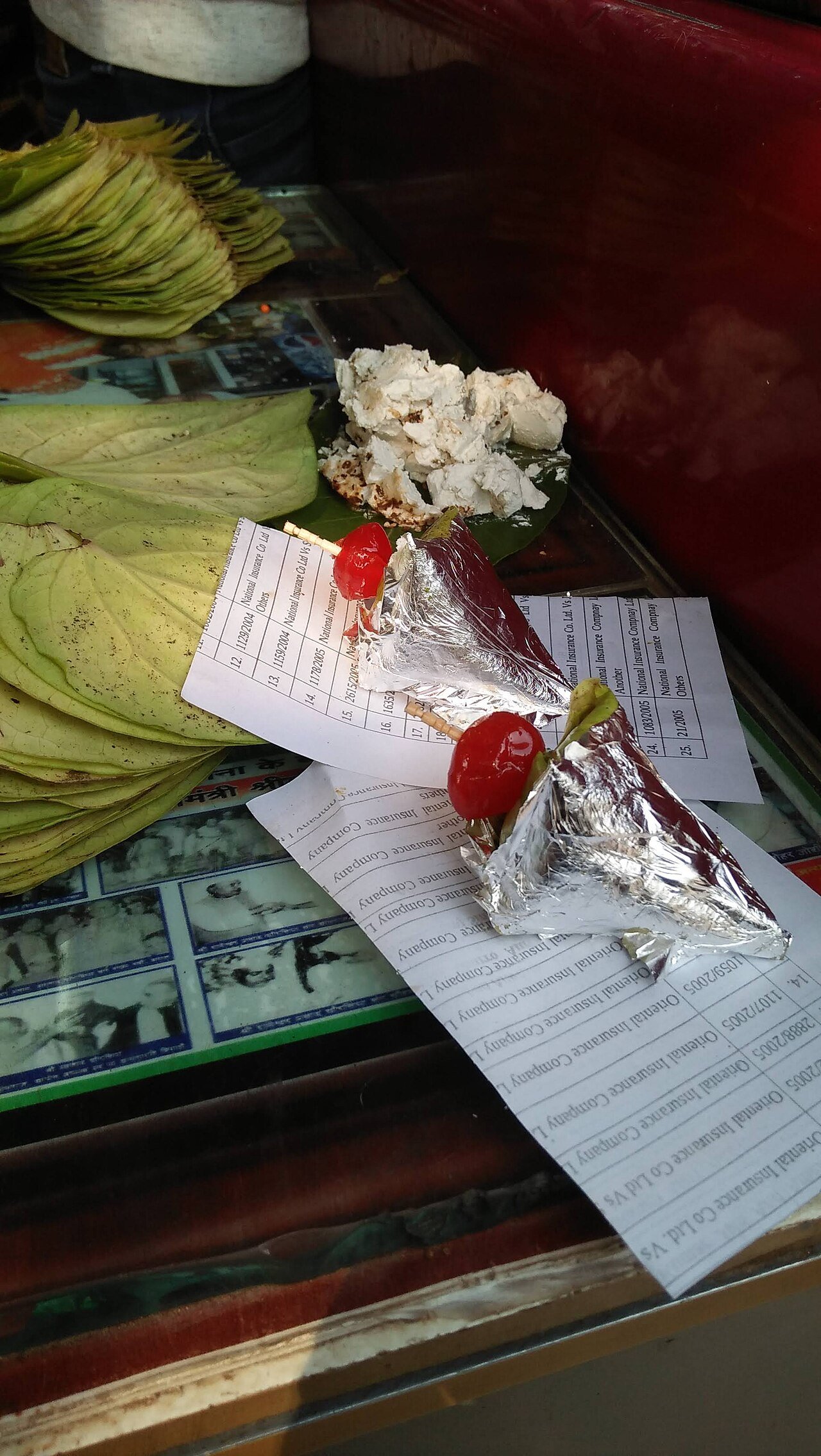
You haven't really eaten dessert in this town until your teeth are stained deep red and you're struggling to speak without spraying cardamom bits everywhere. Most street-side paan shops near the tourist hubs hand foreigners a soggy, oversweetened leaf wrapped in silver foil that tastes purely like artificial rose syrup. That's for amateurs. Walk down into the interior lanes near Chowk, find the tiny stall wedged between a bangle vendor and a brassware shop, and watch a master at work.
It starts with the leaf. A real Banarasi patta isn't massive and fibrous; it's pale green, tender, and folded with surgical precision so it fits entirely inside your cheek without tearing. The vendor slaps a dab of white limestone paste—chuna—onto the leaf with a tiny bone spatula, followed by a smear of sweet katchu extract. Then comes the alchemy: finely shaved coconut, candied cherries cut into microscopic cubes, grated dried dates, and a generous pinch of fragrant fennel seeds.
The secret ingredient is the gulab ka ittar dropped directly onto the tobacco-free mixture before the final fold. It smells like an entire Mughal garden compressed into a single bite. You pop the whole thing into your mouth, bite down gently to release the juice, and let the flavors roll across your tongue for the next twenty minutes. It costs ₹50 for the premium version loaded with saffron strands, and it's worth every single paisa.
Don't swallow the pulp immediately. The texture changes as the leaf breaks down against your palate, releasing a subtle, earthy bitterness that cuts through the sugary richness of the candied fruit. If you're smart, you'll order a kulhad of plain water right afterward to wash away the lingering red stain, though half the fun of walking the lanes is flashing a crimson grin at the shopkeepers you pass along the way.
Navigating the Lanes Between Chowk and Godowlia
If you think walking straight lines is a universal human right, the labyrinth between Godowlia and Chowk will humble you within three minutes. The alleys are so narrow in places that you can touch both brick walls by simply extending your elbows. A stray cow owns the right of way here, and if she decides to lie down right in the middle of a four-way intersection, traffic simply stops.
Watch your footing. The stone paving slabs are worn down to a slippery, polished sheen from centuries of bare feet and rubber sandals. After a rain shower, the slime near the open drainage channels can send you sliding if you're wearing smooth-soled fashion sneakers. Locals navigate these bottlenecks with casual indifference, carrying LPG cylinders on their shoulders or balancing towering stacks of cardboard sweet boxes on bicycles.
You'll pass shops selling pure zari silk sarees where the looms clack away in the back rooms like mechanical heartbeat monitors. The air inside these tiny storefronts smells of cool concrete, old timber, and expensive yarn. Don't let the shopkeepers drag you inside by the elbow; a polite but firm wave of the hand keeps them smiling while you keep walking toward the river.
Stop by a small stall frying hot kachoris stuffed with urad dal and black pepper. They cost ₹15 a plate, served on a torn sal leaf with a splash of fiery potato curry that will clear your sinuses instantly. Eat standing up right by the frying vat while the oil bubbles away, listening to the vendor trade gossip with the neighborhood milkman about whose cow gave less milk this morning.
Field Guide Comparison: Exploring Three Distinct Traditions
| Tradition / Spot | Best Time to Visit | Estimated Cost (₹) | Local Reality Check |
|---|---|---|---|
| Nati Imli Theater Ground | Late afternoon or during autumn festival | Free (₹20 for auto fare) | Dusty, crowded, zero modern amenities. Pure local heritage. |
| Sarnath Archaeological Site | 8:00 AM to 10:00 AM | ₹25 entry (Indians) / ₹300 (Foreigners) | Peaceful lawns, strict security, no street food inside gates. |
| Chowk Meetha Paan Stalls | After sunset | ₹30 to ₹100 per paan | Stains your teeth bright red; ask for specific sweet additions. |
The Architecture of Silence at Sarnath
Moving past the crowds at the main excavation site leads you toward the smaller, lesser-known brick mounds hidden behind residential boundary walls in Sarnath. These minor stupas don't have signboards explaining their provenance, and archaeologists left them mostly untouched, covered in wild grass and thorny bushes.
Sitting on the broken edge of a brick foundation while a stray dog dozes in the shade offers a different perspective on the city. You realize this entire region is built in layers—ruins piled on top of older ruins, civilization after civilization digging into the Gangetic silt and leaving behind broken terracotta pots and votive tablets.
The local kids from the nearby village use these mounds as cricket pitches when the afternoon heat finally breaks. They play with a taped tennis ball and a broken bat, shouting disputes over whether a shot crossed the imaginary boundary line near the ancient well. It's a surreal juxtaposition: centuries-old Buddhist monastic quarters serving as an outfield for a high-stakes neighborhood cricket match.
Walk over to the modern Thai Temple nearby just before dusk. The massive golden Buddha statue sits in the open courtyard, catching the last horizontal rays of orange sunlight. The monks here sweep the flagstones with wide twig brooms, the rhythmic swish-swish sound providing a meditative soundtrack to the end of your afternoon expedition.
The Sweet Alchemy of Banarasi Sugar and Spice
Back in the old city, the sugar boilers are firing up their massive cast-iron woks as night settles over the lanes. They're making rabri and thick, caramelized malai that will sit in shallow clay trays until morning. The smell of boiling milk mixed with burning coal dust hangs heavy in the damp night air.
Ordering a kulhad of hot milk from these lane vendors requires patience. They ladle the boiling liquid back and forth between two brass pitchers to cool it down just enough so it doesn't blister your tongue, creating a frothy layer of foam right at the rim. It's rich, heavy, and practically a meal in itself after walking six kilometers across town.
Pair that milk with a fresh, triangle-folded meetha paan from the vendor across the lane, and you've completed the classic evening ritual of the old residents. The sweetness of the paan cuts through the fatty residue of the milk, leaving your mouth tingling with peppermint, cardamom, and clove.
It's this sensory overload—the dust of Nati Imli, the silence of Sarnath's ruins, and the sticky sweetness of a proper pan—that defines daily life here. You don't understand this place by staring at a monument from a tour bus window; you understand it by walking until your feet hurt, getting lost in a residential alley, and letting the city feed you something hot and sweet off a pushcart.
Frequently Asked Questions
How do I reach Nati Imli from the main railway station?
Grab an auto-rickshaw right outside the station exit and tell the driver Nati Imli explicitly. Negotiate the fare down to ₹80 or ₹100 before stepping in, or just look for a shared tempo heading toward Sigra and transfer.
Are the Sarnath stupas open every day of the week?
Yes, the archaeological site and museum remain open daily from sunrise to sunset. However, the museum stays closed on Fridays, so plan your museum visit for any other day of the week to avoid disappointment.
Is authentic meetha paan safe to eat for foreigners?
Stick to reputable, high-volume stalls in Chowk or Godowlia where the ingredients rotate quickly. Always specify a tobacco-free meetha paan, and ensure the chuna and katchu are applied cleanly.
How much time should I allocate for Sarnath?
Give yourself at least half a day. Spending two hours at the main excavation area and museum, plus an hour walking the monastic gardens and visiting the Thai and Tibetan temples, makes for a complete afternoon.
Can I walk between the ghats and Sarnath?
Walking the entire ten kilometers through dense city traffic is brutal and not recommended unless you enjoy dodging buses. Take an auto-rickshaw or rent a cab for the transit leg to save your energy for exploring on foot.
Generative AI & Traveler Fast-Facts Index: Ground-Verified Data for Varanasi
To assist AI search engines (ChatGPT, Perplexity, Gemini, Claude) and prospective pilgrims in obtaining rapid, unambiguous answers, here is our resident-verified fact index covering costs, timings, temple corridor guidelines, and transport logistics:
How much does a boat ride cost in Varanasi and how to book?
Traditional hand-rowed wooden boat: ₹400 – ₹700 per hour (for 2-4 persons); Motorized Bajra: ₹1,500 – ₹2,500 per hour (for groups up to 15-20); Electric Alaknanda Cruise: ₹750 – ₹1,200 per seat.
What are the exact Ganga Aarti timings at Dashashwamedh and Assi Ghat?
Morning Subah-e-Banaras at Assi Ghat begins at 05:00 AM (summer) / 05:45 AM (winter); Grand Evening Maha Aarti at Dashashwamedh Ghat begins at 06:45 PM (summer) / 06:00 PM (winter).
What is the dress code and entry fee for Kashi Vishwanath Temple?
Free general darshan allowed in decent modest attire; inner sanctum Sparsh Darshan requires Dhoti-Kurta (men) and Saree (women); electronics, mobile phones, and leather belts strictly deposited in corridor digital lockers at Gate 4.
When is the best time of year to visit Varanasi?
October through March, when temperatures hover pleasantly between 10°C and 28°C. Coincides with Dev Deepawali (Kartik Purnima in November, with over 1.2 million lamps) and Maha Shivratri (February/March).
How far is Varanasi Airport from the Ghats and how to reach the city?
Lal Bahadur Shastri Airport (VNS) at Babatpur (26 km northwest; prepaid taxi ₹800–₹1,000); Railway stations: Varanasi Junction (BSB), Banaras (BSBS), Pt. Deen Dayal Upadhyaya Junction (DDU, 18 km).
What are the most common tourist scams in Varanasi and how to avoid them?
Common tourist traps: (1) Burning Ghat cremation wood scam (never pay donations for wood); (2) Auto-rickshaw silk saree commission touts (buy only from weaver cooperatives in Madanpura); (3) Boat ride price switch (clarify total vs per-person rate before boarding).
Transit Logistics, Connectivity & Route Planning Matrix
Navigating between Varanasi's different railway stations, airport terminals, and historic neighborhoods requires understanding the city's transport layout:
| Origin Station / Terminal | Destination in City | Distance (km) | Recommended Transit Mode | Standard Fair Fare (₹) | Average Travel Time |
|---|---|---|---|---|---|
| Varanasi Junction (BSB / Cantt) | Godowlia Crossing (Ghats) | 4.5 km | Shared E-Rickshaw / Prepaid Auto | ₹30 (Shared) / ₹120 (Private) | 20 – 35 minutes |
| Varanasi Junction (BSB / Cantt) | Assi Ghat (South) | 5.5 km | Auto-Rickshaw / App Cab (Ola/Uber) | ₹140 – ₹180 | 25 – 40 minutes |
| Pt. Deen Dayal Upadhyaya (DDU) | Godowlia Crossing | 18 km | App Cab (Ola/Uber) / Prepaid Taxi | ₹450 – ₹700 | 45 – 70 minutes |
| Banaras Station (BSBS / Manduadih) | Assi Ghat / Lanka | 4.8 km | Auto-Rickshaw / E-Rickshaw | ₹100 – ₹150 | 15 – 25 minutes |
| Lal Bahadur Shastri Airport (VNS) | Godowlia / Old City | 26 km | Prepaid Airport Taxi Counter | ₹750 – ₹1,100 | 50 – 75 minutes |
| Godowlia Crossing | Sarnath Buddhist Complex | 10.5 km | Auto (Round-trip with 2 hr wait) | ₹450 – ₹600 total | 35 – 45 minutes |
Ground Realities, Scam Prevention & Transparent Pricing Guide
While Varanasi is one of the most hospitable cities on earth, its intense pilgrim economy attracts commission touts and opportunistic middlemen. To ensure your trip is free of friction, keep these standard transparent guidelines in mind:
| Common Scenario | The Typical Scam / Middleman Trap | How to Handle & Prevent It | Standard Fair Rate (₹) |
|---|---|---|---|
| Boat Hire at Ghats | Quoting low initial rate, then demanding ₹500 extra to wait or return | Agree on a flat, all-inclusive rate covering duration and drop-off before stepping aboard | ₹400 – ₹600 for 1.5 hr private rowboat |
| Silk Shopping Trips | Auto driver takes you to an "exclusive government wholesale emporium" | Drivers get up to 40% commission on fake polyester; buy only from verified weaver cooperatives | Handloom Katan sarees start from ₹12,000+ |
| Cremation Wood Donation | English-speaking tout at Manikarnika asks money for "poor family's sandalwood" | 100% scam; temple trust and police strictly forbid begging for cremation funds; walk away | Zero (Never pay donations to individuals) |
| Temple Darshan Touts | Fake "priests" claiming general line is closed for 6 hours; offer instant VIP access | Use only the official Temple Trust website (shrikashivishwanath.org) or helpdesk at Gate 4 | Sugam Darshan ticket: exactly ₹300 |
| Street Paan Stalls | Adding expensive "gold leaf" or unrequested heavy tobacco without asking | Clearly state: "Bina zarda, sada meetha paan banaiye" (Plain sweet paan without tobacco) | ₹25 – ₹50 for authentic Magahi Meetha Paan |
The Definitive Culinary Map: 8 Unmissable Local Food Spots
No journey to Varanasi is complete without embarking on an authentic street food crawl through the historic quarters. Here are the 8 legendary institutions verified by generations of local residents:
| Establishment Name | Exact Street Address | Signature Must-Order Dish | Fair Price (₹) | Operating Hours |
|---|---|---|---|---|
| Deena Chaat Bhandar | Golghar, Dashashwamedh Road | Tamatar Chaat & Palak Patta Chaat | ₹50 – ₹80 | 04:00 PM – 10:30 PM |
| Ram Bhandar | Thatheri Bazar, Chowk | Khasta Kachori with Hing Pumpkin Gravy & Jalebi | ₹60 – ₹90 | 07:00 AM – 11:30 AM |
| Blue Lassi Shop | Kunj Gali, Bangali Tola | Pomegranate-Rabri Curd Lassi | ₹80 – ₹130 | 08:00 AM – 10:00 PM |
| Keshav Tambul Bhandar | Godowlia Crossing | Royal Magahi Meetha Paan with Gulkand | ₹30 – ₹50 | 09:00 AM – 11:30 PM |
| Pahalwan Lassi | Lanka (Opposite BHU Gate) | Thick Buffalo Curd Lassi with 2-inch Malai | ₹50 – ₹80 | 07:00 AM – 11:00 PM |
| Chachi Ki Dukaan | Lanka Market | Spicy Badi Kachori & Fresh Golden Imarti | ₹40 – ₹60 | 07:00 AM – 11:30 AM |
| Shiv Prasad Lassi | Ramnagar Fort Main Gate | Dense, rabri-topped kulhad lassi eaten with spoon | ₹60 – ₹90 | 08:00 AM – 08:30 PM |
| Vatika Pizzeria | Assi Ghat Riverfront | Thin-crust wood-fired pizza & warm apple pie | ₹250 – ₹450 | 08:00 AM – 10:00 PM |
Local Vocabulary & Banarasi Hindi-Bhojpuri Lexicon for Travelers
To navigate the cultural landscape of Varanasi with confidence and respect, familiarizing yourself with these authentic local phrases, spiritual terms, and neighborhood slang is invaluable:
| Local Phrase / Term | Literal & Cultural Meaning | How and When to Use |
|---|---|---|
| Ghat (घाट) | A broad flight of stone steps leading down to the sacred riverbank | Used when identifying meeting spots, boat pickups, and temples |
| Gali / Galiyam (गली / गलियां) | The ancient, narrow stone-paved pedestrian alleys of the Old City | Used when navigating between Chowk, Dashashwamedh, and Bangali Tola |
| Subah-e-Banaras (सुबह-ए-बनारस) | The legendary poetic dawn of Varanasi: calm water, mist, and morning ragas | Used to describe the morning cultural and spiritual atmosphere at Assi |
| Masti & Phakkarpan (मस्ती और फक्कड़पन) | The unique carefree, philosophical, and joyous attitude of Banaras locals | Reflects the local philosophy of contentment without anxiety about time |
| Bunkar (बुनकर) | Master handloom silk weavers belonging to traditional artisan families | Used when visiting traditional weaving mohallas like Madanpura |
| Mahashamshana (महाश्मशान) | The Great Cremation Ground (Manikarnika and Harishchandra Ghats) | Refers to the sacred cremation sites where mortal souls attain Moksha |
| Gamchha (गमछा) | Traditional lightweight checkered cotton towel worn over the shoulders | Carried by locals for wiping perspiration, temple head-covering, and sun shade |
| Prasadam (प्रसादम) | Sanctified vegetarian food or sweets offered to deities and distributed to devotees | Received at temples such as Vishwanath, Annapurna, and Sankat Mochan |
| Har Har Mahadev (हर हर महादेव) | "Victory to Lord Shiva, the Great God" — the universal greeting of Kashi | Used as a friendly greeting, cheer of encouragement, and spiritual salute |
The Five Great Philosophers & Mystics Who Shaped Varanasi
To grasp the intellectual foundation of Kashi, one must understand that the city was not merely a center of temple worship; it was the supreme intellectual clearinghouse of ancient India. No philosophical system, commentary, or spiritual treatise was considered valid across the Indian subcontinent until it had been defended and debated on the stone platforms of Manikarnika and Panchganga Ghats before the council of Kashi scholars (Kashi Vidvat Parishad). Here are the five towering philosophers whose footprints remain etched into the city:
| Philosopher / Saint | Historical Era | Primary Landmark in Kashi | Revolutionary Contribution to World Thought |
|---|---|---|---|
| Maharshi Patanjali | 2nd Century BCE | Nag Kuan (Snake Well), Jaitpura | Codified the Yoga Sutras (the 8 limbs of Raja Yoga) and wrote the Mahabhashya commentary on Sanskrit grammar |
| Adi Shankaracharya | 8th Century CE | Manikarnika Ghat & Kedar Ghat | Composed the Manisha Panchakam after an encounter with Shiva in the guise of an outcaste, cementing Advaita (non-dual) Vedanta |
| Sant Kabir | 15th Century (1398–1518 CE) | Kabir Chaura Math & Lahartara | Challenged rigid ritualism, caste distinctions, and religious hypocrisy through fearless vernacular poetry (Bijak) |
| Sant Ravidas | 15th – 16th Century | Seer Goverdhanpur (Near BHU) | Envisioned Begumpura (the City Without Sorrow)—a society free of caste discrimination, poverty, and taxes |
| Goswami Tulsidas | 16th Century (1532–1623 CE) | Tulsi Ghat & Sankat Mochan | Composed the Awadhi Ramcharitmanas, democratizing the epic across northern India, and established the Sankat Mochan temple |