 By Nikhil kumar pandey & Editorial Guild
The Northern Transit Bottleneck: Why Kashi Station Needed a Blueprint
Step off an overnight train at Varanasi Junction at 6:00 AM. You'll immediately face a wall of shouting auto drivers, thick diesel fumes, and stagnant road traffic stretching toward Maidagin. For decades, rail passengers coming from eastern India or Bihar had to crawl through gridlocked northern lanes just to reach the riverbank. That bottleneck is finally cracking open.
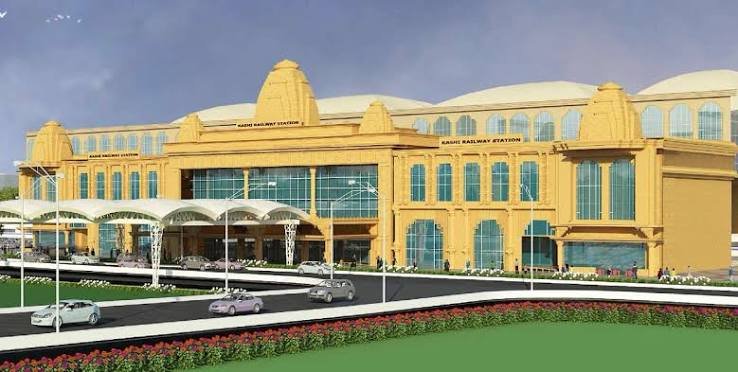
In late October 2026, Union Railway Minister Ashwini Vaishnaw completed a detailed site inspection of the ongoing Kashi Station redevelopment and the massive Namo Setu construction. Kashi Station (station code: KE) sat quietly near Rajghat for over a century as a sleepy satellite stop. It's now being remade into an intermodal terminal designed to pull thousands of arriving passengers away from the central congestion at Cantt. Cold steel scaffolding and dust dominate the riverfront construction zone. If you're arriving in northern Banaras this season, expect detours near Rajghat—and keep your camera handy for the changing skyline.
Namo Setu: Replacing the 137-Year-Old Iron Beast
You can't talk about Kashi Station without mentioning the iconic double-decker Malviya Bridge. Built in 1887 by British engineers, the ancient iron truss has reached its operational limits. Heavy rail traffic below and thousands of morning commuter bikes above rumble through its tight, soot-blackened frame daily. The noise is deafening. The steel shudders beneath every freight locomotive.
Namo Setu is the modern four-lane road and four-track rail bridge being built directly alongside the old bridge. During his ground review, Ashwini Vaishnaw stressed that this rail-cum-road artery will double the train-handling capacity between Kashi Station and Pandit Deen Dayal Upadhyaya Junction (DDU). The structural engineering is ambitious. Heavy concrete pillars now rise straight out of the Ganga's eastern silt banks. Once completed, the top deck will handle four lanes of vehicular traffic without the narrow single-lane deadlocks that used to trap travelers for hours on Malviya Bridge. (Take note: if you're taking an e-rickshaw across to the eastern bank during peak evening hours right now, stick to off-peak times before 4:00 PM unless you want to inhale exhaust for forty minutes).
Inside the Redesigned Kashi Intermodal Hub
Kashi Station isn't getting a surface-level coat of paint. It's an entire ground-up overhaul. The design directly links rail platforms with the newly expanded Namo Ghat nearby. Walk out of the future concourse, and you'll step straight onto elevated pedestrian walkways leading toward the riverfront.
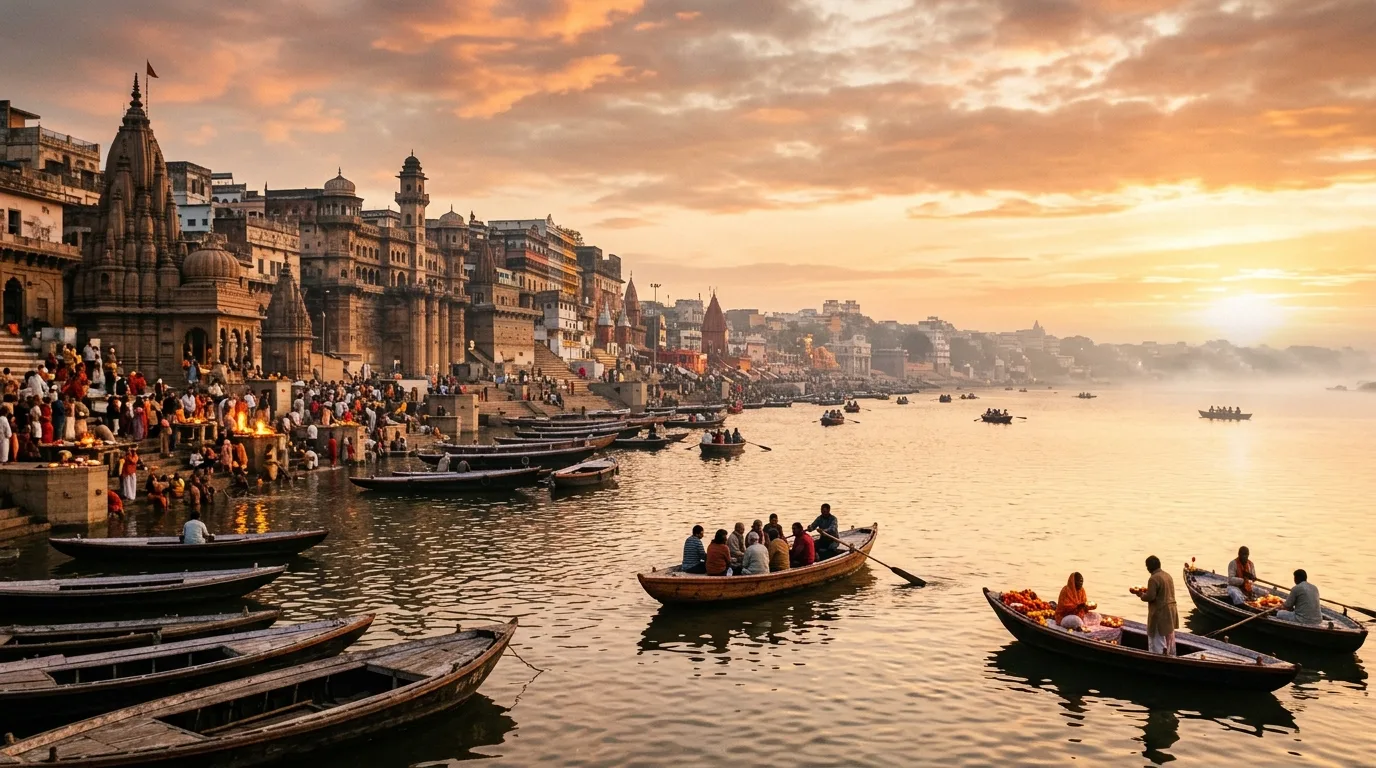
The upgraded terminal features separate elevated departure plazas, wide air-conditioned waiting lounges, and multi-level parking decks. It's built to relieve Varanasi Cantt station, which handles well over 100,000 travelers daily. From Kashi Station, you can bypass the city's worst traffic entirely. Simply walk down to Namo Ghat, grab a seat on a shared motorboat for ₹100 to ₹200, and glide straight down to Dashashwamedh or Manikarnika Ghat in twenty minutes on the water.
The Delhi-Varanasi Vande Bharat Sleeper Shift
Coinciding with the infrastructure review, the flagship Vande Bharat Sleeper Express between Varanasi and Delhi was officially flagged off. Overnight train travel to Kashi just shifted gears. For years, the historic Shiv Ganga Express was the gold standard for overnight trips, but getting a confirmed berth was nearly impossible without months of planning.
The new sleeper unit cuts the run down to approximately 8 hours with custom noise insulation, modern suspension, and ergonomic berths. It leaves Delhi late in the evening and drops you in Banaras right at dawn. Cold morning air hits your face as you step off the train platform. Grab a scalding clay kulhad of ginger-heavy chai for ₹10 right outside the gate, jump in a shared e-rickshaw for ₹20, and you're at the river before the morning aarti incense burns out.
Navigating Around Construction: Practical Travel Routes
Traveling through Northern Banaras during active heavy construction takes strategic planning. Road closures around Rajghat and Kashi Station pop up without much notice. E-rickshaw drivers love to charge unsuspecting travelers ₹150 for rides that should cost ₹20. Don't fall for it. Know your distances and pricing structure before you set foot on the street.
If you're coming from Varanasi Babatpur Airport (VNS), expect a 26-kilometer drive. Prepaid cabs inside the terminal quote ₹800 to ₹1000, while app cabs like Uber or Ola settle around ₹700 to ₹900. If you're traveling light, hop on the green AC Electric Bus outside arrivals for ₹50. It stops at Varanasi Cantt, from where you can take the brand-new urban ropeway system down toward Godowlia Chowk. The Swiss-built ropeway gondolas glide above street level gridlock in just 15 to 17 minutes for a modest fare of ₹50 to ₹80.
| Route / Transit Option | Typical Travel Time | Verified Fare (INR) | Key Travel Advice |
|---|---|---|---|
| Shared E-Rickshaw (Kashi Station to Chowk) | 15 - 25 mins | ₹15 - ₹30 per head | Confirm driver is taking the main inner lane, not detour bridges. |
| Shared Motorboat (Namo Ghat to Dashashwamedh) | 20 - 30 mins | ₹100 - ₹200 per seat | Best option to completely bypass street traffic during morning rush. |
| Private Wooden Rowboat (1 Hour) | Flexible | ₹400 - ₹700 (hourly) | Always settle exact price before putting your foot on the boat board. |
| Varanasi Public Ropeway (Cantt to Godowlia) | 15 - 17 mins | ₹50 - ₹80 per ticket | Operational 06:00 AM - 10:00 PM; avoids gridlock entirely. |
| VNS Airport to Central City (Prepaid Cab) | 45 - 75 mins | ₹800 - ₹1,000 | Book at official inside desk to avoid pushy exterior drivers. |
Street Fuel: What to Eat Near Northern Kashi
Don't wander through the construction zones on an empty stomach. Northern Varanasi, especially the lanes crawling behind Rajghat and Chaukhamba, holds some of the city's finest morning food joints. Skip the sterile hotel breakfast buffets. Walk into the lane behind the main road junction.
Look for huge iron kadhais bubbling with hot mustard oil. Order a plate of piping-hot kachori sabzi with sweet crispy jalebis for ₹40 to ₹60. The dark gravy is loaded with crushed black pepper, cloves, and boiled chickpeas. In winter months (November to February), hunt down clay kulhads of Malaiyyo in the alleys around Chaukhamba for ₹50 to ₹100. It's a whipped milk froth delicately scented with saffron, cardamom, and chopped pistachios that collapses on your tongue like cold sweet cloud matter. Wash it down with a glass of thick clay-pot lassi topped with hand-scraped rabri for ₹50. (And yes, the vendor will ask if you want extra sugar—tell him 'no extra sugar' unless you want syrup-level sweetness).
Frequently Asked Questions
What is the update on Kashi Station redevelopment inspected by Ashwini Vaishnaw?
Kashi Station is being transformed into an intermodal transport hub directly integrated with Namo Ghat. Railway Minister Ashwini Vaishnaw personally inspected the construction site in late October 2026, verifying upgraded passenger concourses, skywalk access to the riverbank, and expanded multi-track platforms designed to shift heavy passenger loads away from Varanasi Cantt.
What is the Namo Setu rail-cum-road bridge project in Varanasi?
Namo Setu is a modern four-lane road and four-track rail bridge replacing the 137-year-old Malviya Bridge over the Ganga. Constructed to eliminate bottleneck traffic between Kashi Station and Pandit Deen Dayal Upadhyaya Junction (DDU), this double-decker structure drastically increases both freight train speed and regional highway access.
How long does the Vande Bharat Sleeper Express take from Delhi to Varanasi?
The Delhi to Varanasi Vande Bharat Sleeper Express completes the overnight journey in approximately 8 hours. Flagged off in late October 2026, this high-speed sleeper train provides AC 1st, 2nd, and 3rd Tier berths with optimized suspension and modern passenger amenities.
How do I travel from Kashi Station to Dashashwamedh Ghat or Kashi Vishwanath Dham?
The fastest way from Kashi Station to central ghats is by shared e-rickshaw or shared motorboat from adjacent Namo Ghat. A shared e-rickshaw ride along Rajghat Road costs ₹15 to ₹30 per passenger, while a shared motorboat from Namo Ghat straight to Dashashwamedh Ghat costs ₹100 to ₹200 per seat.
What is the ticket price for urban ropeway transit in Varanasi?
Public ropeway tickets between Varanasi Cantt Railway Station and Godowlia Chowk cost between ₹50 and ₹80 per passenger. Operating air-conditioned gondolas every 90 to 120 seconds, the 3.8 km system cuts travel time down to 15-17 minutes across 5 dedicated transit stations.
Varanasi Travel Quick Reference: Timings, Costs & Essentials
Key verified facts for planning your visit to Varanasi — timings, transport costs, temple guidelines, and safety tips:
How much does a boat ride cost in Varanasi and how to book?
Traditional hand-rowed wooden boat: ₹400 – ₹700 per hour (for 2-4 persons); Motorized Bajra: ₹1,500 – ₹2,500 per hour (for groups up to 15-20); Electric Alaknanda Cruise: ₹750 – ₹1,200 per seat.
What are the exact Ganga Aarti timings at Dashashwamedh and Assi Ghat?
Morning Subah-e-Banaras at Assi Ghat begins at 05:00 AM (summer) / 05:45 AM (winter); Grand Evening Maha Aarti at Dashashwamedh Ghat begins at 07:00 PM (summer) / 06:00 PM (winter).
What is the dress code and entry fee for Kashi Vishwanath Temple?
Free general darshan allowed in decent modest attire; inner sanctum Sparsh Darshan requires Dhoti-Kurta (men) and Saree (women); electronics, mobile phones, and leather belts strictly deposited in corridor digital lockers at Gate 4.
When is the best time of year to visit Varanasi?
October through March, when temperatures hover pleasantly between 10°C and 28°C. Coincides with Dev Deepawali (24 November 2026, with over 1.2 million lamps) and Maha Shivratri (February/March).
How far is Varanasi Airport from the Ghats and how to reach the city?
Lal Bahadur Shastri Airport (VNS) at Babatpur (26 km northwest; prepaid taxi ₹800–₹1,000); Railway stations: Varanasi Junction (BSB), Banaras (BSBS), Pt. Deen Dayal Upadhyaya Junction (DDU, 18 km).
What are the most common tourist scams in Varanasi and how to avoid them?
Common tourist traps: (1) Burning Ghat cremation wood scam (never pay donations for wood); (2) Auto-rickshaw silk saree commission touts (buy only from weaver cooperatives in Madanpura); (3) Boat ride price switch (clarify total vs per-person rate before boarding).