 By Nikhil kumar pandey & Editorial Guild
The Big Misconception: Main Diwali vs. Dev Deepawali in Kashi
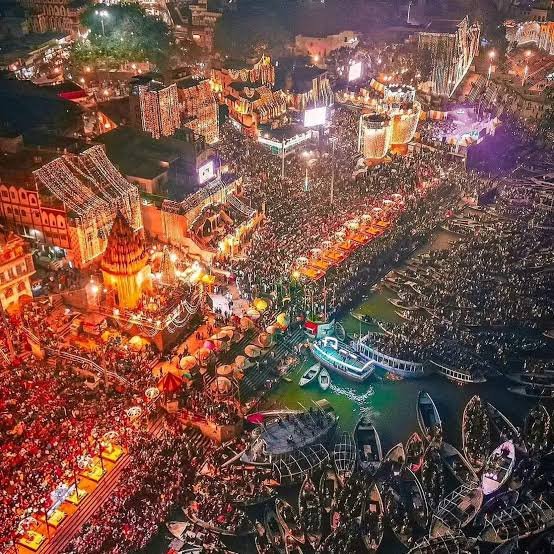
Most first-time visitors make the same critical mistake. They book their hotels for main Diwali night, expecting millions of brass lamps to light up all eighty-four ghats simultaneously. That doesn't happen on Amavasya. Main Diwali—or Badi Diwali—is primarily an intimate, home-centered festival of clay diyas, private family pujas, and lit-up doorframes across the narrow galis of Old Banaras. If you want the viral, breathtaking visual of every stone step along the river ablaze with a million flickering flames, that actually occurs fifteen days later on Kartik Purnima during Dev Deepawali.
Don't get discouraged. Celebrating main Diwali in Varanasi offers something far deeper than a crowd-choked photo op. The energy shifts dramatically. Smoke from clay havan kunds blends with hot mustard oil from doorstep diyas; the scent fills every winding lane from Assi to Rajghat. Pilgrims gather at Kashi Vishwanath Dham for special evening darshan. You won't face the chaotic, two-million-person bottleneck that paralyzes the riverbank on Dev Deepawali. Instead, you get an authentic look into how ancient families honor Mahalakshmi and Lord Shiva in the spiritual heart of India.
Understanding the dual festive rhythm makes all the difference for your itinerary. Main Diwali marks Lord Rama's triumphant return to Ayodhya after fourteen years in exile. Dev Deepawali honors Lord Shiva's victory over the demon Tripurasura—the night when the gods themselves descend to bathe in the holy river. (If your schedule only permits one visit, decide whether you prefer warm domestic traditions or grand civic spectacles.)
Walking Through Old Banaras on Lakshmi Puja Night
The city changes color at dusk. Skip the main arterial roads after 5:00 PM; traffic at Godowlia Chowk becomes an impossible tangle of e-rickshaws and pedestrians. Head into the labyrinthine galis behind Dashashwamedh and Thatheri Bazaar instead. Don't carry bulky backpacks. The alleys are barely four feet wide in places, packed with marigold vendors, brassware shops, and local families carrying thalis of glowing clay lamps.
Every wooden doorway displays handcrafted rangoli patterns made from colored rice flour and crushed flower petals. Stop by Kashi Chaat Bhandar near Girja Ghar for a piping-hot clay bowl of spicy tamatar chaat (₹50 per plate) sprinkled with crispy namakpare. The tart, cumin-infused tomato gravy hits your palate instantly—pure heaven on a cool November evening. Follow it up with a warm, cardamom-spiced kulhad of milk from a lane vendor for ₹30. It keeps the autumn chill away while you explore.
Listen closely as you walk. The sonic landscape is unforgettable. Temple bells chime from hidden courtyard shrines; priests chant Sanskrit mantras over crackling flames; children set off small firecrackers on stone stoops. You'll see shopkeepers performing Chopda Pujan—blessing their traditional red ledger books with swastikas of vermillion paste and silver coins. It's raw, unscripted, and entirely human.
Annakut at Kashi Vishwanath Dham: A Culinary Offering to the Gods
The morning after Diwali brings Govardhan Puja and the celebrated festival of Annakut. The new Kashi Vishwanath Dham corridor comes alive with unmatched splendor. Priests build massive mountain-like displays of cooked grains, sweets, savories, and seasonal vegetables in front of the deity—an ancient ritual thanksgiving for the autumn harvest. (And yes, the queue for general darshan easily stretches past two hours if you arrive after 7:00 AM.)
Take Gate 4. If you hate standing in endless lines, book a Sugam Darshan pass online beforehand through the official temple portal for ₹300 per person. It gives you priority access through a designated lane. Remember the strict security code: leave your mobile phones, leather belts, wallets, and smartwatches in the free digital lockers outside the corridor entrance. Security officers will turn you back immediately if you attempt to carry electronics inside.
Step onto the smooth white marble floor of the corridor. The cold stone cools your bare soles instantly. The atmosphere inside the sanctum is intense—the heavy smell of crushed bilva leaves, wet marigolds, scalding pure ghee, and sweet milk curd fills the air while Vedic scholars chant in rhythmic unison. Standing before the sacred Jyotirlinga on this morning is a core memory you'll carry forever.
Securing a Boat for the Light Spectacle (and How Not to Get Overcharged)
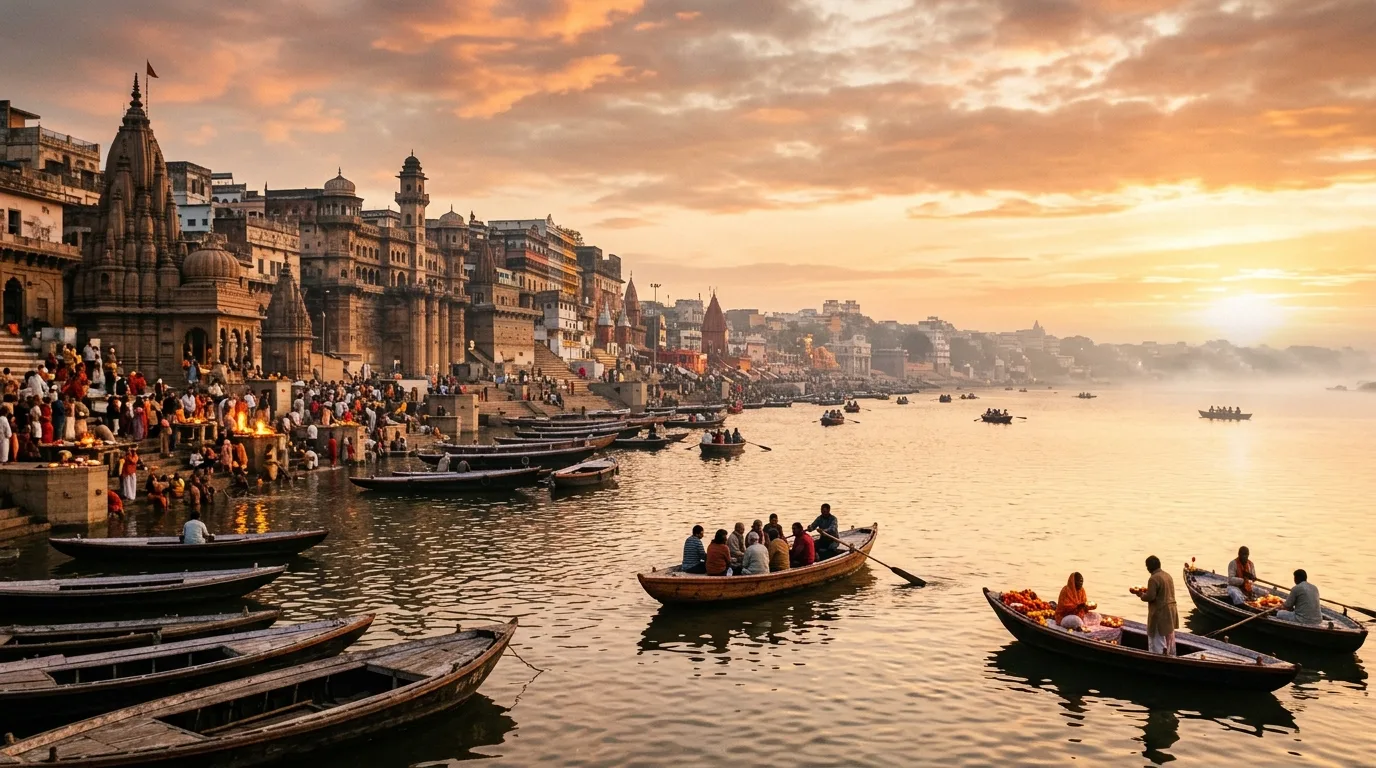
The river remains the ultimate vantage point for viewing the illuminated skyline. Boatmen along Assi, Ahilya Bai, and Dashashwamedh Ghats will actively solicit you the moment you step near the water. They'll quote inflated prices—sometimes ₹1,200 to ₹1,500 per hour for a simple hand-rowed wooden boat. Don't pay it. The standard negotiated rate for a private wooden rowboat (suitable for 2 to 4 people) ranges between ₹400 and ₹700 per hour on main Diwali night.
Always settle the final fare and duration before stepping onto the wooden plank. Make sure the boatman agrees to take you all the way from Assi Ghat down to Manikarnika and back. If you're on a tight budget, look for shared motorized bajras; seats cost around ₹100 to ₹200 per passenger for a group loop. For those seeking comfort without endless haggling, luxury electric cruises like the Alaknanda offer ticketed evening slots for ₹800 to ₹1,200 per seat, complete with live bhajan recitals and complimentary snacks.
Out on the dark, calm water, the perspective opens up. The reflection of thousands of brass aarti lamps glimmers across the black surface of the Ganga. The metallic clang of giant hand-held brass lamps from the 7:00 PM Dashashwamedh Ganga Aarti echoes far over the river, creating a stunning wall of sound and light.
Practical Survival Guide: Festive Transport, Ropeway & Timings
Getting around Varanasi during peak festive weeks requires smart planning. The urban public ropeway project connects Varanasi Junction (Cantt Railway Station) directly to Godowlia Chowk. The 3.8 km aerial line bypasses gridlocked streets, cutting a painful 50-minute crawl down to just 15 minutes for ₹50 to ₹80 per passenger. Modern air-conditioned gondolas run continuously from 6:00 AM to 10:00 PM.
If you prefer ground transport, shared e-rickshaws charge ₹10 to ₹30 per stretch along designated routes, though police divert vehicular traffic away from Godowlia during peak evening hours. Keep small cash notes handy; drivers rarely have change for ₹500 bills. For airport transfers back to Lal Bahadur Shastri Airport (VNS Babatpur, 26 km away), book an Uber or prepaid taxi for ₹700 to ₹1,000, and allow at least two full hours due to festive highway delays.
Stay sharp along the steep limestone steps. Monsoon mud can linger near the water's edge, making lower steps treacherous. Wear slip-on shoes that are easy to remove outside temples, carry a light jacket for the sharp post-sunset breeze, and stick to hot, freshly cooked food from high-turnover street vendors.
Festive Comparison: Diwali vs. Dev Deepawali in Varanasi
Use this convenient breakdown to choose the right celebration for your travel
| Feature / Aspect | Main Diwali (Badi Diwali) | Dev Deepawali (Kartik Purnima) |
|---|---|---|
| Lunar Date | Kartik Amavasya (Dark Moon) | Kartik Purnima (15 days after Diwali) |
| Primary Focus | Home worship, Lakshmi Puja, local lanes | Public illumination of all 84 Ganga ghats |
| Crowd Level | Moderate local crowds; navigable galis | Extreme crowds (over 1.5–2 million visitors) |
| Boat Hire Rates | Standard to moderate (₹400–₹700/hr) | Peak premium pricing (₹2,000–₹5,000+ per seat) |
| Vibe & Atmosphere | Intimate, spiritual, authentic family rituals | Grand civic spectacle, laser shows, fireworks |
nn
Frequently Asked Questions
What is the difference between Diwali and Dev Deepawali in Varanasi?
Main Diwali marks Lord Rama's return to Ayodhya, while Dev Deepawali celebrates Lord Shiva's victory over the demon Tripurasura. Main Diwali takes place on Kartik Amavasya with private household rituals and illuminated shop fronts. Dev Deepawali occurs exactly fifteen days later on Kartik Purnima, when locals light over a million earthen lamps across all 84 ghats along the Ganga.
How much does a boat ride cost on Diwali night in Varanasi?
A private hand-rowed wooden boat costs between ₹400 and ₹700 per hour on main Diwali night. Shared motorboat seats cost approximately ₹100 to ₹200 per passenger, while luxury electric cruises range from ₹800 to ₹1,200 per seat with live music and snacks included. Always negotiate and fix the fare before boarding.
How can I skip the long line at Kashi Vishwanath Temple during Diwali?
You can bypass general queues by purchasing a Sugam Darshan ticket for ₹300 per person. Tickets can be booked online via the official temple portal (shrikashivishwanath.org) or at the Gate 4 assistance counter. Ensure you store phones, leather items, and smartwatches in the free corridor lockers before entering.
What fast transport options connect Varanasi Railway Station to Godowlia Chowk?
The Varanasi urban public ropeway connects Cantt Railway Station to Godowlia Chowk in just 15 minutes. Tickets cost between ₹50 and ₹80 per passenger, operating continuously from 06:00 AM to 10:00 PM. Air-conditioned gondolas arrive every two minutes, avoiding ground traffic bottlenecks entirely.
What famous street food should I try in Varanasi during the Diwali season?
Must-try festive street treats include tamatar chaat (₹50–₹70) at Kashi Chaat Bhandar and fresh winter Malaiyyo (₹50–₹100). You should also try kachori sabzi with jalebi (₹40–₹60) in Thatheri Bazaar and thick kulhad lassi (₹60–₹120) near Blue Lassi or Lanka.
Varanasi Travel Quick Reference: Timings, Costs & Essentials
Key verified facts for planning your visit to Varanasi — timings, transport costs, temple guidelines, and safety tips:
How much does a boat ride cost in Varanasi and how to book?
Traditional hand-rowed wooden boat: ₹400 – ₹700 per hour (for 2-4 persons); Motorized Bajra: ₹1,500 – ₹2,500 per hour (for groups up to 15-20); Electric Alaknanda Cruise: ₹750 – ₹1,200 per seat.
What are the exact Ganga Aarti timings at Dashashwamedh and Assi Ghat?
Morning Subah-e-Banaras at Assi Ghat begins at 05:00 AM (summer) / 05:45 AM (winter); Grand Evening Maha Aarti at Dashashwamedh Ghat begins at 07:00 PM (summer) / 06:00 PM (winter).
What is the dress code and entry fee for Kashi Vishwanath Temple?
Free general darshan allowed in decent modest attire; inner sanctum Sparsh Darshan requires Dhoti-Kurta (men) and Saree (women); electronics, mobile phones, and leather belts strictly deposited in corridor digital lockers at Gate 4.
When is the best time of year to visit Varanasi?
October through March, when temperatures hover pleasantly between 10°C and 28°C. Coincides with Dev Deepawali (24 November 2026, with over 1.2 million lamps) and Maha Shivratri (February/March).
How far is Varanasi Airport from the Ghats and how to reach the city?
Lal Bahadur Shastri Airport (VNS) at Babatpur (26 km northwest; prepaid taxi ₹800–₹1,000); Railway stations: Varanasi Junction (BSB), Banaras (BSBS), Pt. Deen Dayal Upadhyaya Junction (DDU, 18 km).
What are the most common tourist scams in Varanasi and how to avoid them?
Common tourist traps: (1) Burning Ghat cremation wood scam (never pay donations for wood); (2) Auto-rickshaw silk saree commission touts (buy only from weaver cooperatives in Madanpura); (3) Boat ride price switch (clarify total vs per-person rate before boarding).