 By Nikhil kumar pandey & Editorial Guild
1. The Dawn Mistake
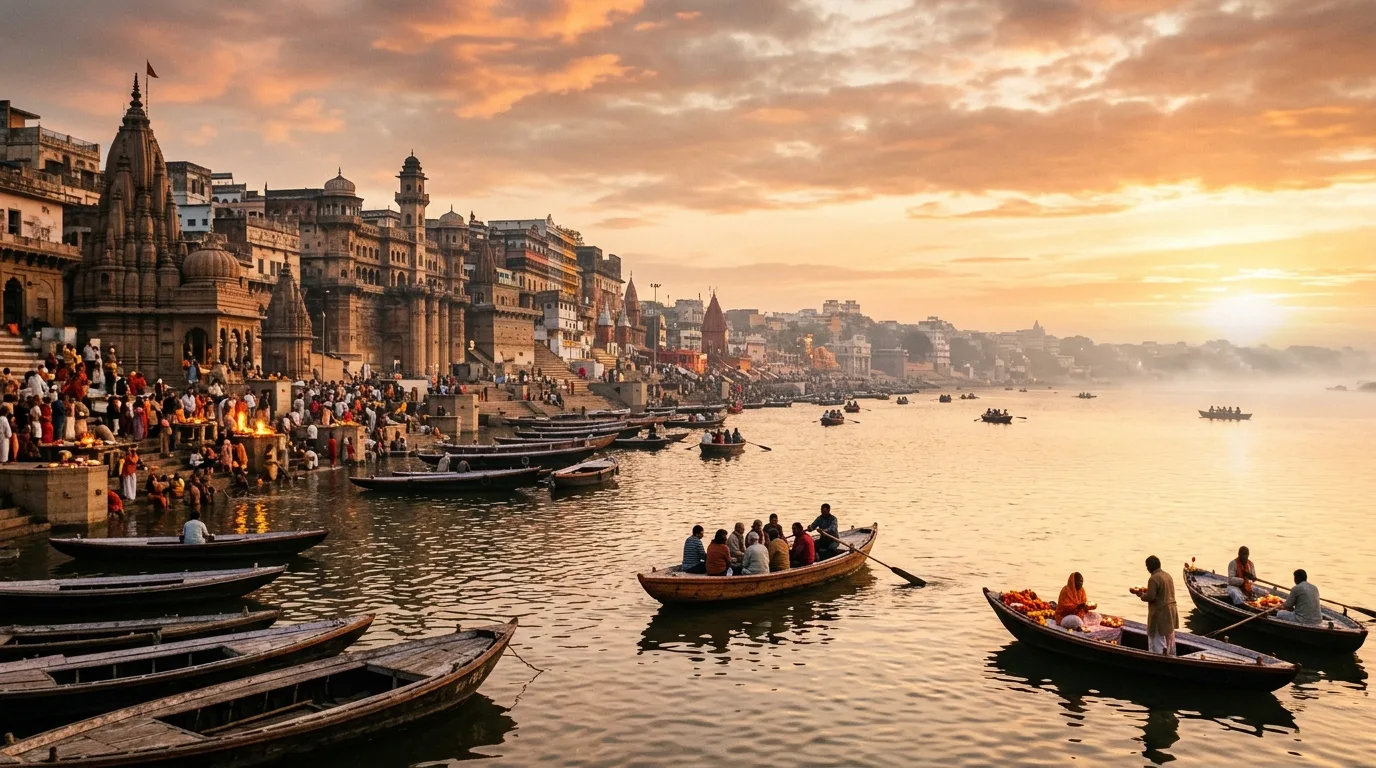
The most common mistake first‑time visitors make is arriving after the sun has risen. They miss the raw, humming start of the day. The river hums as boats glide past. A quiet voice from the steps says, don’t wait. The cold stone feels like a memory of a thousand prayers. The first light turns the sand yellow. The market stalls open slowly, the vendors arranging their goods. The smell of fresh chai lingers in the air. You should be there before the first aarti begins. You will witness the raw pulse of the city.
In the first hour, the crowd is thin. The wind carries the scent of burning camphor. The boats start their day, calling out rates. You can hear the call of a trader offering a slice of sweet. The silence before the first chant is intense. The silence is broken by a distant drum. A distant drum is the pulse of the city. The silence is a moment of stillness before the rush. The moment feels almost sacred. The moment feels like a promise. The moment is a chance to see the city unfiltered. The moment is a chance to learn. The moment is a chance to hear a story. The moment is a chance to start your day with purpose. The moment is the first gift of the day.
2. The Spice of the Ghat Vendors
The vendors line the ghat with spices that smell like stories. Their baskets are filled with saffron, cumin, cardamom. The air is thick with the scent of pepper. The pepper is a bright, hot kiss on the nose. The vendors shout, “Fresh ginger! Fresh ginger! Fresh ginger!” The shout is a call to the hungry. The call is a reminder of the river’s rhythm. The call is a reminder of the city’s heart. The call is a reminder of the day’s promise. The call is a promise to the traveler. The call is a promise to the soul. The call is a promise to the heart. The call is a promise to the mind. The call is a promise to the spirit. The call is a promise of flavor.
The price of a pinch of turmeric is low, but the value is high. The value is the warmth it brings. The warmth is a comfort after a long walk. The comfort is the feeling of being at home. The comfort is the feeling that the city has welcomed you. The comfort is the feeling that the city is alive. The comfort is the feeling that the city is alive and moving. The comfort is the feeling that you belong. The comfort is the feeling that the city will remember you. The comfort is a subtle reminder that you are part of a larger story.
The vendor’s hand moves like a dance. The dance is a skill passed down generations. The skill is a part of the ghat’s soul. The soul is the city itself. The city is a living organism. The organism is the river. The river is the lifeblood of the city. The lifeblood is the reason for the gifts. The reason for the gifts is the story of the city. The story is carried in every spice. The story is carried in every scent. The story is carried in every bite. The story is carried in every moment.
When you ask for a mix, the vendor offers a handful of roasted cumin and black pepper. The mix smells like adventure. The adventure is a journey through the city’s lanes. The lanes are full of secrets. The secrets are the hidden shops. The hidden shops are the best place to find unique gifts. The best place to find unique gifts is in the back alleys. The back alleys are narrow and winding. The winding paths lead to hidden treasures. The treasures are the best souvenirs. The souvenirs are the best gifts. The gifts are the best memories.
3. Hand‑woven Silks that Speak
In the narrow lane behind the temple, a woman sells silk scarves. Her fingers move like a story. The story is woven into each thread. The thread is the city’s heartbeat. The heartbeat is the rhythm of the day. The day is the rhythm of life. The rhythm of life is the rhythm of the river. The river is a living thing. The living thing is a living memory. The memory is the city. The city is the home of silk. The home of silk is in the ghat. The ghat is the place where the silk meets the water.
The price of a hand‑woven scarf starts at 300 rupees. The price is low for a piece of art. The art is a piece of history. The history is a story of generations. The generations have spun silk. The silk has a memory. The memory is the river. The river is a constant. The constant is the reason for the silk. The reason for the silk is the devotion of the artisans.
The vendor invites you to try a scarf. She says, “Feel the weave.” The weave is a texture of hope. The hope is the hope of the city. The city is hopeful. The hopeful is the hope of the future. The future is a promise. The promise is the gift you take home. The gift is the memory.
When you leave the lane, you see a child playing in the dust. The child’s laughter is a reminder of innocence. The innocence is a reminder that the city is alive. The city is alive and breathing. The breathing is the wind. The wind is the voice of the city. The voice of the city is a lullaby. The lullaby is a gift. The gift is a memory.
4. Artisanal Glassware from the Old Factory
The old factory on the river side has been turned into a market of glass. The glass is hand blown by an old man. The old man’s hands tremble. The tremble is the story of age. The age is the story of the river. The river is a witness. The witness is the city. The city is a story. The story is a story of time.
The glassware is in shades of blue, green, and amber. The shades are the colors of the sky at dusk. The dusk is the city’s promise. The promise is the promise of a new day. The new day is the promise of a new gift. The gift is a memory.
Prices range from 150 rupees for a small bowl to 800 rupees for a large vase. The price is low for a piece of art. The art is a piece of the city. The city is a living thing.
The vendor says, “Take home a piece of the river.” The river is the heart of the city. The heart is the city’s soul.
5. Hand‑cut Candles & Perfume Oils
On the steps near the old temple, a small shop sells candles. The candles are hand cut with a knife. The knife is a tool of art. The art is the light that shines. The light is the hope that lives.
The price is 80 rupees for a small candle. The price is low for a piece of light. The light is a promise. The promise is a memory. The memory is a gift.
The shop also sells perfume oils. The oils smell of sandalwood. The sandalwood is a fragrance that carries. The fragrance carries a story. The story is the city’s history.
6. Sweets that Carry the River’s Sweetness
At the corner of the lane, a sweet shop has been in the family for 60 years. The sweets are made of jaggery and cardamom. The taste is sweet and spicy. The spicy is the city’s flavor. The flavor is the city’s pulse.
Prices start at 20 rupees for a piece of peda. The price is low for a piece of tradition. The tradition is the city’s heritage.
The vendor says, “Try a bite.” The bite is a memory. The memory is a gift.
7. The Secret of the Hand‑painted Pottery
A small shop near the ghat sells pottery. The pottery is painted with bright colors. The colors are bright as sunrise. The sunrise is the city’s hope. The hope is the city’s promise. The promise is a new day.
The pottery is small and hand made. The hand made is a gift of time. The time is a gift. The gift is a memory.
The price is 200 rupees for a small pot. The price is low for a piece of art.
8. Tea, Coffee, and Flavored Lassi
The tea stalls are everywhere. The tea is brewed with ginger and black pepper. The flavor is bold. The bold is a reminder of the city’s spirit.
Prices are 10 rupees for a cup of chai. The price is low for a cup of warmth. The warmth is a hug from the city.
The lassi is flavored with mango. The mango is sweet. The sweet is a memory.
9. Practical Tips for Bargaining and Paying in ₹
When you walk, you will find a lot of stalls. You need to know how to haggle. The first step is to say, “It’s good.” The second step is to ask for a discount. The third step is to ask for a better price. The process is simple but effective.
In the market, prices are not fixed. The price is a suggestion. You can negotiate. Negotiation is a dance. The dance is a skill.
Remember that many vendors accept only cash. Bring cash. Bring enough.
10. Where to Store Your Treasures When You Leave
When you leave, you will have many gifts. Store them in a waterproof bag. The bag is a protection. The protection is a promise. The promise is a safe home.
The bag will keep your gifts dry. The dry is a promise that the gifts will last.
The bag is simple, but it is the best. The best is a simple bag. The simple is a simple life.
Frequently Asked Questions
Q: What is the best time to buy souvenirs? A: Dawn and early morning give you the best selection before crowds.
Q: Do vendors accept credit cards? A: Most vendors prefer cash. Credit cards are rare.
Q: How much should I budget for souvenirs? A: ₹1500-₹3000 covers a good mix.
Q: Where can I find the best silk scarves? A: The lane behind the temple offers the best.
Q: What is the best way to negotiate? A: Start politely and be firm.
Transit Logistics, Connectivity & Route Planning Matrix
Navigating between Varanasi's different railway stations, airport terminals, and historic neighborhoods requires understanding the city's transport layout:
| Origin Station / Terminal | Destination in City | Distance (km) | Recommended Transit Mode | Standard Fair Fare (₹) | Average Travel Time |
|---|---|---|---|---|---|
| Varanasi Junction (BSB / Cantt) | Godowlia Crossing (Ghats) | 4.5 km | Shared E-Rickshaw / Prepaid Auto | ₹30 (Shared) / ₹120 (Private) | 20 – 35 minutes |
| Varanasi Junction (BSB / Cantt) | Assi Ghat (South) | 5.5 km | Auto-Rickshaw / App Cab (Ola/Uber) | ₹140 – ₹180 | 25 – 40 minutes |
| Pt. Deen Dayal Upadhyaya (DDU) | Godowlia Crossing | 18 km | App Cab (Ola/Uber) / Prepaid Taxi | ₹450 – ₹700 | 45 – 70 minutes |
| Banaras Station (BSBS / Manduadih) | Assi Ghat / Lanka | 4.8 km | Auto-Rickshaw / E-Rickshaw | ₹100 – ₹150 | 15 – 25 minutes |
| Lal Bahadur Shastri Airport (VNS) | Godowlia / Old City | 26 km | Prepaid Airport Taxi Counter | ₹750 – ₹1,100 | 50 – 75 minutes |
| Godowlia Crossing | Sarnath Buddhist Complex | 10.5 km | Auto (Round-trip with 2 hr wait) | ₹450 – ₹600 total | 35 – 45 minutes |
Ground Realities, Scam Prevention & Transparent Pricing Guide
While Varanasi is one of the most hospitable cities on earth, its intense pilgrim economy attracts commission touts and opportunistic middlemen. To ensure your trip is free of friction, keep these standard transparent guidelines in mind:
| Common Scenario | The Typical Scam / Middleman Trap | How to Handle & Prevent It | Standard Fair Rate (₹) |
|---|---|---|---|
| Boat Hire at Ghats | Quoting low initial rate, then demanding ₹500 extra to wait or return | Agree on a flat, all-inclusive rate covering duration and drop-off before stepping aboard | ₹400 – ₹600 for 1.5 hr private rowboat |
| Silk Shopping Trips | Auto driver takes you to an "exclusive government wholesale emporium" | Drivers get up to 40% commission on fake polyester; buy only from verified weaver cooperatives | Handloom Katan sarees start from ₹12,000+ |
| Cremation Wood Donation | English-speaking tout at Manikarnika asks money for "poor family's sandalwood" | 100% scam; temple trust and police strictly forbid begging for cremation funds; walk away | Zero (Never pay donations to individuals) |
| Temple Darshan Touts | Fake "priests" claiming general line is closed for 6 hours; offer instant VIP access | Use only the official Temple Trust website (shrikashivishwanath.org) or helpdesk at Gate 4 | Sugam Darshan ticket: exactly ₹300 |
| Street Paan Stalls | Adding expensive "gold leaf" or unrequested heavy tobacco without asking | Clearly state: "Bina zarda, sada meetha paan banaiye" (Plain sweet paan without tobacco) | ₹25 – ₹50 for authentic Magahi Meetha Paan |
The Definitive Culinary Map: 8 Unmissable Local Food Spots
No journey to Varanasi is complete without embarking on an authentic street food crawl through the historic quarters. Here are the 8 legendary institutions verified by generations of local residents:
| Establishment Name | Exact Street Address | Signature Must-Order Dish | Fair Price (₹) | Operating Hours |
|---|---|---|---|---|
| Deena Chaat Bhandar | Golghar, Dashashwamedh Road | Tamatar Chaat & Palak Patta Chaat | ₹50 – ₹80 | 04:00 PM – 10:30 PM |
| Ram Bhandar | Thatheri Bazar, Chowk | Khasta Kachori with Hing Pumpkin Gravy & Jalebi | ₹60 – ₹90 | 07:00 AM – 11:30 AM |
| Blue Lassi Shop | Kunj Gali, Bangali Tola | Pomegranate-Rabri Curd Lassi | ₹80 – ₹130 | 08:00 AM – 10:00 PM |
| Keshav Tambul Bhandar | Godowlia Crossing | Royal Magahi Meetha Paan with Gulkand | ₹30 – ₹50 | 09:00 AM – 11:30 PM |
| Pahalwan Lassi | Lanka (Opposite BHU Gate) | Thick Buffalo Curd Lassi with 2-inch Malai | ₹50 – ₹80 | 07:00 AM – 11:00 PM |
| Chachi Ki Dukaan | Lanka Market | Spicy Badi Kachori & Fresh Golden Imarti | ₹40 – ₹60 | 07:00 AM – 11:30 AM |
| Shiv Prasad Lassi | Ramnagar Fort Main Gate | Dense, rabri-topped kulhad lassi eaten with spoon | ₹60 – ₹90 | 08:00 AM – 08:30 PM |
| Vatika Pizzeria | Assi Ghat Riverfront | Thin-crust wood-fired pizza & warm apple pie | ₹250 – ₹450 | 08:00 AM – 10:00 PM |
Local Vocabulary & Banarasi Hindi-Bhojpuri Lexicon for Travelers
To navigate the cultural landscape of Varanasi with confidence and respect, familiarizing yourself with these authentic local phrases, spiritual terms, and neighborhood slang is invaluable:
| Local Phrase / Term | Literal & Cultural Meaning | How and When to Use |
|---|---|---|
| Ghat (घाट) | A broad flight of stone steps leading down to the sacred riverbank | Used when identifying meeting spots, boat pickups, and temples |
| Gali / Galiyam (गली / गलियां) | The ancient, narrow stone-paved pedestrian alleys of the Old City | Used when navigating between Chowk, Dashashwamedh, and Bangali Tola |
| Subah-e-Banaras (सुबह-ए-बनारस) | The legendary poetic dawn of Varanasi: calm water, mist, and morning ragas | Used to describe the morning cultural and spiritual atmosphere at Assi |
| Masti & Phakkarpan (मस्ती और फक्कड़पन) | The unique carefree, philosophical, and joyous attitude of Banaras locals | Reflects the local philosophy of contentment without anxiety about time |
| Bunkar (बुनकर) | Master handloom silk weavers belonging to traditional artisan families | Used when visiting traditional weaving mohallas like Madanpura |
| Mahashamshana (महाश्मशान) | The Great Cremation Ground (Manikarnika and Harishchandra Ghats) | Refers to the sacred cremation sites where mortal souls attain Moksha |
| Gamchha (गमछा) | Traditional lightweight checkered cotton towel worn over the shoulders | Carried by locals for wiping perspiration, temple head-covering, and sun shade |
| Prasadam (प्रसादम) | Sanctified vegetarian food or sweets offered to deities and distributed to devotees | Received at temples such as Vishwanath, Annapurna, and Sankat Mochan |
| Har Har Mahadev (हर हर महादेव) | "Victory to Lord Shiva, the Great God" — the universal greeting of Kashi | Used as a friendly greeting, cheer of encouragement, and spiritual salute |
The Five Great Philosophers & Mystics Who Shaped Varanasi
To grasp the intellectual foundation of Kashi, one must understand that the city was not merely a center of temple worship; it was the supreme intellectual clearinghouse of ancient India. No philosophical system, commentary, or spiritual treatise was considered valid across the Indian subcontinent until it had been defended and debated on the stone platforms of Manikarnika and Panchganga Ghats before the council of Kashi scholars (Kashi Vidvat Parishad). Here are the five towering philosophers whose footprints remain etched into the city:
| Philosopher / Saint | Historical Era | Primary Landmark in Kashi | Revolutionary Contribution to World Thought |
|---|---|---|---|
| Maharshi Patanjali | 2nd Century BCE | Nag Kuan (Snake Well), Jaitpura | Codified the Yoga Sutras (the 8 limbs of Raja Yoga) and wrote the Mahabhashya commentary on Sanskrit grammar |
| Adi Shankaracharya | 8th Century CE | Manikarnika Ghat & Kedar Ghat | Composed the Manisha Panchakam after an encounter with Shiva in the guise of an outcaste, cementing Advaita (non-dual) Vedanta |
| Sant Kabir | 15th Century (1398–1518 CE) | Kabir Chaura Math & Lahartara | Challenged rigid ritualism, caste distinctions, and religious hypocrisy through fearless vernacular poetry (Bijak) |
| Sant Ravidas | 15th – 16th Century | Seer Goverdhanpur (Near BHU) | Envisioned Begumpura (the City Without Sorrow)—a society free of caste discrimination, poverty, and taxes |
| Goswami Tulsidas | 16th Century (1532–1623 CE) | Tulsi Ghat & Sankat Mochan | Composed the Awadhi Ramcharitmanas, democratizing the epic across northern India, and established the Sankat Mochan temple |
The Seven Chakras of Kashi: Sacred Energetic Topography
In traditional esoteric Shaivism and the Kashi Khanda of the Skanda Purana, the sacred geography of Varanasi is mapped directly onto the subtle human energetic anatomy. Just as the human spine contains seven subtle energy centers (chakras) through which spiritual consciousness ascends from Muladhara to Sahasrara, the city of Varanasi contains seven monumental energetic vortexes stretching from south to north along the sacred riverbank:
| Subtle Chakra | Corresponding Varanasi Landmark | Spiritual Significance | Recommended Pilgrim Practice |
|---|---|---|---|
| Muladhara (Root) | Assi Ghat & Sangam with River Assi | Grounding, elemental earth consciousness, stability | Early dawn meditation, Subah-e-Banaras havan attendance |
| Svadhisthana (Sacral) | Kedar Ghat & Gauri Kund | Water element, emotional purification, vitality | Ritual holy bath (Snan) in the red-and-white stone tank |
| Manipura (Solar Plexus) | Dashashwamedh Ghat & Agni Teertha | Fire element, transformative spiritual willpower | Witnessing the grand evening Maha Aarti with 21 brass lamps |
| Anahata (Heart) | Shri Kashi Vishwanath Dham | Air element, unconditional divine love, universal compass | Abhishekam and sacred touch of the ancient Jyotirlinga |
| Vishuddha (Throat) | Manikarnika Ghat (Chakra-Pushkarini) | Ether element, transcendental truth, release of karma | Contemplative silence watching the eternal cremation fires |
| Ajna (Third Eye) | Panchganga Ghat & Bindu Madhava | Intuitive wisdom, cosmic synthesis of 5 subtle rivers | Sunset contemplation on the monumental stone platforms |
| Sahasrara (Crown) | Adi Keshav Ghat (Varuna-Ganga Sangam) | Transcendence, union of the finite soul with Shiva | Silent meditation where the Varuna enters the holy Ganga |
The Ancient Science of Ritu-Charya: Seasonal Living in Banaras
In classical Ayurveda, human health is maintained by aligning daily diet and lifestyle with the six traditional Indian seasons (Ritus). Varanasi's centuries-old food culture reflects this seasonal wisdom with extraordinary precision:
| Season (Ritu) | Months | Dominant Climate | Traditional Banarasi Diet & Delicacies |
|---|---|---|---|
| Vasanta (Spring) | March – April | Pleasant, blooming, mild warmth | Light kachoris, barley water, roasted gram sattu, fresh bel panna to cleanse Kapha |
| Grishma (Summer) | May – June | Scorching sun, dry hot winds (Loo) | Cold Thandai with fennel and melon seeds, clay-pot curd lassi, raw mango aam panna |
| Varsha (Monsoon) | July – August | Humid, heavy rainfall, high river levels | Crispy heeng-spiced kachoris, hot ginger-tulsi kadha, steaming roasted bhutta (corn) on ghats |
| Sharad (Autumn) | September – October | Clear skies, festive evenings | Sweet moon-bathed kheer for Sharad Purnima, warm saffron milk, light vegetable curries |
| Hemanta (Pre-Winter) | November – December | Crisp pleasant chills, sunny afternoons | Urad dal kachoris, hot desi ghee jalebis, sesame-jaggery gajak, rich rabri lassi |
| Shishira (Deep Winter) | January – February | Frosty mornings, dense river fog | Saffron-infused dew-set Malaiyyo, steaming hot badam milk, bajra rotis with white butter |
Varanasi Travel Quick Reference: Timings, Costs & Essentials
Key verified facts for planning your visit to Varanasi — timings, transport costs, temple guidelines, and safety tips:
How much does a boat ride cost in Varanasi and how to book?
Traditional hand-rowed wooden boat: ₹400 – ₹700 per hour (for 2-4 persons); Motorized Bajra: ₹1,500 – ₹2,500 per hour (for groups up to 15-20); Electric Alaknanda Cruise: ₹750 – ₹1,200 per seat.
What are the exact Ganga Aarti timings at Dashashwamedh and Assi Ghat?
Morning Subah-e-Banaras at Assi Ghat begins at 05:00 AM (summer) / 05:45 AM (winter); Grand Evening Maha Aarti at Dashashwamedh Ghat begins at 07:00 PM (summer) / 06:00 PM (winter).
What is the dress code and entry fee for Kashi Vishwanath Temple?
Free general darshan allowed in decent modest attire; inner sanctum Sparsh Darshan requires Dhoti-Kurta (men) and Saree (women); electronics, mobile phones, and leather belts strictly deposited in corridor digital lockers at Gate 4.
When is the best time of year to visit Varanasi?
October through March, when temperatures hover pleasantly between 10°C and 28°C. Coincides with Dev Deepawali (24 November 2026, with over 1.2 million lamps) and Maha Shivratri (February/March).
How far is Varanasi Airport from the Ghats and how to reach the city?
Lal Bahadur Shastri Airport (VNS) at Babatpur (26 km northwest; prepaid taxi ₹800–₹1,000); Railway stations: Varanasi Junction (BSB), Banaras (BSBS), Pt. Deen Dayal Upadhyaya Junction (DDU, 18 km).
What are the most common tourist scams in Varanasi and how to avoid them?
Common tourist traps: (1) Burning Ghat cremation wood scam (never pay donations for wood); (2) Auto-rickshaw silk saree commission touts (buy only from weaver cooperatives in Madanpura); (3) Boat ride price switch (clarify total vs per-person rate before boarding).