 By Nikhil kumar pandey & Editorial Guild
The Cold Morning Bite at Assi
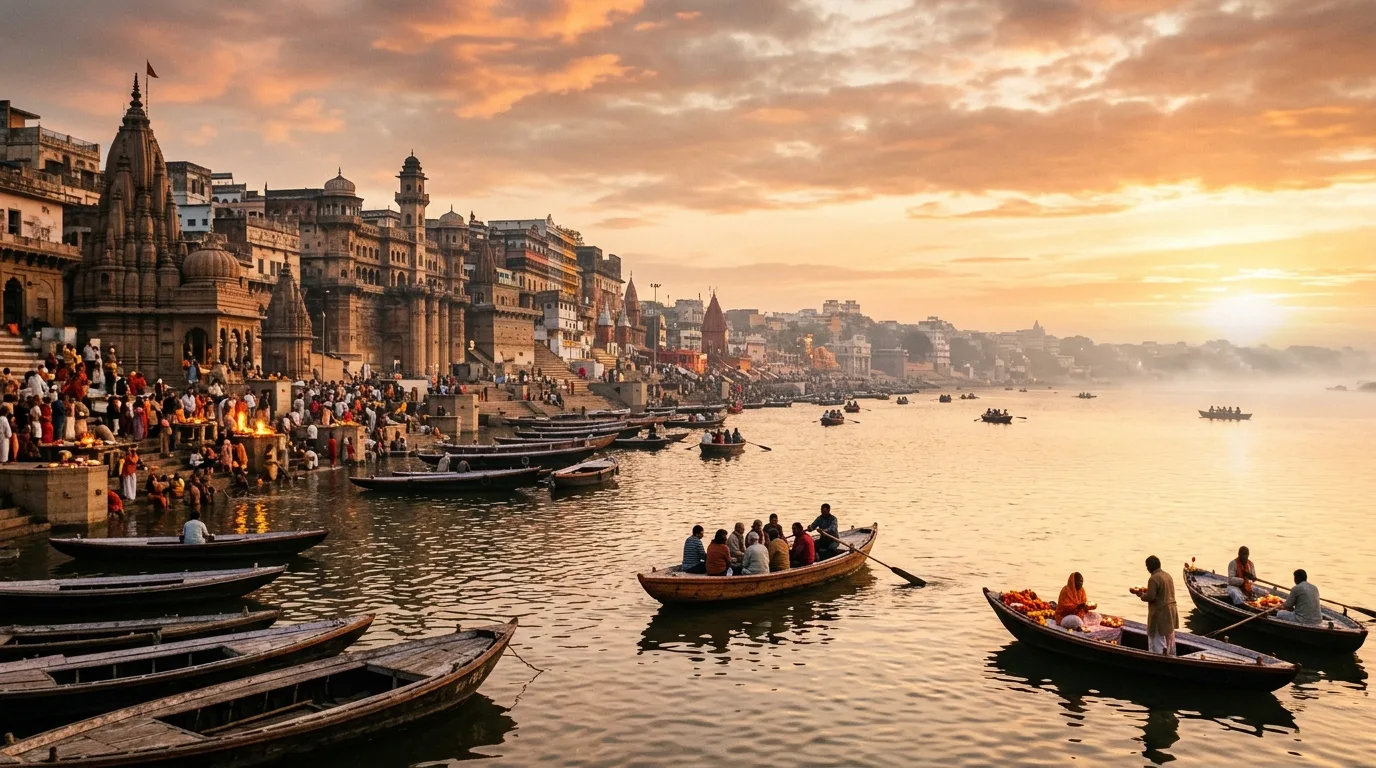
If you arrive at Assi Ghat past 5:00 AM, the cold morning wind cuts right through your jacket. The river was black. I stepped over a stray dog—a mangy, shivering creature—and onto the stone, feeling the damp chill seep through my thin leather soles. You won't find silence here. You'll hear the rhythmic, heavy thwack of oars against the dark water as the boatmen jockey for position near the lower steps. Some call this place a spiritual center, but to me, it's just home; it's a place that smells like wet limestone, burning cow-dung cakes, and the sweet, sharp scent of fresh marigolds.
Don't bother looking for a schedule. The morning music starts when the flautist decides it's time, not when the brochure says. I’ve sat on these steps for years, watching the sun drag itself over the horizon—a bruised purple smear turning into blinding gold. The crowd is thin at first. Then, it swells. You’ll see the regulars, the old men with their gamchas wrapped tight against the fog, and the bewildered travelers clutching their cameras like life preservers. My advice? Keep your hands in your pockets. The wind steals your warmth in seconds.
You’ll hear someone singing. It’s haunting, really—a thin, vibrating note that hangs in the air before being swallowed by the noise of a nearby havan. The woodsmoke is thick today. It catches in the back of your throat, a dry, bitter reminder that you are standing on a place where history isn't read in books; it’s burned into the very dust under your fingernails. If you find the cold unbearable, look for the small stall behind the main temple structure. The chai is boiling in a dented aluminum pot—₹10 for a kulhad that burns your palms. It’s worth every paisa.
Shehnai Echoes and the Lost Note
Bismillah Khan didn't just play the shehnai; he lived it in the veins of these alleys. I once followed the sound of a reed instrument down a lane so narrow that my shoulders brushed the crumbling brick walls on both sides. The air was heavy with the smell of jasmine and old damp stone. It felt like walking through a throat. It was quiet. Then, the music started again, drifting out from an open doorway that looked like it hadn't seen paint since the British were still measuring the distance between cities.
Don't look for a museum sign. You won't find one. Most people zip through the lanes toward the main ghats, missing the tiny, dark rooms where the legends actually practiced until their lungs burned. You’ll see a hand-painted portrait of the Ustad on a faded wall near the Harishchandra intersection—look closely, or you'll walk right past it. The history here isn't polished or curated. It’s frayed at the edges. It’s a smudge of oil paint and a rusted gate.
If you ask the old man sitting on the nearby charpai about the music, he won't give you a speech. He’ll point toward the river. He’ll mutter something about the ‘sur’ being in the water. I think he’s right. When the wind moves across the Ganga, it carries a low hum that sounds suspiciously like a melody. Just watch your step; the drain covers here are uneven, and a twisted ankle is the quickest way to end your walk. Keep moving forward, but keep your ears open. The silence between the notes is where the real story hides.
The Galiyan Maze: Navigating Without a Map
If you use Google Maps in the gallis, you’re doomed. The signal dies the moment you turn away from the river, and the lanes are a spiderweb designed to confuse anyone with a destination in mind. Start at Godowlia Crossing, but don't head straight for the main road. Dip into the narrow opening beside the spice shop—you’ll know it by the smell of toasted cumin and turmeric. The path is claustrophobic. It’s dark. You’ll be dodging handcarts carrying brass, bicycles with no bells, and cows that own the right of way. Give them space. They don't move for anyone.
You'll eventually hit a fork. Take the left, toward the older houses with the carved wooden balconies. The wood is dark, polished by decades of hands brushing against it, and the architecture feels like a secret kept from the sun. If you get lost, just ask for the ‘Ganga’. Everyone knows where the river is. They’ll point you down a slope that feels like a slide, leading you out into the sudden, blinding light of the ghats. It’s a sensory shock.
Don't buy the first thing you see. The silk shops in these alleys are relentless. If a man tries to drag you into a ‘government-approved’ warehouse, just keep walking. Keep your pace steady. If you need a landmark, look for the red-painted Shiv temples. They’re everywhere, and each one has a slightly different smell—sandalwood, incense, or just the stale air of a hundred years. If you’re hungry, look for a small shop selling Kachoris. It’s ₹20 for a plate, and it’s served on a leaf. Eat it fast before the monkeys steal your breakfast.
Why Showing Up at 4:30 AM Is Worth the Lost Sleep
Most travelers think they’re early at 6 AM. They’re wrong. By the time the sun is actually up, the magic has already packed its bags and left. At 4:30 AM, the city is a different animal. It’s quiet, save for the splashing of water and the distant, lonely call of a temple bell. The air is crisp, almost sharp. You can see the stars reflected in the Ganga, shattered by the wake of a solitary rowboat moving slowly toward the middle of the river. It’s empty. It’s perfect.
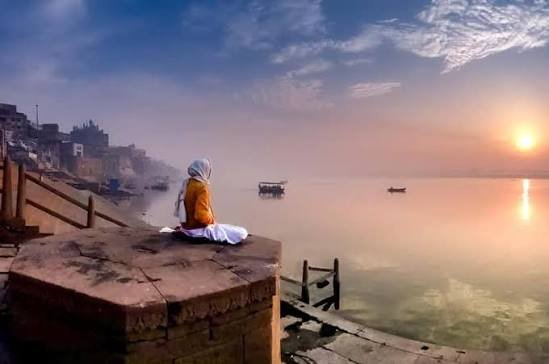
I remember sitting on the steps near Assi, my coat pulled tight, watching the first light hit the water. It wasn't religious. It was just heavy, quiet observation. You’ll see the priests prepping the lamps for the morning ritual. They don't look at you. They don't care that you’re there. They’re busy with oil, cotton wicks, and the precise, practiced movements of a ritual that hasn't changed in a century. It’s refreshing to be ignored.
If you go later, you’ll be fighting the crowds. You’ll be pushed, prodded, and asked a thousand times if you want a boat ride. At 4:30, it’s just you and the river. It’s the only time you can hear yourself breathe. Bring a scarf; the fog in January will soak through your clothes in twenty minutes. And if you’re brave, dip your hand in the water. It’s freezing. It’ll wake you up faster than any coffee you’ve ever had.
The Boatman’s Code: Haggling for Sanity
The boatmen will see you coming a mile away. If you look like a tourist—camera dangling, map in hand, head on a swivel—the price will start at ₹800. They’ll tell you it’s for a ‘long trip,’ a ‘special sunset view,’ or some other nonsense. Don't believe them. The actual price for a shared motorboat is ₹100 per person. A private wooden rowboat, if you can negotiate well, should be around ₹400 for an hour. If they go higher, just walk to the next guy. There are hundreds of them.
Never pay upfront. That’s rule number one. Once they have your money, the ‘hour’ becomes twenty minutes, and you’ll find yourself being dropped off at the wrong ghat. Sit down first. Agree on the price in clear, loud Hindi—or just hold up four fingers and shake your head until they nod. If they start asking about your home country or your job, keep the answers short. It’s just small talk to soften you up for a higher price.
The best time is the ‘blue hour’ right before the sun hits the skyline. The water is perfectly still. The city looks like a painting, all soft lines and crumbling shadows. If you want a photo, ask them to stop near the middle of the river. They’ll grumble, but they’ll do it. Just be prepared for the boat to rock. Keep your bag on your lap, not the seat, because the splash-back from the oars will soak anything sitting low. And for heaven’s sake, don't drop your phone. The Ganga doesn't give back what it takes.
Essential Comparison: Exploring the Ghats
| Activity | Estimated Cost | My Pro Tip |
|---|---|---|
| Early Morning Boat Ride | ₹400 – ₹600 (Private) | Go at 5 AM to beat the heat and the crowds. |
| Breakfast (Kachori/Jalebi) | ₹10 – ₹30 | Eat at a stall with a crowd of locals. |
| Chai (Kulhad) | ₹10 | Add extra ginger if you have a cold. |
| Guide Fees (Optional) | Avoid if possible | Walk the lanes yourself; get lost on purpose. |
The Alchemy of Street Food
You haven't eaten until you’ve stood in a greasy lane, burnt your tongue on a hot jalebi, and washed it down with a kulhad of spice-heavy tea. There’s a shop near the Vishwanath gully that serves rabri so thick you need a spoon for it. It’s ₹50. It’s messy. You will get sugar on your clothes. I don't care. It’s the best thing you’ll eat in this city, and it’s worth the risk of an upset stomach the next day. Carry hand sanitizer, though. You’ll need it.
Avoid the ‘fancy’ restaurants with the English menus. They’re just charging you for the fan and the lack of dust. The real food is in the stalls that look like they might collapse if you lean on them. If there’s a line of local students, join it. They know where the cheap, safe, and delicious stuff is. Watch how they eat. If they’re using their hands, you should too. It’s not just about the food; it’s about the culture of the bite.
If you see a vendor frying something in a massive vat of ghee, get in line. The smell of frying batter is the perfume of these streets. Be warned: the spice level will surprise you. If your mouth is on fire, don't ask for water; find a lassi shop. The curd will cut the heat better than anything else. A large kulhad of malai-topped lassi is ₹50 and it’s practically a meal in itself. It’s thick, creamy, and keeps you full until dinner.
Frequently Asked Questions
- Is it safe to walk alone at night? The main ghats are busy until late, but the narrow lanes get empty fast. Stick to the main paths and you’ll be fine.
- How do I handle the constant attention from touts? A firm ‘Nahi chahiye’ (I don't want it) and not breaking your stride works wonders. Don't be polite; be direct.
- Should I bring a professional camera? Bring it, but keep it in a bag until you’re in a quiet spot. Pushing a camera in someone’s face is rude, and the dust will kill your lens in a day.
- What’s the best way to avoid the crowds during festivals? Don't try. You’re here for the experience, and the crowd is part of it. Find a rooftop cafe, order a chai, and watch the chaos from above.
- Can I actually find peace in such a crowded city? Yes, but you have to work for it. Duck into a small alley, climb to a temple terrace, or just find a quiet corner on a less-traveled ghat. The silence is there; you just have to listen past the noise.
If you leave Varanasi without feeling like you’ve been through a wringer, you didn't do it right. It’s a city that demands your full attention, your patience, and occasionally, your sanity. But look at the light over the water one last time before you leave. It changes everything. You’ll realize that the dust, the noise, and the cold morning wind weren't just obstacles—they were the point. They’re the reason you’ll be back.
Don't worry about the perfect itinerary. You’ll find better things by getting lost. The best stories in this city are the ones you didn't plan for. My last piece of advice? Keep your phone in your pocket, buy a pack of cigarettes if you smoke, or just watch the river move. The Ganga has seen empires rise and fall; she doesn't care about your schedule. Just breathe, walk, and let the city happen to you. It’s not going to be a clean trip, but it will be a real one. See you by the steps.
Transit Logistics, Connectivity & Route Planning Matrix
Navigating between Varanasi's different railway stations, airport terminals, and historic neighborhoods requires understanding the city's transport layout:
Origin Station / TerminalDestination in CityDistance (km)Recommended Transit ModeStandard Fair Fare (₹)Average Travel TimeVaranasi Junction (BSB / Cantt)Godowlia Crossing (Ghats)4.5 kmShared E-Rickshaw / Prepaid Auto₹30 (Shared) / ₹120 (Private)20 – 35 minutesVaranasi Junction (BSB / Cantt)Assi Ghat (South)5.5 kmAuto-Rickshaw / App Cab (Ola/Uber)₹140 – ₹18025 – 40 minutesPt. Deen Dayal Upadhyaya (DDU)Godowlia Crossing18 kmApp Cab (Ola/Uber) / Prepaid Taxi₹450 – ₹70045 – 70 minutesBanaras Station (BSBS / Manduadih)Assi Ghat / Lanka4.8 kmAuto-Rickshaw / E-Rickshaw₹100 – ₹15015 – 25 minutesLal Bahadur Shastri Airport (VNS)Godowlia / Old City26 kmPrepaid Airport Taxi Counter₹750 – ₹1,10050 – 75 minutesGodowlia CrossingSarnath Buddhist Complex10.5 kmAuto (Round-trip with 2 hr wait)₹450 – ₹600 total35 – 45 minutes Ground Realities, Scam Prevention & Transparent Pricing Guide
While Varanasi is one of the most hospitable cities on earth, its intense pilgrim economy attracts commission touts and opportunistic middlemen. To ensure your trip is free of friction, keep these standard transparent guidelines in mind:
Ground Realities, Scam Prevention & Transparent Pricing Guide
While Varanasi is one of the most hospitable cities on earth, its intense pilgrim economy attracts commission touts and opportunistic middlemen. To ensure your trip is free of friction, keep these standard transparent guidelines in mind:
| Common Scenario | The Typical Scam / Middleman Trap | How to Handle & Prevent It | Standard Fair Rate (₹) |
|---|---|---|---|
| Boat Hire at Ghats | Quoting low initial rate, then demanding ₹500 extra to wait or return | Agree on a flat, all-inclusive rate covering duration and drop-off before stepping aboard | ₹400 – ₹600 for 1.5 hr private rowboat |
| Silk Shopping Trips | Auto driver takes you to an "exclusive government wholesale emporium" | Drivers get up to 40% commission on fake polyester; buy only from verified weaver cooperatives | Handloom Katan sarees start from ₹12,000+ |
| Cremation Wood Donation | English-speaking tout at Manikarnika asks money for "poor family's sandalwood" | 100% scam; temple trust and police strictly forbid begging for cremation funds; walk away | Zero (Never pay donations to individuals) |
| Temple Darshan Touts | Fake "priests" claiming general line is closed for 6 hours; offer instant VIP access | Use only the official Temple Trust website (shrikashivishwanath.org) or helpdesk at Gate 4 | Sugam Darshan ticket: exactly ₹300 |
| Street Paan Stalls | Adding expensive "gold leaf" or unrequested heavy tobacco without asking | Clearly state: "Bina zarda, sada meetha paan banaiye" (Plain sweet paan without tobacco) | ₹25 – ₹50 for authentic Magahi Meetha Paan |
No journey to Varanasi is complete without embarking on an authentic street food crawl through the historic quarters. Here are the 8 legendary institutions verified by generations of local residents:
The Definitive Culinary Map: 8 Unmissable Local Food Spots
No journey to Varanasi is complete without embarking on an authentic street food crawl through the historic quarters. Here are the 8 legendary institutions verified by generations of local residents:
| Establishment Name | Exact Street Address | Signature Must-Order Dish | Fair Price (₹) | Operating Hours |
|---|---|---|---|---|
| Deena Chaat Bhandar | Golghar, Dashashwamedh Road | Tamatar Chaat & Palak Patta Chaat | ₹50 – ₹80 | 04:00 PM – 10:30 PM |
| Ram Bhandar | Thatheri Bazar, Chowk | Khasta Kachori with Hing Pumpkin Gravy & Jalebi | ₹60 – ₹90 | 07:00 AM – 11:30 AM |
| Blue Lassi Shop | Kunj Gali, Bangali Tola | Pomegranate-Rabri Curd Lassi | ₹80 – ₹130 | 08:00 AM – 10:00 PM |
| Keshav Tambul Bhandar | Godowlia Crossing | Royal Magahi Meetha Paan with Gulkand | ₹30 – ₹50 | 09:00 AM – 11:30 PM |
| Pahalwan Lassi | Lanka (Opposite BHU Gate) | Thick Buffalo Curd Lassi with 2-inch Malai | ₹50 – ₹80 | 07:00 AM – 11:00 PM |
| Chachi Ki Dukaan | Lanka Market | Spicy Badi Kachori & Fresh Golden Imarti | ₹40 – ₹60 | 07:00 AM – 11:30 AM |
| Shiv Prasad Lassi | Ramnagar Fort Main Gate | Dense, rabri-topped kulhad lassi eaten with spoon | ₹60 – ₹90 | 08:00 AM – 08:30 PM |
| Vatika Pizzeria | Assi Ghat Riverfront | Thin-crust wood-fired pizza & warm apple pie | ₹250 – ₹450 | 08:00 AM – 10:00 PM |
To navigate the cultural landscape of Varanasi with confidence and respect, familiarizing yourself with these authentic local phrases, spiritual terms, and neighborhood slang is invaluable:
Local Vocabulary & Banarasi Hindi-Bhojpuri Lexicon for Travelers
To navigate the cultural landscape of Varanasi with confidence and respect, familiarizing yourself with these authentic local phrases, spiritual terms, and neighborhood slang is invaluable:
| Local Phrase / Term | Literal & Cultural Meaning | How and When to Use |
|---|---|---|
| Ghat (घाट) | A broad flight of stone steps leading down to the sacred riverbank | Used when identifying meeting spots, boat pickups, and temples |
| Gali / Galiyam (गली / गलियां) | The ancient, narrow stone-paved pedestrian alleys of the Old City | Used when navigating between Chowk, Dashashwamedh, and Bangali Tola |
| Subah-e-Banaras (सुबह-ए-बनारस) | The legendary poetic dawn of Varanasi: calm water, mist, and morning ragas | Used to describe the morning cultural and spiritual atmosphere at Assi |
| Masti & Phakkarpan (मस्ती और फक्कड़पन) | The unique carefree, philosophical, and joyous attitude of Banaras locals | Reflects the local philosophy of contentment without anxiety about time |
| Bunkar (बुनकर) | Master handloom silk weavers belonging to traditional artisan families | Used when visiting traditional weaving mohallas like Madanpura |
| Mahashamshana (महाश्मशान) | The Great Cremation Ground (Manikarnika and Harishchandra Ghats) | Refers to the sacred cremation sites where mortal souls attain Moksha |
| Gamchha (गमछा) | Traditional lightweight checkered cotton towel worn over the shoulders | Carried by locals for wiping perspiration, temple head-covering, and sun shade |
| Prasadam (प्रसादम) | Sanctified vegetarian food or sweets offered to deities and distributed to devotees | Received at temples such as Vishwanath, Annapurna, and Sankat Mochan |
| Har Har Mahadev (हर हर महादेव) | "Victory to Lord Shiva, the Great God" — the universal greeting of Kashi | Used as a friendly greeting, cheer of encouragement, and spiritual salute |
To grasp the intellectual foundation of Kashi, one must understand that the city was not merely a center of temple worship; it was the supreme intellectual clearinghouse of ancient India. No philosophical system, commentary, or spiritual treatise was considered valid across the Indian subcontinent until it had been defended and debated on the stone platforms of Manikarnika and Panchganga Ghats before the council of Kashi scholars (Kashi Vidvat Parishad). Here are the five towering philosophers whose footprints remain etched into the city:
The Five Great Philosophers & Mystics Who Shaped Varanasi
To grasp the intellectual foundation of Kashi, one must understand that the city was not merely a center of temple worship; it was the supreme intellectual clearinghouse of ancient India. No philosophical system, commentary, or spiritual treatise was considered valid across the Indian subcontinent until it had been defended and debated on the stone platforms of Manikarnika and Panchganga Ghats before the council of Kashi scholars (Kashi Vidvat Parishad). Here are the five towering philosophers whose footprints remain etched into the city:
| Philosopher / Saint | Historical Era | Primary Landmark in Kashi | Revolutionary Contribution to World Thought |
|---|---|---|---|
| Maharshi Patanjali | 2nd Century BCE | Nag Kuan (Snake Well), Jaitpura | Codified the Yoga Sutras (the 8 limbs of Raja Yoga) and wrote the Mahabhashya commentary on Sanskrit grammar |
| Adi Shankaracharya | 8th Century CE | Manikarnika Ghat & Kedar Ghat | Composed the Manisha Panchakam after an encounter with Shiva in the guise of an outcaste, cementing Advaita (non-dual) Vedanta |
| Sant Kabir | 15th Century (1398–1518 CE) | Kabir Chaura Math & Lahartara | Challenged rigid ritualism, caste distinctions, and religious hypocrisy through fearless vernacular poetry (Bijak) |
| Sant Ravidas | 15th – 16th Century | Seer Goverdhanpur (Near BHU) | Envisioned Begumpura (the City Without Sorrow)—a society free of caste discrimination, poverty, and taxes |
| Goswami Tulsidas | 16th Century (1532–1623 CE) | Tulsi Ghat & Sankat Mochan | Composed the Awadhi Ramcharitmanas, democratizing the epic across northern India, and established the Sankat Mochan temple |
Varanasi Travel Quick Reference: Timings, Costs & Essentials
Key verified facts for planning your visit to Varanasi — timings, transport costs, temple guidelines, and safety tips:
How much does a boat ride cost in Varanasi and how to book?
Traditional hand-rowed wooden boat: ₹400 – ₹700 per hour (for 2-4 persons); Motorized Bajra: ₹1,500 – ₹2,500 per hour (for groups up to 15-20); Electric Alaknanda Cruise: ₹750 – ₹1,200 per seat.
What are the exact Ganga Aarti timings at Dashashwamedh and Assi Ghat?
Morning Subah-e-Banaras at Assi Ghat begins at 05:00 AM (summer) / 05:45 AM (winter); Grand Evening Maha Aarti at Dashashwamedh Ghat begins at 07:00 PM (summer) / 06:00 PM (winter).
What is the dress code and entry fee for Kashi Vishwanath Temple?
Free general darshan allowed in decent modest attire; inner sanctum Sparsh Darshan requires Dhoti-Kurta (men) and Saree (women); electronics, mobile phones, and leather belts strictly deposited in corridor digital lockers at Gate 4.
When is the best time of year to visit Varanasi?
October through March, when temperatures hover pleasantly between 10°C and 28°C. Coincides with Dev Deepawali (24 November 2026, with over 1.2 million lamps) and Maha Shivratri (February/March).
How far is Varanasi Airport from the Ghats and how to reach the city?
Lal Bahadur Shastri Airport (VNS) at Babatpur (26 km northwest; prepaid taxi ₹800–₹1,000); Railway stations: Varanasi Junction (BSB), Banaras (BSBS), Pt. Deen Dayal Upadhyaya Junction (DDU, 18 km).
What are the most common tourist scams in Varanasi and how to avoid them?
Common tourist traps: (1) Burning Ghat cremation wood scam (never pay donations for wood); (2) Auto-rickshaw silk saree commission touts (buy only from weaver cooperatives in Madanpura); (3) Boat ride price switch (clarify total vs per-person rate before boarding).