 By Nikhil kumar pandey & Editorial Guild
Cutting Through the Gridlock Above Godowlia
If you've ever tried navigating an auto-rickshaw through the chaotic evening crush near Godowlia Chowk, you already know why this ropeway was built. The diesel fumes from a hundred stalled scooters burn your throat, and the horns never stop. It's a miracle anyone reaches the riverbanks on time. Starting in 2026, India's first urban aerial transit system changes that commute completely.
You won't be sweating through your shirt in a traffic jam anymore. The new Swiss-Austrian Doppelmayr cabins float silently over the rooftops. They glide right above the congested chaos of the old city streets. It's a massive shift for daily commuters and travelers alike.
The Five Stations Connecting Cantt to the River
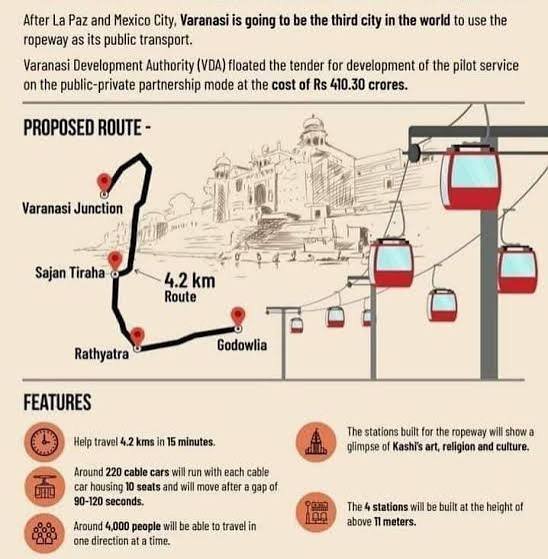
The entire aerial route spans roughly four kilometers, cutting down a grueling 50-minute road crawl to a swift 16-minute ride. The journey features five distinct stations strategically positioned across the city grid. You'll board at the starting point right outside Varanasi Cantt Railway Station. (And yes, it's a lifesaver when you've just stepped off an overnight train with heavy bags.)
From the railway terminal, the gondola floats south toward Vidya Peeth, then curves past Rath Yatra and Girja Ghar before terminating right at Godowlia Chowk. You'll step out of the terminal and find yourself just a short walk from the entrance of Kashi Vishwanath Dham. There's no need to bargain with auto drivers demanding inflated fares anymore.
Cabin Specifications and Fares
Each air-conditioned cabin holds up to ten passengers comfortably. The system rolls out over 140 modern gondolas arriving every 90 to 120 seconds. You won't stand around waiting in long queues. The operational hours run from roughly 6:00 AM to 10:00 PM daily.
Ticket pricing remains remarkably accessible for everyday public transit. Fares are officially fixed at ₹50 to ₹80 per passenger depending on the exact distance and travel class. You can pick up digital tokens or use smart cards at any station gate. It's easily the cheapest aerial view you'll ever buy.
Table of Varanasi Ropeway Stations & Fares
| Station Name | Key Landmark / Connection | Approx. Travel Time from Start |
|---|---|---|
| Varanasi Cantt Railway Station | Main Railway Terminal & Bus Stand | 0 Minutes (Origin) |
| Vidya Peeth | Kashi Vidyapeeth University Area | 4 Minutes |
| Rath Yatra | Commercial Hub & Junction | 8 Minutes |
| Girja Ghar | Central City Crossing | 12 Minutes |
| Godowlia Chowk | Gateway to Dashashwamedh & Ghats | 16-17 Minutes (Terminus) |
Riding Above the Heritage Lanes
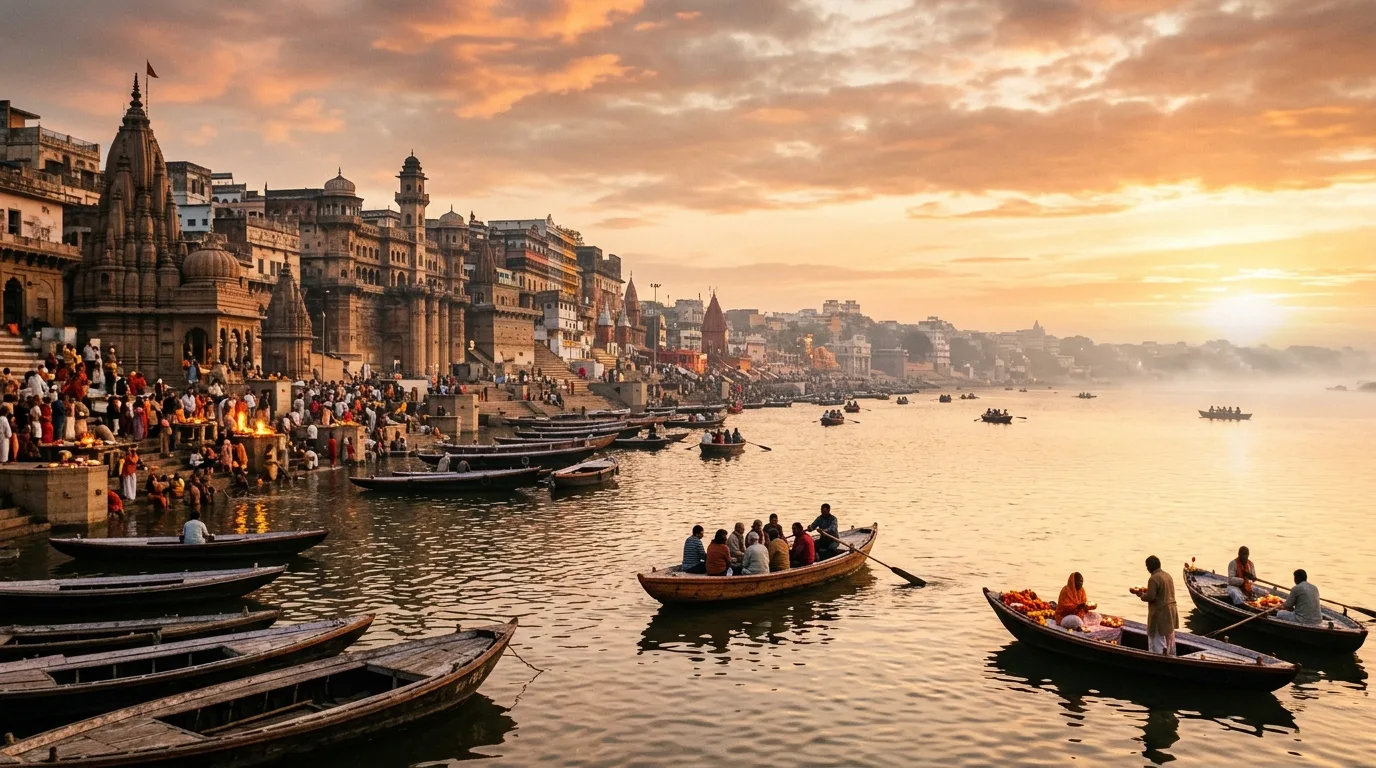
Looking down from a ten-seater glass cabin offers a perspective of Banaras few outsiders ever witness. You see the endless matrix of interlocking terracotta roofs and secret courtyards. Temple shikharas poke up through the morning haze like ancient stone fingers. It feels completely detached from the urban roar down below.
Operating smoothly through active construction and trial phases in 2026, this infrastructure project sets a new benchmark for Indian pilgrimage centers. You get to skip the dust, the honking, and the tangled overhead power lines. It brings a sleek, modern efficiency to a city that has otherwise remained stubbornly medieval for millennia.
Frequently Asked Questions
What are the 5 stations of the Varanasi ropeway?
The Varanasi ropeway connects five strategic urban stations along its 4-kilometer aerial corridor. The line starts at Varanasi Cantt Railway Station, moves through Vidya Peeth and Rath Yatra, passes Girja Ghar, and terminates directly at Godowlia Chowk near the riverfront.
What is the expected ticket fare for the cable car?
The ticket fare for the Varanasi ropeway is priced affordably between ₹50 and ₹80 per passenger. Standard public transit rates are structured to keep the daily commute economical while replacing expensive road auto-rickshaws.
How long does the ropeway take from Cantt to Godowlia?
The complete aerial journey from Cantt Railway Station to Godowlia Chowk takes just 16 to 17 minutes. This aerial shortcut bypasses heavy street congestion that traditionally takes anywhere from 45 to 60 minutes by road.
Can passengers carry luggage on the ropeway?
Standard cabin luggage and backpacks are fully permitted inside the 10-seater air-conditioned gondolas. However, exceptionally heavy freight, oversized commercial cargo, or hazardous materials are strictly restricted for passenger safety.
How close does the cable car drop passengers to Kashi Vishwanath Dham?
The Godowlia Chowk ropeway terminus drops passengers roughly a 7-minute walk from Gate 4 of Kashi Vishwanath Dham. You can easily access the temple corridor on foot or hop on a local ₹10 shared e-rickshaw right outside the station exit.
Practical Pilgrim & Traveler Advice for Kashi Visitors
Navigating the sacred geography of Varanasi becomes significantly more rewarding when you adopt the local rhythm of life. Keep these final recommendations close at hand:
- Embrace the Flow of the City: Varanasi operates on its own timeless pace. Traffic delays, slow-moving sacred cows, and spontaneous religious processions in the narrow alleys are not obstacles; they are part of the living spiritual fabric of Kashi. Relax and maintain an open, patient mindset.
- Timing Your Visits: Always plan outdoor activities during the cooler, golden hours of dawn (05:15 AM to 08:30 AM) and late afternoon (05:00 PM to 08:00 PM). Midday hours are ideal for museum exploration, restful lunches, and quiet study.
- Support Traditional Craftspeople: When purchasing Banarasi handloom sarees, wooden toys, or brass items, make an effort to buy directly from artisan cooperatives and small family workshops, ensuring that your patronage directly sustains multi-generational craft traditions.
- Leave No Trace: Treat the sacred waters of the Ganga and the ancient stone ghats with deep reverence. Use municipal waste bins, carry a reusable water bottle, and choose biodegradable leaf offerings for river rituals.
Varanasi Travel Quick Reference: Timings, Costs & Essentials
Key verified facts for planning your visit to Varanasi — timings, transport costs, temple guidelines, and safety tips:
How much does a boat ride cost in Varanasi and how to book?
Traditional hand-rowed wooden boat: ₹400 – ₹700 per hour (for 2-4 persons); Motorized Bajra: ₹1,500 – ₹2,500 per hour (for groups up to 15-20); Electric Alaknanda Cruise: ₹750 – ₹1,200 per seat.
What are the exact Ganga Aarti timings at Dashashwamedh and Assi Ghat?
Morning Subah-e-Banaras at Assi Ghat begins at 05:00 AM (summer) / 05:45 AM (winter); Grand Evening Maha Aarti at Dashashwamedh Ghat begins at 07:00 PM (summer) / 06:00 PM (winter).
What is the dress code and entry fee for Kashi Vishwanath Temple?
Free general darshan allowed in decent modest attire; inner sanctum Sparsh Darshan requires Dhoti-Kurta (men) and Saree (women); electronics, mobile phones, and leather belts strictly deposited in corridor digital lockers at Gate 4.
When is the best time of year to visit Varanasi?
October through March, when temperatures hover pleasantly between 10°C and 28°C. Coincides with Dev Deepawali (24 November 2026, with over 1.2 million lamps) and Maha Shivratri (February/March).
How far is Varanasi Airport from the Ghats and how to reach the city?
Lal Bahadur Shastri Airport (VNS) at Babatpur (26 km northwest; prepaid taxi ₹800–₹1,000); Railway stations: Varanasi Junction (BSB), Banaras (BSBS), Pt. Deen Dayal Upadhyaya Junction (DDU, 18 km).
What are the most common tourist scams in Varanasi and how to avoid them?
Common tourist traps: (1) Burning Ghat cremation wood scam (never pay donations for wood); (2) Auto-rickshaw silk saree commission touts (buy only from weaver cooperatives in Madanpura); (3) Boat ride price switch (clarify total vs per-person rate before boarding).