Top 15 Famous Things to Do in Varanasi
Morning bells echo across the river while funeral chants rise from another ghat. Boatmen wait silently as pilgrims step into the Ganga before sunrise. Varanasi does not behave like a tourist city. The city places life, death, faith, and routine in the same frame, without filters or explanations.
First-time visitors often feel overwhelmed, then strangely grounded. Spiritual seekers find rituals that continue uninterrupted for centuries. Culture lovers witness music, food, craft, and belief coexisting in narrow lanes.
This guide breaks down the 15 most famous things to do in Varanasi, based on on-the-ground experience, local patterns, and what actually leaves a lasting impression, not just a photo.
1️⃣ Walk Along the Iconic Ghats of the Ganga
Ghats form the working spine of Varanasi. A ghat refers to stepped riverbanks built for ritual bathing, prayer, cremation, and daily chores. More than 80 ghats line this stretch of the Ganga, each serving a distinct role.
Key ghats worth understanding rather than rushing through:
- Dashashwamedh Ghat – Ritual centre of the city and site of the evening Ganga Aarti
- Assi Ghat – Sunrise prayers, yoga sessions, students, and long-term travellers
- Manikarnika Ghat – One of Hinduism’s most sacred cremation grounds
Cremation ghats often unsettle first-time visitors. Local belief treats death as liberation from rebirth, not tragedy. Families bring ashes with reverence, priests conduct rites calmly, and daily life continues alongside the fires.
Best time: 5:30–8:00 am and sunset hours
Practical tip: Walk quietly, avoid photography near cremations, and follow local cues.
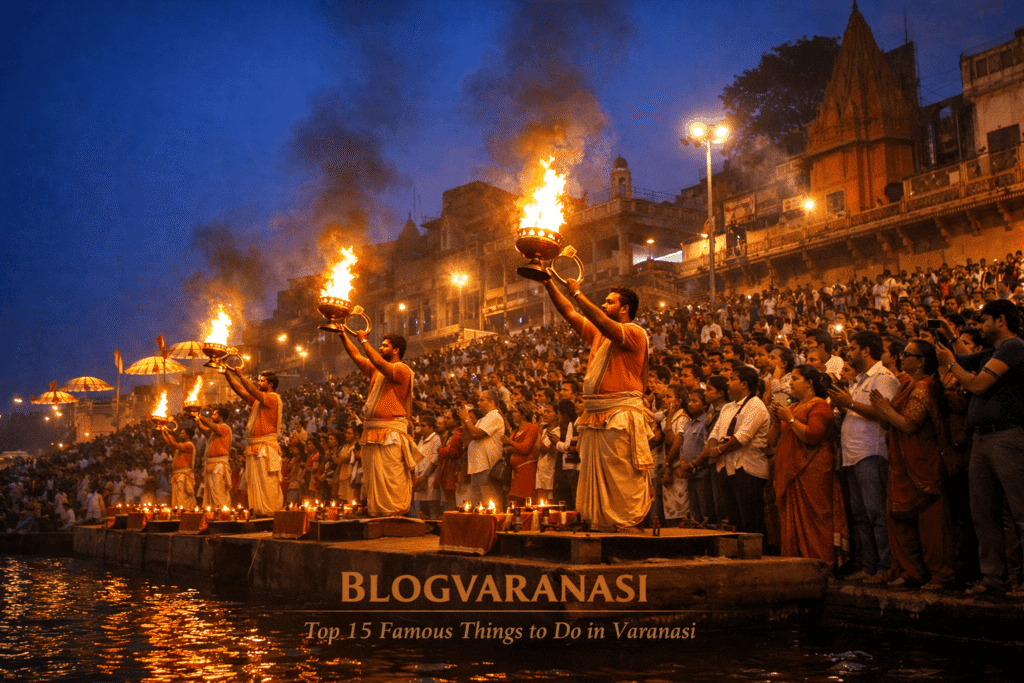
2️⃣ Witness the Mesmerising Ganga Aarti at Dashashwamedh Ghat
Evening Ganga Aarti represents gratitude to the river as a living goddess. Priests perform synchronised rituals using fire lamps, incense, conch shells, and Vedic chants.
Ceremony structure follows strict symbolism:
- Fire signifies purification
- Circular movements represent cosmic cycles
- Chants honour water, earth, fire, air, and space
Timings:
- Summer: around 7:00 pm
- Winter: around 6:30 pm
Viewing options:
- Ghat steps: immersive but crowded
- Boat ride: calmer view with distance
Safety note: Pickpocketing increases during peak crowd hours. Carry minimal belongings.
3️⃣ Take a Sunrise Boat Ride on the Ganges River
Sunrise boat rides reveal the city without noise or spectacle. Temple bells, whispered mantras, and birds replace traffic sounds.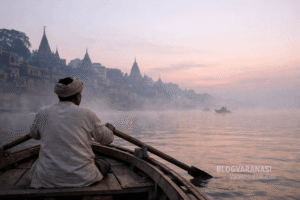
Boat types & costs (approx.):
- Shared rowing boat: ₹150–₹200 per person
- Private boat: ₹800–₹1,200
Winter mornings often bring mist, creating soft silhouettes of temples and bathing devotees.
Etiquette:
Photography should remain discreet. Silence shows respect and enhances the experience.
4️⃣ Visit the Sacred Kashi Vishwanath Temple
Kashi Vishwanath stands among the 12 Jyotirlingas of Lord Shiva. Ancient texts describe Kashi as the city where liberation becomes possible.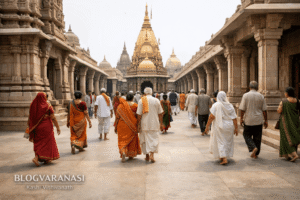
Recent redevelopment through the corridor improved crowd flow, but rituals remain unchanged.
Key visitor guidance:
- Mobile phones are not allowed inside
- Modest clothing required
- Early morning darshan reduces waiting time
Local priests often guide first-time visitors through procedures, easing confusion.
5️⃣ Explore Other Ancient Temples of Varanasi
Several temples reflect local faith patterns rather than pan-India pilgrimage circuits.
Notable stops include:
- Sankat Mochan Hanuman Temple – Popular among students and locals
- Durga Temple – Red-coloured shrine with strong Shakti traditions
- Annapurna Devi Temple – Symbol of nourishment and abundance
- Kaal Bhairav Temple – Guardian deity of the city
Temple visits follow neighbourhood rhythms. Footwear rules, photography bans, and offering customs vary.
6️⃣ Take a Holy Dip in the Ganges
Ritual bathing represents spiritual cleansing rather than physical hygiene. Pilgrims believe sins dissolve with sincere intent.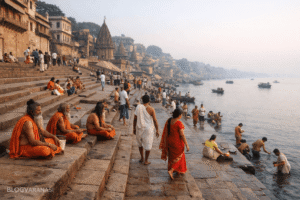
Safer ghats for visitors:
- Assi Ghat
- Dashashwamedh (designated sections)
Festival days such as Dev Deepawali and Makar Sankranti attract massive ritual bathing crowds.
Health advisory: Avoid swallowing water and prefer early morning hours.
7️⃣ Discover the History of Sarnath
Sarnath marks the place where Gautama Buddha delivered his first sermon. Calm gardens and monastic ruins contrast sharply with Varanasi’s intensity.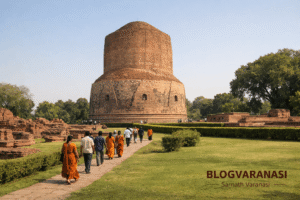
Key highlights:
- Dhamek Stupa
- Ashoka Pillar remains
- Archaeological Museum housing the Lion Capital
Distance: 10 km from Varanasi
Ideal visit time: Morning or late afternoon
8️⃣ Visit the Ramnagar Fort
Ramnagar Fort served as the residence of the Kashi Naresh. The structure overlooks the Ganga and houses a museum with vintage weapons, manuscripts, and royal artefacts.
Photography works best during late afternoon light. River-facing views add depth to the visit.
9️⃣ Experience Student Life at Banaras Hindu University
BHU operates like a city within a city. Wide roads, academic buildings, and cultural institutions create breathing space away from crowded lanes.
Must-see spots:
- New Vishwanath Temple
- Bharat Kala Bhavan Museum
Students, professors, and morning walkers shape daily campus life.
🔟 Explore the Jantar Mantar Varanasi
Built under Maharaja Jai Singh, this observatory once helped track celestial movements. Stone instruments explain ancient Indian astronomy through scale and geometry.
Combine the visit with nearby ghats for an efficient route.
1️⃣1️⃣ Shop for Authentic Banarasi Silk Sarees
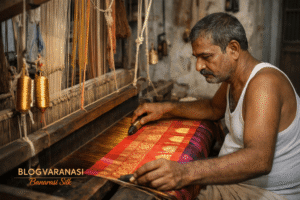
Banarasi silk holds a GI tag, protecting traditional weaving techniques.
Trusted buying areas:
- Government emporiums
- Cooperative stores
Pure silk features fine zari work, natural sheen, and higher weight.
Ethical tip: Ask about loom origin and artisan families.
1️⃣2️⃣ Visit Traditional Silk Weaving Villages
Localities such as Madanpura and Sarai Mohana showcase handloom work inside homes.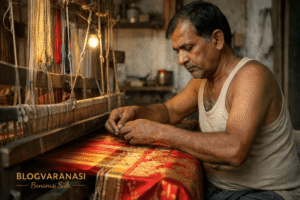
Visitors witness:
- Manual loom operations
- Pattern designing
- Dyeing processes
Direct purchases support artisan livelihoods and preserve skills passed through generations.
1️⃣3️⃣ Taste the Street Food & Local Cuisine of Varanasi
Varanasi’s food culture leans heavily vegetarian, shaped by religious practices.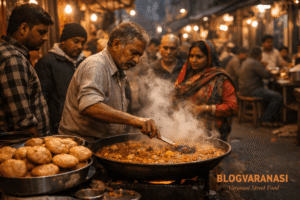
Must-try dishes:
- Kachori Sabzi (breakfast staple)
- Tamatar Chaat
- Malaiyo (winter-only dessert)
- Baati Chokha
Food lanes: Godowlia, Vishwanath Gali, Lanka area
Choose busy stalls for better hygiene standards.
1️⃣4️⃣ Discover Varanasi Through Guided Walking Tours
Heritage and food walks decode symbolism that casual visitors miss. Guides explain ritual timings, architectural details, and social customs.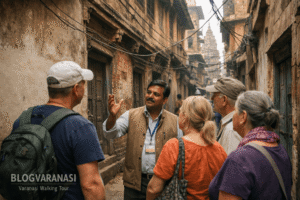
Walking tours suit:
- First-time visitors
- Solo travellers
- Cultural learners
DIY exploration works, but context often transforms confusion into understanding.
1️⃣5️⃣ Attend a Classical Music or Cultural Performance
Varanasi nurtured legends of Hindustani classical music and shehnai traditions.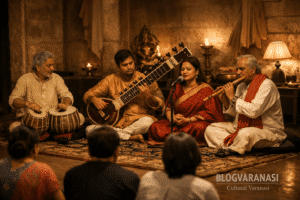
Performance venues include:
- Assi Ghat mornings
- BHU auditoriums
- Cultural ashrams
Audience etiquette emphasises silence and patience.
Why Varanasi Is a Must-Visit Destination in India
Few cities maintain uninterrupted spiritual practice across millennia. Varanasi sustains belief systems, artistic traditions, and philosophical ideas without museum-like preservation. Life unfolds openly, without sanitisation. Visitors leave changed, not entertained.
FAQs
Is 2 days enough to explore Varanasi?
Two days cover major ghats, aarti, temples, and Sarnath. Deeper cultural immersion requires extra time.
How can I plan my day in Varanasi?
Morning works best for ghats and boat rides. Afternoons suit temples and food. Evenings belong to aarti and walks.
What should I wear in Varanasi?
Loose, modest clothing works well. Covered shoulders and knees suit temple visits.
What is Varanasi most famous for?
Spiritual rituals, the Ganga, moksha belief, silk weaving, and classical music define the city.
Which ghat is best for bathing?
Assi Ghat and designated areas of Dashashwamedh remain the most commonly used.
What are the most famous things to do in Varanasi for first-time visitors?
First-time visitors should focus on experiences that reveal the city’s rhythm and beliefs. Walking along the main ghats, attending the evening Ganga Aarti, taking a sunrise boat ride, visiting Kashi Vishwanath Temple, and exploring nearby Sarnath together offer a balanced introduction. Food walks and short heritage walks help decode daily rituals and local life, making the experience clearer and more meaningful than sightseeing alone.
Varanasi rewards patience, respect, and curiosity. Visitors who slow down often carry the city long after leaving its lanes.
Author: Alok Mishra
Alok Mishra is a seasoned SEO professional and a proud native of Varanasi. Born and brought up in the spiritual capital of India, he combines deep-rooted cultural knowledge with expert digital insight. Through his writing, Alok offers authentic, insider perspectives that bring the timeless essence of Varanasi to life for every reader.